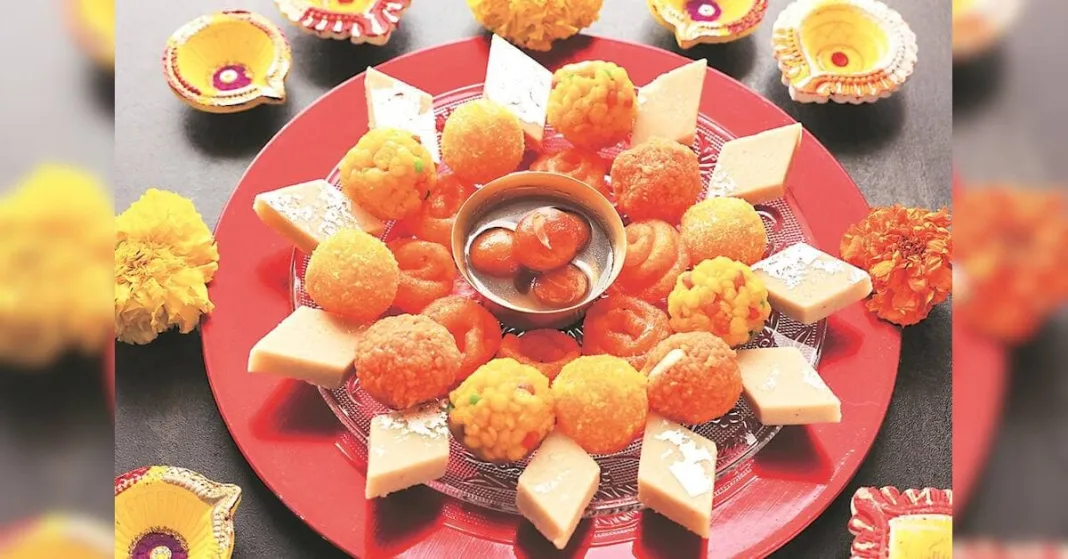

From the laddu in south India, to the meatier barfi in the North, sandesh in West Bengal and chhena poda in Odisha, the price of almost all sweets has gone up by about 10-15 per cent on average across the country this festival season, compared with the last one, shopkeepers said.
The main culprit behind this cost escalation are rising prices of sugar and milk that go into making the sweets that are devoured during Diwali and Durga Puja.
Sugar prices are high because of unexpectedly low production, the outcome of excess rains in Maharashtra and pest attacks in Uttar Pradesh last year.
Milk, on the other hand, took a hit from low rainfall this year, which impacts fodder production.
“Costs have increased significantly, but we are trying to absorb them,” said Partha Nandy of the iconic Girish Chandra Dey & Nakur Chandra Nandy sweet shop in Kolkata.
“We will watch for a couple of months and then take a call (on raising prices),” Nandy said.
Around Raksha bandhan, the shop raised the prices of select malai (cream)-based sweets — including its popular malai roll, sarpuria and malai shingara — by about ₹5 apiece.
Another increase so soon is difficult to contemplate: “After all, we have a responsibility.”
Nitai Chandra Ghosh of Chittaranjan Mistanna Bhandar, best known for its soft, spongy rosogolla, said, “Even three-four months ago, sugar prices were at Rs 44 per kg. They are now hovering around Rs 60 per kg. I can’t increase prices every now and then. My customers will turn away.”
In Odisha, prices of all sweetmeats including rossogolla, chhena-poda and chhena-gaja, have rocketed, with sweet makers raising retail prices by Rs 25-30 per kg.
“Chhena is now supplied at Rs 220 a kilo, up by Rs 40 per kg in the last two to three months,” Bimbadhar Behera, president of the Utkal Mistanna Byabasayee Samiti (Utkal Sweetmeat Traders Association) said.
Down South, for Vishnu Shankar, a director at Chennai’s Adyar Ananda Bhavan, one of the biggest sweetmeat makers in Tamil Nadu, the real challenge are nuts, cashew, butter, rice and pulse prices. “There is an average increase of 15 per cent, and we will be passing it on to customers,” Shankar said.
The spike in the prices of imported items like nuts is mainly due to the West Asia war and resultant rise in container rates.
“As of today, there has been a 33 per cent increase in the prices of sugar, oils, nuts, groceries and other items, including vegetables. Prices will still go up because of Deepavali,” said D Srinivasan, president of the Tamil Nadu Hotels Association.
He added that packaging material prices have also increased, as it is mostly petroleum based.
Up in the North, Varun Khera, head of the Noida chapter of the National Restaurant Association of India (NRAI) said, “The prices of sugar, paneer and khoya have increased. With cooking gas prices and logistics also going up, even salaries have gone up. The only way forward is to work on the bottom line (profit). Otherwise, it will be very difficult for us to survive like this.”
Data sourced from industry and other platforms shows that ex-mill sugar prices in Maharashtra – an important sugar producer – have risen from about Rs 4,300 per quintal to Rs 5,200- 5,300 per quintal this month, a jump of more than 20 per cent.
Before this, prices had jumped to a more than 16-year high of Rs 5,550 per quintal in mid-August, which forced the government to permit import of one million tonnes of raw sugar for the first time in almost a decade and announce measures to curb black-marketing and hoarding of sugar.
But the jury is out on whether the measures have succeeded in lowering prices. A senior industry executive said only limited consignments have hit the market because of a price mismatch.
“The landed cost of imported white sugar is Rs 52-53 per kg while domestic prices fall to around Rs 45 per kg by the time the imported sugar arrives. The economics will not work.”
“This (the current jump in prices) reflects a short window of tight supply, not a structural shortage. The new season opened with mill inventories at a multi-decade low. At the same time, festive buying by households, sweet makers and bulk consumers is at its peak, and good-quality sugar at mills is limited,” said Uppal Shah, chairman and managing director of JK India eAgriTech Ltd, a trading and market intelligence company.
The good news is that sugarcane crushing has begun almost a month earlier than usual this year.
“As more than 50 sugar mills have started crushing, fresh sugar will start flowing in the coming weeks. Along with the higher October release quota, we expect supplies to improve and prices to stabilise soon. We are also expecting some action from the Union Food Ministry soon to control the prices,” Shah said.
There is some consensus that when it comes to sugar the situation may normalise just in time for Diwali, which is in early November.
In the case of milk, most industry players said that prices might remain elevated even during the flush (high production) season that started in October because of expected low production this year.
Since March 2026, which is usually the start of the lean season for the milk industry, companies have raised prices multiple times.
A senior industry executive had said recently that there have been four retail price hikes between May and August. “That is unusual. Normally, you would not see four hikes in such a short period.”
Centre restricts diversion of sugar for ethanol, frees up supplies
The Centre has allowed sugar mills to sell October’s production in the current and the next month over and above their regular monthly quotas to ensure adequate festival-season supplies, PTI reported. Separately, a Reuters report citing a tender issued on Friday, said the government has directed oil marketing companies to reduce sugar diversion for ethanol production to zero in 2026/27, excluding ethanol made from sugarcane juice, sugar syrup and B-heavy molasses from their latest tender. The twin measures come as underwhelming rainfall during monsoon threatens sugar output and prices climb sharply.