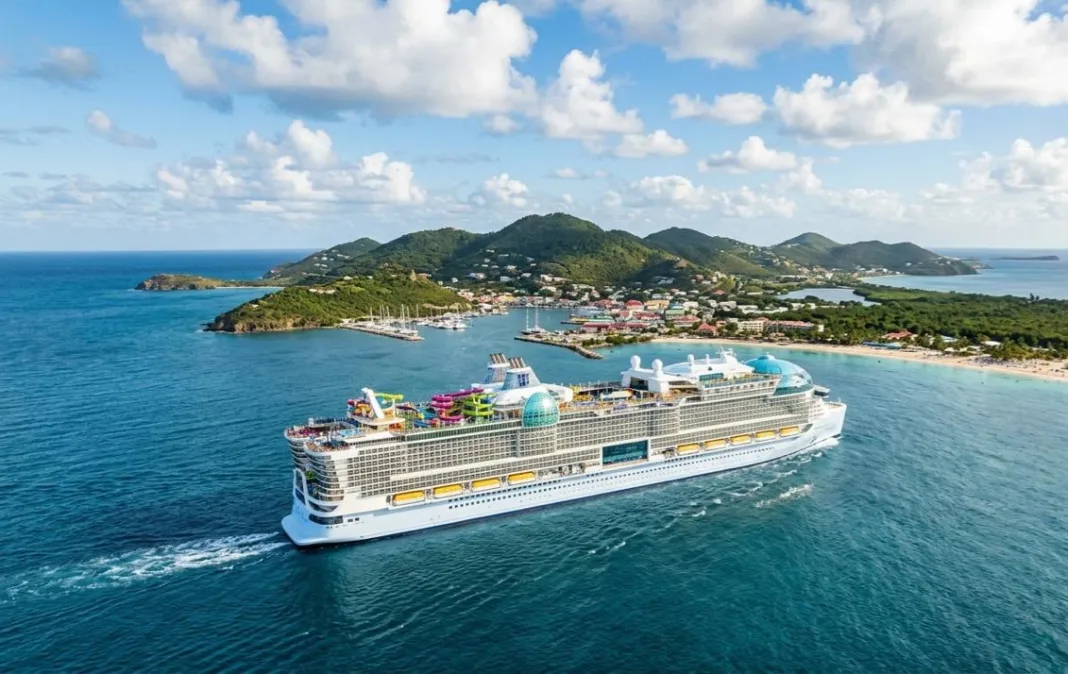

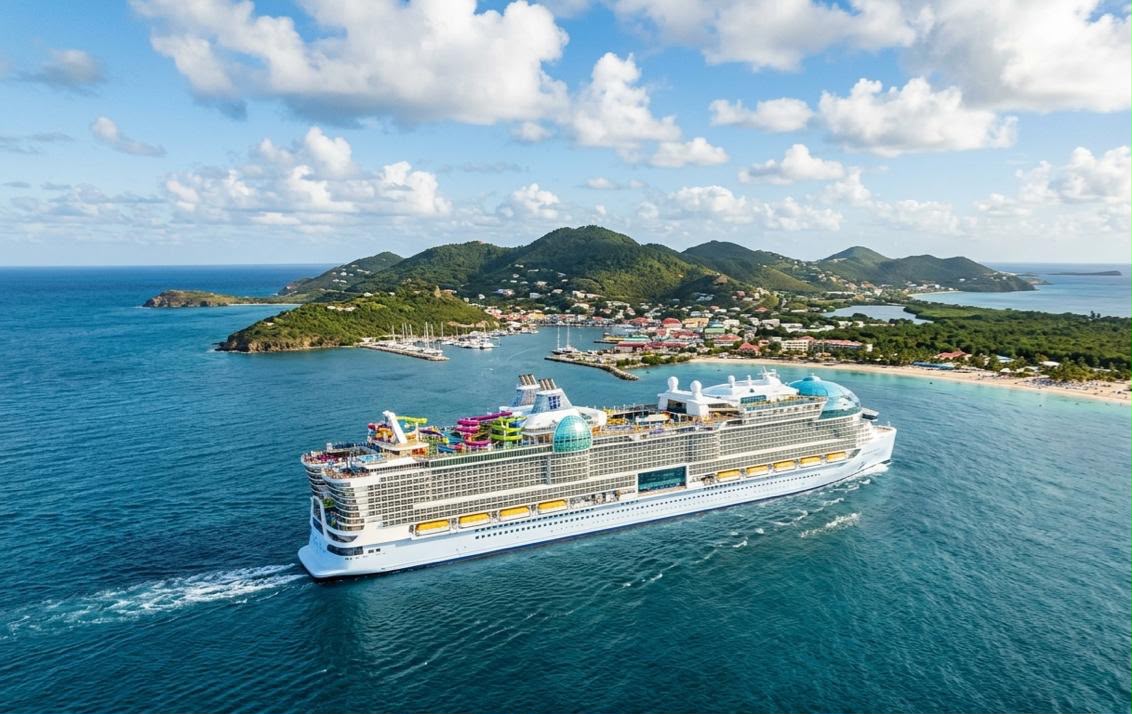
Royal Caribbean Teams Up With MSC and more cruise giants to bring Europe’s ultimate year-round adventures into the spotlight, creating exciting possibilities for unforgettable holidays. As cruise giants expand their European offerings, travellers can discover spectacular coastlines, historic cities, sunlit islands and remarkable cultural experiences beyond the traditional summer season. Royal Caribbean Teams Up With MSC and other cruise operators as Europe’s year-round adventures attract attention from holidaymakers worldwide. From Mediterranean escapes to Canary Islands discoveries, these unforgettable holidays offer fresh inspiration for global travellers. Travel And Tour World urges readers to explore the full story and discover what these cruise adventures could mean for their next European holiday.
Royal Caribbean’s planned year-round European cruise programme for 2028–29 could give international holidaymakers more flexibility when choosing between Mediterranean history, Atlantic island scenery and northern European city breaks. The announcement also highlights a wider question for travellers: how are cruise companies responding to demand for holidays beyond the traditional summer season?
Advertisement
Advertisement
The answer involves several distinct travel trends. European tourism accommodation has recovered beyond pre-pandemic levels, cruise passenger numbers have expanded, and several operators are selling winter itineraries in the Mediterranean and Canary Islands. However, the availability of a winter cruise depends on the individual ship and sailing schedule, rather than a cruise line’s overall presence in Europe.
Royal Caribbean’s 2028–29 European Deployment in Detail
Royal Caribbean International announced its expanded European programme on 14 October 2026. Seven ships are scheduled to operate across Europe during the 2028 season, with Rhapsody of the Seas extending the programme into winter. The deployment covers the Mediterranean, Northern Europe, the Canary Islands and destinations in the Atlantic.
The summer schedule is designed around Greek islands, Turkey, Egypt, Croatia, Scandinavia and other European destinations. Selected itineraries feature overnight stays, while later evening departures can give passengers more time ashore.
The winter programme aboard Rhapsody of the Seas is particularly relevant to travellers who prefer to avoid peak summer crowds. From November 2028, planned nine- to twelve-night voyages will include destinations across the Canary Islands, Portugal, Morocco, Cyprus, Malta and Greece. Travellers should verify individual departure dates and port combinations before making independent arrangements.
Advertisement
Advertisement
| Programme detail | Published information | What it means for travellers |
|---|---|---|
| Cruise season | 2028–29 | Options across summer and winter |
| Ships deployed | Seven | Multiple ship and itinerary choices |
| Winter lead ship | Rhapsody of the Seas | Longer seasonal coverage in Europe |
| Summer voyage lengths | Seven to 12 nights across the programme | Choices for different holiday durations |
| Winter voyage lengths | Nine to 12 nights on Rhapsody of the Seas | More time to combine several destinations |
| Winter regions | Canary Islands, Portugal, Morocco and Mediterranean destinations | A mixture of Atlantic scenery and cultural ports |
| Northern European ports | Copenhagen and Stockholm return to the programme | More options for Scandinavian cruise holidays |
| Greek island highlight | Santorini | Opportunities to explore island villages and coastal views |
European Tourism Statistics Reveal the Bigger Picture
Tourism statistics help explain why additional seasonal options may interest travellers. Eurostat’s annual data on nights spent in tourist accommodation show the scale of Europe’s recovery from the COVID-19 disruption. These figures cover hotel stays, holiday accommodation and other establishments, not cruise passenger visits alone.
EU tourist accommodation nights, 2020–2025. Figures are rounded from Eurostat’s annual dataset and represent nights, not individual visitors.
| Year | Accommodation nights | Change from previous year | Travel context |
|---|---|---|---|
| 2020 | 1.42 billion | — | Pandemic disruption |
| 2021 | 1.83 billion | +29.0% | Partial reopening and recovery |
| 2022 | 2.75 billion | +50.3% | Strong return of travel |
| 2023 | 2.94 billion | +6.8% | Recovery continued |
| 2024 | 3.02 billion | +2.7% | New annual record in the detailed dataset |
| 2025 | 3.14 billion | +4.1% | Further expansion in the latest dataset |
Source: Eurostat, nights spent at tourist accommodation establishments. Growth rates are approximate calculations from rounded figures.
The pattern is significant. The sharpest recovery occurred in 2021 and 2022, when accommodation activity rebounded from the exceptionally low 2020 baseline. Growth subsequently became more moderate as the tourism industry returned to higher operating levels.
For travellers, these figures do not prove that winter cruising itself is growing at the same rate. They show that the wider European accommodation market has recovered and continued expanding. Cruise operators still need to assess ship capacity, route economics, weather conditions and the appeal of individual destinations.
Five-year comparison of European cruise demand
Cruise statistics provide a different perspective. The Cruise Lines International Association (CLIA) reported that European source markets generated 8.4 million ocean-cruise passengers in 2024, up 3% from 8.2 million in 2023. Its 2025 report put the total at 8.9 million, a further increase of approximately 5.3%.
Advertisement
Advertisement
| Year | European cruise source passengers | Interpretation |
|---|---|---|
| 2020 | A comparable annual figure is not included in the cited 2023–25 report series | Pandemic disruption makes comparisons difficult |
| 2021 | A comparable annual figure is not included in the cited 2023–25 report series | Recovery remained affected by restrictions |
| 2022 | Not established here from a comparable annual source series | Cruise operations resumed unevenly |
| 2023 | 8.2 million | Strong demand returned |
| 2024 | 8.4 million | Approximately 3% annual growth |
| 2025 | 8.9 million | Approximately 5.3% annual growth |
Source: CLIA Europe source-passenger reports. These are European residents taking ocean cruises anywhere in the world, not the number of tourists visiting Europe or cruise passengers arriving at European ports.
The latest comparable figures suggest continuing demand among European cruise customers. They cannot, however, establish that every European cruise destination is experiencing the same pattern or that Royal Caribbean’s new programme alone will generate additional demand.
Which Other Cruise Lines Are Offering Similar European Experiences?
Royal Caribbean is not the only operator giving travellers alternatives to traditional summer cruising. Several competitors offer winter Mediterranean or Atlantic-island sailings, while others concentrate on extended port stays, smaller-ship experiences or broad seasonal programmes. Their schedules are not identical, so the comparison below distinguishes winter deployments from year-round European operations.
1. MSC Cruises — Western Mediterranean and Canary Islands alternatives
MSC offers one of the clearest comparisons for travellers considering winter cruising. Its published winter 2027–28 deployment keeps MSC World Europa in the Western Mediterranean, with seven-night itineraries calling at Barcelona, Marseille, Genoa, Civitavecchia, Messina and Valletta. Separately, MSC’s MSC World Asia deployment is focused on the South Caribbean, not Europe. The distinction matters: MSC provides winter European alternatives, but its cited announcement does not establish the same year-round Europe arrangement announced by Royal Caribbean.
Best for: Barcelona, southern France, Italy and Malta.
Advertisement
Advertisement
2. Norwegian Cruise Line — Longer port calls and flexible summer routes
Norwegian Cruise Line’s published 2027 peak-season programme deploys eight ships in Europe. Its offering includes mostly seven-day voyages from ten embarkation ports, with an average port stay of nearly 11 hours and more than 90% of itinerary time spent in port, according to the company’s announcement. Selected sailings include overnight stays in Istanbul, Copenhagen and Hamburg, alongside late departures from Santorini, Dubrovnik and Ibiza. This is particularly relevant to travellers who want additional sightseeing time rather than a winter programme specifically.
Best for: island sightseeing, port-intensive itineraries and city exploration.
3. Costa Cruises — Winter sun and island landscapes
Costa’s published winter 2027–28 options include Canary Islands and Madeira voyages, alongside itineraries covering Italy, France, Spain and Tunisia. Its programme demonstrates how travellers can combine mild-weather island destinations with Mediterranean cultural stops during the cooler months. The Canary Islands are especially useful for holidaymakers interested in volcanic scenery, coastal walks and outdoor excursions. Costa’s advertised winter itineraries represent a seasonal alternative rather than proof of a continuous, year-round deployment across Europe.
Best for: Atlantic islands, volcanic landscapes and winter coastal holidays.
Advertisement
Advertisement
4. Viking — Destination-focused extended voyages
Viking’s 2028–29 ocean programme includes more than 700 departure dates across 80 voyages, 301 ports and 84 countries, according to its booking announcement. The global deployment covers the Mediterranean and Northern Europe alongside other world regions. These figures describe the entire programme, not Europe alone. Travellers seeking a more extended cultural itinerary can compare Viking’s destination-focused approach with Royal Caribbean’s mix of family-oriented onboard experiences and shorter European voyages.
Best for: destination-led travel, cultural excursions and longer itineraries.
Cruise-line comparison at a glance
| Cruise line | Published programme used for comparison | Notable route or feature | How it compares |
|---|---|---|---|
| Royal Caribbean | Europe 2028–29 | Seven ships; winter programme aboard Rhapsody of the Seas | Year-round European ambition |
| MSC Cruises | Winter 2027–28 | Seven-night Western Mediterranean voyages | Strong winter Mediterranean alternative |
| Norwegian Cruise Line | Peak season 2027 | Eight European ships; ten embarkation ports | Port-intensive summer itineraries |
| Costa Cruises | Winter 2027–28 | Canary Islands, Madeira and Mediterranean options | Seasonal winter-sun alternative |
| Viking | Ocean voyages 2028–29 | 80 voyages across 301 ports worldwide | Destination-focused extended journeys |
Sources: official cruise-line announcements. These figures refer to different deployment periods and programme scopes, and should not be treated as a direct capacity ranking.
What the Cruise Industry’s Economic Statistics Mean for Destinations
The European cruise industry has an economic footprint beyond passenger ticket purchases. A January 2026 report prepared for CLIA by Tourism Economics estimated that cruise activity generated €64.1 billion in total economic output across Europe in 2024. It also supported €28.3 billion in GDP, approximately 445,000 jobs and €16.4 billion in wages. These figures include direct, indirect and induced effects across the economy.
| European cruise industry indicator | 2024 figure |
|---|---|
| Total economic output | €64.1 billion |
| Contribution to GDP | €28.3 billion |
| Employment supported | 445,000 jobs |
| Wages supported | €16.4 billion |
| Direct cruise-linked spending | €31.3 billion |
| Cruise-line purchases | €13.7 billion |
| Shipbuilding and capacity investment | €9.6 billion |
| Passenger and crew spending | €6.4 billion |
| Cruise-line staff wages in the spending calculation | €1.7 billion |
Source: CLIA’s Economic Contribution of Cruise Tourism to Europe 2024, prepared by Tourism Economics. Figures are rounded and the components may not sum precisely.
Advertisement
Advertisement
These figures demonstrate that cruise activity supports port services, suppliers, shipyards and local tourism businesses. However, total economic output is not the same as money spent directly by tourists in a destination. Nor does every cruise passenger spend the same amount ashore.
For travellers, the practical takeaway is to consider excursions that benefit local operators and leave enough time to explore destinations responsibly. Choosing locally guided walking tours, regional food experiences and authorised transport can help visitors engage more meaningfully with the places they visit.
Which European Destinations Are Best for Winter Cruises?
Canary Islands, Spain
The Canary Islands are among the strongest destinations to consider for winter cruising because their Atlantic location provides a different experience from mainland European winter cities. Tenerife offers Mount Teide’s volcanic landscape, coastal viewpoints and historic streets in La Laguna. Gran Canaria combines beach areas with the Maspalomas Dunes and the historic quarter of Las Palmas.
Travellers should check the ship’s port schedule before choosing excursions. A short call may allow time for one major attraction and a meal, but a long excursion across the island may leave little room for unexpected traffic or weather delays.
Lisbon, Portugal
Lisbon is a practical choice for travellers who enjoy architecture, food and urban exploration. Visitors can explore the Alfama district, visit historic viewpoints, sample Portuguese pastries and walk along the waterfront. Those with a longer stay may consider a separate day trip to Sintra, although the journey requires additional planning.
Winter visitors should bring layers and waterproof clothing, since Atlantic weather can be changeable. A central walking route is often more reliable than trying to visit several distant attractions within a short port call.
Advertisement
Advertisement
Casablanca, Morocco
Casablanca provides a contrast to European island and coastal stops. Travellers can explore the city’s architectural heritage, visit the waterfront and discover Moroccan cuisine. The Hassan II Mosque is a major landmark, but visitors should verify current visiting arrangements and any requirements for guided access.
Those planning independent sightseeing should confirm transport options and return times. Since Morocco has different entry requirements from European Union destinations, travellers should also check passport and visa rules for their nationality.
Santorini, Greece
Santorini is best suited to travellers interested in caldera views, traditional settlements and Greek island culture. Oia and Fira offer different perspectives on the island, while local restaurants provide opportunities to sample regional dishes. Travellers should check the ship’s arrival arrangements, as tender operations and local transport can influence how much time is available ashore.
The Royal Caribbean summer programme includes later stays in Santorini on selected itineraries. Such arrangements can help visitors plan their day, but passengers should always confirm the details for their specific sailing.
A Detailed Seven-Day European Cruise Planning Guide
A seven-day plan is useful for travellers who want to combine a cruise with time in a departure city. The following is an illustrative itinerary, not a confirmed Royal Caribbean sailing schedule. Actual port order, sailing dates and overnight stays will depend on the booked voyage.
| Day | Suggested plan | Traveller guidance |
|---|---|---|
| Day 1 | Arrive in Lisbon or Barcelona | Stay overnight if possible to reduce missed-ship risk |
| Day 2 | Embarkation day | Complete check-in and explore the ship |
| Day 3 | First scheduled port | Prioritise one major attraction and a local meal |
| Day 4 | Island or coastal destination | Book a suitable excursion or explore nearby independently |
| Day 5 | Historic city visit | Focus on museums, architecture or a guided walking tour |
| Day 6 | Final port or sea day | Keep plans flexible and review disembarkation instructions |
| Day 7 | Disembarkation | Allow sufficient time for airport transfers and onward travel |
For a longer winter cruise, travellers can extend the land portion by two or three nights. This can provide more time to explore Lisbon, Barcelona or Athens before boarding, or to recover from a long international flight after disembarkation.
Advertisement
Advertisement
Before booking: essential checks
- Confirm the exact ports, arrival times and departure times.
- Compare airfare, hotel costs, transfers, excursions and cruise fare together.
- Check passport validity, visa requirements and border procedures for every country.
- Review travel insurance, cancellation terms and medical coverage.
- Consider seasonal daylight, local weather and the availability of attractions.
- Keep sufficient time between ship arrival and any independently booked flight.
What the Five-Year Data Suggest for Cruise Travellers
The tourism and cruise figures reveal two related but distinct developments. European accommodation nights recovered strongly after 2020, reaching new highs in the latest annual dataset. Separately, European cruise source passengers reached 8.9 million in 2025, according to CLIA. Neither figure alone proves that every destination is becoming busier throughout the year.
The cruise-specific data also show a seasonal difference. CLIA’s 2024 analysis estimated around 8.7 million passenger visits per month across European ports during July and August, compared with approximately two million monthly visits during December through March. The winter figures reflect a smaller market, although the Canary Islands recorded a 22% year-on-year increase in available passenger cruise days in 2024.
| Indicator | Latest cited result | Relevance to travellers |
|---|---|---|
| EU accommodation nights, 2025 | 3.14 billion | Shows the scale of wider tourism activity |
| European cruise source passengers, 2025 | 8.9 million | Measures Europeans taking cruises worldwide |
| European cruise port visits, 2024 | Nearly 65 million | Measures cruise passenger visits to European ports |
| European cruise deployment, 2024 | Around 75 million available passenger cruise days | Measures cruise capacity deployed in Europe |
| Canary Islands deployment, 2024 | +22% available passenger cruise days year on year | Shows increased cruise capacity in the region |
| European cruise economic output, 2024 | €64.1 billion | Shows the industry’s wider economic footprint |
Sources: Eurostat and CLIA/Tourism Economics. These are different measures and years, not interchangeable passenger totals.
Conclusion
In conclusion, Royal Caribbean Teams Up With MSC and other cruise giants to put Europe’s ultimate year-round adventures in the spotlight, opening exciting possibilities for unforgettable holidays. From the sunlit Canary Islands and Portugal’s coastal charm to Greece’s spectacular islands and the Mediterranean’s historic ports, travellers have more opportunities to discover Europe across different seasons. Moreover, comparing cruise lines, itineraries, departure ports and travel costs can help holidaymakers choose the experience that best suits their interests. As cruise operators introduce diverse European journeys, Travel And Tour World encourages global travellers to explore these destinations, plan ahead and prepare for extraordinary cruise holidays filled with culture, scenery and lasting memories.