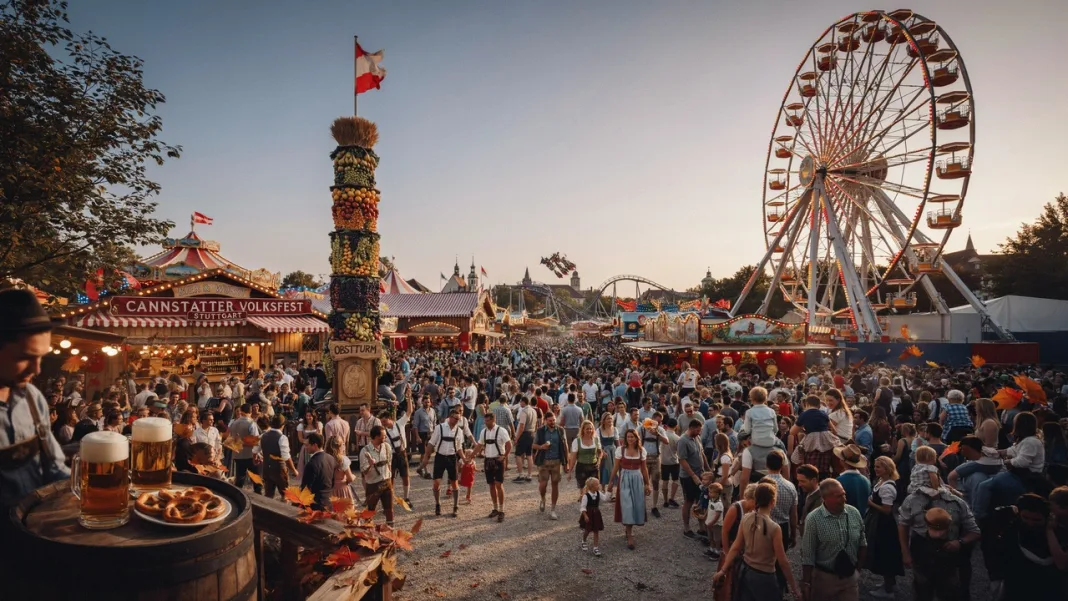

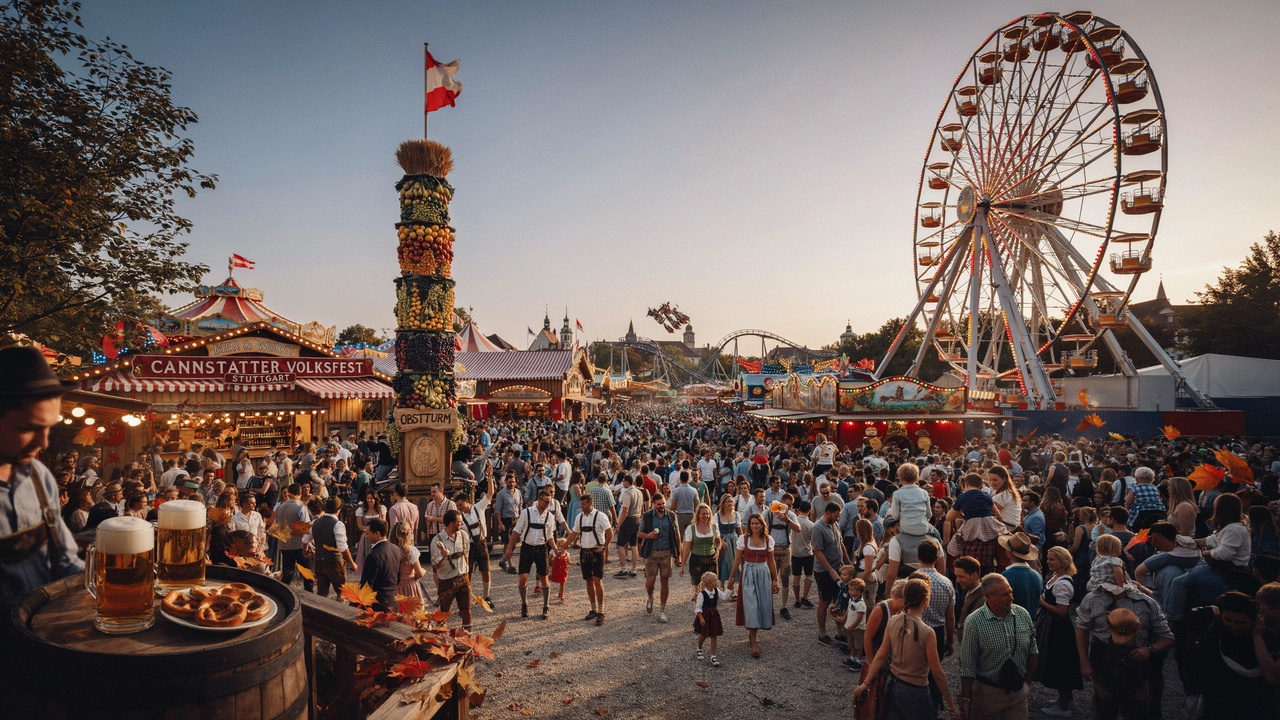
Germany’s 179th Cannstatter Volksfest concluded on 11 October 2026 after 17 days of celebrations at Stuttgart’s Cannstatter Wasen. Running from 25 September, the historic autumn festival brought together traditional Swabian culture, international visitors, regional breweries, entertainment and agricultural heritage. The event highlighted Stuttgart’s importance as a major European festival tourism destination, with its extensive fairground attractions supporting hotels, restaurants, public transport and local businesses. Previous editions attracted approximately 3 million to 4.6 million visitors annually between 2022 and 2025, according to the figures presented in the report. Similar German heritage celebrations in the United States, Brazil, Canada and Australia demonstrate the festival tradition’s international appeal. While the final verified attendance and economic impact figures for 2026 remain to be established, the event illustrates how cultural festivals can contribute to regional tourism, employment and destination visibility.
Where Does This Event Happen and Who Is Participating?
The festival takes place directly on the Cannstatter Wasen, a dedicated 25-hectare fairground situated in the Bad Cannstatt district of Stuttgart, integrated into the larger NeckarPark sports and leisure campus. Rather than operating as a closed, single-promoter arena, the fair acts as an open civic forum coordinating three distinct stakeholder tiers:
Advertisement
Advertisement
- Regional Breweries and Festival Marquees: Eight major festival tents and specialty alpine venues—led by historical Swabian breweries including Dinkelacker, Stuttgarter Hofbräu, and Schwaben Bräu, alongside landmark marquee operators like the SchwabenWelt, Grandls Hofbräuzelt, Göckelesmaier, and the Albdorf—provide seating for more than 35,000 guests simultaneously.
- Showmen, Fairground Rides, and Concessionaires: Coordinated via the Landeshauptstadt Stuttgart, approximately 300 licensed family businesses, midway ride engineers, and market traders operate across five linear kilometres of fairground frontages. Attractions span traditional nostalgic wooden carousels to record-holding mobile roller coasters and giant observation wheels.
- Civic Parades and Agricultural Fraternities: The festival’s signature Volksfest parade (Volksfestumzug) convenes more than 100 heritage delegations, 3,600 costumed marchers, equestrian dray teams, brass bands, and civic associations, drawing over 250,000 live spectators along the parade streets from Bad Cannstatt’s historic inner core to the Wasen.
How Has Attendance Tracked Over the Past Five Years?
Attendance telemetry tracked across municipal turnstiles, crowd sensors, and transport logs maintained by regional transit networks highlights robust post-pandemic volume:
| Year | Edition / Operating Framework | Fairground Footprint | Total Audited Attendance | Operational Catalysts & Dynamics |
| 2021 | Staging Canceled (Pandemic Hiatus) | Cannstatter Wasen | 0 (Wasenwirt pop-ups) | Official public folk festival paused due to state public-health directives. |
| 2022 | 175th Edition (Resumption) | Full 25-Hectare Fairground | ~3.0 million | Return of physical tents; initial post-lockdown regional demand surge. |
| 2023 | 176th Edition (Full Scale) | Full 25-Hectare Fairground | ~4.3 million | Uninhibited overseas arrivals; extended warm autumn dry spell. |
| 2024 | 177th Edition | Full 25-Hectare Fairground | ~4.6 million | Post-pandemic high; peak weekend transit utilization across VVS rail links. |
| 2025 | 178th Edition | Full 25-Hectare Fairground | ~4.2 million | Steady multi-week footfall despite intermittent rainy opening weekends. |
Which Other Countries Have This Same Event?
While the Cannstatter Volksfest holds proprietary heritage in Stuttgart, several sovereign destinations host structurally equivalent Germanic folk festivals and direct sister celebrations:
- United States (Cannstatter Volksfest, Philadelphia): Founded in 1873 by Swabian immigrants under the Cannstatter Volksfest-Verein, this three-day Labor Day festival remains one of the oldest continuing German-American heritage gatherings in North America. Parallel German-American harvest festivals also draw thousands in Chicago and New York.
- Brazil (Oktoberfest de Blumenau, Santa Catarina): Latin America’s largest German folk festival, celebrating 19th-century German emigrant traditions with traditional Bavarian-Swabian beer pavilions, brass bands, and parades.
- Canada (Kitchener-Waterloo Oktoberfest, Ontario): North America’s largest Germanic autumn festival, incorporating multi-day harvest markets, gala tents, and cultural parades.
- Australia (Oktoberfest in the Gardens, Perth, Melbourne, Sydney): Structured outdoor showground celebrations bringing authentic German marquee cultures, folk dress (Tracht), and culinary traditions to Southern Hemisphere audiences.
Which Region of Travellers Come to This Event Most?
Visitor flow analytics monitored in coordination with the German National Tourist Board (DZT) outline three clear inbound feeder pipelines:
- Domestic South German Commuter Core (Over 65% of Total Footfall): Day-trippers and corporate delegations commute via regional express rail and the S-Bahn network from Baden-Württemberg, Bavaria, and Hesse (notably Frankfurt, Karlsruhe, Mannheim, and Ulm).
- Western European Short-Haul Corridors (Switzerland, Austria, France, Benelux): Accounting for roughly 20% of foreign turnstile admissions, these travelers capitalize on high-speed rail links (ICE and TGV lines into Stuttgart Hauptbahnhof) and cross-border road networks for long-weekend city breaks.
- Transatlantic and Heritage Corridors (United States & Canada): Comprising over 10% of overseas attendees, this cohort includes active-duty U.S. military personnel and NATO families stationed across southwestern Germany (such as USAG Stuttgart), alongside North American heritage tourists and members of overseas Swabian societies.
Which Country Benefits Most and How Are Tourism and the Economy Impacted?
Germany—and explicitly the State of Baden-Württemberg and the City of Stuttgart—stands as the primary macroeconomic beneficiary:
Advertisement
Advertisement
┌────────────────────────────────────────────────────────────────────────┐
│                   MUNICIPAL ECONOMIC & TOURISM FOOTPRINT               │
├───────────────────────────────────┬────────────────────────────────────┤
│       DIRECT HOSPITALITY          │       LABOUR & REGIONAL SUPPLY     │
├───────────────────────────────────┼────────────────────────────────────┤
│ • €300M–€350M estimated direct    │ • Employment retention: over       │
│   and indirect regional turnover. │   17,000 direct & indirect jobs.   │
│                                   │                                    │
│ • Citywide hotel compression:     │ • Local agricultural supply:       │
│   88%–94% occupancy across        │   peak sales for regional grain,   │
│   Stuttgart and Esslingen hotels. │   butchers, and Swabian bakeries.  │
└───────────────────────────────────┴────────────────────────────────────┘
- Direct Economic Multiplier: According to regional economic reviews from the Statistisches Landesamt Baden-Württemberg, major folk festivals inject substantial capital into metropolitan commerce. The Cannstatter Volksfest generates an estimated €300 million to €350 million in direct and indirect consumer transactions across hospitality, ground transport, retail, and festival concessions.
- Employment Generation: The event sustains roughly 4,500 direct jobs on the Wasen fairgrounds—across security, service personnel, and technical operations—while an estimated 17,000 jobs throughout the wider regional supply chain (bakers, meat producers, logistics operators, and transport staff) depend directly on festival procurement.
- Hospitality Occupancy and ADR Compression: Hotels across Stuttgart Central, Bad Cannstatt, and neighboring Esslingen achieve occupancy rates between 88% and 94% during peak festival weekends, significantly raising Average Daily Rates (ADR) during the early-autumn travel corridor.
- Public Transit Integration: Over 60% of attendees arrive via public transit. Coordinated ticketing between event operators and local transit entities enables millions of journeys across the Stuttgart Stadtbahn and S-Bahn without inducing urban gridlock.
Stuttgart’s Historic Festival Reinforces Germany’s Position in Global Cultural Tourism
The conclusion of the 179th Cannstatter Volksfest marks another important chapter in Stuttgart’s long-standing cultural heritage and Germany’s autumn festival tourism calendar. From its origins as an agricultural celebration in 1818 to its modern role as a major international gathering, the festival demonstrates how traditional events can support contemporary tourism economies. Its combination of regional gastronomy, historic parades, entertainment and cultural experiences provides opportunities for domestic and international travellers to discover Baden-Württemberg beyond conventional sightseeing.
The festival’s influence also extends beyond Stuttgart. Similar celebrations in Brazil, Canada, Australia and the United States reflect the worldwide appeal of German cultural traditions and their potential to encourage heritage tourism. For Stuttgart, the continuing challenge is to balance high visitor volumes with transport efficiency, accommodation capacity, environmental responsibility and the preservation of local identity.
As Germany prepares for future editions, Cannstatter Volksfest remains an important example of how established cultural celebrations can strengthen destination branding, encourage visitor spending and connect regional traditions with international audiences.