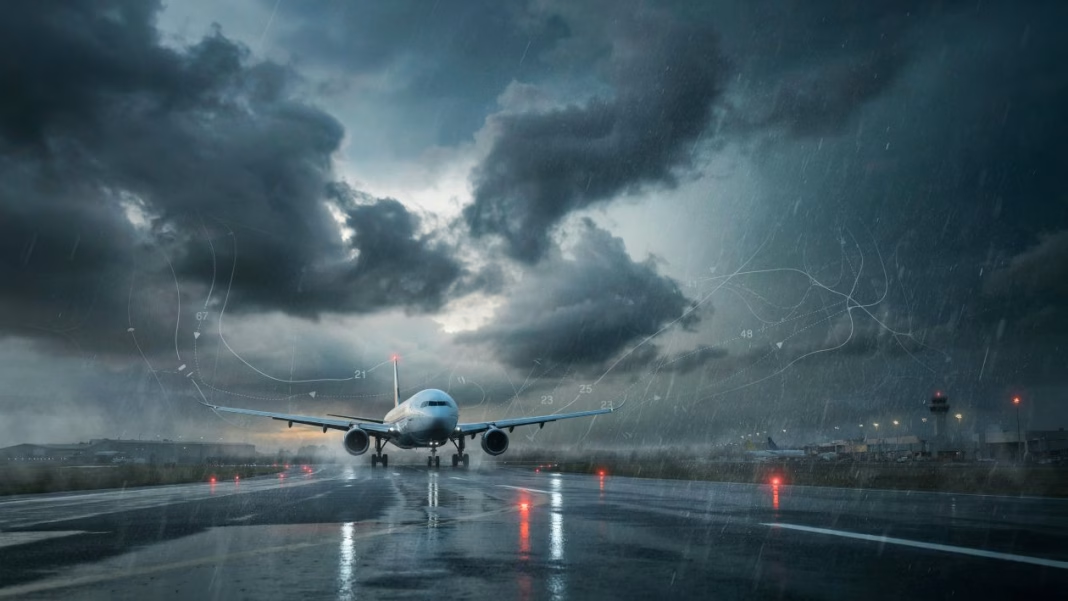


The recent Jet2 Boeing 737 runway excursion Birmingham incident underscores severe winter aviation risks across the United Kingdom. Flight LS1310 arrived directly from Venice, Italy. Pilots battled fierce winds during this dramatic event. Storm Boelo created unprecedented operational challenges for British aviation. This report details the technical and human impact.
Storm Boelo Batters Birmingham Airport
The UK Met Office named Storm Boelo recently. It became the second named storm this season. The system brought highly unsettled weather across northern England. Aviation networks faced immediate and severe disruptions globally. Birmingham Airport suffered relentless crosswinds throughout the afternoon. Operations staff closely monitored the deteriorating meteorological conditions.
Advertisement
Advertisement
Met Office Weather Data Summary
| Metric | Recorded Value | Aviation Impact |
| Wind Direction | 280 Degrees | Severe left-side crosswind |
| Sustained Speed | 19 Knots | High pilot workload |
| Peak Gusts | 32 Knots | Aircraft instability |
| Visibility | Reduced | Approach complications |
Such extreme weather inevitably forces delayed flight schedules. Automated weather stations recorded these dangerous conditions continuously.
Flight LS1310 Approach Dynamics
The Boeing 737-800 established its final approach path. Pilots targeted Birmingham Airport Runway 33 for landing. This runway sits in a strict northwest orientation. The prevailing wind struck from 280 degrees laterally. This angle created a formidable 50-degree crosswind attack.
Crosswind Landing Mechanics
Flight crews must execute precise aerodynamic manoeuvres here. Standard techniques include the traditional crab landing method. The wing-low sideslip is another vital pilot technique. These inputs keep the aircraft aligned before touchdown.
Advertisement
Advertisement
Crosswind Component Calculations
- Sustained Crosswind: Approximately 15 knots laterally.
- Gusting Crosswind: Approaching 25 knots laterally.
- Aircraft Limit: Nearing maximum demonstrated crosswind capabilities.
These figures illustrate the extreme difficulty of this landing. Pilots managed constant directional shifts during the descent.
The Touchdown and Excursion
At precisely 14:19 UTC, the aircraft made contact. The Boeing 737-800 touched down on the paved runway. The transition to hydrodynamic ground rolling began immediately. This phase transfers weight from wings to wheels.
Nose Swing and Recovery
Suddenly, the aircraft nose swung sharply to the left. The left landing gear departed the paved runway surface. It tracked briefly onto the adjacent soft grass. The flight crew reacted with immediate corrective inputs. They utilised aggressive rudder controls and asymmetric braking. Nose-wheel steering helped regain vital directional stability rapidly. They successfully steered the aircraft back onto the pavement.
Official Statements and Post-Flight
The aircraft decelerated safely to a normal taxi speed. It did not require emergency towing equipment. The jet taxied independently to its designated terminal stand. All passengers and crew disembarked normally without reported injuries.
Jet2 and Airport Operations
A Jet2 spokesperson confirmed the flight details promptly. They attributed the operational anomaly entirely to Storm Boelo. The airline emphasised that everyone disembarked completely safely. Airport operations staff immediately closed the runway for inspection. They scanned for hazardous mud or broken aircraft parts. Foreign Object Debris poses massive risks to subsequent traffic. Operations resumed only after safety teams cleared the surface.
Advertisement
Advertisement
Air Accidents Investigation Branch Role
The Air Accidents Investigation Branch oversees these critical incidents. A runway excursion triggers specific aviation safety protocols. The AAIB examines mechanical and aerodynamic factors meticulously.
Regulatory Safety Frameworks
Investigators will analyse the exact timing of the de-crab. They will review when thrust reversers were deployed. Localised wind shear at the touchdown zone remains suspect. The UK Civil Aviation Authority will review these findings. They aim to prevent future occurrences under similar conditions. This successful recovery demonstrates effective pilot crisis management.
Passenger Rights and Compensation
This incident raises urgent questions regarding passenger consumer rights. The Civil Aviation Authority strictly regulates UK airline compensation.
CAA Guidelines on Weather
Under UK261 regulations, compensation depends on delay causes. Severe weather constitutes an “extraordinary circumstance” legally. Consequently, airlines are exempt from paying fixed financial compensation. However, airlines retain a strict legal “duty of care”.
Airline Duty of Care Requirements
| Passenger Entitlement | Trigger Condition | Airline Responsibility |
| Meals and Refreshments | Delays over 2 hours | Vouchers provided |
| Communications | Immediate disruption | Two phone calls |
| Hotel Accommodation | Overnight delays | Fully funded rooms |
| Ground Transport | Between airport and hotel | Fully funded transit |
Passengers must keep all receipts for subsequent reimbursement claims.
Advertisement
Advertisement
Industry Impact and Disruptions
Storm Boelo caused significant cascading delays across the network. Birmingham Airport experienced severe inbound and outbound bottlenecks.
Accommodation and Transit Bottlenecks
Airlines scrambled to find local hotel rooms for passengers. Regional transport infrastructure strained under the sudden load. Many travellers faced hours waiting for shuttle buses. Customer service desks became overwhelmed by rebooking requests.
Legal and Immigration Repercussions
International flight disruptions create complex border force challenges.
Visa Overstay Liabilities
Non-UK citizens risk visa overstays during prolonged airport closures. The Home Office generally grants leniency during natural disasters. Passengers must document their delayed flight status meticulously. Official airline letters serve as crucial immigration evidence.
Commercial Consequences for Tourism
The UK and Italy maintain a lucrative tourism corridor. Disruptions damage consumer confidence in winter travel bookings.
UK and Italy Corridors
Venice relies heavily on British weekend city-break tourists. Flight unreliability threatens these vital international revenue streams. Travel agents face immense pressure to refund packaged holidays. Regional tourism boards must reassure anxious prospective visitors.
Advertisement
Advertisement
Enhancing Future Aviation Resilience
Aviation stakeholders continually seek improved severe weather resilience.
Technological Advancements in Navigation
Modern aircraft utilise sophisticated wind shear detection systems. Upgraded ground-based radar provides granular meteorological data instantly. AI-powered revenue management systems rebook passengers faster today. These technologies mitigate the worst impacts of extreme weather.
Final Takeaways on Safety
Aviation remains the safest mode of modern global transport. The Jet2 Boeing 737 runway excursion Birmingham proves this. Highly trained pilots successfully managed a terrifying weather anomaly. The aircraft recovered safely without any passenger injuries. Safety frameworks functioned exactly as regulatory bodies intended.