
Microfinance industry body Microfinance Institutions Network (MFIN) will issue guidelines in the next 10-15 days for lenders to move towards using Permanent Account Number (PAN) and Central Know Your Customer (CKYC) records to identify borrowers, with an aspirational target of completing the transition within one-and-a-half years.
The move aims to strengthen credit underwriting by helping lenders identify borrowers’ exposure across microfinance and retail loans, Alok Misra, chief executive officer of MFIN, said at the Business Standard BFSI Summit 2026 on Monday.
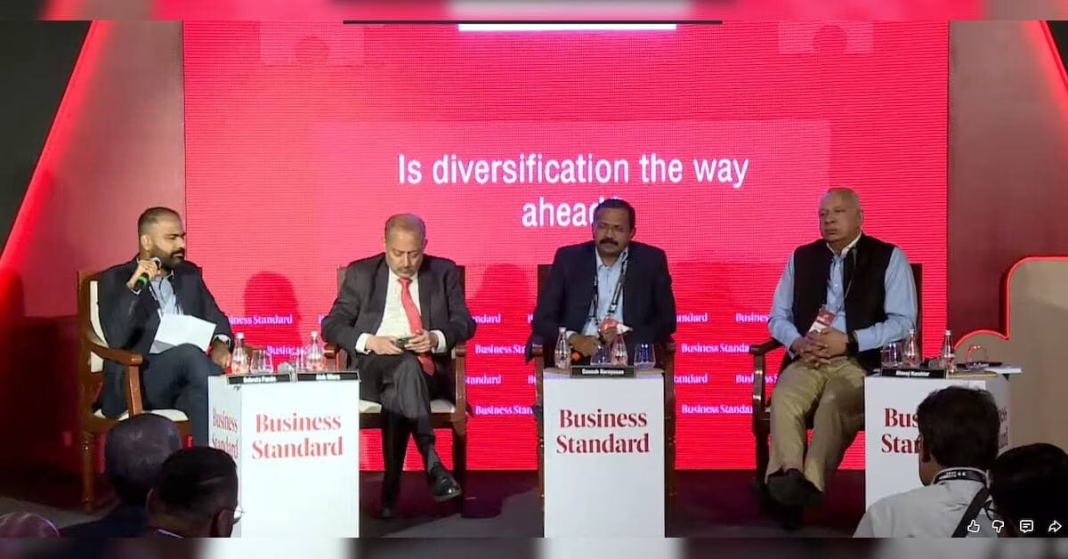
Misra was part of a panel discussion on ‘Is diversification the way ahead?’, alongside Ganesh Narayanan, MD and CEO of CreditAccess Grameen, and Manoj Nambiar, MD of Arohan Financial Services.
“In 10-15 days, we will be coming out with the guidelines. We are taking an aspirational target that, along with voter ID, which is already there, the industry has to move towards PAN and CKYC within one-and-a-half years. That will make underwriting more robust because, in retail, 100 per cent of loans are seeded with PAN. So you can find retail linkages also,” Misra said.
He said some borrowers had multiple voter IDs, making it difficult for lenders to establish their identities and assess their total indebtedness. The Election Commission of India’s website also lacks an application programming interface (API) through which lenders can link records directly. CKYC and the National Securities Depository Ltd, by contrast, have APIs.
The proposed changes follow a period of stress in the sector, during which rapid lending growth exposed weaknesses in underwriting and collections. According to Nambiar, the industry’s outstanding credit had expanded from around Rs 2.5 trillion in March 2020 to Rs 4.5 trillion within two years following the pandemic.
“The demand was so strong that a lot of institutions felt this was the right time to gain market share and grow. Unfortunately, while doing that, were they ready from a credit-underwriting perspective, whether ready from a collections and recovery perspective, essentially is what has caused the issue,” Nambiar said.
MFIN subsequently prescribed minimum underwriting standards, including a maximum of three lenders per borrower, total indebtedness of no more than Rs 2 lakh across microfinance institutions and restrictions on lending to borrowers who were 60 days or more delinquent. Nambiar said the industry had seen an improvement in collections from September last year following the implementation of these standards.
According to Narayanan, the recovery was also visible in business performance, with lenders filling some of the gap left by banks that had pulled back from the segment.
“As a company, we’ve had two very good strong quarters so far. We’ve seen a certain amount of pullback from banks, which is getting filled up by MFIs. Over the next few quarters, we should see how things evolve. But we’ve definitely seen the bottom of the crisis that happened in the last two financial years, but it’s come up quite strongly now,” Narayanan said.
Narayanan said diversification was becoming important as borrowers’ needs evolved. Microfinance institutions often help women with little or no credit history enter the formal credit system, but as their businesses grow, they seek individual loans and other products.
Nambiar said the RBI’s 60:40 framework had created greater room for microfinance institutions to develop secured-lending businesses, including loans against property, vehicle loans and gold loans, reducing their dependence on unsecured lending.
External risks remain. Narayanan said some stress had emerged in pockets of central Maharashtra, although the industry had not seen an impact elsewhere, including Karnataka. The challenge for lenders will be to sustain the recovery while maintaining underwriting discipline and adapting to borrowers’ changing credit needs.