
Lake Garda and More Emerge as Italian Summer Hot Spots Worth Visiting in Autumn Instead because the cooler season brings a different side of Italy’s best-known destinations into focus. Lake Garda offers mountain scenery, historic towns, olive culture and food-and-wine experiences, while the Amalfi Coast shifts towards vineyards, chestnut woods, villages and countryside. Sorrento adds autumn harvest traditions, local products and scenic walking routes, and Tuscany enters its white-truffle season alongside wine, chestnuts and village festivals. Italy’s national tourism data also shows strong autumn demand, with October accounting for 46% of overnight stays recorded during the fourth quarter of 2025. Together, these Summer Hot Spots give travellers compelling reasons to visit in Autumn Instead.
Why can Lake Garda become more appealing after the summer peak?
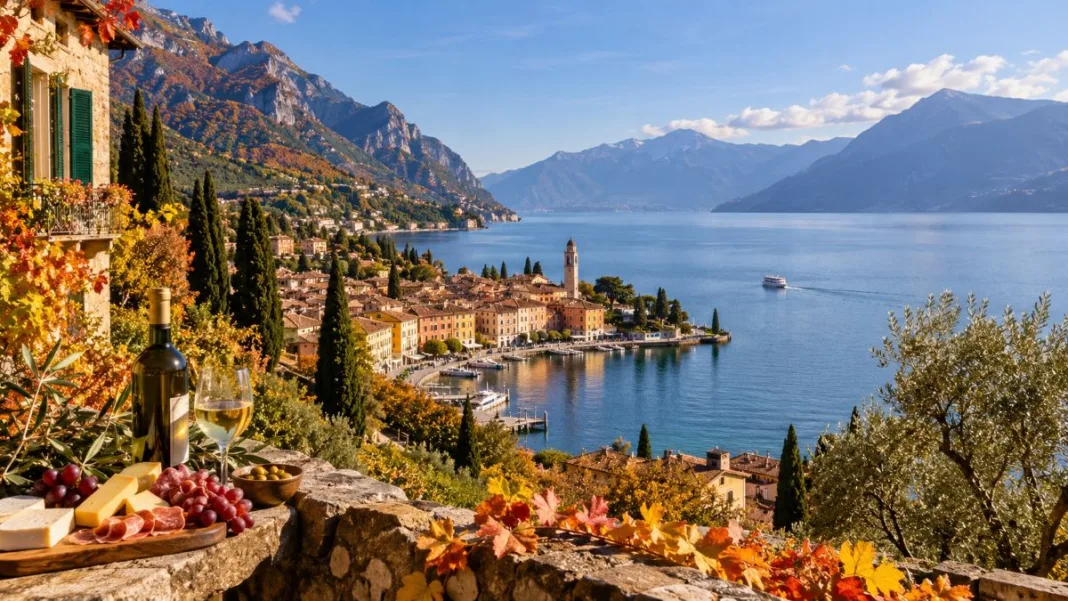
Lake Garda offers a useful example of how autumn can change a destination without changing its identity. The lake stretches across the provinces of Brescia, Verona and Trento, creating a mix of mountains, historic settlements, water views and food-and-wine traditions.
Advertisement
Advertisement
The numbers underline its importance. The Veneto regional government recorded 14.795 million overnight stays in the Lake Garda destination area during 2025, making it the region’s most visited destination area. Veneto as a whole registered 22.3 million tourist arrivals and 74.2 million overnight stays that year. Several important Garda municipalities also recorded foreign visitor shares above 70%.
For autumn visitors, the attraction shifts towards olive harvesting, villages, walking, wine and local food. Official tourism information highlights the development of olive and vine cultivation around the lake, including Garda protected extra-virgin olive oil.
Advertisement
Advertisement
Lake Garda at a glance
| Indicator | Official information |
|---|---|
| Lake Garda overnight stays in Veneto destination area, 2025 | 14.795 million |
| Veneto tourist arrivals, 2025 | 22.3 million |
| Veneto overnight stays, 2025 | 74.2 million |
| Foreign visitor share in several major Garda municipalities | More than 70% |
For tourists, the key advantage is variety. Autumn can encourage visitors to move beyond the lakeshore and discover the agricultural and cultural landscape surrounding it.
Why does the Amalfi Coast reveal a different personality in autumn?
The Amalfi Coast is commonly associated with summer beaches, boats and dramatic coastal scenery. Yet the official Italian tourism portal presents the area as a much broader cultural landscape covering 16 municipalities, including Positano, Amalfi, Vietri sul Mare and inland mountain communities.
Advertisement
Advertisement
Autumn brings greater attention to the countryside. Official tourism material highlights vineyards, chestnut woods, agricultural traditions, historic villages and local food. Tramonti provides a particularly distinctive base, with 13 mountain hamlets set among vineyards, chestnut forests and terraces. Scala, another elevated village, enters its chestnut season in October.
This creates a different travel rhythm from the height of summer. Travellers can focus on walking, food, village life and landscapes shaped by farming.
Why the geography matters
The coast’s steep cliffs, narrow roads and limited beaches can make peak-season travel demanding. In autumn, those same features can become part of a slower landscape-focused experience. Official tourism information places gastronomy, citrus groves, vineyards, olive trees, cliffs and historic villages at the centre of the destination.
The result is an Amalfi Coast experience based less on simply being beside the sea and more on understanding the landscape behind the shoreline.
Why is Sorrento especially attractive for an autumn food trip?
Sorrento offers a strong connection between travel and local production. The official Italia.it itinerary proposes a two-day, approximately 40-kilometre route through Vico Equense, Sorrento, Massa Lubrense and Punta Campanella. The route combines food, wine, art and nature.
The peninsula is known for Sorrento IGP lemons, walnuts, olive oil, PDO cheeses and DOC Penisola Sorrentina wines. Autumn adds another layer because October is associated with the traditional walnut harvest. Official tourism material also identifies 11 November, St Martin’s Day, with the traditional opening of the year’s new wine.
Advertisement
Advertisement
Sorrento’s autumn travel facts
| Feature | Official information |
|---|---|
| Food-and-wine route | Almost 40 km |
| Suggested duration | 2 days |
| Number of stages | 4 |
| Key products | Lemons, walnuts, cheeses, olive oil and wine |
| Major natural stop | Punta Campanella |
Punta Campanella adds a walking and landscape component, with views towards Capri and the Tyrrhenian Sea.
For travellers, this means autumn can connect harvests, food, walking, nature and archaeology without requiring a traditional peak-summer itinerary.
Why does Tuscany become a major autumn destination for food lovers?
Tuscany’s autumn strength comes from its produce calendar, particularly the white truffle.
Official Visit Tuscany material identifies San Miniato as one of Europe’s important white-truffle areas. The white-truffle season runs approximately from September to December, placing the destination firmly within the autumn travel window.
The annual National White Truffle Market takes place across the second, third and fourth weekends of November. San Miniato also sits between Florence and Pisa and along the historic Via Francigena.
The event has substantial visitor appeal. The Municipality of San Miniato estimates annual attendance at about 60,000 to 100,000 people.
Advertisement
Advertisement
San Miniato autumn facts
| Feature | Official information |
|---|---|
| White-truffle season | September–December |
| National White Truffle Market | Second, third and fourth weekends of November |
| Annual visitors | About 60,000–100,000 |
| Location | Between Florence and Pisa |
| Historic route | Via Francigena |
San Miniato is also known for a remarkable historical truffle find. Local government tourism material records a 2.520-kilogram white truffle discovered in 1954, described in the source material as the world’s largest white truffle.
Tuscany’s wider autumn calendar also includes chestnuts, wine and seasonal produce, giving visitors several reasons to travel beyond the better-known summer season.
What do Lake Garda, the Amalfi Coast, Sorrento and Tuscany have in common?
Although the four destinations are geographically different, they share a clear autumn pattern. Their appeal becomes increasingly experience-led once summer fades.
| Destination | Autumn focus | Key official fact |
|---|---|---|
| Lake Garda | Olive culture, wine, villages and walking | 14.795m Veneto-side overnight stays in 2025 |
| Amalfi Coast | Chestnuts, vineyards, agriculture and villages | 16 municipalities |
| Sorrento | Walnuts, wine, lemons and walking | ~40-km food-and-wine route |
| Tuscany | White truffles, wine and seasonal festivals | 60,000–100,000 annual San Miniato market visitors |
The wider national figures reinforce the importance of the season. According to Italy’s national statistics institute, foreign overnight stays represented 56.5% of all nights in the fourth quarter of 2025, while total overnight stays increased 2.9% year on year. October alone accounted for 46% of the quarter’s overnight stays.
That suggests autumn should not be treated simply as a quieter version of summer. It is an important tourism period in its own right.
What should travellers consider before replacing a summer trip with an autumn visit?
The key advantage is not simply the expectation of fewer visitors. It is the change in the travel experience.
Advertisement
Advertisement
Lake Garda becomes more closely linked with olive production, walking and food. The Amalfi Coast opens a stronger connection with vineyards, mountain hamlets and chestnut country. Sorrento brings harvest traditions and food routes to the foreground. Tuscany offers truffle season and village festivals.
Official Italia.it material explicitly promotes autumn experiences centred on vineyards, local products, historic villages, parks, countryside and food-and-wine tourism, particularly between September and December.
Travellers should nevertheless check local opening dates and seasonal transport before departure. Autumn services can differ from summer timetables, while weather can affect hiking, ferries and rural activities.
The central message is simple: these famous summer destinations do not disappear after August. Their tourism offer changes.
Comment From Anup Keshan, Founder and Editor-in-Chief of Travel And Tour World
“Autumn gives travellers a compelling opportunity to experience Italy through its food, landscapes, villages and traditions rather than focusing only on the summer coastline. Lake Garda, the Amalfi Coast, Sorrento and Tuscany each offer a different seasonal story, from olive production and chestnut landscapes to harvests, vineyards and the white-truffle calendar. This is valuable for travellers because the journey becomes more connected with local culture and regional life. It is also valuable for destinations because autumn tourism can spread demand beyond the busiest summer period. Italy’s official tourism information and national statistics clearly demonstrate that autumn is already an important part of the country’s visitor economy.”
Conclusion: Why are these four Italian summer hotspots worth visiting in autumn?
Four Italian summer hot spots are worth visiting in autumn because the season reveals experiences that peak summer can easily overshadow. The cause is seasonal change. Harvests begin, rural landscapes take centre stage and cultural calendars become richer. The answer is a more varied style of travel built around food, walking, villages, wine and heritage. The reason is also practical: Italy’s official statistics show strong autumn tourism, while October generated 46% of overnight stays in the final quarter of 2025. Lake Garda, the Amalfi Coast, Sorrento and Tuscany therefore offer more than a quieter holiday. They provide a different way to understand some of Italy’s most celebrated destinations.