
Support for nonpartisan judicial elections is being put to the test in Montana, the latest location in a nationwide battle for bench seats that can determine the fate of consequential state laws.
After a series of recent court rulings on abortion, voting and climate change displeased Republicans, GOP officials have tried to inject more partisanship into Montana’s officially nonpartisan Supreme Court elections. Citizen activists have responded by forcing a statewide vote on an amendment to enshrine nonpartisan judicial elections in the state constitution.
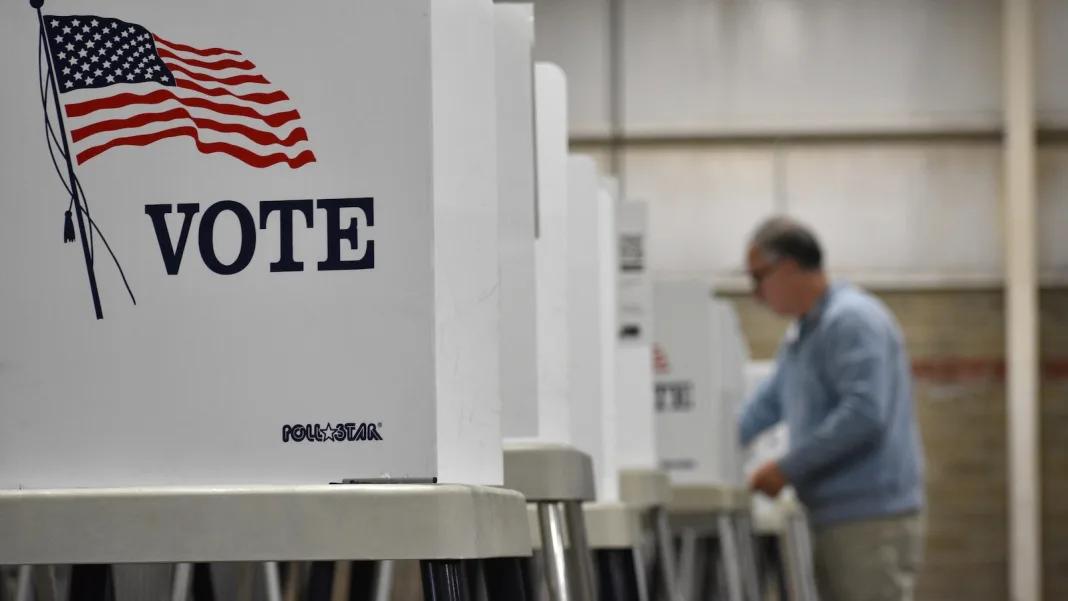
That’s resulted in an unusual November election. While voters are deciding whether to mandate nonpartisan elections, they also will be choosing between two officially nonpartisan candidates for the state Supreme Court — one backed by the Republican Party, the other by organized labor and a Democratic-aligned group.
The battle around the Montana Supreme Court ranks among the most intense of the roughly two dozen states holding November elections for their highest courts. Millions of dollars are being spent, continuing a recent trend in Montana and elsewhere and underscoring the elevated importance of top state judicial offices.
Last year, a record amount over $100 million was spent on a pivotal Wisconsin Supreme Court race that — while officially nonpartisan — kept liberals in narrow control of the court. Since gaining control in 2023, the liberal court majority has struck down an abortion ban law and overturned state legislative districts that benefited Republicans, putting partisan control of both chambers in play in this year’s election.
No state Supreme Court contest is expected to cost even close to that much this year, because no single seat is perceived as that essential to control a court. But interest groups nonetheless are focusing on court races in several states with a goal of positioning themselves for bigger races in 2028.
“State supreme courts are really, really important — increasingly important — arbiters of rights and liberties,” said Deirdre Schifeling, chief political and advocacy officer for the American Civil Liberties Union, which is spending $5.5 million on Supreme Court races in Michigan, Montana and North Carolina.
The organization said it also spent over $1 million on Supreme Court races earlier this year in Georgia and Wisconsin.
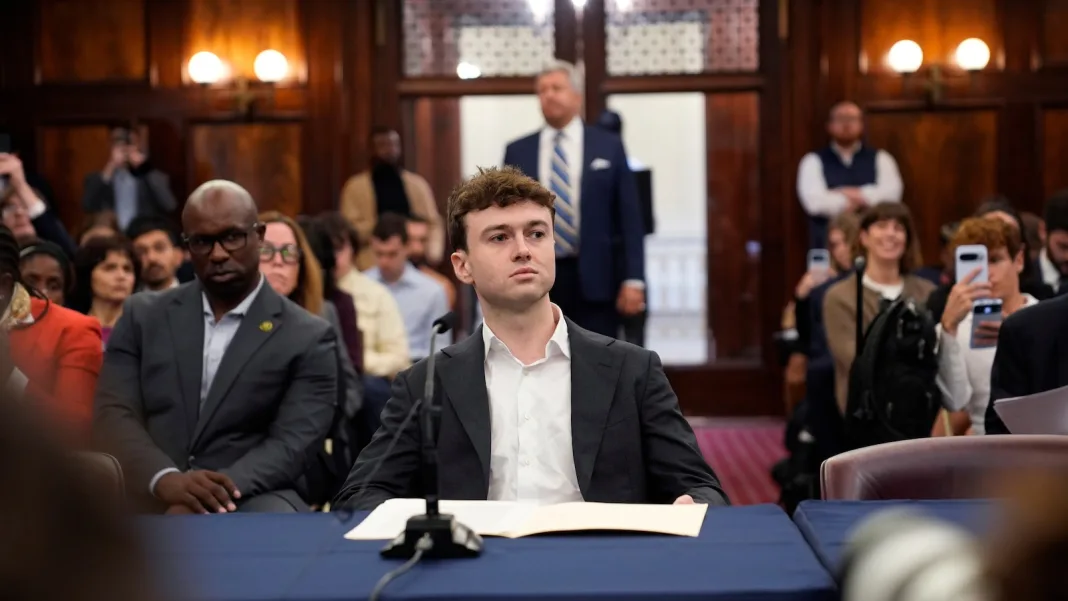
Montana’s Supreme Court race features Amy Eddy and Dan Wilson, both currently district court judges in Flathead County. Eddy edged Wilson by fewer than 8,000 votes out of around 270,000 cast in a June primary for the state Supreme Court. But because they were the only candidates, both advanced to a rematch in the general election.
In recent years, the Montana Supreme Court struck down laws restricting abortion and limiting voter registration on Election Day. It also upheld a landmark ruling that the state was violating residents’ constitutional rights to a clean environment by permitting oil, gas and coal projects without regard for global warming.
Eddy, serving as a fill-in Supreme Court judge, was part of the majority that ruled the state’s abortion laws violated individual privacy rights in the state constitution.
Frustrated Republicans, who hold legislative majorities, have proposed numerous bills aimed at the judiciary. One new law effective for this year’s election allows political parties to contribute money to judicial candidates. Legislation to require partisan judicial elections passed the Senate but failed in the House.
Citizen activists responded to that attempt by gathering petition signatures to place an amendment on the November ballot that would enshrine nonpartisan judicial elections in the state constitution. The ACLU has contributed $2.1 million to that campaign, according to finance reports filed at the end of September.
The ACLU also has mailed flyers touting Eddy’s support for abortion rights and her decision not to accept money from political parties. The Democratic-aligned group Defend Our Courts also has backed Eddy. Wilson, meanwhile, has received funding from various Republican Party committees and spoke earlier this year at a GOP event.
Eddy said accepting money from political parties “undermines the public’s trust that the judicial branch can be impartial.”
Wilson, noting Eddy’s donations from lawyers, said “that’s more dangerous and corrosive to the objectivity of judges.”
The focus on Montana’s high court comes after similar campaigns in other states.
In August, Kansas voters overwhelmingly defeated a Republican-backed proposal to elect Supreme Court judges instead of appointing them.
In North Carolina, the Republican-led state Legislature passed a law restoring partisan elections beginning in 2018, after Democratic-leaning judges won a majority on the state’s officially nonpartisan Supreme Court. That change paved the way for Republicans to reclaim control of the court in the 2022 elections. And that quickly led to more changes. A few months later, the new conservative majority reversed its predecessors by upholding a voter photo identification law and tossing out a ruling against a Republican-drawn congressional map.
In Ohio, the Republican-led Legislature passed a law in 2021 requiring partisan labels for Supreme Court judges on general election ballots. Since then, Republicans have expanded their narrow court majority into a dominant one.
Both the Ohio and North Carolina courts remain targets for the progressive group Alliance for Justice Action, which hopes to build momentum toward one day flipping control of those courts.
“It has been a slow process of losing judicial support in those spaces. It will be a slow process to regain it,” said Tish Gotell Faulks, the group’s state courts director.
Democrats are defending one Supreme Court seat in North Carolina this year, and each party is defending a seat in Ohio. Montana’s race will replace a retiring judge who has sometimes been a swing vote.
“What happens in this year’s races will determine how likely it is that the ideology of the court flips in 2028, when that is in fact at stake,” said Douglas Keith, deputy director of the judiciary program at the Brennan Center for Justice.