

He rose to superstardom as India rose through the global economic rankings. Darr, Anjaam, Yes Boss, Duplicate, many of his subsequent hits were not-so-typical Hindi films. In Darr and Anjam, he played the bad guy to startlingly good effect. In Baazigar, he was a murderer who walked away with the audience’s love.
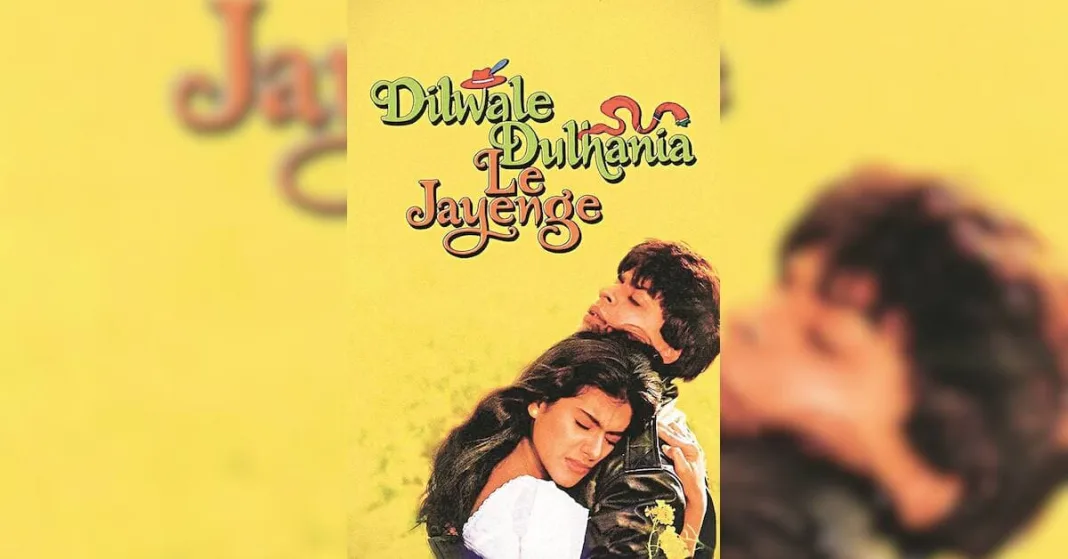
However, it is his romance and family dramas — Dilwale Dulhania Le Jayenge, Kuch Kuch Hota Hai, and many others — that prised open the overseas market for India. For over a decade ending somewhere in 2012, his movies brought in more than half of all the overseas revenues that Indian cinema made.
The trajectory of Khan’s career runs parallel with (and lords over) everything the Indian movie business has experienced in these 35 years — the 1,000-seater single screens, satellite TV, multiplexes and now streaming.
In 1990, when Khan was making his way up, another young man from Delhi was trying to get the local government to deregulate movie ticket prices and reduce the 60 per cent entertainment tax on them. Ajay Bijli, 23 then, was renovating the family owned Priya, a single-screen in South Delhi. He reckoned a reduction in taxes would help the business that was being wrecked by video piracy.
In 1991, the Delhi government allowed 80 per cent of ticket prices to be decontrolled but kept a ceiling of Rs 5 per ticket on 20 per cent of the 1,000 seats. When Priya and other single screens started doing well, talk turned to multiplexes. These were not possible without a foreign partner because India didn’t know how to do multiplexes. But how do you get a foreign partner without foreign direct investment (FDI)?
“We engaged Ernst & Young (now EY) and another firm called DPNC to liaise with the government that FDI should be allowed. In 1995, we were the first ones to get special approval to get (the Australian theatre chain) Village Roadshow to invest 40 per cent in the company. The majority had to be with the Indian partner,” says Bijli.
What he remembers clearly is, “There was a huge mindset of openness. Whether you’re from exhibition or any other sector, government bodies all over the country were very receptive to change. There was this whole thing that, yes, if it’s happening in the cinema industry abroad, this should be done in India too — ticket prices should be decontrolled, the number of shows should be made flexible, building bylaws should be updated.”
In 1997, PVR Anupam, India’s first multiplex with four screens, opened in Delhi. The very next year, in mid-1998 came an announcement granting industry status to cinema. It was notified in 2000.
From thereon came a series of changes in quick succession. FICCI (Federation of Indian Chambers of Commerce and Industry) FRAMES, an annual conference on the business of media and entertainment was born. The Indian Banks’ Association (IBA) announced norms for film financing. There were several initial public offerings in 2000 — Mukta Arts and Adlabs Films (both of which merged eventually to form Mukta Adlabs Digital Exhibition), and Balaji Telefilms. Some states, beginning with Maharashtra, offered tax holidays for the building of multiplexes, leading to a boom. Hundred per cent FDI was allowed in films in 2002.
The bottom line — there was a positive air around the business of cinema as Indian entered the millennium.
The multiplexing of movies
Shashi Kapoor was known for his support for slice-of-life, real stories. Shyam Benegal’s Kalyug (1981) and Govind Nihalani’s Vijeta (1982) are just two of the outstanding films he produced. For Ramesh Sharma’s political thriller New Delhi Times (1986), he won the National Award for best actor. These are some of the films Bijli remembers loving as a kid.
“But they never used to get played properly. They were not art films. They were just great films made on a smaller budget and meant for a certain audience. I was very happy when suddenly you could have the capacity and auditoriums to fill up these movies as well,” says he.
The first set of people to be excited about multiplexes were Hollywood studios.
“They said if you have 200-300-seater cinemas then we can import those smaller films we were not showing in India. Earlier, they were only importing blockbusters,” says Bijli. The thousand-seaters demanded mass movies like Tezaab (1988), Ram Lakhan (1989) or Jurassic Park (1994). Even those did not work as well once satellite TV joined video piracy by the mid-nineties.
TV, however, helped in creating an alternative revenue stream that sustained the business while the number of people going to the cinemas kept falling. Add the overseas market, which took off in the mid-nineties thanks to Sooraj Barjatya (Hum aapke Hain Kaun, 1994), Aditya Chopra (Dilwale Dulhania Le Jayenge, 1995), Yash Chopra (Dil To Pagal hai, 1997), and Karan Johar (Kabhi Khushi Kabhie Gham, 2001).
The diaspora in the US, Europe and other parts of the world was hungry for a connection with home in those days before video calling and foreign travel became easier. This opened up a new territory for Indian cinema.
By 2004, multiplexes started making a difference. The ability to show a variety of films — from Astitva (2000) and Iqbal (2005) to Kal Ho Naa Ho (2003) and Hum Tum (2004) — went up. The ability to increase or decrease shows, prices, meant you could maximise revenues for all kinds of films. An Om Shanti Om (2007) would get screens in larger, 300-400 seat audis, while a Peepli Live (2010) could keep running steadily in 100-150-seat ones.
The single biggest change multiplexes brought was transparency. Every ticket sold was computerised and accounted for. For very long, theatres had been under-declaring what they earned. There were entire regions in the Hindi belt where you did not get a ticket. Your hand was stamped and that was it. By 2004-05, as multiplexes started mushrooming, whatever a film earned was shared between trade and production firms. Minimum guarantee deals were out.
This money coming back into the system, a flexible screen ecosystem, the money from both satellite channels hungry for reach and from fresh-eyed investors and foreign studios (Fox Star, Sony, Warner, Disney) gave a whole new generation of filmmakers the chance to rise and shine. This included the likes of Vetrimaaran (Polladhavan), Vishal Bhardwaj (Omkara, Kaminey), Zoya Akhtar (Luck by Chance, Zindagi Na Milegi Dobara), Sriram Raghavan (Johnny Gaddaar, Badlapur), Farhan Akhtar (Dil Chahta Hai, Lakshya), among many others.
In the eighties and nineties. their movies would have met the same fate as Shashi Kapoor’s — relegated as arthouse fare with minimal screenings. But multiplexes gave them wings encouraging others to follow suit.
This gave birth to the ‘multiplex’ film. It was easier to make money on films that appealed just to urban India and overseas markets. Small town and rural India, where single screens dominated, fell off the release map for many films. At industry forums, the debate on multiplexes dominating creative began. Some of the biggest hits in small towns and single screens — like Sooraj Barjatya’s Vivah (2006) — barely registered in multiplexes. Sivaji: The Boss (2007) or 3 Idiots (2009) worked across the country, but most hits, in Hindi, were coming from cities with multiplex screens.
The other big markets — Tamil Nadu, Andhra Pradesh and Telangana — remained avowedly single-screen keeping the mass film alive. Their cinemas have remained immune to corporatisation and organised financing.
In Andhra Pradesh and Telangana, home to Telugu cinema, theatres are largely owned by the big producers making for a backward integration that keeps capital rolling. The films they make then remain the massy, popular ones like Pushpa (1 and 2) or RRR, which can fill up a 1,000-seater.
Kerala, on the other hand, has remained the capital for small yet popular films that make you think, like Drishyam, Kumbalangi Nights, Manjummel Boys, Vaazha or Kaathal: The Core, among many others. Not surprisingly, it finds traction on both streaming and in theatres today. In the past four years, Malayalam cinema has almost doubled its share of the national box-office.
The making of one movie market
This mainstreaming of all kinds of cinemas is one of the biggest changes streaming brought. It completes the process of making India into one cinema market. For years, Hindi and South Indian filmmakers tried their hand at pan-Indian films, but both storytellers and the audiences were not ready. Andha Kanoon (1983, Rajinikant and Amitabh Bachchan) or Sadma (1983, Kamal Haasan and Sridevi) were exceptions.
By the turn of the millennium, Hindi general entertainment channels started offering dubbed versions of Tamil and Telugu films, getting a large audience from the Hindi belt.
When streaming took off in 2016, Hindi, Tamil, Bengali, Telugu, Marathi, and other language films started finding an audience outside their core markets. In a few years, this has translated into box-office success, too, a la Telugu films. Indians are now sampling and enjoying movies from all parts of their country.
There is a lot of chatter about how streaming has destroyed the movie business, how it offers better content, etc. However, just like television, streaming is both an opportunity and a reason to up the game. Almost every hit show on streaming — Scam 1992, Pritam and Pedro or Mirzapur — comes from the same filmmakers or studios that make popular films. In a country that makes close to 1,700 films a year, quality will always be a matter of debate.
The fact remains that over two-third of the business’ revenues come from theatres. Streaming or any other media cannot make up for that. And that is why theatres remain paramount to the movie ecosystem.
In the story of its growth, it is infrastructure, not content or its quality that has let Indian cinema down. About 20 years back, over 240 million people went to a movie theatre regularly. From 12,000 in the early nineties, India is now down to less than 9,000 screens.
The “world’s largest film producing country” has just over six screens for every million of its people. Compared to, say, 109 in the US or 64 in China. There are entire swathes of India that haven’t had a screen for years. Even if all the 157 million cinema-going people saw Dhurandhar on the big screen, it was still watched by only 11 per cent of the country. Of the 19,000 pin codes in India, 16,350 have no screens at all. These are not pin codes with full internet penetration and high bandwidth guzzling devices aplenty. They are places that rely on basic smartphones to watch old movies on YouTube or take a DD Freedish connection because there is nothing else.
Whenever infrastructure has been incentivised — like multiplexes were — the making and of watching movies has improved and grown.
There is a lot of talk of Indian cinema’s soft power globally. But our presence in the global market is a blip compared to, say, Hollywood or South Korea. The low-hanging fruit is the home market. The Indian movie business has been at $1.5-2 billion level for years. More than 90 per cent of this money comes from Indians watching Indian films — in the theatre, on TV or on streaming.
However, the revenues or tickets sold (832 million) simply don’t behove a cinema that has over a hundred years withstood the might of Hollywood, when almost every other country’s cinema collapsed. It is only with 20,000-30,000 screens and a market size of $5-10 billion will the Indian movie business be big enough to have both the creative and distribution chops to take on the world.
Some efforts are underway. In West Bengal, local studio SVF’s decision to take over, lease, manage or own crumbling screens helped double its revenues and bring people back to the theatre. PVR launched it first of its smart screen in Muzaffarpur (Bihar) this week. The plan to do 1,000 smart screens in tier-II and III towns over the next five years.
There have been several requests to give infrastructure status to the building of theatres. There has been an appeal to bring all tickets, not just some, in the 5 per cent GST fold instead of 18 per cent. Much of this is doable if the will to change policy that existed in the decade after liberalisation, returns.