
Published on August 19, 2026 |
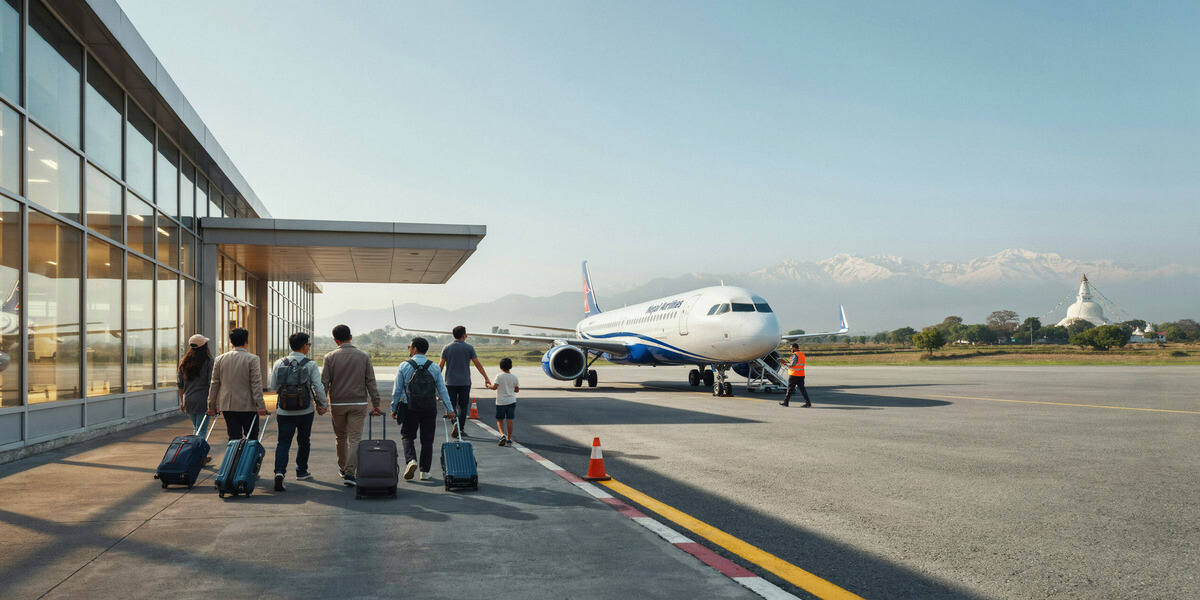
Image generated with Ai
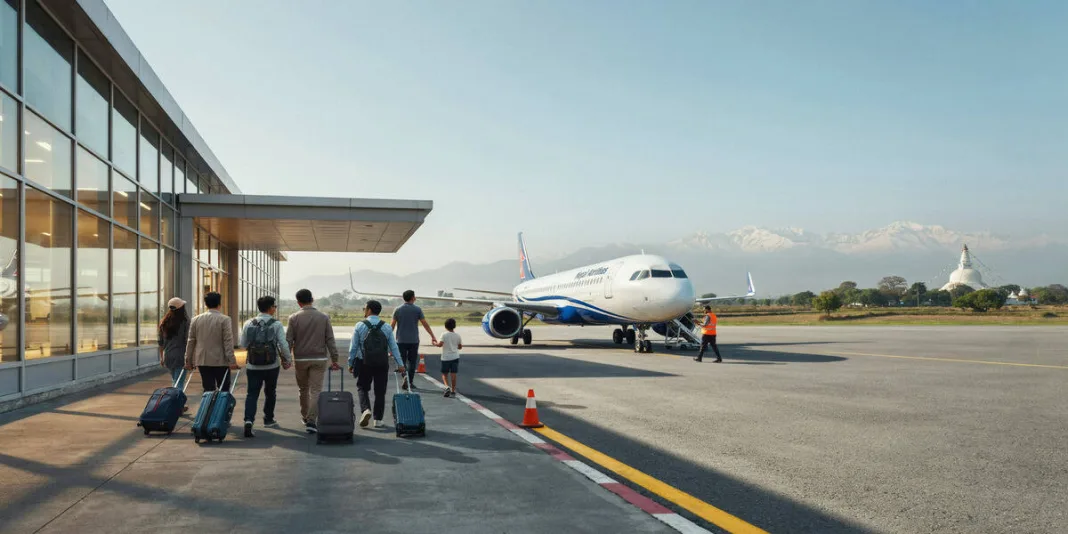
The proposed operating base by Nepal Airlines in Bhairahawa has the potential to change international accessibility and tourism in western Nepal by bringing Lumbini closer to more travelers. The new operating base could lead to the Gautam Buddha International Airport becoming a primary international airport while easing congestion on Kathmandu’s International Airport. Better accessibility for pilgrims, tourists, business travelers, and labor migrants has the potential to create more opportunities for the region. Bhairahawa is the likely the best pick for growth in aviation in accordance with the government of Nepal’s focus on expanding tourism beyond the existing traditional tourism areas.
Nepal Airlines’ plan to establish an operating base at Gautam Buddha International Airport in Bhairahawa could reshape western Nepal’s tourism future by creating a stronger aviation gateway, improving international access and unlocking the global potential of Lumbini. The move comes as Nepal works to increase the use of its second international airport and reduce dependence on Kathmandu for overseas travel. Recent preparations show Nepal Airlines is moving towards using Bhairahawa more actively for operations, including training activities and base development efforts.
Nepal Airlines’ Bhairahawa Move Could Create Nepal’s Next Aviation Hub
For years, Nepal’s international aviation system has depended heavily on Tribhuvan International Airport in Kathmandu. The capital city has remained the main entry point for global travellers. However, rising demand and limited capacity have increased the need for another strong international gateway.
Gautam Buddha International Airport in Bhairahawa was built to support this change. The airport was designed as Nepal’s second international airport and aims to bring global connectivity closer to western Nepal.
Advertisement
Advertisement
The planned Nepal Airlines base could become a major turning point. Instead of operating only from Kathmandu, Nepal’s national carrier could place aircraft and resources in Bhairahawa. This would allow more direct services from the region.
A stronger airline presence can change the future of an airport. Regular flights create confidence among passengers, tourism companies and international airlines. They also encourage businesses to invest around the airport.
Bhairahawa has the location, infrastructure and tourism importance needed to become a major aviation centre. The Nepal Airlines plan could provide the push required to bring these advantages together.
Gautam Buddha International Airport Gets a New Opportunity for Growth
Since beginning international operations in 2022, Gautam Buddha International Airport has faced challenges in attracting stable international services. Although the airport has modern facilities, flight numbers have remained below expectations.
Advertisement
Advertisement
The problem has not been the airport’s potential. The challenge has been building a reliable network of airlines and routes.
Nepal Airlines’ proposed base could help solve this issue. A national carrier operating from Bhairahawa would create a stronger foundation for future growth.
The airport management has also been working to increase international flight activity and attract more airlines. Expansion plans include improving connectivity and encouraging more services linked with tourism and regional travel.
However, aviation growth requires more than a modern terminal. Airports need frequent flights, strong demand and efficient operations. Nepal Airlines’ involvement could help create the first major step towards that goal.
Bhairahawa Could Unlock the Global Potential of Lumbini Tourism
The biggest tourism opportunity from the Bhairahawa base plan is the growth of Lumbini tourism.
Lumbini is one of Nepal’s most important cultural destinations. It is known worldwide as the birthplace of Gautam Buddha and attracts millions of visitors interested in Buddhist heritage, spirituality and history.
At present, many international visitors travelling to Lumbini enter Nepal through Kathmandu before continuing their journey by road. This makes travel longer and less convenient.
A stronger Bhairahawa airport operation could change this experience. Direct international connections would allow travellers to reach Lumbini more easily.
This could create new opportunities for Buddhist tourism markets across Asia. Countries such as India, China, Japan, South Korea, Thailand and Sri Lanka have strong cultural connections with Buddhist heritage.
Better air access could encourage more pilgrimage groups, cultural tours and international travel packages. It could also increase demand for hotels, restaurants, transport services and local businesses in the Lumbini region.
The airport could become the front door to one of Nepal’s greatest tourism treasures.
Western Nepal Could Experience Wider Economic Benefits
The impact of the Bhairahawa base would extend beyond tourism. The development could also support business activity and international travel for local communities.
Many people from western Nepal travel overseas for employment, especially to Gulf countries and Asian destinations. Currently, many passengers must first travel to Kathmandu before taking international flights.
A Bhairahawa-based operation could make these journeys easier. Direct flights would reduce travel time and create more convenient options for passengers.
Improved connectivity could also support regional businesses. Better air links often attract investment, increase trade opportunities and create jobs around airports.
The airport could become an important economic engine for western Nepal. Hotels, transport companies, retailers and tourism operators could all benefit from increased passenger movement.
Nepal Moves Towards a More Balanced Aviation Network
The Bhairahawa plan reflects Nepal’s wider goal of developing multiple aviation gateways. The country wants to reduce pressure on Kathmandu and spread tourism benefits across different regions.
However, Nepal’s new airports have faced operational barriers. One major challenge has been international air entry routes, which are important for airlines planning efficient flight operations. Nepal and India have been discussing additional cross-border air routes to improve the viability of airports such as Bhairahawa and Pokhara.
Solving these challenges will be important for long-term success. More routes, better airline cooperation and stronger tourism promotion will determine how quickly Bhairahawa can grow.
Nepal Airlines’ involvement could help create momentum by showing confidence in the airport’s future.
Bhairahawa Could Become Nepal’s Gateway to a New Tourism Era
The proposed Nepal Airlines operating base at Gautam Buddha International Airport represents more than an aviation decision. It represents Nepal’s ambition to create a stronger, more balanced travel network.
If successful, Bhairahawa could transform from an underused international airport into a powerful gateway connecting global travellers with western Nepal.
The biggest winner could be Lumbini tourism. Easier access could bring more visitors, strengthen local businesses and improve Nepal’s position as a global cultural destination.
Nepal’s travel future is gaining new momentum as the Bhairahawa base plan could connect Lumbini with global visitors by creating a stronger aviation gateway beyond Kathmandu. The move may boost tourism, improve regional connectivity and open fresh opportunities for western Nepal.
The proposed establishment of Nepal Airlines’ operating base at the Gautam Buddha International Airport is likely to be a landmark in the development of the aviation and tourism sectors of Nepal. It provides an opportunity for the people in the western region of Nepal to be more connected to the rest of the world, and also serves to ease access to Lumbini by international tourists. A successful Bhairahawa hub would also serve to support the tourism sector as well as create additional jobs and business opportunities for local residents. The effort is a long one and requires consistent airline operations, government support and better connectivity, but the plan’s potential to make Bhairahawa the next big international gateway for travelers provides a great opportunity to put it into action.
Advertisement
Advertisement