
Published on August 19, 2026 |
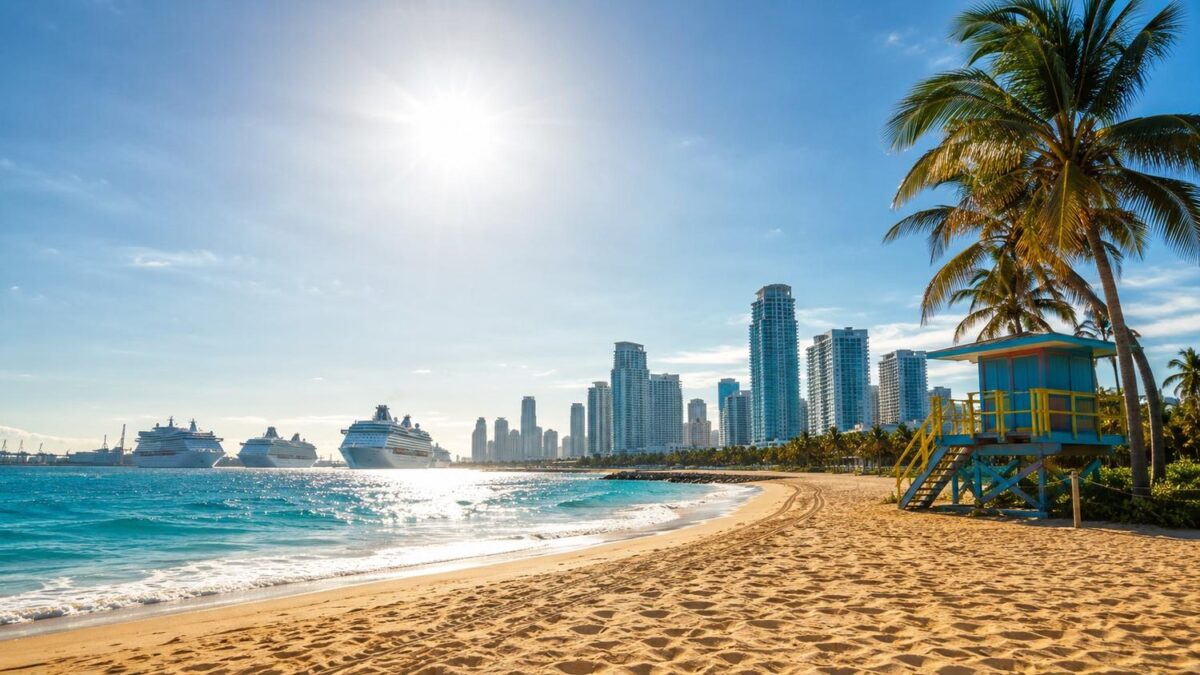
Image generated with Ai
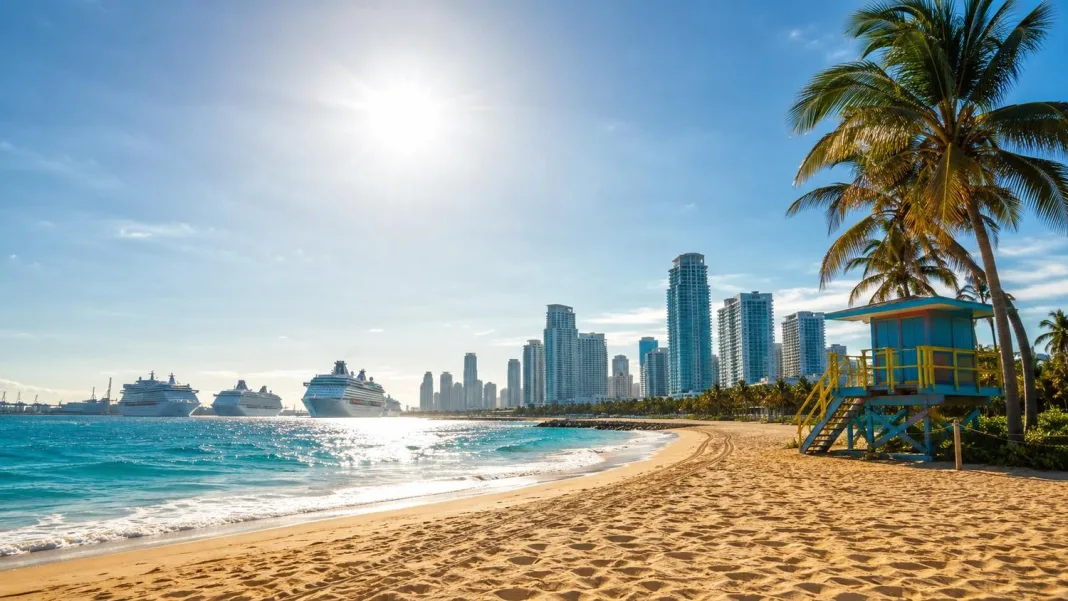
Now that Miami has tied a record with temperatures in the triple-digits on August 18, 2026, tourists are being advised to change their vacation plans. Previously, the record high of 100° occurred in Miami was in 1942. Visitors need to consider the impact that record temperatures have on local tourism in Miami. In 2025, Miami’s metropolitan area had a record 28.3 million visitors. The local economy thrives because of the beaches, cruise ports, and the abundance of open air events and activities. Miami’s local authorities said there would be no sweeping closures of the tourism industry, so visitors need to reevaluate their plans to accommodate some changes, use the city’s cooling centers, monitor the forecasts, and understand the serious health threats, as opposed to some of the unverified “travel disruption” claims.
Miami Matches a Heat Record That Stood for 84 Years
Miami reached an actual air temperature of 100°F, or approximately 37.8°C, on 18 August 2026. The reading tied the city’s all-time maximum temperature, previously recorded on 21 July 1942.
According to the National Weather Service Miami-South Florida, this was only the second time Miami had reached 100°F since continuous climate records began in 1895. The event was therefore far more unusual than a normal hot summer day in South Florida.
Miami’s normal maximum temperature for 18 August is 91°F, based on the 1991–2020 climate-normal period. The record-equalling reading was therefore 9°F above the normal daily maximum.
Advertisement
Advertisement
It also broke the previous daily record for 18 August. That record was 96°F and had been established in 2022.
The NWS displayed a Heat Advisory for the region. It also expected temperatures to remain above average overnight.
The record 100°F heat immediately created an important travel story. Miami is a global destination built around coastal recreation, cruises, outdoor dining, sightseeing, sport and entertainment. Millions of visitors arrive expecting hot weather, but very few expect Miami to match the highest temperature in its recorded history.
The record does not mean that Miami stopped functioning. It does mean visitors need to treat extreme heat as a central part of their itinerary planning.
Advertisement
Advertisement
Why 100°F Is Exceptionally Unusual in Coastal Miami
Miami regularly experiences hot and humid weather. However, its coastal geography usually prevents actual temperatures from rising as high as those found in inland parts of Florida.
Nearby Atlantic waters can moderate daytime temperatures. Regular sea breezes also transport comparatively cooler maritime air towards the coast. These forces do not make Miami cool, but they often prevent the city from reaching the highest temperature levels experienced farther inland.
Humidity can still make lower temperatures feel dangerous. This is why visitors should examine both the measured temperature and the heat index.
A reading of 100°F is significant because it shows that normal coastal moderation was insufficient to stop the temperature from reaching Miami’s historic ceiling.
Before August 2026, the NWS climate table listed only one 100°F day for Miami. The next-highest readings were 98°F. Those temperatures occurred on several dates between 1990 and 2023.
The new reading therefore did not simply break an August daily record. It joined the most extreme temperature previously observed across more than 130 years of continuous records.
Official climate information was still preliminary when the event was announced. Final certification rests with NOAA’s National Centers for Environmental Information after quality-control procedures are completed.
What the Record Means for Miami Tourism
Greater Miami and Miami Beach welcomed 28.3 million visitors in 2025, according to the Greater Miami Convention and Visitors Bureau. Those visitors generated an estimated $32.2 billion in total economic impact.
The destination’s visitor economy supports hotels, restaurants, attractions, tours, transport companies, events, cultural venues and neighbourhood businesses. It also relies heavily on outdoor experiences.
That dependence makes extreme heat a tourism-management issue. It affects when visitors explore, how long they remain outdoors and which attractions they choose.
The event creates several immediate concerns:
- Visitors may underestimate exposure because Miami is expected to be hot.
- Travellers from cooler countries may not be acclimatised.
- Children and older adults can face greater health risks.
- Cruise passengers may spend long periods moving between terminals, vehicles and hotels.
- Beachgoers may remain in direct sunlight for several hours.
- Outdoor workers must continue supporting tourism services.
- Warm nights can limit physical recovery after a demanding day.
- Tour operators may need to adjust departure times or rest periods.
The official temperature record does not establish that visitor numbers fell. It also does not prove that businesses suffered cancellations. Those outcomes would require verified booking, spending or operational data.
Miami Tourism Entered 2026 From a Position of Strength
The heat record arrived during a period of strong tourism performance.
The official destination organisation reported that the 28.3 million visitors recorded in 2025 represented another milestone for Greater Miami and Miami Beach. Total economic impact reached $32.2 billion.
Between July 2024 and June 2025, visitor spending reached approximately $21.3 billion, representing a 3% year-on-year increase.
Miami’s hotel sector also remained highly competitive. In 2025, Greater Miami and Miami Beach hotels ranked fourth nationally for revenue per available room. By the middle of 2026, the destination had reportedly moved into second place for this performance measure.
These figures show why heat resilience matters economically. Miami is not managing a small seasonal tourism market. It is protecting a large visitor economy with international reach.
Extreme heat can influence guest satisfaction even without causing formal closures. A traveller who cannot comfortably visit an outdoor attraction may change plans, shorten an excursion or move spending towards indoor activities.
The visitor economy therefore has an incentive to offer flexibility, shade, water and clear safety communication.
Official Miami Tourism Indicators
| Indicator | Official figure | Period | Tourism significance |
|---|---|---|---|
| Visitors to Greater Miami and Miami Beach | 28.3 million | 2025 | Shows the size of the population potentially exposed to seasonal heat |
| Total tourism economic impact | $32.2 billion | 2025 | Demonstrates the importance of protecting visitor confidence |
| Visitor spending | $21.3 billion | July 2024–June 2025 | Supports hotels, restaurants, tours and local businesses |
| Growth in visitor spending | 3% | Year-on-year | Indicates continued tourism demand |
| Miami International Airport passengers | 55.3 million | 2025 | Highlights Miami’s role as a global aviation gateway |
| International MIA passengers | 24.8 million | 2025 | Shows the importance of guidance for travellers from cooler climates |
| Domestic MIA passengers | 30.5 million | 2025 | Confirms substantial domestic access |
| MIA average daily passengers | 151,547 | 2025 | Illustrates the scale of daily ground-transport exposure |
| PortMiami-supported employment | More than 340,000 jobs | Latest official study | Shows the cruise port’s wider economic importance |
| PortMiami annual economic contribution | $42 billion | Latest official study | Demonstrates the cruise and maritime sector’s regional influence |
These figures come from the Greater Miami Convention and Visitors Bureau, Miami International Airport and PortMiami. They provide economic context. They should not be interpreted as evidence that the 18 August heat event caused a specific financial loss.
Beach Tourism Faces the Most Visible Exposure
Miami’s beaches are central to its international identity. South Beach, Haulover Beach, Crandon Park, Virginia Key and other coastal locations attract residents and tourists throughout the year.
A beach visit can become dangerous during extreme heat because exposure comes from several sources at once. Visitors face direct sunlight, hot sand, limited shade and physical activity. Water can provide temporary relief, but it does not prevent dehydration or sunburn.
Strong breezes may also create a false sense of comfort. People can continue losing fluids even when the wind makes the air feel less oppressive.
Visitors should consider:
- Arriving early in the morning.
- Avoiding the hottest afternoon hours.
- Using broad-spectrum sunscreen.
- Reapplying sunscreen after swimming.
- Carrying more water than expected.
- Taking regular breaks in shaded areas.
- Wearing lightweight, light-coloured clothing.
- Protecting children from prolonged direct sunlight.
- Leaving immediately if dizziness, nausea or weakness develops.
Travellers should also continue checking beach-specific conditions. Heat is only one coastal hazard. Lightning, rip currents, rough surf, water quality and marine warnings may create separate risks.
No general closure of Miami-Dade beaches was confirmed because of the 100°F temperature. Coverage should therefore focus on increased exposure rather than claiming that beach tourism was halted.
Cruise Guests Need to Plan Beyond the Ship
PortMiami’s position as a major cruise gateway makes the record heat highly relevant to cruise travellers.
The greatest exposure may not occur aboard an air-conditioned ship. It can happen during the journey between Miami International Airport, hotels and cruise terminals.
Passengers may spend time:
- Waiting for hotel shuttles.
- Standing in taxi or rideshare areas.
- Handling luggage outside terminals.
- Waiting at kerbs before embarkation.
- Moving through security queues.
- Exploring Bayside or downtown Miami before sailing.
- Walking on exposed ship decks.
- Joining outdoor shore activities before or after a cruise.
Cruise travellers should keep essential medication, water and sun protection in hand luggage. These items should not be placed exclusively inside checked baggage.
Passengers arriving several hours before an embarkation slot may be tempted to walk around with luggage. On an extreme-heat day, an air-conditioned waiting area is a safer option.
PortMiami supports more than 340,000 jobs and contributes approximately $42 billion annually to the regional economy, according to its official economic-impact information. These figures underline the importance of protecting the passenger experience during severe weather.
No official PortMiami closure or widespread cruise cancellation was identified in connection with the heat record. A high temperature alone should not be reported as proof of cruise disruption.
Miami International Airport Remains a Critical Gateway
Miami International Airport handled 55.3 million passengers in 2025. This included 30.5 million domestic passengers and 24.8 million international passengers.
Approximately 151,547 travellers passed through MIA on an average day. Fifty-seven passenger airlines connected the airport with 190 destinations.
These numbers make airport heat planning an important part of destination management.
Terminal buildings are air-conditioned, but passengers may face high temperatures while:
- Waiting for hotel transport.
- Collecting a rental car.
- Searching for a rideshare.
- Standing at outdoor pick-up points.
- Moving between parking areas and terminals.
- Loading luggage.
- Waiting for relatives or private transfers.
Airport employees and airline ground workers can experience greater exposure. Baggage teams, ramp workers, drivers and maintenance staff may spend prolonged periods near hot aircraft, concrete surfaces and machinery.
Extreme heat can affect aviation operations in certain circumstances. It may influence aircraft performance, payload calculations and worker-safety procedures. However, there was no official evidence that the 100°F reading caused a broad MIA shutdown or mass flight cancellation.
Travellers should check directly with their airline rather than assuming that a Heat Advisory changes a flight schedule.
Tour Operators May Need to Rework the Tourism Day
Walking tours, food tours, bicycle trips, Everglades excursions, wildlife visits and boat experiences form an important part of Miami’s tourism offer.
Extreme heat can change the safest operating window.
A walking tour scheduled for early afternoon may expose guests to the strongest sunlight and highest temperatures. Moving the same tour to morning or evening can reduce exposure while preserving the experience.
Tour operators can respond through practical measures:
- Earlier departures.
- Shorter walking sections.
- More frequent shaded stops.
- Additional drinking water.
- Smaller groups.
- Air-conditioned transport.
- Clear health warnings before departure.
- Flexible rebooking when conditions become dangerous.
- Staff trained to recognise heat illness.
Visitors should not assume that every tour will change automatically. They should contact the operator, check the cancellation policy and ask about shade, water and physical difficulty.
The heat record also creates a workforce issue. Guides, drivers, porters and attraction staff may experience repeated exposure while serving different visitor groups throughout the day.
Everglades Adventures Require Added Caution
Many Miami visitors include an Everglades excursion in their itinerary. These trips may involve road travel, outdoor waiting, airboat rides and wildlife observation.
The Everglades can feel especially demanding during hot, humid weather. Shade may be limited in some visitor areas. Travellers may also spend longer outside than expected while waiting for transport or a scheduled departure.
Visitors should carry water, insect protection, sun protection and suitable clothing. They should confirm operating conditions with the relevant park authority or licensed operator before leaving Miami.
A record temperature in Miami does not automatically mean every part of the Everglades recorded the same temperature. It also does not establish that tours were suspended across the region.
The accurate angle is that the event increased the importance of preparation for outdoor adventures, especially for people unfamiliar with South Florida’s climate.
Hotels Become Essential Heat-Safety Partners
Hotels play a bigger role during extreme heat than simply providing accommodation.
Guests may rely on hotels for:
- Air-conditioned recovery spaces.
- Safe luggage storage.
- Drinking water.
- Local weather information.
- Indoor dining.
- Flexible concierge recommendations.
- Shaded transport waiting areas.
- Medical assistance when symptoms develop.
- Alternative indoor itineraries.
The hotel sector can also face higher operating demands. Air-conditioning systems may work harder. Guests may use more water. Swimming pools and shaded seating may become busier. Visitors may spend more time inside the property.
These changes can create opportunities for restaurants, spas and indoor hotel facilities. However, claims about higher occupancy, increased spa bookings or extra energy costs would require data from hotel operators.
Miami’s strong revenue-per-available-room performance shows that the hotel sector entered the heat event from a competitive position. Maintaining service quality during extreme weather can help protect that standing.
Restaurants, Spas and Museums Could Offer an Indoor Alternative
Miami’s official tourism organisation promotes August as a period for dining, spa visits, events and seasonal savings. Programmes such as Miami Spice and Miami Spa Months encourage visitors to explore restaurants and wellness services.
During record heat, indoor tourism becomes more useful.
Visitors can restructure their day around:
- Museums and galleries.
- Shopping centres.
- Indoor cultural venues.
- Restaurants.
- Hotel spas.
- Aquariums and covered attractions.
- Evening entertainment.
- Air-conditioned transport between neighbourhoods.
This does not mean the record automatically increased revenue for indoor businesses. No official figures had established such a shift.
It does show how a diversified tourism economy can remain attractive when outdoor conditions become difficult.
An itinerary with indoor and outdoor options gives travellers more control. It also reduces the pressure to continue an unsafe activity simply because it was booked in advance.
Families Need a Different Heat Strategy
Families may face greater challenges because children can become dehydrated or overheated quickly. Young children may also struggle to explain their symptoms.
Parents and guardians should avoid tightly packed itineraries. A full day combining the beach, outdoor sightseeing and an evening event may become exhausting during exceptional heat.
Families should build in:
- Regular indoor breaks.
- Extra water.
- Light meals.
- Sun-protective clothing.
- Flexible transport.
- Shorter beach sessions.
- Rest periods during the afternoon.
- Close monitoring for unusual tiredness or irritability.
Children should never be left in a parked vehicle, even briefly. Interior temperatures can rise rapidly.
Family travel insurance details should remain accessible. Parents should also know the location of nearby urgent-care facilities and understand when emergency assistance is required.
Older and Medically Vulnerable Travellers Face Higher Risk
Older adults, pregnant travellers and people with chronic medical conditions may be more vulnerable to extreme heat.
Some medicines can influence hydration, sweating or the body’s ability to regulate temperature. Travellers should not change prescribed medicine without medical advice.
People carrying medicines that require controlled storage should avoid leaving them in vehicles or exposed luggage. Heat can damage some medical products.
Warning signs that require attention include:
- Dizziness.
- Headache.
- Weakness.
- Nausea.
- Muscle cramps.
- Unusually heavy sweating.
- Shortness of breath.
- Reduced urination.
Confusion, collapse, seizures or an extremely high body temperature may indicate heat stroke. Heat stroke is a medical emergency.
Travellers should call 911 when severe symptoms occur rather than trying to continue an excursion or return independently to their hotel.
Miami-Dade Expands Cooling and Hydration Support
Miami-Dade County identifies its official heat season as running from 1 May to 31 October. The county says the average annual number of days above 90°F has increased from 84 to 133 since 1970.
Its official extreme-heat programme provides guidance, cooling-site information and public safety resources.
The county maintains cooling locations in libraries, parks and government buildings. Operating hours vary, so travellers should check the official list before travelling to a site.
During major 2026 sporting events, the county also used air-conditioned cooling stations, hydration facilities and weather monitoring. Free-water points were installed at selected public transport locations.
These initiatives were designed for residents and visitors. They demonstrate how heat preparedness has become part of event and tourism planning.
The record-equalling temperature strengthens the case for maintaining these measures beyond individual sporting events.
Government Heat Measures Relevant to Travellers
| Official measure | Purpose | Relevance to tourists |
|---|---|---|
| Public cooling sites | Provide access to air-conditioned spaces | Useful for visitors caught outdoors during peak heat |
| Heat-season designation | Concentrates awareness from May to October | Helps travellers understand the seasonal risk |
| Hydration stations | Provide access to drinking water | Supports event guests and public transport users |
| Weather monitoring | Supplies current heat-index information | Helps visitors decide when to travel outdoors |
| Public safety messaging | Explains symptoms and precautions | Assists international visitors unfamiliar with local conditions |
| Event cooling stations | Provides relief at major gatherings | Reduces exposure during sport and entertainment events |
| Emergency guidance | Directs people to call 911 for severe illness | Important for travellers without local medical knowledge |
These measures do not eliminate heat risk. They provide tools that make safer travel possible when used correctly.
Public Transport Can Reduce Outdoor Walking
Miami’s transport network can help visitors reduce long walks during extreme heat. The free Metromover serves parts of downtown Miami and connects locations near major visitor areas.
Metrorail, buses, rideshares, taxis and hotel shuttles provide additional alternatives.
However, public transport does not remove exposure completely. Travellers may still wait at outdoor stations or stops. They should examine walking distances at both ends of the journey.
A route that appears short on a map can become physically demanding when it includes exposed pavements, luggage and high humidity.
Visitors should plan routes before leaving an air-conditioned building. They should also allow extra time so they are not forced to run or walk quickly in the heat.
Outdoor Events Must Treat Heat as an Operational Risk
Miami attracts travellers through football, baseball, concerts, festivals and large international events.
Heat exposure can begin well before a visitor enters a venue. Parking areas, security lines, public transport approaches and ticket checkpoints may provide little shade.
Event organisers can reduce risk through:
- Timed entry.
- Free water.
- Refill stations.
- Shaded queues.
- Air-conditioned cooling spaces.
- Medical teams.
- Real-time weather announcements.
- Flexible staff breaks.
- Clear rules on refillable bottles.
- Accessible assistance for vulnerable guests.
Visitors should read venue rules before arrival. Some locations restrict bottle sizes or container types. Understanding those requirements can prevent guests from losing their water at security.
There was no official evidence that the 18 August record forced a citywide cancellation of events. Any individual event change should be verified with its organiser.
Warm Nights Extend the Tourism Challenge
Daytime maximum temperatures attract the strongest headlines, but overnight heat also matters.
The NWS expected above-average minimum temperatures following the 100°F day. Warm nights reduce the time available for the body, buildings and public spaces to cool down.
This can affect:
- Evening restaurant queues.
- Nightlife districts.
- Outdoor concerts.
- Waterfront walks.
- Hotel balconies.
- Late cruise arrivals.
- Travellers waiting for transport.
- People staying in poorly cooled accommodation.
Visitors should not assume that sunset immediately removes the risk. Evening activities may still require water, lighter clothing and regular breaks.
Hotels and short-term accommodation providers should ensure that cooling systems are working before guests arrive.
Marine Heat Adds a Wider Tourism Concern
Miami-Dade County had already organised discussions about extreme heat, Biscayne Bay and coral reefs before the 100°F record.
Officials and environmental specialists were monitoring water temperatures, nutrients and other indicators that can affect marine ecosystems.
This matters to tourism because Biscayne Bay and nearby coastal waters support:
- Boat tours.
- Snorkelling.
- Diving.
- Fishing.
- Wildlife observation.
- Waterfront recreation.
- Environmental education.
- Marine hospitality businesses.
The atmospheric temperature record does not prove that coral damage occurred on the same day. Air temperature and water temperature are related but different measurements.
Any claim about bleaching, fish mortality or marine damage must be supported by environmental monitoring. The responsible tourism angle is that atmospheric and marine heat risks require continued official observation.
Climate Change Provides Context but Not a Simple Attribution
A single record temperature cannot independently determine how much climate change contributed to that specific event.
A formal scientific attribution assessment would be required to quantify the role of human-driven warming.
However, the US Fifth National Climate Assessment states that rising average temperatures increase the likelihood of extreme and record-breaking heat. It concludes that heatwaves are very likely to become more frequent, longer and more severe as warming continues.
For travel journalism, the correct distinction is important.
The Miami record should not be described as standalone proof that climate change directly caused the event. It can be placed within the established scientific context of increasing extreme-heat risk.
That context matters for tourism planning because hotels, attractions, airports, cruise facilities and outdoor venues make long-term investment decisions.
Economic Effects Must Be Reported Carefully
Extreme heat can influence tourism spending, staffing and operating costs, but no immediate financial loss should be invented.
Potential cost pressures include:
- Increased air-conditioning use.
- Higher demand for water.
- Additional shaded facilities.
- More staff breaks.
- Medical preparation.
- Rescheduling tours.
- Cooling equipment.
- Maintenance of heavily used pools and indoor spaces.
Potential spending shifts include:
- Fewer afternoon outdoor activities.
- More indoor dining.
- More museum visits.
- Greater spa demand.
- Increased use of air-conditioned transport.
- Later restaurant and entertainment bookings.
These are plausible business effects. They are not verified outcomes of the 18 August event without official sales, booking or employment data.
The most accurate economic conclusion is that extreme heat creates a risk-management challenge for a tourism economy worth $32.2 billion.
No New Visa or Entry Rules Resulted From the Heat
The record temperature did not create a new visa requirement, border measure or tourism entry policy.
International travellers remain subject to the normal United States entry rules applicable to their nationality and travel purpose.
Visitors should not confuse a local Heat Advisory with a national travel restriction. A Heat Advisory communicates a health risk. It does not close the border or invalidate travel documents.
Likewise, the event did not trigger an official citywide evacuation.
The absence of new entry measures is important because sensational coverage can create confusion among international travellers.
Travel Insurance May Not Cover Heat Alone
Travellers should review their policy before cancelling plans.
A record temperature or Heat Advisory may not automatically qualify as an insured cancellation event. Policies commonly require a defined trigger, such as:
- A cancelled flight.
- An official closure.
- A mandatory evacuation.
- A medically documented emergency.
- An interruption covered by the policy wording.
Visitors should contact their insurer rather than assuming that uncomfortable or dangerous weather automatically guarantees reimbursement.
Travellers who develop heat-related illness should retain medical records and receipts in case their policy includes emergency treatment or trip interruption.
What Travellers Should Do Before Visiting Miami
Travellers with confirmed Miami bookings should not assume that cancellation is necessary. They should make informed adjustments.
Before departure:
- Check the latest NWS forecast and warnings.
- Confirm flight and cruise status directly.
- Review accommodation cooling and check-in arrangements.
- Reserve early-morning outdoor activities where possible.
- Identify indoor alternatives.
- Locate nearby cooling sites.
- Pack sunscreen, a hat and lightweight clothing.
- Bring a refillable water bottle where permitted.
- Review medicines with a healthcare professional when necessary.
- Read travel-insurance conditions.
During the visit:
- Drink regularly before feeling thirsty.
- Limit alcohol during the hottest part of the day.
- Take breaks in air-conditioned spaces.
- Avoid tightly scheduled outdoor itineraries.
- Monitor children and older companions.
- Never leave anyone in a parked vehicle.
- Stop activity if weakness or dizziness develops.
- Seek emergency assistance for confusion, collapse or severe symptoms.
What Has and Has Not Been Officially Confirmed
| Confirmed development | Not confirmed |
|---|---|
| Miami reached 100°F on 18 August 2026 | Citywide tourism shutdown |
| The temperature tied the 1942 all-time record | Closure of Miami International Airport |
| It was only the second 100°F reading since 1895 | Widespread flight cancellations |
| The NWS displayed a Heat Advisory | PortMiami closure |
| Overnight temperatures were expected to remain above average | Broad cruise cancellations |
| Miami-Dade provides public cooling sites | General closure of Miami beaches |
| Visitors were advised to practise heat safety | Closure of all outdoor attractions |
| Official tourism data show 28.3 million visitors in 2025 | A measured fall in August tourism demand |
This distinction should remain central to responsible reporting.
Future Tourism Planning Must Follow Published Heat Strategies
Miami-Dade’s published approach already recognises extreme heat as a seasonal hazard.
The county’s cooling network, event hydration measures, weather monitoring and public information provide the foundation for future visitor protection.
The official tourism organisation also maintains a five-year visitor-industry strategy and promotes a diversified destination. Indoor culture, dining, spas, shopping and entertainment can support tourism when outdoor conditions become difficult.
No unsupported target should be attached to the heat event. There is no official evidence that Miami plans to restrict summer tourism or reduce visitor numbers.
The published direction instead favours preparedness, visitor communication, infrastructure resilience and a broad mix of experiences.
Miami’s Record Heat Changes Planning, Not Its Entire Tourism Offer
The temperature record is serious because it exposes visitors and tourism workers to a genuine health risk. It also challenges the traditional assumption that coastal Miami will remain below 100°F.
Yet the event does not erase the destination’s tourism strengths.
Miami retains extensive air access, a globally important cruise port, a large hotel sector and a diverse range of indoor and outdoor attractions. The immediate task is to adapt itineraries to conditions.
Visitors can still travel responsibly by avoiding peak heat, using cooling facilities, checking official alerts and remaining flexible.
The central story is not that tourism ended. It is that extreme weather has become a more important part of how a Miami holiday must be planned.
Conclusion
Miami’s historic 100°F reading provides context for travelers when choosing beaches and outdoor activities, cruises and adventures without showing evidence of widespread disruption at the destination. The older recorded temperature for Miami was surpassed and the normal daily maximum was exceeded by 9°F. The safety of visitors was a consideration in the planning for summer during the 100°F heat. Travelers are advised to closely monitor the forecast, engage cooling sites, plan to conduct strenuous activities during cooler times of the day and verify services booked. The economy that is based on visitors to Miami is operating and is connected to other markets. The adaptability of the Miami market to actively manage the cooling infrastructure of the market while protecting visitors and the workforce will prove to be its best defense against the negative effects of increased hot temperatures.
Advertisement
Advertisement