
Published on August 18, 2026 |
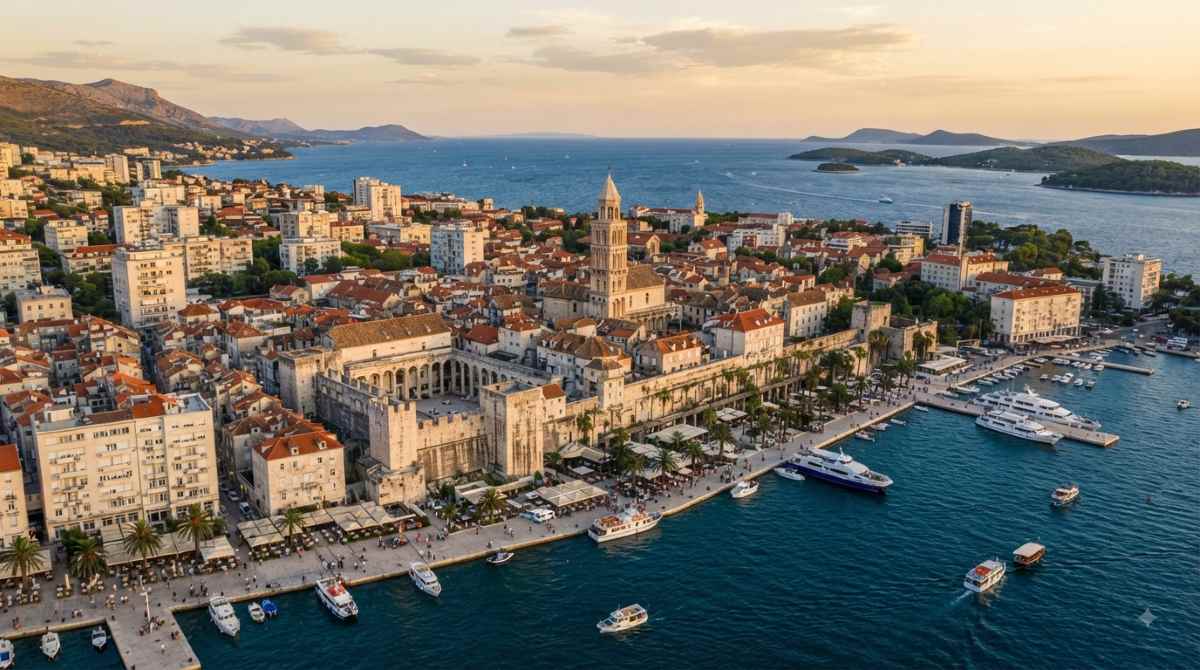
Image generated with Ai
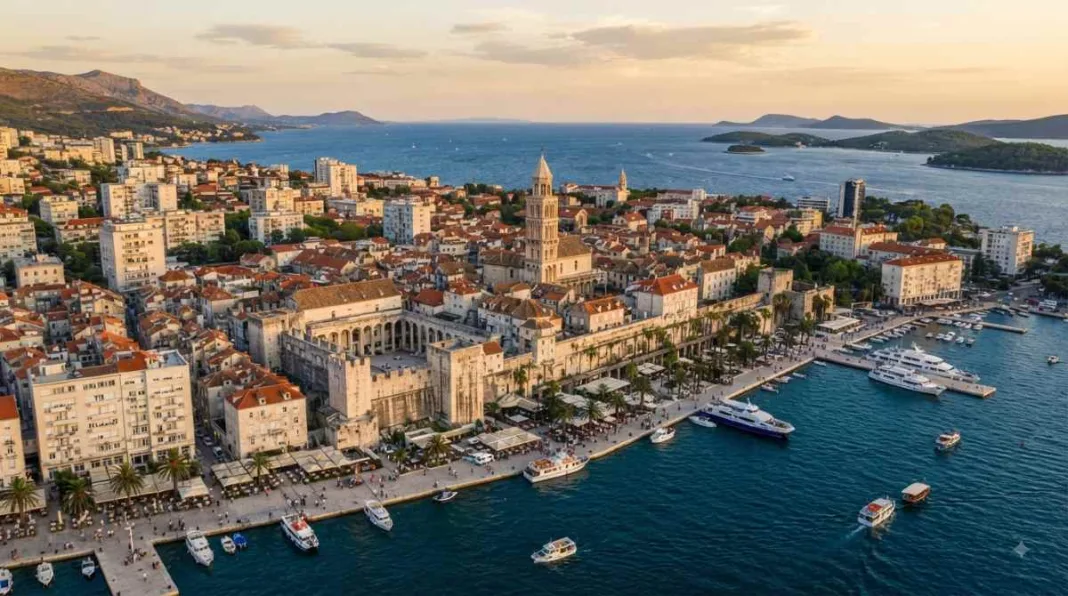
The coastal landscape of the Mediterranean has long been defined by a storied past. Few locations illustrate the integration of antiquity and contemporary living as effectively as Split, Croatia. As Croatia’s fastest-growing hub, this gorgeous Adriatic city has evolved from a historic port into a premier destination for global travelers.
The city is fundamentally anchored by the sprawling remains of Diocletian’s Palace. This UNESCO World Heritage site was constructed at the turn of the 4th century for the Roman Emperor Diocletian. Unlike many archaeological sites that are cordoned off from public life, the palace functions as the literal heart of the city. Thousands of residents and visitors traverse ancient limestone corridors daily. This unique urban morphology has solidified the reputation of Split, Croatia, as a vital cultural nexus.
Impact on Travelers and Historical Tourism
The influx of visitors has fundamentally altered the travel experience within the region. Travelers are no longer merely observers of history. Instead, they are participants in an active, living museum. The density of historical artifacts provides an immersive encounter with the Roman Empire that is rare in modern travel.
For those seeking engagement, the city offers a blend of high-energy exploration and leisure. Key activities and highlights for visitors include:
- Guided Historical Tours: Exploring the subterranean cellars of Diocletian’s Palace with official experts.
- Scenic Promenades: Taking relaxing sunset walks along the bustling Riva promenade.
- Island Excursions: Booking day trips to the nearby islands of Brač and Hvar.
- Architectural Sightseeing: Marveling at the Peristyle square and the Cathedral of Saint Domnius.
Furthermore, the expansion of local tourism infrastructure ensures high-quality hospitality, dining, and accessibility for modern tourists.
Industry Insights for European Heritage Destinations
From an industry perspective, Split, Croatia, is often cited as a model for successful urban tourism management. The city has navigated the complexities of balancing the preservation of fragile archaeological sites with the demands of increasing international arrivals.
Industry analysts have observed a shift in tourism patterns. Emphasis is now placed on off-season travel to mitigate the pressures of peak-summer congestion. Growth is supported by a robust diversification of the tourism product. This includes a flourishing culinary scene that highlights Dalmatian seafood and viticulture. Consequently, the city has transformed from a transient stopover into a multi-day hub supporting boutique hotels and artisan enterprises.
Practical Information from a Croatia Travel Guide
For those planning a visit, logistical considerations are paramount. Essential details for travelers include:
Advertisement
Advertisement
- Airport Transit: The city is primarily served by Split Airport, which handles high volumes of international traffic.
- Navigation: Exploring the Old Town is best accomplished on foot within its pedestrian-only zones.
- Best Time to Visit: Traveling during the shoulder seasons of May or September offers pleasant weather with thinner crowds.
- Packing Essentials: Visitors should bring comfortable footwear suitable for uneven ancient stone pathways.
Comparison with Previous Policies in Mediterranean Escapes
The development trajectory of Split, Croatia, represents a significant departure from earlier, more restrictive conservation models. In previous decades, the focus was centered on static preservation, which often limited the functionality of the city center.
Recent municipal policies have adopted a more integrated approach. They prioritize the adaptive reuse of historical structures, turning abandoned areas within the palace complex into centers for commerce and culture. Current urban planning now emphasizes the harmonious coexistence of a growing residential population and a booming tourism sector. This evolution ensures that the destination remains relevant and vibrant rather than stagnant.
Advertisement
Advertisement