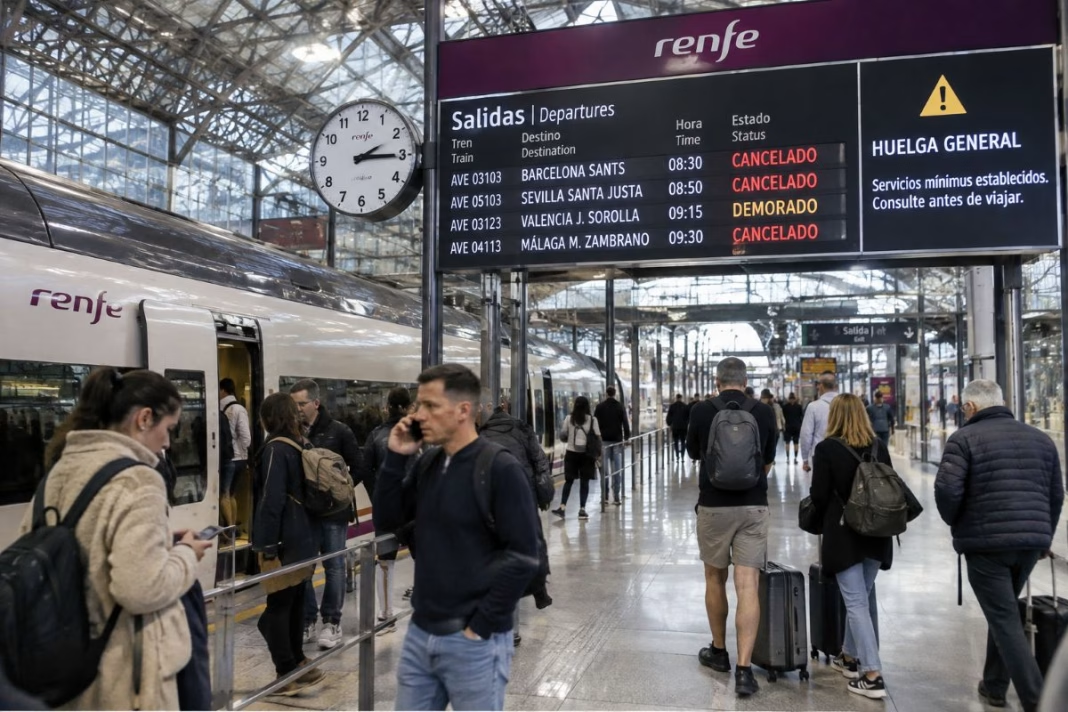


The UK has issued a Spain travel warning as November strikes threaten flights, trains and holidays across one of Europe’s most popular tourist destinations. The Foreign, Commonwealth & Development Office (FCDO) updated its advice on 10 November 2026, highlighting potential transport disruption from a nationwide strike scheduled for 11 November. Spanish authorities subsequently established minimum railway services, with some commuter routes required to operate at only 50% of normal frequency outside peak hours. Further railway industrial action has also been reported for 17 and 23 November. With more than 19 million British tourists visiting Spain annually, the warnings have significant implications for travel planning.
Why Did the UK Issue a Travel Warning for Spain in November 2026?
The UK Foreign, Commonwealth & Development Office updated its Spain travel advice on 10 November following announcements of nationwide industrial action.
Advertisement
Advertisement
The warning concerned a general strike scheduled for 11 November, which had the potential to affect transport services across the country.
British travellers were advised to check directly with airlines, railway operators and other travel providers before beginning their journeys.
Advertisement
Advertisement
The advisory did not prohibit travel to Spain or indicate that every airport and railway station would close.
Instead, it highlighted the possibility of reduced services and unexpected changes to travel arrangements.
Advertisement
Advertisement
The UK Government also warned about separate railway disruption following a serious high-speed train collision in Toledo province on 28 October.
These developments created additional uncertainty for travellers planning journeys through Spain.
However, the strike-related warning and the railway collision concerned different incidents and should not be treated as the same disruption.
Which Spanish Transport Services Were Affected by the Nationwide Strike?
Spain’s Ministry of Transport established mandatory minimum railway services for the nationwide strike on 11 November.
The arrangements were intended to maintain essential passenger connections while allowing industrial action to proceed.
According to official Renfe information, commuter services were required to operate at 75% of normal frequency during designated peak periods.
Advertisement
Advertisement
Outside those hours, the minimum requirement fell to 50%.
Spain Railway Strike: Official Minimum-Service Requirements
| Railway service | Minimum service required | Potential reduction |
|---|---|---|
| Commuter trains during peak hours | 75% | Up to 25% |
| Commuter trains outside peak hours | 50% | Up to 50% |
| Medium-distance trains | 65% | Up to 35% |
| High-speed and long-distance trains | 73% | Up to 27% |
| Freight trains | 26% | Up to 74% |
These percentages represent government-established minimum operating requirements rather than confirmed cancellation totals.
The designated commuter peak periods were 06:00–09:00, 13:30–15:30 and 18:30–20:30.
Travellers using suburban rail networks outside these periods could therefore encounter fewer scheduled services.
Which Spanish Tourist Destinations Faced Potential Travel Disruption?
The nationwide strike created potential transport challenges across Spain’s major tourism destinations.
Madrid and Barcelona were particularly relevant because their extensive commuter rail networks support airport transfers, business travel and tourism.
Advertisement
Advertisement
Other destinations, including Málaga, Seville, Valencia and Alicante, also rely on regional and long-distance transport connections.
Spanish Destinations and Potential Travel Impact
| Destination | Transport services requiring checks | Potential traveller impact |
|---|---|---|
| Madrid | Commuter rail, metro, high-speed trains | City breaks and airport connections |
| Barcelona | Rodalies, metro, regional trains | Tourism and cruise transfers |
| Málaga | Commuter trains and airport transport | Costa del Sol holidays |
| Seville | Long-distance and local rail services | Cultural tourism |
| Valencia | Metro, commuter and intercity trains | Coastal and city holidays |
| Alicante | Regional rail and airport transfers | Costa Blanca tourism |
| Mallorca | Local public transport | Balearic Islands holidays |
| Tenerife and Gran Canaria | Local transport and airport transfers | Canary Islands tourism |
The table identifies transport connections that travellers needed to monitor.
It does not establish that every listed destination experienced confirmed cancellations.
No official government announcement identified a nationwide closure of Spanish airports because of the strike.
What Further Railway Strikes Were Reported for November 2026?
The 11 November general strike was not the only industrial action affecting Spain’s railway sector.
Separate disputes involving railway employees and train drivers created additional uncertainty during the month.
Advertisement
Advertisement
Further industrial action was reported for 17 and 23 November.
However, the final extent of disruption remained dependent on negotiations, operator announcements and government minimum-service arrangements.
Spain November 2026 Railway Disruption Timeline
| Date | Reported development | Status |
|---|---|---|
| 10 November | Train drivers’ industrial action | Government minimum-service resolution issued |
| 11 November | Nationwide general strike | Officially announced |
| 12 November | Originally planned drivers’ stoppage | Reported postponed |
| 17 November | Further railway-sector industrial action | Reported planned |
| 23 November | Rescheduled train drivers’ strike | Reported planned |
The later dates should not be interpreted as confirmation that all trains would be cancelled.
Passengers planning journeys on those days should check the latest information from Renfe, Adif and their specific train operators.
The situation may change if agreements are reached before the scheduled action.
Why Was Spain’s Railway Network Already Facing Additional Disruption?
Spain’s railway network was also dealing with the consequences of a serious high-speed train collision in Toledo province on 28 October 2026.
Advertisement
Advertisement
The UK Foreign Office highlighted the incident in its Spain travel advice, warning that significant railway disruption was expected.
The collision affected travel planning independently of the November industrial action.
Passengers using routes connected with Madrid and southern Spain were therefore advised to verify their train arrangements.
The combination of railway disruption and strike warnings increased uncertainty for travellers making multi-city journeys.
However, the two developments had separate causes.
The available official information does not establish that the collision resulted from industrial action or that the strikes were connected to the accident.
Advertisement
Advertisement
Travellers should distinguish between safety-related railway disruption and service reductions associated with labour disputes.
How Important Is Spain to British Holidaymakers?
Spain remains one of the most important international holiday destinations for British travellers.
According to Spain’s National Statistics Institute, the country welcomed 96,770,515 international tourists in 2025.
Of these, 19,068,319 were residents of the United Kingdom.
British arrivals increased by 3.7% compared with 2024, while total international tourism grew by 3.2%.
Spain International Tourism: Official 2025 Statistics
| Visitor market | Tourist arrivals | Annual change |
|---|---|---|
| United Kingdom | 19,068,319 | +3.7% |
| France | 12,796,815 | −1.0% |
| Germany | 12,016,418 | +0.6% |
| Italy | 5,681,150 | +3.3% |
| Nordic countries | 5,171,651 | +0.9% |
| United States | 4,451,770 | +4.3% |
| Total international arrivals | 96,770,515 | +3.2% |
The UK accounted for approximately 19.7% of Spain’s international tourist arrivals.
Advertisement
Advertisement
These figures explain why transport warnings can affect a substantial travel market.
However, they do not establish how many British visitors were directly affected by the November strikes.
Which Spanish Regions Attract the Largest International Tourist Numbers?
Spain’s tourism demand is concentrated across several major regions, including Catalonia, the Balearic Islands, the Canary Islands and Andalusia.
Official 2025 statistics demonstrate the scale of visitor activity across these destinations.
International Tourist Arrivals by Spanish Region
| Region | Approximate international arrivals in 2025 |
|---|---|
| Catalonia | 20.1 million |
| Balearic Islands | 15.7 million |
| Canary Islands | 15.7 million |
| Andalusia | 14.5 million |
| Valencian Community | 12.4 million |
| Madrid | 9.1 million |
These destinations support substantial hotel, restaurant, transport and attraction businesses.
Consequently, disruptions to railway connections and airport transfers can create difficulties for tourists travelling between cities or reaching accommodation.
Advertisement
Advertisement
However, the regional visitor figures represent completed annual tourism activity.
They should not be presented as the number of travellers affected by the November 2026 industrial action.
The actual impact depends on the services disrupted, the duration of the action and individual travel arrangements.
What Should British Travellers Do Before Visiting Spain?
British tourists planning journeys to Spain should check the latest government advice and confirm their transport arrangements before departure.
The FCDO recommends contacting travel providers directly for updated information.
Passengers travelling by rail should review Renfe and Adif announcements, particularly when industrial action is scheduled.
Advertisement
Advertisement
Those using airport transfers should allow additional time where transport disruption is expected.
Travellers with connecting flights or onward rail journeys should monitor their booking information closely.
Keeping copies of tickets, cancellation notices and receipts may also be useful if travel plans change.
However, compensation eligibility depends on the circumstances and applicable passenger rights.
A strike announcement does not automatically entitle every passenger to a refund or financial compensation.
Travellers should review their airline, railway operator and insurance conditions before making alternative arrangements.
Advertisement
Advertisement
Does the UK Travel Warning Mean Spain Is Unsafe for Tourists?
The FCDO’s November update concerned transport disruption rather than a general prohibition on travel to Spain.
The advisory did not instruct all British tourists to cancel their holidays.
Spain’s hotels, attractions and tourism businesses were not subject to a nationwide closure under the warning.
However, transport services could operate at reduced frequency during industrial action.
The practical concern for travellers was the possibility of delays, missed connections and revised journey arrangements.
Passengers should therefore distinguish between a travel disruption advisory and a broader safety warning.
Advertisement
Advertisement
The latest official information remains available through the UK Government’s Spain travel advice.
Travellers should also check local transport operators because disruption can vary significantly between destinations.
For those with confirmed bookings, obtaining current information is more useful than assuming every service will be affected.
Conclusion: What Does Spain’s Strike Warning Mean for UK Travellers?
The UK’s November 2026 Spain travel warning highlighted the risk of transport disruption during nationwide industrial action. Official Spanish regulations required commuter trains to operate at between 50% and 75% of normal service, while minimum levels were also established for medium-distance and high-speed routes. Further railway action was reported for later in November, creating additional uncertainty for passengers. With more than 19 million British tourists visiting Spain in 2025, the warnings were relevant to a major international travel market. However, the advisory did not prohibit holidays or confirm nationwide airport closures. Travellers should continue checking official transport updates before departure.