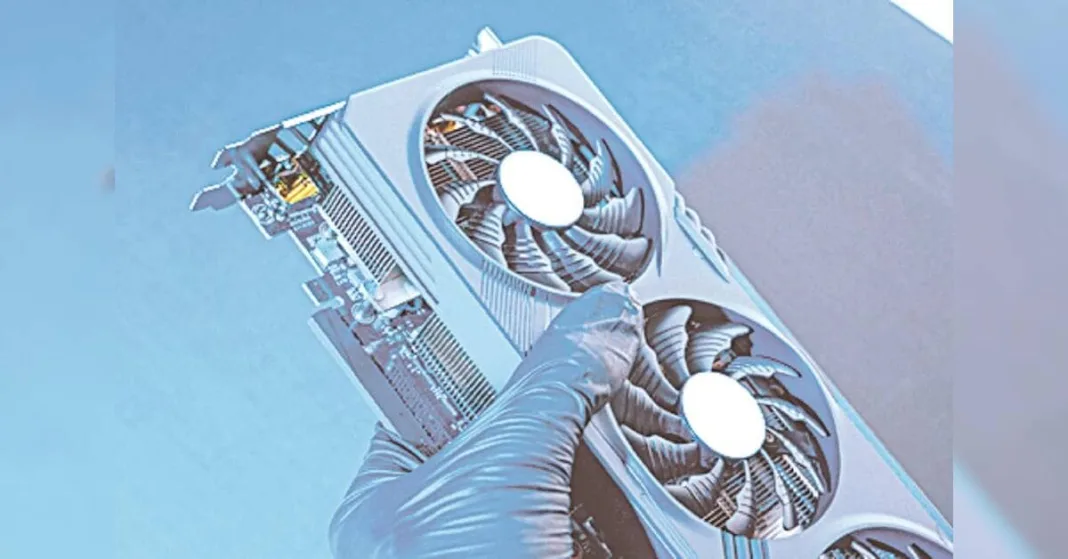

“These companies need to find the right commercial value for the GPUs they onboarded. There is not enough uptake of GPUs in India right now. It is, therefore, important that these companies are able to sell the compute for the right price to anyone globally,” a senior government official said.
The request to allow successful bidders to sell GPU compute capacity globally came from the industry and was accepted to ensure they remain profitable until demand in India also picks up, the official said.
Under the Rs 10,372 crore IndiaAI Mission, 14 companies have successfully bid to onboard GPUs from various original equipment manufacturers, including Nvidia, Intel, AMD, AWS and Google.
The bidders include Reliance Group-backed Jio Platforms, Tata Group’s Tata Communications, and Hiranandani Group-backed Yotta Data Services, while startups such as CtrlS Datacenters Limited, E2E Networks, Locus Enterprise Solutions, and NxtGen Datacenter & Cloud Technologies Private Limited, among others.
In addition to encouraging companies to sell compute capacity globally at commercial rates, the Ministry of Electronics and Information Technology has also tweaked the terms of the latest bidding round to ensure uptake for at least five years’ worth of GPU usage, a second official said.
“So suppose the on-demand hourly L1 (lowest bid) rate for an AMD MI300X or Intel Gaudi 2 is Rs 168 per GPU per hour or Rs 57 per GPU per hour. Under the latest bidding round, in which we will onboard 10,000 new GPUs, the government will buy GPU time worth 5 years from the successful bidders and then provide it to the startups, researchers, academia, and other applicants as and when they apply for it,” the official said.
This, the official said, will ensure successful bidders also get the right valuation for the GPUs they have onboarded and can therefore attract the right investors.
“Since the L1 prices are much lower compared to GPU prices anywhere else, the commercial rates will have to be higher and companies cannot offer them to other players globally at the L1 prices since that is subsidised by the government,” one of the officials quoted above said.
The L1 price is the lowest price a company bids to supply GPUs. For example, after the first three rounds of bidding under the IndiaAI Mission, the average L1 price discovered was nearly Rs 115 per GPU hour, while the L1 price for some high-end GPUs, such as Nvidia’s H100, was around Rs 140 per GPU hour.
In the first round, the government empanelled 10 companies to procure and supply 18,693 GPUs, including 12,896 Nvidia H100 GPUs, 1,480 Nvidia H200 GPUs, and MI325 and MI300X GPUs. In the second round, the government approved bids from four more companies to onboard these GPUs.