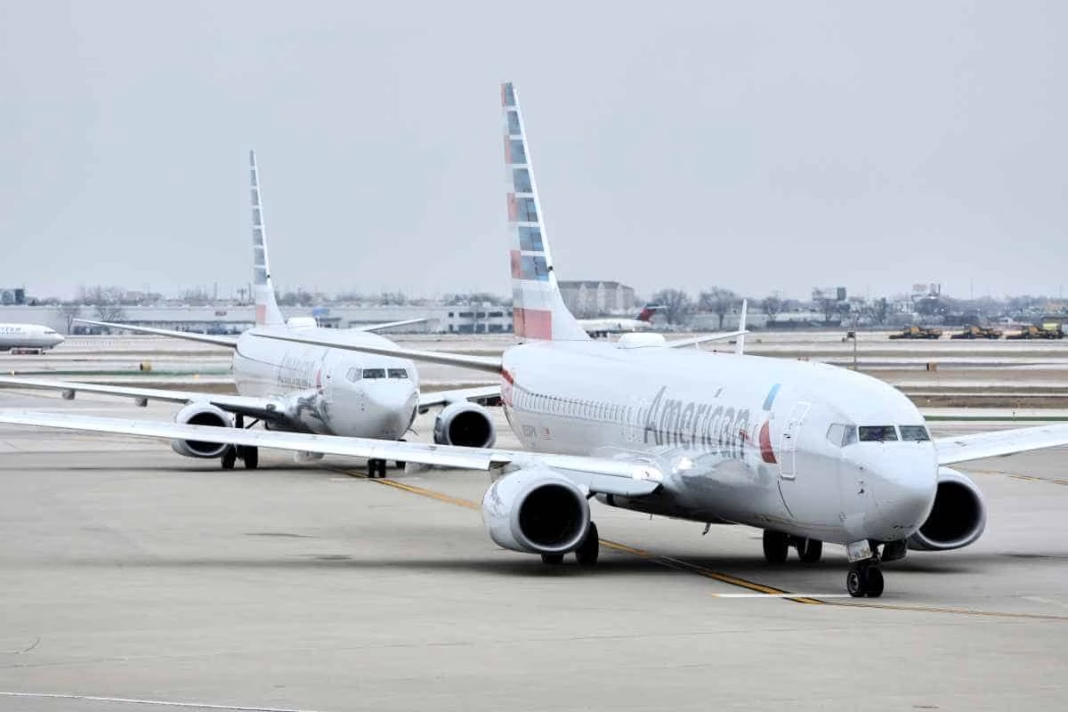


American Airlines has made a striking leap in the rankings of corporate travel buyers, a reflection of the wider efforts to repair its image through expenditure on aircraft, premium products, airports and onboard tech. While Delta Airlines retained its lead position in the ranking of airlines in the 2026 Business Travel News Airline Survey, American was the airline that made the biggest gains in terms of average ratings between 2025 and 2026. On the survey, American scored an average of 3.26, compared to 2.75 in 2025 and 2.15 in 2024. This is an overall increase of 0.51 points from last year and 1.11 points over the two-year period. American’s overall position still ranked as the lowest among the airlines, however, illustrating the distance it still has to make up when compared to its major rivals.
A Significant Improvement in Corporate Buyer Perception
American’s progress has attracted attention from travel management consultants who monitor airline performance and corporate customer relationships.
Bob Brindley, chief strategy officer at Partnership Travel Consulting, described the airline’s year-over-year improvement as a positive development. He noted that continued gains could bring American closer to United Airlines in the corporate travel rankings, although Delta would remain a challenging competitor.
The improvement follows a difficult period for American’s corporate relationships. The airline faced criticism over its distribution strategy and its implementation of New Distribution Capability (NDC), which created friction with travel agencies and corporate travel buyers.
While those concerns remain part of the industry’s assessment of the airline, American executives attribute the improved ratings primarily to investments across the customer experience.
Neil Geurin, American Airlines’ vice president of global sales, said the airline had made substantial investments to improve its products and services. He expects those improvements to continue influencing customer perceptions.
Advertisement
Advertisement
Distribution Channels Record Stronger Ratings
One of the most notable developments in the 2026 survey was American’s improved performance in the distribution channels category.
The airline received a score of 3.47 in this category, an increase of 0.57 points. It was American’s second-highest category rating, suggesting that corporate travel buyers are increasingly satisfied with aspects of its distribution offering.
The improvement is notable given the difficulties associated with the airline’s earlier NDC strategy. American had previously faced criticism from travel agencies and corporate customers over changes to how its fares and content were distributed.
Geurin, however, does not attribute the overall improvement in American’s survey performance to distribution alone. He points instead to the combined effect of investments in aircraft, airport facilities, premium seating, food and beverage services, connectivity and entertainment.
For corporate travel programmes, distribution remains important because travel managers need access to airline content through the booking channels and systems they use. Improvements in this area can support stronger relationships with agencies and corporate procurement teams.
Fleet Modernisation and Premium Cabin Investments
American is also investing in its aircraft interiors and onboard experience as it seeks to attract higher-value travellers.
Advertisement
Advertisement
Its fleet modernisation programme includes increasing the availability of premium seating, upgrading existing aircraft and improving passenger amenities. The airline plans to increase premium seating across its narrowbody fleet from approximately 25% of seats to around 40% in the coming years.
The changes include additional First Class and Main Cabin Extra seating, refreshed interiors, improved storage and redesigned cabin features.
American has also announced plans to restore seatback entertainment screens across its narrowbody fleet. New aircraft deliveries beginning in 2028 are expected to feature the screens, while existing aircraft will undergo retrofits. The programme is intended to provide passengers with entertainment options beyond their personal devices.
Connectivity is another priority. American plans to begin installing Starlink Wi-Fi on more than 500 narrowbody aircraft from the first quarter of 2027. The service is expected to support high-speed browsing, streaming and online communication.
These improvements are relevant to corporate travellers who increasingly expect reliable connectivity and comfortable working conditions during flights.
The airline is also developing its premium food and beverage offering, alongside investments in airport lounges. American has described its planned lounge improvements as the largest investment in new and expanded Flagship and Admirals Club facilities in its history.
Advertisement
Advertisement
DFW Expansion Supports Long-Term Growth
American’s investment in Dallas Fort Worth International Airport represents another major element of its strategy.
The airline and DFW Airport increased their planned investment in the new Terminal F project to approximately $4 billion in May 2025. The expanded development is designed to provide 31 gates, additional international facilities, more premium space, improved check-in facilities and a dedicated parking garage.
Terminal F will be operated entirely by American Airlines, strengthening the carrier’s position at its largest hub.
The first phase, comprising 15 gates, is expected to open in 2027. The complete development is planned to be delivered in stages, with the final configuration expected to provide expanded capacity and improved passenger facilities.
GoldSpring Consulting partner Neil Hammond described the investment as ambitious, noting that additional airport capacity could support American’s future growth. DFW is a major connecting hub for the airline, making its infrastructure particularly important for domestic and international operations.
American and DFW have also been progressing other terminal improvements. In September 2026, the partners opened nine new gates at Terminal C, while additional Terminal A expansion work is progressing.
Closing the Gap With Delta and United
Still, American has a significant gap to close to move up to the next level of the corporate travel universe. In the 2026 poll, Delta led with a 4.22 average score, with Southwest on 4.11, United on 3.68, and Alaska on 3.41. American’s 3.26 was not good enough to keep up with these other carriers that qualify in the US survey. The airline’s better showing in all 11 categories of the survey, while encouraging, is also a positive sign that American’s turnaround is demonstrating itself in one way or another in several aspects of the corporate travel relationship. Moving forward, American will have to keep that momentum in order to succeed. Improvements in aircraft, an enhanced product offering and widebody fleet, a broader distribution footprint, and better airport ground services will need to yield a much more consistent operational picture and customer satisfaction level. For corporate travel buyers, the airline’s changing offering has the potential to be more attractive as its service and network continue to evolve.