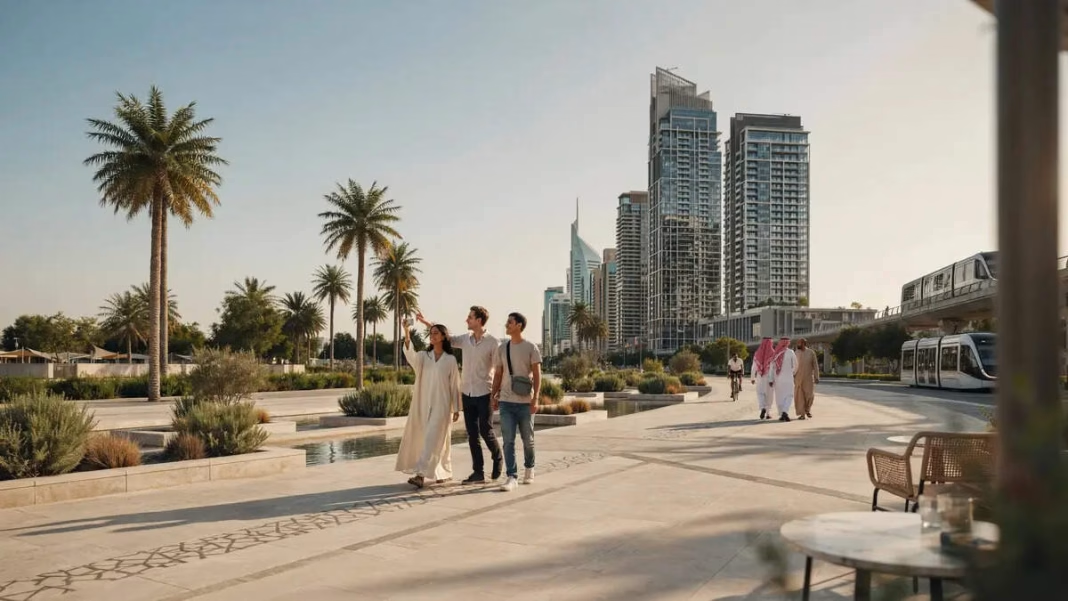


Saudi Arabia and Gulf allies are driving a $371B tourism boom using smart technology. The Gulf Cooperation Council (GCC) is in the midst of one of the biggest changes to its economy of the 21 st Century, moving away from an oil-dependent economy towards a vibrant, diversified market. At the heart of this change is the travel and tourism industry. With huge investments and ambitious strategies, the region is set to become a global travel hotspot. However, with some of the most futuristic mega-developments and luxury resorts in the world now dotting the Middle Eastern scenery, there is a new expectation for those operating within the industry. Infrastructure is no longer enough to satisfy today’s tourists. Instead, operators will be competing over data, artificial intelligence and how they can best incorporate technology into the visitor journey.
The $371 Billion Horizon: Redefining the Economic Engine
The economic trajectory of the GCC’s tourism sector is nothing short of historic. According to projections from the World Travel & Tourism Council and recent industry analyses, travel and tourism in the region is projected to surge from $247 billion in 2024 to a staggering $371 billion by 2034. This financial windfall brings with it a massive increase in international visitor spending, fundamentally altering the macroeconomic makeup of the Gulf.
A newly released report by Qatar-based Turismo Technologies highlights the sheer scale of this shift. Over the next decade, the travel and tourism sector is expected to increase its overall contribution to the GCC’s economic output from an already robust 11.4% in 2024 to an estimated 13.3% by 2034. This is not merely organic growth; it is the result of deliberate, aggressive policymaking aimed at capturing a dominant share of global travel. However, as the region prepares to welcome hundreds of millions of new visitors, the report delivers a critical warning: the smart, tech-driven investments in the underlying visitor experience must catch up to the pace of physical development.
The Hidden Friction: Confronting the 70% Offline Dilemma
Despite the sector’s strong growth in recent years and the colossal scale of regional ambitions, the visitor experience has not kept pace with the physical infrastructure. The current traveler journey across the Gulf remains heavily fragmented. Airlines, immigration authorities, hotel groups, and local attractions frequently operate on isolated, disconnected systems, creating friction points that frustrate the modern, hyper-connected traveler.
The Turismo Technologies report uncovers a startling operational gap: an estimated 65% to 70% of in-destination tours and activities are still booked completely offline. This massive analog footprint leaves governments, destination management organizations, and tourism operators flying blind. Without centralized digital booking ecosystems, stakeholders lack vital visibility into what visitors are actually doing, how much they are spending on the ground, and where demand is surging in real-time. This offline dilemma results in misallocated resources, crowded bottlenecks at popular sites, and missed revenue opportunities that could otherwise be captured through targeted, data-driven upselling.
The Digital Antidote: The Turismo Experience Stack
To bridge this critical gap, industry analysts are advocating for a unified digital architecture. Turismo Technologies outlines a framework known as the “Turismo Experience Stack.” This concept relies on integrating foundational physical infrastructure—such as destination-wide IoT sensors, 5G connectivity, and smart transit systems—with advanced, AI-powered software platforms.
Advertisement
Advertisement
The integration of artificial intelligence is no longer a futuristic luxury; it is a baseline expectation. With 56% of global travelers now utilizing AI assistants to plan, book, or manage their itineraries, destinations that fail to offer intelligent, predictive digital services risk obsolescence. By adopting the Turismo Experience Stack, GCC nations can harvest real-time data to optimize capacity, personalize recommendations, and deliver a frictionless ecosystem where a visitor’s smartphone serves as a unified passport for transit, accommodation, dining, and cultural experiences.
Saudi Arabia: A Quantum Leap Ahead of Schedule
At the forefront of this regional boom is Saudi Arabia, a nation executing the most ambitious tourism rollout in modern history. The Kingdom recently achieved a monumental milestone by surpassing 100 million annual visits seven years ahead of its original Vision 2030 target. Instead of resting on this victory, Saudi leadership immediately recalibrated, raising its ambition to a staggering 150 million annual visits by the end of the decade.
This explosive growth is intended to generate 1.6 million new jobs and fundamentally reshape the Saudi economy. However, scaling operations to comfortably accommodate 150 million people requires unprecedented technological integration. Saudi Arabia stands alongside its Gulf neighbors in recognizing that the next phase of its tourism strategy must overcome challenges in ICT integration and service delivery at scale. The Kingdom’s success will hinge not just on the completion of giga-projects like NEOM or the Red Sea Project, but on deploying the digital infrastructure necessary to manage the logistics, safety, and satisfaction of a massive influx of international guests.
The United Arab Emirates: Scaling the Hospitality Summit
While Saudi Arabia brings rapid, disruptive growth, the United Arab Emirates (UAE) continues to leverage its established position as the region’s tourism anchor. The UAE operates with unmatched scale and operational maturity, aiming to attract 40 million hotel guests by 2031. To accommodate this massive influx, the nation is aggressively expanding its hotel supply, targeting an inventory of 304,000 keys over the next few years.
For the UAE, the challenge is not necessarily building brand awareness, but rather optimizing a mature market. The focus is shifting toward managing peak seasonality, ensuring affordability across diverse traveler demographics, and deepening the inclusion of the local workforce. By integrating advanced analytics and AI-driven management tools, the UAE aims to smooth out seasonal demand curves and maintain its reputation for frictionless luxury, ensuring that its massive hotel infrastructure operates at peak economic efficiency year-round.
Oman, Qatar, and Bahrain: Architecting Distinct Digital Destinations
The tourism renaissance is not limited to the region’s largest players; Oman, Qatar, and Bahrain are carving out highly distinct, digitally-enabled identities to capture their own shares of the $371 billion market.
Advertisement
Advertisement
Oman is taking a long-term, heritage-focused approach, targeting approximately 12 million visitors by 2040. The Sultanate’s strategy heavily relies on eco-tourism, cultural preservation, and sustainable development. For Oman, digital integration means using technology to manage visitor footprints in sensitive ecological and historical sites, ensuring that tourism growth does not degrade the natural beauty that attracts visitors in the first place.
Qatar, riding the enduring momentum of the 2022 FIFA World Cup, is seeking to welcome 7.1 million visitors annually by 2030. Qatar has already heavily invested in smart city infrastructure and is now focused on leveraging that technology to streamline the MICE (Meetings, Incentives, Conferences, and Exhibitions) sector, alongside luxury and cultural tourism. The goal is to create an entirely interconnected hospitality environment where business and leisure travelers experience zero digital friction from the airport to the boardroom.
Bahrain has set a highly aggressive, near-term target of 14.1 million visitors by 2026. To meet this imminent goal, Bahrain must rapidly accelerate its digital adoption, focusing on strategic alignment, regional branding, and human capital development. By upgrading its digital booking platforms and investing in the tech literacy of its hospitality workforce, Bahrain aims to present itself as a highly accessible, forward-thinking destination for regional weekend travelers and international tourists alike.
The transition from building world-class infrastructure to delivering world-class, tech-enabled experiences is the defining challenge of the next decade for the GCC. The projected growth to a $371 billion industry is a testament to the region’s ambition, but unlocking the full economic potential of this boom requires closing the 70% offline gap. By championing artificial intelligence, embracing the Turismo Experience Stack, and fostering regional interoperability, Saudi Arabia and its Gulf counterparts are not just preparing for a tourism boom—they are actively engineering the future of global travel.