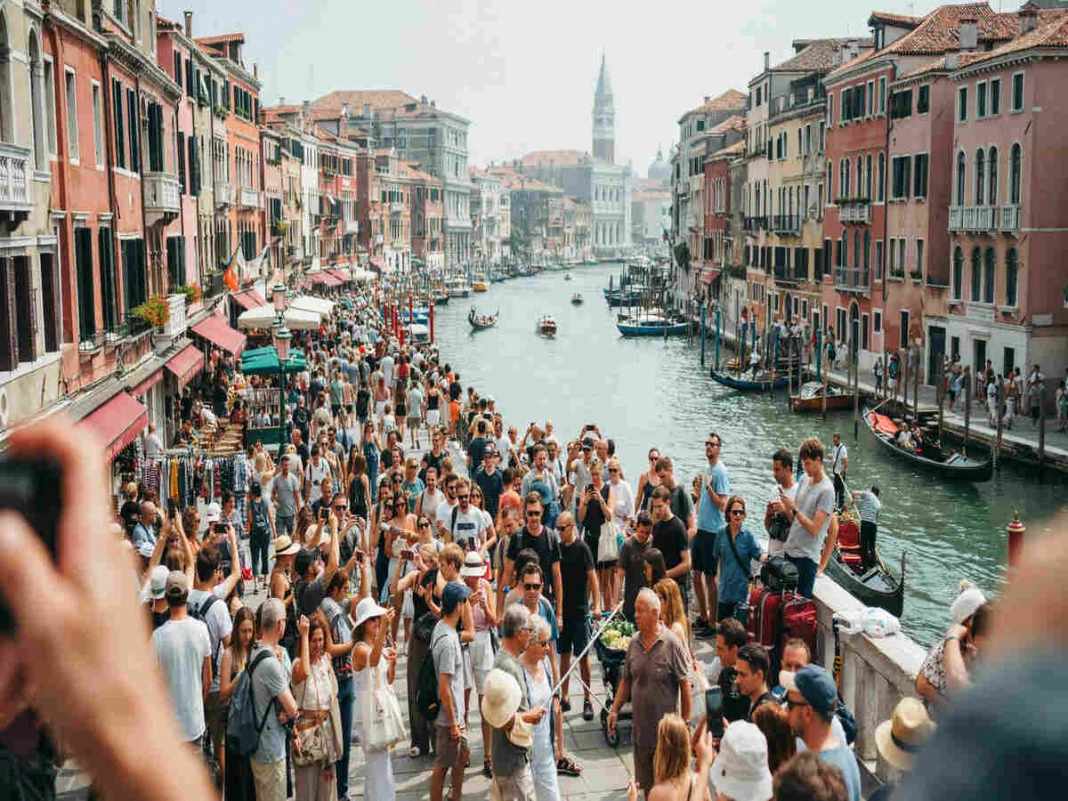


Spain, Italy and other European spots are working harder to deal with the overtourism problem. More and more visitors are putting stress on landmarks, housing and daily life. Venice is increasing tourist fees. Barcelona is making rules for holiday rentals. Amsterdam is still seeing crowds even with rules already in place. At the same time meanwhile the European Union has introduced new plans to manage tourism more responsibly. These steps are being taken ahead of 2027. The number of tourists is expected to hit 1.57 billion by 2026. Governments now face a challenge. They want to keep places welcoming for visitors while ensuring local communities are not pushed too far.
Famous cities are facing growing pressure from millions of visitors. Japan is also taking action through higher accommodation taxes and better crowd management. Meanwhile, the European Union has announced a major tourism strategy. These changes raise an important question. Can popular destinations welcome more tourists while protecting local people, historic landmarks and public services?
Advertisement
Advertisement
Global Tourism Boom Sparks Growing Fears Over Record Visitor Crowds
International tourism is moving towards another record year despite high travel costs and global uncertainty.
The WTM Global Travel Report 2026 forecasts around 1.57 billion international tourist arrivals in 2026. Tourism Economics also projects 8% growth in 2027 if geopolitical tensions ease.
Advertisement
Advertisement
However, these are forecasts rather than confirmed annual results.
UN Tourism reported approximately 690 million international arrivals during the first six months of 2026. This represented growth of just 0.4%.
Advertisement
Advertisement
The figures show that global tourism remains strong, although growth differs between regions.
Popular cities continue to face pressure on housing, transport, historic sites and public spaces.
Advertisement
Advertisement
Venice Expands Tourist Access Fees as Italy Prepares for 2027
Venice is taking stronger action against overcrowding.
The Italian city has approved 72 tourist access-fee days for 2027, compared with 60 days in 2026.
The new calendar begins on 26 March and ends on 15 August 2027.
On designated days, the charge will apply between 8.30 am and 4.30 pm. The maximum fee will be €10, although final payment arrangements remain subject to further decisions.
Advertisement
Advertisement
Venice wants to manage day visitors and reduce pressure on its historic centre.
However, the fee is not a strict visitor cap.
Its effectiveness will depend on whether tourists change their travel dates.
Spain Tightens Tourism Rules as Barcelona Faces Housing Pressure
Spain is addressing another major problem linked to tourism growth.
Barcelona plans to end licences for more than 10,000 tourist flats when their existing permissions expire in November 2028.
The city wants to return these homes to residential use, as tourist accommodation has become a central issue in the housing crisis though it is not the sole driver of rising property prices.
Advertisement
Advertisement
Tourist accommodation has become an important part of the wider debate about housing costs and availability.
However, tourism is not the only reason property prices rise. Housing shortages and investment also influence the market.
Barcelona’s policy shows how city authorities are trying to balance visitor demand with residents’ needs.
The challenge is protecting local communities without damaging the tourism economy.
Rome Introduces New Trevi Fountain Charge to Manage Crowds
Rome has introduced a new approach to managing one of Italy’s most famous attractions.
Since 2 February 2026, tourists and non-residents have faced a €2 charge to enter the area closest to the Trevi Fountain.
Advertisement
Advertisement
Visitors can still admire the landmark from outside the restricted area without paying.
The measure aims to improve crowd control and protect the visitor experience.
Unlike Venice’s wider access-fee system, Rome’s charge applies to a specific attraction area.
Both measures reflect growing interest in managing busy places through targeted fees.
However, charging visitors does not automatically reduce overall tourism demand.
Japan Raises Kyoto Hotel Taxes as Popular Attractions Face Pressure
Japan is also responding to tourism-related challenges.
Advertisement
Advertisement
Kyoto introduced a revised accommodation tax on 1 March 2026.
The system has five price levels. Visitors staying in accommodation costing ¥100,000 or more per person per night pay ¥10,000 in tax per person per night.
Lower-priced accommodation attracts smaller charges.
Kyoto also provides crowd forecasts to help visitors avoid busy sightseeing areas.
These measures aim to improve tourism management while protecting daily life for residents.
Japan’s approach shows that destinations can combine visitor information with targeted charges.
Advertisement
Advertisement
Such policies may help distribute crowds without restricting every tourist.
Amsterdam Faces Rising Tourism Pressure Despite Hotel Restrictions
Amsterdam remains another important example of Europe’s overtourism challenge.
Official city forecasts suggest tourist overnight stays could reach 25.6 million in 2027.
The figure would exceed the preliminary 23.7 million recorded for 2025.
Amsterdam has restricted new hotel development and applies a tourist tax of 12.5% of the accommodation price before VAT.
However, accommodation controls alone may not solve congestion.
Advertisement
Advertisement
Some visitors may stay outside the city and travel into the centre.
This can increase pressure on nearby areas and transport networks.
Amsterdam’s experience highlights the need for coordinated tourism and infrastructure planning.
European Union Unveils Major Strategy to Fight Tourism Imbalances
A significant development arrived on 4 November 2026.
The European Commission introduced its new Sustainable Tourism Strategy to strengthen tourism while protecting destinations.
The plan focuses on better visitor management, improved tourism data and travel throughout the year.
Advertisement
Advertisement
It also proposes an EU Model for Tourism Management and a Toolbox for Balanced Tourism.
The Commission’s published timetable places the development of these management initiatives in the second half of 2027.
The strategy does not introduce a single tourist limit across Europe.
Instead, it aims to help countries and cities develop suitable local policies.
The wider objective is to spread tourism benefits more fairly.
United Kingdom Moves Towards New Visitor Charges
The United Kingdom is also exploring ways to make tourism contribute more directly to local services.
Advertisement
Advertisement
Edinburgh introduced a 5% visitor levy for eligible accommodation stays beginning on 24 July 2026.
The charge applies to accommodation costs for up to five consecutive nights.
Meanwhile, the UK Government introduced a Visitor Levy Bill for England on 4 November 2026.
The proposed legislation would allow qualifying local authorities and mayors to introduce overnight accommodation charges.
However, it has not yet created a nationwide tourist tax in England.
These developments show growing interest in using tourism revenue to support infrastructure and communities.
Advertisement
Advertisement
Smaller Destinations Could Face New Risks as Travellers Seek Quieter Holidays
Some travellers are looking beyond famous cities to escape large crowds.
This could benefit smaller towns, rural regions and lesser-known attractions.
However, moving visitors elsewhere is not always a simple solution.
Smaller communities may lack sufficient roads, public transport, accommodation and waste services.
A sudden rise in tourists could create new overcrowding problems.
Authorities must therefore examine local capacity before promoting emerging destinations.
Advertisement
Advertisement
The goal should be to distribute tourism responsibly rather than simply move pressure from one location to another.
What Will the Overtourism Crisis Mean for Travellers in 2027?
Travellers should prepare for more destination-specific rules in 2027.
Some locations may require advance reservations. Others may introduce visitor charges, accommodation restrictions or better crowd-management systems.
The United Nations has also designated 2027 as the International Year of Sustainable and Resilient Tourism.
This creates an opportunity for stronger international cooperation.
The challenge is significant. Tourism supports businesses, employment and local economies unmanaged growth can damage historic places and disrupt daily life
With overtourism becoming a bigger issue, many popular tourist destinations are looking to create new methods to help manage the influx of tourists. Countries like Spain, Italy and others are creating new policies and increasing tourist costs to help protect the cities and local communities. However, simply charging tourists more won’t fix all the issues. Improving transport in cities, providing cheap housing and improving the public services to help the cities. Although tourism is an important source of employment for these countries, it shouldn’t become a burden on the daily lives of the people living there. In 2027 the real challenge will be finding the correct balance between helping tourists enjoy some of the most beautiful places in the world but also ensuring that they’re livable for the people who live there.