

A major structural realignment across Mesoamerican territorial development and sustainable travel has been initiated through strategic multilateral financing. Anchored by the newly established European Investment Bank regional representation in Panama City under the European Union’s Global Gateway agenda, comprehensive capital deployment is being directed toward clean energy transitions, low-carbon transit corridors, marine water sanitation, and inclusive community microfinance. By replacing fragmented regional infrastructure with unified cross-border public investments, ecological preservation and high-value leisure tourism are being systematically aligned, positioning Central America and Mexico as a unified, climate-resilient economic corridor designed to foster durable local prosperity and cross-border environmental integrity.
Multilateral Governance and Regional Representation
A major operational milestone was reached on 5 November 2026, when the regional representation for Central America and Mexico was formally launched by the European Investment Bank during the 30th Ibero-American Summit in Madrid. Headquartered in Panama City and operated under a host country agreement since October 2026, a permanent institutional bridge has been established by this dedicated diplomatic and technical outpost between the European Union and six partner nations: Panama, Costa Rica, El Salvador, Guatemala, Honduras, and Mexico.
The operational vanguard of EIB Global—the specialised development arm established by the EIB Group to deliver international partnerships under the European Union’s Global Gateway strategy—is embodied by the establishment of the Panama City regional office. Up to €300 billion in worldwide public and private capital is intended to be mobilised by Global Gateway between 2021 and 2027, with a formal commitment made by EIB Global to finance at least one-third of that aggregate total. In Latin America and the Caribbean alone, €1.8 billion in total financing commitments was recorded by the EIB in 2025, deploying capital to climate change mitigation, sustainable transport, water security, and gender-inclusive microfinance.
Panama’s designated role as the institutional nexus for this capital deployment has been rooted in long-standing historical cooperation. More than $1.1 billion in cumulative financing has been directed by the Bank to Panamanian strategic projects, including a $500 million investment allocated for the expansion of the Panama Canal, alongside substantial outlays designated for the modern urban rail infrastructure of the Panama Metro.
Advertisement
Advertisement
At the formal launch in Madrid, the fundamental objectives of the new office were highlighted by EIB President Nadia Calviño, by whom it was affirmed that the institution was already regarded as a trusted partner in the region through the sustained financing of the Panama Canal, water infrastructure, healthcare networks, small and medium-sized enterprises (SMEs), and women’s economic empowerment. It was further stated by Calviño that transcontinental ties would be reinforced, major project implementation would be expedited, and tangible, lasting benefits would be delivered to millions of citizens and commercial enterprises by the Panama representation.
This strategic alignment was echoed by Panama’s Minister of Foreign Affairs, Javier Martínez-Acha Vásquez, by whom it was observed that Panama’s geographic connectivity and established institutional partnerships were being leveraged by hosting the regional representation. It was emphasised by the Minister that technical preparation, structured financing, and the execution of complex transnational operations across clean energy, sustainable mobility, municipal sanitation, and technological innovation throughout the Central American Isthmus and Mexico would be streamlined by the operational presence of the EIB in Panama City.
Advertisement
Advertisement
Powering Paradise: Grid Harmonisation and Off-Grid Eco-Resort Resilience
The cornerstone of the EIB’s renewed operational presence in Central America is constituted by its flagship regional electricity integration programme. Formally approved under EIB project reference 20240300 as the “ELECTRICITY INTEGRATION OF CENTRAL AMERICA LE” (Lending Envelope), €1 billion in long-term development financing has been allocated by this landmark operation toward a total estimated investment programme of €2 billion, backed comprehensively by the European Fund for Sustainable Development Plus (EFSD+) and the Global Europe Neighbourhood, Development and International Cooperation Instrument (NDICI) guarantees.
Structural limitations inherent to the Central American Electrical Interconnection System (SIEPAC) and the regional electricity market (Mercado Eléctrico Regional—MER), technically governed by the Regional Operating Agency (Ente Operador Regional—EOR), are directly addressed by this facility. While basic bilateral electricity sales were historically enabled by SIEPAC transmission corridors, remote regions were frequently isolated by network bottlenecks and transmission line losses. Under the lending envelope financed by EIB Global, high-voltage substations are being expanded, automated grid-balancing mechanisms are being installed, and new regional interconnectors are being constructed to double cross-border transfer capacity from 300 MW to 600 MW.
A catalytic effect on sustainable tourism is produced by the geographical distribution of regional power generation:
- Baseload Geothermal and Hydroelectric Reserves: Over 98% of domestic electricity is generated from renewable sources in Costa Rica, derived from volcanic cordilleras and large-scale reservoirs, while extensive geothermal and biomass capacities are maintained in Guatemala.
- Solar and Wind Expansions: Substantial utility-scale solar photovoltaic and wind installations have been added across El Salvador, Honduras, and Panama.
- Corridor Decarbonisation: Surplus renewable power generated in exporting jurisdictions is enabled to flow across upgraded borders to offset localized deficits, dramatically decreasing dependence on imported heavy fuel oils and diesel generation.
National Sub-Operations and Hospitality Integration
Major national sub-operations have been executed under this regional framework:
- Costa Rica Grid Modernisation (Project 20250019): A sovereign-guaranteed loan of €170,285,227.76 (approximately USD 200 million) was signed in late December 2025 with the state utility Instituto Costarricense de Electricidad (ICE). The modernisation and expansion of national transmission networks are funded under this allocation, supporting the National Decarbonisation Plan (2018–2050) through the extension of high-capacity feeders directly into remote rural and coastal tourism zones, including Guanacaste and the Osa Peninsula.
- El Salvador Transmission Modernisation (Project 20250023): An allocated framework facility of USD 250 million (EUR 218 million) was approved in July 2026 to support the national transmission utility Empresa Transmisora de El Salvador (ETESAL) within an overall USD 561 million capital expenditure plan. Substations are being modernised, interconnections with Honduras and Guatemala are being reinforced, and transmission lines linking Pacific coastal leisure destinations with clean energy grids are being constructed.
- Guatemala and Honduras Pipeline: Follow-on sub-operations with public transmission utilities in Tegucigalpa and Guatemala City are actively being prepared by the Panama City office, targeting critical nodes supplying the Petén rainforest biosphere and the Caribbean Bay Islands of Roatán and Utila.
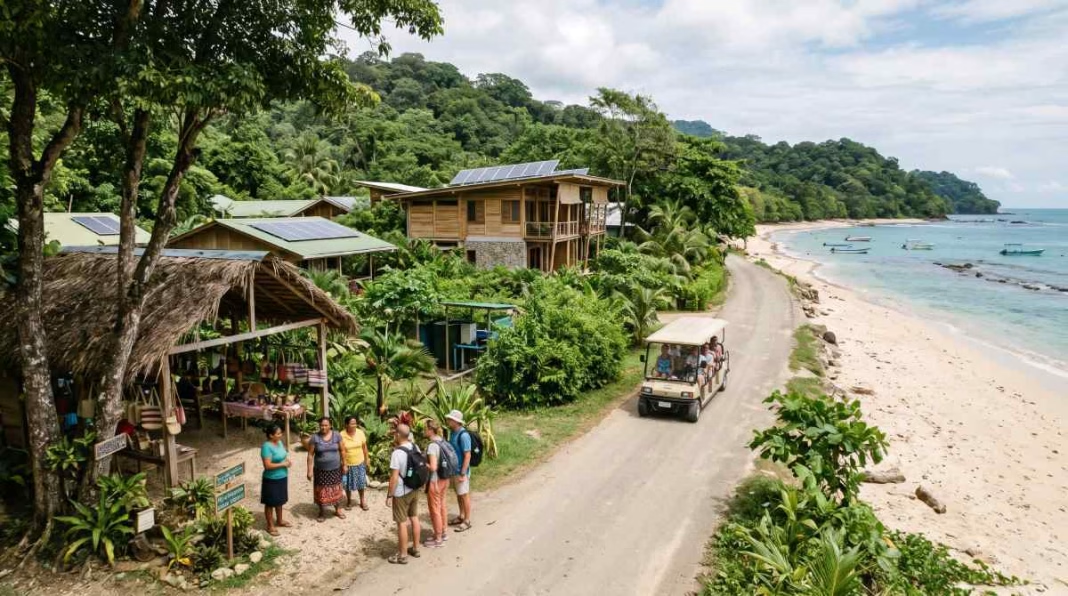
Affordable and uninterrupted baseline electricity is provided to green hospitality operators through this harmonised power architecture. Remote diesel generators—previously operated by boutique eco-resorts at high operational cost—are being replaced by clean, stabilized distribution feeds at standard commercial tariffs. Financial savings are consequently redirected into habitat conservation, guest education, and community initiatives, while adjacent cloud forests and coastal ecosystems are preserved from acoustic disturbance.
Bridging Mesoamerica: Low-Emission Mobility and Multi-Destination Travel Corridors
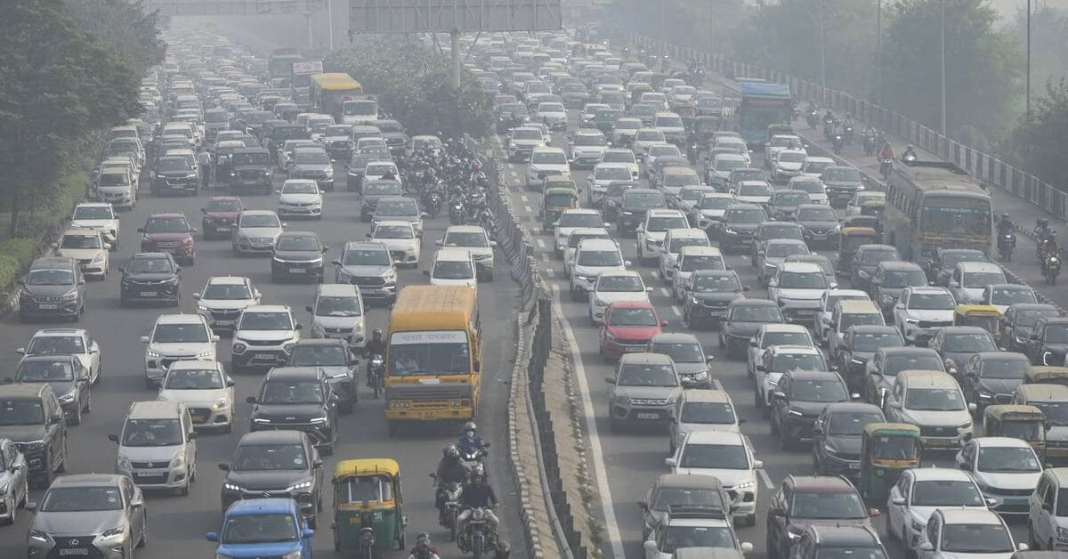
Multi-destination leisure travel in Mesoamerica was long hindered by regional transit fragmentation. Although extended itineraries encompassing Mayan archaeological monuments, Pacific surf zones, and Panamanian rainforests were widely sought by international visitors, multi-country journeys were historically restricted by disjointed regional bus lines, congested border facilities, and carbon-intensive domestic flights.
Advertisement
Advertisement
Technical assistance and concessional financing are being deployed by EIB Global into sustainable transport networks connecting with transnational crossing points. These initiatives build upon previous urban transit financing, including the co-funding of Panama Metro Line 1. Urban rail in Panama is currently being expanded through Line 3—a 26.7-kilometre monorail system comprising 14 stations running through an undersea tunnel beneath the Panama Canal to Panama Oeste. Furthermore, feeder networks such as the $255.1 million San Miguelito Cable Car project are being integrated with primary regional hubs, mitigating surface congestion bottlenecks.
These nodes are being linked with transnational transit corridors. Through blended mechanisms like the Latin America and Caribbean Investment Facility (LACIF), feasibility assessments for regional rail and low-emission electric bus networks along arterial routes are being supported. Standardised public transit allows collaborative “Mesoamerican Trails” to be promoted by tourism ministries under the Central American Tourism Integration System (Secretaría de Integración Turística Centroamericana—SITCA).
The strategic value of these transit enhancements is reinforced by sustained arrival numbers recorded by UN Tourism:
- A 17% growth over 2019 levels was documented in Central America in 2024, marking one of the fastest recovery rates globally.
- A 5% year-on-year increase in arrivals was registered across the region in 2025, contributing to record international tourism export receipts.
- An 18% expansion in international visitor volume was confirmed during the first quarter of 2026.
Visitor spending is enabled to disperse beyond major urban centres and isolated coastal enclaves, distributing financial benefits into rural communities, protected cultural heritage reserves, and boutique hospitality networks.
Guarding the Coastline: Coastal Adaptation, Beach Preservation, and Water Security
The leisure economy of Mesoamerica is underpinned by the biological integrity of its coastlines, spanning the Mesoamerican Barrier Reef System, Pacific surf beaches, and protected mangrove estuaries. However, severe climate pressures are faced by these ecosystems, including storm-induced coastal erosion, sea level rise, aquifer salinisation, and marine pollution from untreated municipal effluent.
Severe risks are posed to coral systems by obsolete municipal sewage infrastructure. Elevated nutrient levels leading to macroalgae blooms and reef degradation are triggered when untreated discharge enters coastal waters. Concurrently, operational disruptions and reliance on trucked freshwater supplies are caused during dry seasons when municipal supplies run low.
Advertisement
Advertisement
Targeted investments are directed into coastal resilience and water security through the Clean Oceans Initiative—a multi-donor partnership coordinated between the EIB, Agence Française de Développement (AFD), KfW, Cassa Depositi e Prestiti (CDP), and Instituto de Crédito Oficial (ICO):
- Panama Sanitation Program (PSP): Executed via the Ministry of Health (MINSA) and IDAAN, untreated municipal sewage from the Bay of Panama and Pacific estuaries has been intercepted and transferred into secondary and tertiary treatment facilities, providing an engineering benchmark for regional coastal preservation.
- Costa Rican Hydrological Enhancements: Potable water networks and sewage infrastructure in coastal tourism cantons are being extended by the national utility Instituto Costarricense de Acueductos y Alcantarillados (AyA).
- Regulatory Compliance: Strict ecological standards enforced by the Costa Rican Tourism Board (ICT) under the Certification for Tourism Sustainability (CST) and the Ecological Blue Flag (Bandera Azul Ecológica) program are directly satisfied through these treatment facilities, safeguarding seawater purity indicators and potable water standards.
The Human Element: Empowering Women-Led Micro-Enterprises and Community Tourism
While physical connectivity is established by electrical interconnections and rapid transit lines, the cultural fabric of Mesoamerican travel is sustained by local community initiatives, indigenous associations, agricultural cooperatives, and family-managed lodges.
Although a substantial majority of community-level tourism ventures are founded and operated by women, structural barriers have routinely been encountered in credit markets due to onerous collateral conditions imposed by commercial lenders.
Liquidity is channelled by EIB Global through specialized intermediaries, guarantee structures, and trust funds:
- DINAMICA II Facility: Supported jointly by the EU LACIF, CABEI/BCIE, KfW, and the EIB, credit allocations are targeted toward micro, small, and medium-sized enterprises (MSMEs), with dedicated funding tranches ring-fenced for women entrepreneurs and rural green ventures.
- Panamanian Micro-Credit Alignment: In alignment with the Master Plan for Sustainable Tourism (PMTS) managed by the Tourism Authority of Panama (ATP), tailored micro-loans are distributed in partnership with institutions such as Microserfin to finance renewable solar installations, ecological trail construction, and digital booking infrastructure among indigenous Guna, Ngäbe-Buglé, and Emberá communities.
- RED SOFIA Network: In Costa Rica, gender equality, operational security, and community tourism standards are advanced under the ICT RED SOFIA program, enabling certified female entrepreneurs to access differentiated promotional backing and CST certification credits.
Economic leakage—wherein tourism expenditure is extracted by foreign transportation operators and multinational hotel chains—is structurally mitigated when accommodation, guiding, and culinary operations remain managed by local women entrepreneurs, retaining capital within municipal economies to fund healthcare, schooling, and environmental stewardship.
Economic Multipliers and Structural Framework
A structural transition from fragmented enclaves to integrated, low-impact regional corridors is realized through this institutional convergence:
Advertisement
Advertisement
| Analytical Dimension | Traditional Fragmentation Model | Integrated EIB Global / Global Gateway Model |
| Grid Power Sourcing | Isolated, polluting diesel generators; volatile operating costs. | Harmonised cross-border clean electricity via SIEPAC/MER lending envelopes. |
| Regional Travel Logistics | Congested border posts, fragmented bus networks, heavy carbon footprints. | Intermodal public transport, urban rapid transit, and low-emission transnational corridors. |
| Coastal Ecological Health | Untreated municipal wastewater discharge; degradation of coral reefs. | Advanced sewage treatment via the Clean Oceans Initiative; certified Blue Flag coastlines. |
| Local Economic Retention | Extensive tourism revenue leakage to multinational conglomerates. | Direct micro-lending to women-led MSMEs; retention of community-based revenue. |
| Private Investment Climate | High infrastructure risk; commercial investment confined to isolated resorts. | Multilateral risk mitigation attracting green bond issuances and certified eco-hospitality. |
A decisive structural transition in international development finance and regional tourism governance has been established through EIB Global’s coordinated interventions. As cross-border electrical grids, low-emission mobility networks, coastal watersheds, and women-led community enterprises are reinforced, sustainable corridors are secured, ensuring that regional tourism growth is harmonised with long-term climate resilience.