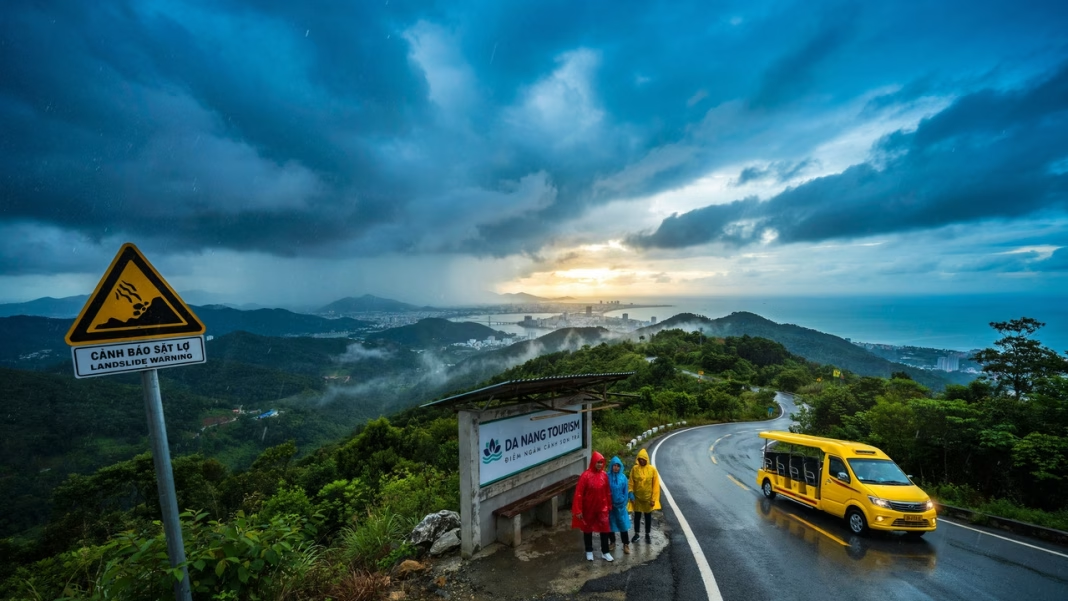


Da Nang, Vietnam: Tourists visiting Da Nang between 9 and 11 November 2026 face a significant weather alert as authorities warn of heavy rainfall, thunderstorms, landslides and flash flooding. On 9 November, the Management Board of Son Tra Peninsula and Da Nang Tourism Beaches urged residents and visitors to avoid dangerous mountain roads, suspend trekking and postpone sightseeing during severe weather. Vietnam’s national meteorological authority has also forecast widespread heavy rainfall across central Vietnam, with some locations facing exceptionally high rainfall totals. The warning puts visitor safety, outdoor tourism and access to Son Tra Peninsula firmly in focus.
Da Nang Heavy Rain Warning Raises Serious Concerns for Tourists Visiting Vietnam
Da Nang’s three-day heavy rain warning has brought renewed attention to the dangers of exploring mountainous tourist attractions during severe weather. Authorities have advised people to place personal safety ahead of holiday plans, particularly around Son Tra Peninsula.
Advertisement
Advertisement
The warning covers 9–11 November 2026. Rainfall could affect mountain roads, scenic viewpoints, coastal excursions and outdoor activities across the city.
The Central Vietnam Meteorological and Hydrological Station warned of moderate to heavy rain, with some locations experiencing very heavy downpours and thunderstorms.
The Management Board has issued specific advice for people planning to visit Son Tra. Visitors should avoid trekking, hiking and sightseeing when conditions become dangerous.
The warning is preventive. It does not mean every tourist attraction across Da Nang has closed.
Advertisement
Advertisement
However, travellers should not assume that familiar sightseeing routes remain safe during intense rainfall.
Vietnam’s Latest Forecast Warns of Exceptionally Heavy Rainfall Across Central Regions
Vietnam’s national meteorological authority issued an updated forecast at 3.30 am local time on 10 November 2026.
Advertisement
Advertisement
The bulletin forecasts widespread heavy to very heavy rainfall from the early morning of 10 November through the night of 11 November across Hue, Da Nang and eastern areas from Quang Ngai to Gia Lai.
Rainfall totals could reach 150–280 millimetres across the wider forecast area, with isolated locations receiving more than 450 millimetres.
These are forecast figures for the specified region. They are not confirmed rainfall measurements for Da Nang city itself.
The authority also warned that rainfall intensity could exceed 100 millimetres within three hours in some locations.
Advertisement
Advertisement
Thunderstorms may bring lightning, strong gusts, hail and localised whirlwinds. Heavy rain could flood low-lying urban areas, trigger flash floods and destabilise steep slopes.
The official bulletin classified the weather-related disaster risk at Level 1 and indicated that widespread heavy rain should gradually ease from 12 November. khituongvietnam.gov.vn+1
Key Weather Forecast and Tourist Safety Information
| Category | Official information |
|---|---|
| Destination | Da Nang, Vietnam |
| Main warning period | 9–11 November 2026 |
| Latest verified bulletin | 10 November, 3.30 am local time |
| Main weather threats | Heavy rain, thunderstorms, lightning and strong winds |
| Forecast rainfall | 150–280 mm across the wider affected region |
| Isolated rainfall forecast | Above 450 mm in some locations |
| Intense rainfall risk | More than 100 mm within three hours |
| Geographic concern | Son Tra Peninsula, steep slopes and flood-prone areas |
| Official rainfall risk level | Level 1 |
| Expected rainfall trend | Gradual reduction from 12 November |
| Main visitor advice | Postpone hazardous outdoor sightseeing and follow local instructions |
These figures describe an evolving weather forecast, not the final rainfall recorded after the event.
Son Tra Peninsula Becomes the Main Focus of Da Nang’s Tourist Safety Advisory
Son Tra Peninsula is one of Da Nang’s best-known natural attractions. Its forested mountains, winding roads and coastal viewpoints attract visitors seeking scenery beyond the city’s urban beaches.
However, these same geographical features create challenges during heavy rain.
The peninsula contains steep mountain slopes, forest roads, streams and elevated viewing locations. Rain can reduce visibility and make road surfaces slippery.
Advertisement
Advertisement
On 9 November, the Management Board issued a precautionary warning asking residents and tourists to reconsider visits during adverse weather.
The advice covers sightseeing, mountain walking, trekking and travelling on roads crossing the peninsula.
Visitors have been told not to enter areas where authorities have issued restrictions or safety warnings.
The main message is straightforward: a planned mountain excursion should not continue simply because transport arrangements or sightseeing bookings have already been made.
Tourists Urged to Stop Trekking and Hiking as Rain Makes Mountain Routes Dangerous
Trekking and hiking are among the outdoor activities most directly affected by the weather warning.
Heavy rain can make trails slippery and difficult to navigate. Mud, standing water and reduced visibility can increase the danger of falls.
Advertisement
Advertisement
The Management Board has specifically advised visitors not to attempt mountain walks or travel along Son Tra’s roads during severe weather.
This applies particularly to steep sections, locations exposed to falling trees and areas vulnerable to landslides.
Tourists should avoid streams and creeks during heavy rain. Even a normally shallow watercourse may become hazardous when strong currents develop.
Visitors should also resist the temptation to enter secluded forest tracks to avoid busy roads or reach alternative viewpoints.
A quieter path is not necessarily a safer path.
For organised excursions, tourists should contact their tour operator before departure and request updated information about access conditions.
Advertisement
Advertisement
If weather conditions are unsafe, postponing the activity is the appropriate decision.
Landslide Warnings Extend Across 31 Communes and Wards in Da Nang
The regional meteorological warning supplied in the 9 November report identified flash flood and landslide risks across 31 communes and wards.
Son Tra Ward was among the areas requiring particular attention.
The warning highlighted locations near the observation tower and mountain slopes at elevations between 500 and 700 metres.
These elevated sections deserve special caution because they combine steep terrain with exposure to heavy rainfall.
The source report also described landslide repair work underway on Son Tra Peninsula.
Advertisement
Advertisement
This provides important context for visitors. Mountain roads may already have vulnerable sections before a new period of intense rain begins.
National forecasters have separately warned that heavy precipitation can trigger landslides on slopes and flash floods in smaller rivers and streams.
The 31-area warning identifies locations exposed to potential hazards. It does not confirm that landslides occurred in all 31 areas during this weather event.
Why Son Tra’s Famous Mountain Roads Can Become Unsafe During Severe Rain
Son Tra’s scenic roads are an important part of the peninsula’s appeal.
Visitors use them to reach temples, viewpoints and natural landscapes overlooking Da Nang and the coast.
The local authorities’ warning makes road safety a central concern during the current rainfall.
Advertisement
Advertisement
Drivers have been advised to reduce speed and maintain a safe distance from other vehicles.
They should avoid parking beneath large trees, near unstable slopes or in locations with limited visibility.
Stopping beside a scenic mountain road to photograph rain clouds or waterfalls may seem attractive. However, doing so can expose visitors to falling branches, moving debris or approaching traffic.
Driving conditions can also change quickly between lower and higher elevations.
A road that appears manageable near the city may become much more difficult farther uphill.
Tourists should follow any traffic restrictions immediately and never attempt to pass a closed barrier.
Advertisement
Advertisement
Son Tra Peninsula’s Popular Tourist Attractions Face Disruption During the Rainy Weather
The warning affects an area containing some of Da Nang’s most recognisable natural and cultural attractions.
According to Da Nang’s official tourism information portal, Son Tra offers a combination of mountain scenery, forest ecosystems, religious landmarks and coastal viewpoints.
The destination features Linh Ung Pagoda, Ban Co Peak, Tien Sa Lighthouse, the Heritage Banyan Tree and several scenic observation points.
These attractions form part of the city’s established sightseeing itineraries. However, visitors must assess access conditions before travelling during the current weather alert.
Major Tourist Attractions Requiring Extra Caution
- Ban Co Peak: A high mountain viewpoint reached by steep roads and steps. Visits should be postponed during dangerous weather.
- Linh Ung Pagoda: A major religious landmark overlooking the coast. Visitors should confirm road conditions before travelling.
- Tien Sa Lighthouse: An elevated coastal viewpoint where rain and poor visibility may affect access.
- Heritage Banyan Tree: A natural landmark surrounded by forest, making official access instructions particularly important.
- Vong Canh Hill: A scenic observation location where wet roads and limited visibility may complicate travel.
- Dong Dinh Museum: A cultural attraction within Son Tra’s natural landscape. Visitors should verify access and operating arrangements.
- Tien Sa Beach: A coastal attraction where conditions should be checked before any outdoor visit.
These are locations requiring sensible precautions, not a list of officially confirmed closures.
Da Nang’s tourism portal identifies these sites in its 2026 sightseeing itineraries. danangfantasticity.com+1
Advertisement
Advertisement
Flash Floods and Fast-Flowing Streams Create Additional Danger for Visitors
Flash flooding is another major concern during prolonged heavy rainfall.
Unlike ordinary flooding, flash floods can develop rapidly, especially when large amounts of rain fall over mountainous terrain.
Son Tra Peninsula contains streams running from its forested slopes towards lower ground.
During intense rainfall, water levels and currents may rise quickly.
The Management Board has specifically warned visitors not to approach streams, creeks or areas containing strong currents.
This advice is particularly important for travellers who enjoy photography, nature walks and exploring waterfalls.
Advertisement
Advertisement
A stream that appears calm at the beginning of an excursion may become dangerous after heavy rainfall higher in the mountains.
Visitors should never attempt to cross moving floodwater, whether on foot or by vehicle.
They should also avoid walking through flooded underpasses or entering unfamiliar water-covered roads.
The safest response is to move away from exposed areas and follow instructions from local authorities.
Da Nang’s Coastal Tourism Industry Faces a Test as Outdoor Activities Become Weather-Dependent
Da Nang is widely recognised for its coastal tourism, natural scenery and urban attractions.
Its appeal extends beyond beach holidays. Visitors also explore mountain viewpoints, cultural landmarks, forest landscapes and outdoor recreation areas.
Advertisement
Advertisement
The November weather alert highlights how closely these activities depend on safe conditions.
Heavy rainfall can affect sightseeing schedules, reduce visibility and make outdoor excursions less suitable.
Tour operators may need to review activities involving mountain roads or exposed terrain.
Hotel teams and tourism businesses also have a practical role in communicating accurate weather information to guests.
However, the warning does not establish that Da Nang’s entire tourism industry has stopped operating.
There is no confirmed citywide tourism shutdown in the information reviewed.
Advertisement
Advertisement
The distinction is important for international visitors. A warning concerning dangerous outdoor conditions should not automatically be interpreted as the closure of every hotel, restaurant or attraction.
Official Tourism Guidance Already Restricts Unauthorised Trekking on Son Tra Peninsula
The current weather warning adds to existing visitor protection measures for Son Tra Peninsula.
In September 2026, the Son Tra Peninsula and Da Nang Tourism Beaches Management Board issued separate guidance against unauthorised trekking and ecotourism activities in the peninsula’s protected forest.
The official tourism portal explained that the ecotourism, resort and recreation plan for Son Tra Nature Reserve had not yet been approved.
Consequently, individuals and organisations cannot independently arrange activities within the protected forest without the necessary permission.
Visitors were advised against purchasing or joining unapproved trekking, wildlife observation and forest exploration tours.
Advertisement
Advertisement
The earlier advisory also warned against entering the forest through unofficial paths or participating in unauthorised nighttime activities.
These restrictions concern forest protection and visitor safety. They are separate from the temporary November rainfall warning.
Together, the two advisories underline the importance of travelling through permitted routes and respecting management instructions. danangfantasticity.com
Why November’s Heavy Rain Is Particularly Important for Da Nang Tourism
November falls within the wetter period of Da Nang’s annual weather cycle.
The city’s official tourism guidance identifies October through February as a rainy period when heavy rainfall, slippery roads and fog can make Son Tra more difficult to explore.
By comparison, March through September generally offers more favourable conditions for mountain sightseeing.
Advertisement
Advertisement
This seasonal pattern helps explain why authorities are asking tourists to reconsider outdoor excursions during the current episode.
However, normal seasonal rainfall and an official severe weather warning are not the same thing.
The 9–11 November alert concerns a specific period of potentially intense rainfall and associated hazards.
Tourists should therefore rely on current official forecasts rather than assuming the weather is simply typical November rain.
Even experienced visitors to Vietnam should reassess plans when authorities warn of unstable slopes, flooded roads or dangerous streams.
What Travellers Should Know
Visitors staying in Da Nang between 9 and 11 November should review their outdoor itinerary and avoid unnecessary journeys into hazardous mountain areas.
Advertisement
Advertisement
The most important precaution is to follow the Management Board’s instructions, particularly around Son Tra Peninsula.
Before Booking or Starting an Excursion
- Check the latest official rainfall forecast.
- Confirm whether the attraction is accessible.
- Ask tour operators about postponement arrangements.
- Avoid trekking and hiking during heavy rainfall.
- Do not enter restricted forest areas.
- Avoid streams, steep slopes and landslide-prone roads.
- Follow instructions from tourism staff and local authorities.
- Check road conditions before arranging private transport.
- Keep essential travel documents and communication devices protected from rain.
- Choose safer alternatives when outdoor activities become unsuitable.
Travellers should also distinguish between a weather warning and a confirmed service cancellation.
The available information does not verify widespread flight cancellations, airport closures or citywide hotel shutdowns caused by this particular rain episode.
Anyone travelling through Da Nang International Airport should check directly with their airline for operational updates rather than assuming flights are disrupted.
How International Tourists Can Adjust Their Da Nang Itineraries During Heavy Rain
The weather alert need not mean abandoning every part of a holiday.
However, visitors should adopt a more flexible approach and remove activities that involve unnecessary exposure to mountainous or flood-prone locations.
Advertisement
Advertisement
A planned trip to Ban Co Peak, for example, should be reconsidered if heavy rain or unsafe road conditions are forecast.
The same applies to forest walks, elevated viewpoints and remote coastal tracks.
Indoor cultural activities may provide alternatives, provided the venues remain open and journeys to them are safe.
Da Nang’s tourism information portal lists attractions such as the Museum of Cham Sculpture, Da Nang Museum and Da Nang Fine Arts Museum.
These can be considered when conditions allow, although their normal opening hours do not guarantee operation during severe weather.
Travellers should contact attractions directly before departure.
Advertisement
Advertisement
Staying closer to accommodation may also be appropriate during periods of particularly intense rainfall.
The priority is not simply finding another attraction. It is avoiding unnecessary travel during dangerous conditions.
Why This Matters
Da Nang’s three-day heavy rain warning is significant because it directly affects how tourists can safely experience one of central Vietnam’s major destinations.
Son Tra Peninsula is not merely a sightseeing location. It is an important natural attraction where tourism activities intersect with protected forest landscapes and mountainous terrain.
Heavy rainfall introduces risks that may not be immediately visible to visitors.
A scenic road can become slippery, a mountain stream can develop strong currents and a hillside can become unstable following prolonged rain.
Advertisement
Advertisement
For international visitors unfamiliar with the terrain, official warnings provide essential guidance.
The situation also demonstrates why tourism businesses must respond flexibly to changing weather conditions.
Travel providers can support visitor safety by checking access arrangements, communicating warnings and reviewing outdoor itineraries.
The longer-term lesson is about responsible destination management rather than an assumed decline in tourism demand.
There is no verified evidence in the information reviewed of a measurable fall in visitor arrivals or tourism revenue resulting from this specific warning.
Rainfall Forecast Shows Why Visitors Should Continue Monitoring Conditions Through 11 November
Vietnam’s meteorological bulletins show how the forecast developed as the rainfall event approached.
Advertisement
Advertisement
An earlier national forecast warned that Hue, Da Nang and eastern Quang Ngai could experience widespread heavy rainfall between 9 and 11 November.
The 9 November afternoon bulletin then forecast 150–300 millimetres across a wider area extending through Gia Lai, with isolated totals exceeding 500 millimetres.
By the early hours of 10 November, the national authority had issued another forecast.
It predicted 150–280 millimetres across Hue, Da Nang and eastern areas from Quang Ngai to Gia Lai between early 10 November and the night of 11 November.
Some locations could receive more than 450 millimetres.
These successive forecasts should not be added together because their forecast periods overlap.
Advertisement
Advertisement
They also should not be interpreted as observed rainfall totals.
The latest verified bulletin used for this report expected heavy rain across central Vietnam to gradually decrease from 12 November.
That expectation does not guarantee that every mountain road or visitor attraction will immediately become safe.
Tourist Support and Local Instructions Remain Essential During the Weather Alert
Visitors who need assistance should use official tourism support services.
Da Nang’s tourism authorities publish a visitor assistance service and contact details for the Son Tra Peninsula and Da Nang Tourism Beaches Management Board.
The Management Board’s published hotline is 0905 791 080.
Advertisement
Advertisement
Da Nang’s official tourism information portal also identifies the visitor assistance numbers 1022 and *8899.
These contacts can help travellers seek information, although service availability and the nature of assistance should be confirmed directly.
Tourists should also consult hotel reception teams, licensed guides and local management staff for location-specific instructions.
In an immediate emergency, visitors should contact the appropriate emergency services.
Most importantly, travellers should never enter a closed or restricted area simply because it appears accessible.
A temporary restriction may reflect an immediate hazard that is not obvious from the roadside.
Advertisement
Advertisement
What Tour Operators, Hotels and Travel Companies Should Consider
The weather warning also carries practical implications for travel businesses handling visitors to Da Nang.
Operators arranging mountain excursions should verify conditions before departure.
Tours involving trekking, sightseeing on elevated roads or access to secluded natural attractions require particular attention.
Travel businesses should explain why an itinerary may need to change, rather than treating a weather warning as a minor inconvenience.
Accommodation providers can help visitors by communicating official forecasts and advising against unnecessary travel.
Transport providers should avoid routing tourists through restricted or dangerous sections.
Advertisement
Advertisement
Where bookings are affected, customers should check the specific cancellation or rescheduling terms supplied by their provider.
The official warning does not establish a universal refund entitlement or mandatory cancellation policy.
Those commercial arrangements depend on the service and booking conditions.
The immediate industry priority is to ensure that guests receive accurate safety information before beginning potentially hazardous activities.
When Could Da Nang’s Weather Improve and Tourists Resume Outdoor Sightseeing?
The national meteorological authority’s early 10 November bulletin indicated that widespread heavy rainfall across central Vietnam should gradually decrease from 12 November.
This provides an expected improvement in the overall weather pattern.
Advertisement
Advertisement
However, improving rainfall conditions do not automatically remove every danger.
Mountain roads may remain wet or obstructed.
Streams may continue carrying strong currents after rain has stopped.
Slopes affected by prolonged rainfall may also require inspection before normal access is restored.
Visitors should therefore check official updates and local access instructions before restarting mountain excursions.
No verified reopening date for specific restricted sections of Son Tra Peninsula was established in the reviewed information.
Advertisement
Advertisement
Tourists should avoid treating 12 November as a guaranteed date for unrestricted sightseeing.
Frequently Asked Questions About the Da Nang Heavy Rain Warning
1. Why has Da Nang warned tourists about heavy rain?
Da Nang authorities warned visitors because heavy rainfall and thunderstorms between 9 and 11 November 2026 could create hazardous conditions. The main concerns include landslides, flash floods, slippery roads, strong currents and unsafe outdoor sightseeing conditions.
2. Is Son Tra Peninsula closed to tourists during the warning?
The information reviewed confirms an official recommendation to avoid dangerous sightseeing, trekking and road travel. It does not establish a complete closure of the entire peninsula. Visitors should follow local restrictions and confirm access before travelling.
3. Which tourist activities should visitors avoid?
Authorities have warned against trekking, hiking, mountain sightseeing and travelling through hazardous sections during severe weather. Visitors should also avoid streams, steep slippery roads, landslide-prone slopes and restricted forest areas.
4. How much rain is expected in Da Nang?
Vietnam’s national meteorological authority forecast 150–280 millimetres across a wider region including Da Nang between early 10 November and the night of 11 November. Isolated locations could receive more than 450 millimetres. These are regional forecasts, not citywide measured totals.
5. When will heavy rain in Da Nang begin to ease?
The national forecast issued early on 10 November indicated that widespread heavy rain across central Vietnam should gradually ease from 12 November. Travellers should continue checking local warnings because road and slope hazards can persist after rainfall decreases.
Advertisement
Advertisement
Closing Update: Da Nang Tourists Advised to Put Safety Ahead of Sightseeing Until Conditions Improve
Da Nang’s severe weather warning highlights the importance of careful travel planning during central Vietnam’s rainy season.
The 9–11 November rainfall episode has prompted authorities to issue specific precautions for people visiting Son Tra Peninsula.
Tourists are being encouraged to postpone dangerous outdoor activities, avoid unstable slopes and waterways, drive carefully and respect restricted areas.
The national meteorological authority’s forecast of further heavy rainfall through 11 November reinforces that advice.
Although conditions are expected to improve gradually from 12 November, visitors should rely on updated official instructions before returning to mountain routes.
For travellers exploring Da Nang, the central message remains clear: the city’s natural attractions can be enjoyed another day, but severe weather warnings must be taken seriously.