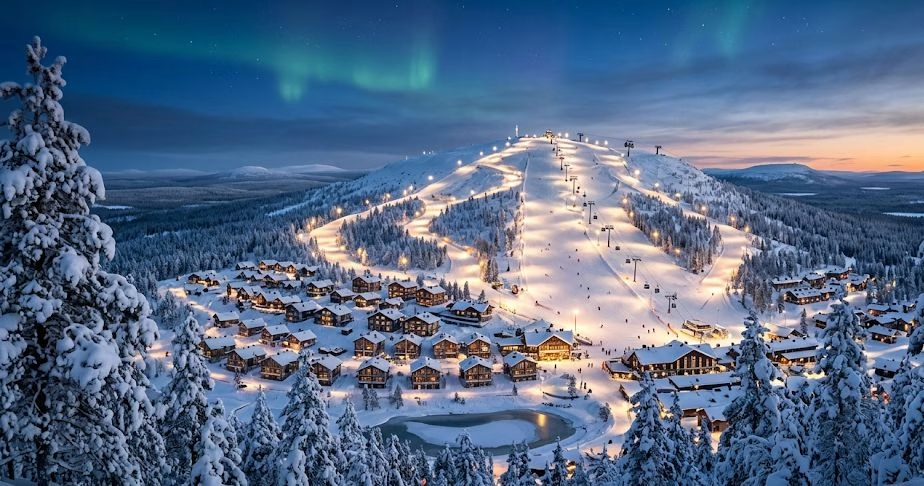


British Columbia and more destinations are seeing ski demand surge as winter travellers search for exciting mountain escapes. Whistler and others are expanding winter adventures, giving travellers more reasons to explore snowy landscapes, ski slopes and vibrant alpine towns. Moreover, British Columbia continues to attract attention as ski demand grows across Canada, while Whistler and other resorts prepare for another busy winter. As a result, winter adventures are becoming increasingly important for travellers seeking fresh experiences. Travel And Tour World urges readers to explore the complete story, discover where ski demand is rising, and learn how British Columbia, Whistler and others are reshaping winter adventures for global travellers.
Six Best Canadian Ski Resorts for the 2026–27 Winter Season: Detailed Statistics, Visitor Trends and Travel Guide
Canada is entering another major winter travel season with its mountain resorts attracting skiers, snowboarders, families and international adventure travellers.
Advertisement
Advertisement
The country’s strongest ski destinations stretch from the Coast Mountains of British Columbia to the Canadian Rockies of Alberta.
Early snowfall is already drawing attention to Canada’s winter landscape. For travellers, the bigger opportunity is planning around snow reliability, terrain, transport, accommodation, food and visitor pressure.
Advertisement
Advertisement
The six destinations below stand out for their scale, scenery, infrastructure and overall winter experience.
Canadian Ski Resorts at a Glance
| Resort | Province | Skiable terrain | Lifts | Vertical | Average annual snowfall | Longest run | 2026–27 season information |
|---|---|---|---|---|---|---|---|
| Whistler Blackcomb | British Columbia | 8,171 acres | 36 | 1,609 m | 1,072 cm | 11 km | Winter operations planned from November 2026 |
| Lake Louise Ski Resort | Alberta | 4,200 acres | 13 | 991 m | Resort snow reporting varies by location | 8 km | Nov. 6, 2026–May 2, 2027 |
| Banff Sunshine | Alberta | 3,358 acres | 12 | 1,070 m | 925 cm | — | Nearly 200-day season |
| Sun Peaks | British Columbia | 4,400 acres | 13 | 896 m | 600 cm | 8 km | Nov. 21, 2026–Apr. 4, 2027 |
| Big White | British Columbia | 7,759 acres total resort area; 2,834 acres patrolled | 17 | 777 m | About 7.5 m | 7.2 km | Nov. 26, 2026–Apr. 4, 2027 |
| Revelstoke | British Columbia | 3,121 acres | — | 1,713 m | 10.5 m | 15.2 km | 2026–27 winter bookings available |
The statistics show why these destinations appeal to different traveller groups. Whistler is the scale leader, Lake Louise combines skiing with iconic scenery, Sunshine is known for its long season, Sun Peaks is strong for families, Big White offers extensive ski-in/ski-out accommodation, and Revelstoke is aimed strongly at advanced mountain travellers.
Advertisement
Advertisement
Exact annual visitor totals for each individual resort are not publicly released consistently. CWSAA confirms that individual ski-area visitation information is confidential. This is why comparing six resorts using invented annual visitor figures would be misleading.
The following table provides the strongest available five-season comparison for Western Canadian skiing.
Advertisement
Advertisement
| Ski season | Western Canada skier visits | Comparison | Key interpretation |
|---|---|---|---|
| 2020–21 | Pandemic-affected | Below normal | International and destination travel remained restricted |
| 2021–22 | 9.1 million | Strong recovery | Domestic demand surged |
| 2022–23 | 10.3 million | Record | Strong snow and returning destination markets |
| 2023–24 | 8.75 million | -15% from record | Challenging weather affected many resorts |
| 2024–25 | 9.8 million | +12% from 2023–24 | Second-highest Western Canadian result on record |
CWSAA says Western Canada recorded 9.8 million skier visits in 2024–25, compared with 8.75 million in 2023–24 and the record 10.3 million in 2022–23. British Columbia and Yukon accounted for 7.1 million visits in 2024–25, just below the 7.4-million record set in 2022–23.
The national picture also improved.
Canadian ski areas recorded approximately 19.5 million skier visits in 2024–25, up from 17.9 million during the weather-challenged previous season.
Domestic visits accounted for approximately 17.4 million of the 19.5 million total.
Advertisement
Advertisement
The United States remained Canada’s largest international ski market, representing 5.9% of visits, while other overseas markets accounted for 3.2%.
International visits nevertheless remained about 1 million below pre-pandemic levels.
Western Canadian Ski Tourism Economic Impact
| Indicator | 2021–22 | 2022–23 | 2023–24 |
|---|---|---|---|
| Economic activity | $2.10 billion | $2.73 billion | $2.67 billion |
| GDP contribution | — | $1.98 billion | $1.90 billion |
| Jobs supported | 18,837 | 22,522 | 21,698 |
| Western Canadian skier visits | 9.1 million | 10.3 million | 8.75 million |
| Government tax contribution | $266 million | — | — |
The figures demonstrate that ski tourism is considerably larger than lift-ticket sales. Accommodation, restaurants, transport, retail, equipment rental and other visitor services all benefit from mountain tourism.
Whistler Blackcomb is the strongest choice for travellers who want maximum terrain, a large resort village and a complete mountain holiday.
The resort combines 8,171 acres of skiable terrain, more than 200 marked trails, 16 alpine bowls and three glaciers.
Its highest lift-accessed elevation reaches about 2,284 metres, while the combined mountains receive approximately 1,072 centimetres of snow annually.
Advertisement
Advertisement
The terrain breakdown is approximately 20% easiest, 35% more difficult, 25% most difficult and 20% expert-only.
The resort has 36 lifts and a combined uphill capacity of almost 70,000 riders per hour.
For a first visit, spend four or five days rather than attempting the resort in a weekend.
Use the first day for Whistler Mountain and the PEAK 2 PEAK Gondola.
Dedicate the second day to Blackcomb.
Reserve another day for lessons, guided skiing or snowshoeing.
Advertisement
Advertisement
Non-skiers can explore Whistler Village, ride the gondola, shop, visit spas and enjoy winter dining.
Whistler also offers snowmobiling, dog sledding, snowshoeing and other winter activities.
Accommodation ranges from luxury hotels and full-service resorts to condominiums and vacation homes. Tourism Whistler confirms that the destination has a broad accommodation mix suitable for different budgets and travel styles.
For luxury travellers, Fairmont Chateau Whistler provides a slopeside-style luxury base.
The Westin Resort & Spa, Whistler is another strong choice for travellers prioritising resort facilities.
For food, travellers can consider Araxi Restaurant & Oyster Bar for upscale dining or Rimrock Café for a more intimate mountain dining experience.
Advertisement
Advertisement
Whistler is particularly suitable for couples, groups of experienced skiers, families wanting extensive facilities and travellers seeking nightlife alongside skiing.
Lake Louise is one of Canada’s most scenic ski destinations.
The resort offers more than 4,200 skiable acres, 170 named runs, 13 lifts, a 991-metre vertical rise and a longest run of approximately 8 kilometres.
Terrain is divided into roughly 25% beginner, 45% intermediate and 30% advanced.
This makes Lake Louise particularly useful for mixed groups where beginners and experienced skiers want to share the same destination.
The 2026–27 ski season is scheduled for November 6, 2026, through May 2, 2027.
Advertisement
Advertisement
Travellers should combine skiing with Lake Louise sightseeing.
The wider area provides access to the famous Lake Louise Lakeshore and Moraine Lake.
Parks Canada estimated approximately 11,000 daily visitors at Upper Lake Louise during the 2025 operating season, compared with around 9,000 in 2023.
Moraine Lake averaged approximately 6,000 daily visitors in 2025, compared with around 5,000 in 2023.
Transport planning is essential.
Parks Canada says visitors should reserve shuttle transportation in advance because parking is extremely limited.
Advertisement
Advertisement
In 2025, Parks Canada shuttles transported approximately 27% of Upper Lake Louise visitors and 48% of Moraine Lake visitors.
Stay options include Post Hotel & Spa and Lake Louise Inn.
For dining, Lakeview Lounge offers a scenic setting, while Bill Peyto’s Cafe is useful for casual meals.
Travellers can also explore Saffron for Indian cuisine.
A practical itinerary is four nights.
Ski for two full days.
Advertisement
Advertisement
Use another day for Lake Louise and nearby winter scenery.
Keep one flexible day for weather.
Parks Canada warns that avalanche terrain exists around Lake Louise from November through June. Visitors should never enter marked avalanche terrain without appropriate training and equipment.
Banff Sunshine is the strongest option for travellers who want a long Canadian Rockies ski season.
The resort offers approximately 3,358 acres of skiable terrain.
It rises from a base elevation of about 1,658 metres to approximately 2,730 metres.
Advertisement
Advertisement
The vertical rise is approximately 1,070 metres.
The resort has 12 lifts, with terrain divided into roughly 20% beginner, 55% intermediate and 25% expert.
Average snowfall is approximately 925 centimetres annually.
Sunshine’s 2026–27 pass information promotes nearly 200 days of skiing and riding, with the winter season running from early November through late May.
This makes the destination particularly interesting for early-season and spring travellers.
A four-day itinerary works well.
Advertisement
Advertisement
Spend two days skiing.
Use another day to explore Banff town and the surrounding national park.
Reserve a final day for winter sightseeing, hot springs or relaxed dining.
Banff National Park recorded 4.23 million visitors in 2024, after 4.29 million in 2023.
The park recorded about 3.00 million visitors in 2020, 3.67 million in 2021, and 4.13 million in 2022.
Those figures are park-wide, not Sunshine Village skier visits.
Advertisement
Advertisement
Travellers should therefore use them as an indicator of destination popularity rather than as resort attendance.
Banff provides extensive accommodation.
Banff Park Lodge and other central properties offer convenient access to restaurants and transport.
For food, The Bison Restaurant & Terrace focuses on mountain-oriented Canadian dining.
Good Folk is another option for travellers exploring Banff’s dining scene.
The wider destination also offers hot springs, winter walks, dog sledding, ice skating and seasonal festivals. Banff & Lake Louise Tourism lists skiing, snowboarding, skating, dog sledding, winter hiking and hot springs among major winter experiences.
Advertisement
Advertisement
Sun Peaks is particularly attractive for families and travellers who prefer a less complicated village experience.
The resort covers 4,400 acres across three mountains.
It has 144 trails and glades, two alpine bowls, a maximum run length of approximately 8 kilometres and 13 lifts.
Terrain is approximately 10% novice, 58% intermediate and 32% advanced or expert.
Lift capacity is approximately 15,800 riders per hour.
Average annual snowfall is around 6 metres, or approximately 237 inches.
Advertisement
Advertisement
The 2026–27 winter season is scheduled for November 21, 2026, through April 4, 2027.
Sun Peaks also provides 37 kilometres of groomed Nordic trails and additional backcountry Nordic routes.
That makes the destination useful for travellers who do not want to spend every day downhill skiing.
The resort reported a record skier-visit season in 2024–25.
However, the resort does not publish the exact annual skier-visit totals, so a numerical five-year resort series cannot be responsibly provided.
Tourism Sun Peaks reported 90.7% occupancy from November through February during 2024–25, while U.S. visitation increased.
Advertisement
Advertisement
The resort also reported its strongest skier-visit season to that point.
For accommodation, Sun Peaks Grand Hotel & Conference Centre is a strong full-service option.
The property provides ski-in/ski-out access, wellness facilities and dining.
The resort’s culinary scene includes Mantles Restaurant & Lounge, Powder Hounds, Oya Japanese Cuisine, Mountain High Pizza and the Steakhouse at Sun Peaks Lodge.
Mantles is particularly useful for travellers seeking regional ingredients and seasonal dishes.
Families should plan four nights.
Advertisement
Advertisement
Ski for two days.
Reserve one day for snowshoeing or Nordic skiing.
Keep the final day flexible for weather and village activities.
Big White is one of Canada’s strongest choices for travellers who value ski-in/ski-out convenience.
The resort’s mountain statistics list 7,759 acres of total resort area, including 2,834 acres of patrolled terrain.
It has 119 designated trails across 105 kilometres of marked terrain, a 777-metre vertical drop and 17 lifts.
Advertisement
Advertisement
Lift capacity reaches approximately 28,700 skiers per hour.
The longest run, Around the World, extends approximately 7.2 kilometres.
Terrain is roughly 18% beginner, 54% intermediate, 22% expert and 6% extreme.
Big White receives approximately 7.5 metres of annual snowfall.
It also has the largest night-skiing area in Western Canada.
The 2026–27 season is scheduled from November 26, 2026, through April 4, 2027.
Advertisement
Advertisement
Recent visitor indicators show strong momentum.
During the 2024–25 holiday period, skier visits were 50.4% higher year to date than the comparable previous period.
Holiday attendance from December 21 to January 5 increased 31%.
U.S. visitation increased 52%.
Central Okanagan visitors represented 62.4% of visits, while Australia and New Zealand visits increased 5.2%.
During a 2024 peak period covering BC Family Day and U.S. Presidents’ Week, the resort recorded 524,000 chairlift rides, a 16% increase year over year.
Advertisement
Advertisement
The resort also reported a record snow base of 182 centimetres during that period.
Accommodation is one of Big White’s major advantages.
The resort offers hotels, condominiums, townhomes, vacation homes and luxury cabins.
Its official accommodation directory describes the village as Canada’s largest totally ski-in/ski-out resort village.
Travellers can choose properties such as Chateau Big White, Inn at Big White, White Crystal Inn and numerous condominium developments.
Food choices include Black Diamond Bar & Grill, VISTA, Cabin Kitchen + Bar, Snowshoe Sam’s, The Woods and Underground Pizza.
Advertisement
Advertisement
Big White lists more than 18 mountain food establishments and promotes local Okanagan wines.
Revelstoke is the destination to prioritise when advanced skiing and dramatic vertical terrain matter more than beginner-friendly cruising.
The resort provides 3,121 acres of terrain.
Its vertical drop reaches 1,713 metres, or approximately 5,620 feet.
That is promoted as the longest vertical descent in North America.
Average snowfall is approximately 10.5 metres, while the longest run reaches approximately 15.2 kilometres.
Advertisement
Advertisement
The terrain profile makes Revelstoke particularly attractive to experienced skiers and snowboarders.
Travellers should allow at least four nights.
Use the first day for familiarisation and groomed terrain.
Use the second and third days for advanced terrain when conditions permit.
Keep another day available for sightseeing and weather flexibility.
Revelstoke town adds another dimension to the trip.
Advertisement
Advertisement
Visitors can combine mountain days with local restaurants, cafés, winter sightseeing and mountain-town experiences.
The resort’s accommodation range includes budget-friendly hotels and luxury ski-in/ski-out options.
The Sutton Place Hotel is the resort’s only ski-in/ski-out hotel and has more than 200 condominium suites, ranging from studios to three-bedroom units.
The property is positioned beside the Revelation Gondola, making it particularly convenient for skiers.
Revelstoke’s visitor growth has also been visible in local tourism indicators.
Reporting on 2023 data found skier visits increased 16% year over year, while Revelstoke hotel occupancy increased 7.5% over the corresponding 2022 period.
Advertisement
Advertisement
The resort does not publish a complete five-year individual skier-visit series.
That limitation should be considered when comparing Revelstoke with larger publicly tracked destinations.
| Resort | 2020–21 | 2021–22 | 2022–23 | 2023–24 | 2024–25 |
|---|---|---|---|---|---|
| Whistler Blackcomb | Exact resort figure not publicly disclosed | Exact resort figure not publicly disclosed | Exact resort figure not publicly disclosed | Down significantly in part of season | Exact resort figure not publicly disclosed |
| Lake Louise | Resort total not publicly disclosed | Resort total not publicly disclosed | Resort total not publicly disclosed | Resort total not publicly disclosed | Resort total not publicly disclosed |
| Sunshine Village | Resort total not publicly disclosed | Resort total not publicly disclosed | Resort total not publicly disclosed | Resort total not publicly disclosed | Resort total not publicly disclosed |
| Sun Peaks | Not publicly disclosed | Not publicly disclosed | Previous record established | Lower-weather season | New record |
| Big White | Not publicly disclosed | Not publicly disclosed | Not publicly disclosed | Strong but weather affected | +50.4% YTD during early 2024–25 period |
| Revelstoke | Not publicly disclosed | Not publicly disclosed | Not publicly disclosed | Local indicators available | Not publicly disclosed |
This is not a missing-data error. CWSAA states that individual ski-area information is kept confidential and that only aggregated provincial data are published.
For Whistler Blackcomb, Vail Resorts also generally reports its mountain portfolio collectively rather than publishing a complete annual individual-resort series. Whistler has nevertheless been described as regularly exceeding two million annual visits historically, making it one of North America’s highest-volume ski destinations.
| Metric | Result |
|---|---|
| Western Canada 2021–22 skier visits | 9.1 million |
| Western Canada 2022–23 skier visits | 10.3 million |
| Western Canada 2023–24 skier visits | 8.75 million |
| Western Canada 2024–25 skier visits | 9.8 million |
| Canada 2022–23 skier visits | 21.1 million |
| Canada 2024–25 skier visits | 19.5 million |
| Canada 2024–25 domestic visits | 17.4 million |
| U.S. share of Canadian skier visits | 5.9% |
| Other overseas share | 3.2% |
| Western Canadian ski economic activity, 2023–24 | $2.67 billion |
| Western Canadian ski GDP, 2023–24 | $1.9 billion |
| Western Canadian ski jobs, 2023–24 | 21,698 |
The industry trajectory shows a clear pandemic shock followed by a strong domestic recovery.
The record 2022–23 Western Canadian season reached 10.3 million visits.
Advertisement
Advertisement
A weather-challenged 2023–24 season reduced visitation by 15%.
The 2024–25 season then recovered to 9.8 million, the second-highest level recorded.
For international travellers arriving from outside Canada, a seven-day itinerary can combine skiing with sightseeing.
| Day | Suggested plan |
|---|---|
| Day 1 | Arrive in Calgary or Vancouver and transfer to mountain destination |
| Day 2 | First ski day and equipment adjustment |
| Day 3 | Full mountain skiing or snowboarding |
| Day 4 | Scenic winter activity, spa or village exploration |
| Day 5 | Second major ski day |
| Day 6 | Flexible weather day, sightseeing or snowshoeing |
| Day 7 | Morning activity, transfer and departure |
Travellers wanting a Rockies-focused trip can combine Banff, Lake Louise and Sunshine.
A British Columbia-focused journey can combine Whistler with Sun Peaks, Big White or Revelstoke, although distances require careful planning.
| Traveller type | Best choice | Main reason |
|---|---|---|
| First-time international visitor | Lake Louise | Scenery, terrain variety and Rockies experience |
| Luxury traveller | Whistler Blackcomb | Resort scale, accommodation and dining |
| Family | Sun Peaks | Wide intermediate terrain and village convenience |
| Snow reliability seeker | Sunshine Village | High elevation and long season |
| Ski-in/ski-out traveller | Big White | Extensive slopeside accommodation |
| Advanced skier | Revelstoke | Extreme vertical and deep terrain |
| Mixed-ability group | Lake Louise | Beginner through advanced terrain |
| Nightlife and après | Whistler | Large village and extensive dining |
| Nordic and snowshoe traveller | Sun Peaks | Extensive non-alpine winter network |
| Scenic Rockies holiday | Lake Louise/Banff | Lakes, peaks and national park experiences |
The best resort depends on the traveller’s priorities rather than one universal ranking.
Advertisement
Advertisement
Whistler suits visitors who want a large international resort environment.
Lake Louise suits travellers who want skiing surrounded by iconic Canadian Rockies scenery.
Sunshine works well for long-season planning.
Sun Peaks offers a more relaxed village experience.
Big White is highly convenient for ski-in/ski-out holidays.
Revelstoke is better suited to experienced mountain users.
Advertisement
Advertisement
International travellers should also allow weather flexibility.
Snow conditions can affect road travel, lift operations and backcountry access.
Parks Canada advises visitors to check current conditions before winter activities.
At Lake Louise, avalanche terrain can remain hazardous from November through June. Visitors entering avalanche terrain need appropriate training and equipment.
Jasper National Park offers another useful model for responsible winter planning. Parks Canada recommends checking trail reports, using traction equipment on icy trails and keeping distance from wildlife.
For travellers driving through the Rockies, winter road preparation is equally important.
Advertisement
Advertisement
A ski holiday should therefore be planned around accommodation, transportation, mountain conditions, activity reservations and emergency information rather than snowfall alone.
Canada’s ski market has moved strongly beyond the pandemic disruption.
Western Canada reached 9.8 million skier visits in 2024–25, only about half a million below its 10.3-million record.
British Columbia and Alberta remain the centre of Canada’s mountain tourism story.
For travellers planning the 2026–27 season, the six resorts offer distinctly different experiences.
Whistler delivers scale.
Advertisement
Advertisement
Lake Louise delivers scenery and versatility.
Sunshine delivers elevation and season length.
Sun Peaks delivers family-friendly variety.
Big White delivers convenient slopeside living.
Revelstoke delivers serious vertical terrain.
The strongest strategy is to match the resort to the traveller rather than simply chase the biggest snowfall figure.
Advertisement
Advertisement
Early snow can start the excitement, but detailed preparation is what turns a mountain trip into a successful Canadian winter holiday.
Conclusion
British Columbia and more Canadian destinations are gaining momentum as ski demand grows and travellers seek memorable winter adventures. Whistler and others continue to strengthen their appeal with extensive slopes, snowy landscapes, comfortable stays and activities beyond skiing. Moreover, destinations such as Banff, Lake Louise, Sun Peaks, Big White and Revelstoke offer different experiences for families, adventure seekers and international visitors. Therefore, travellers planning a winter escape should compare snow conditions, resort facilities, accommodation and transport before booking. Travel And Tour World encourages travellers to watch these emerging trends closely, as British Columbia and Whistler could become major highlights of the upcoming winter travel season.