

German and French riots and flash shutdowns impact cities severely, dealing a blow to tourism over the weekends. A series of socio-economic protests have hit the very center of Western Europe hard, making the weekend city scene one of riots, tear gas, and closed businesses. The cities in Germany and France have become the twin centers of increasingly hostile civilian protest, with grievances rooted in cost-of-living increases, neglect of young people, crumbling educational facilities, and military conscription leaking straight from lecture halls and unions into shopping and culture areas.
As municipal authorities deploy water cannons and riot cordons, the economic fallout has landed heavily upon international travel and leisure economies. Weekend tourism across several European capitals and transport nodes has effectively ground to a halt under the weight of flash commercial shutdowns, abrupt metro disruptions, and foreign embassy security warnings.
The Boiling Point: Core Grievances Driving the Streets
The unrest is not an isolated riot, but the violent manifestation of cross-border youth solidarity and organized labor defiance responding to compounded economic pressures across the European Union.
- The “Gen Z” Uprising: Spearheaded by youth coalitions such as “Gen Z regelt” (Gen Z takes charge), younger demonstrators are demanding sweeping structural reforms—from rent freezes in student corridors to direct government subsidies for soaring basic living costs.
- Resistance to Conscription: German demonstrations were further inflamed by legislative debates concerning the reinstatement of compulsory military service, drawing fierce pushback from high school and university students refusing to bear the burden of defense rearmament.
- Education Neglect and Housing Deprivation: In France, student bodies mobilized en masse over squalid campus accommodations, severe teacher vacancies, and unaddressed infrastructural decay, fusing their anger with broader national labor strikes demanding real wage growth against persistent inflation.
Country-by-Country Breakdown: The Unfolding Escalation
Germany: Clashes Across the Commercial Core
In Germany, coordinated rallies spanned more than three dozen cities, beginning as orderly student assemblies before transforming into volatile after-dark confrontations. While Berlin, Munich, and Hamburg reported significant street friction and barricade fires, Frankfurt am Main saw the most destructive civil unrest.
Advertisement
Advertisement
Masked breakaway groups engaged in targeted attacks against commercial hubs. Cobblestones, pyrotechnic fireworks, and petrol bombs were launched directly at law enforcement lines. Frankfurt’s premier shopping thoroughfares suffered widespread vandalism, with rioters breaking through display windows to plunder sneaker stores, boutique perfume shops, and specialty retailers. The situation reached peak volatility when an armory store was breached, forcing police tactical squads to deploy pepper spray, high-pressure water cannons, and aerial surveillance helicopters to secure the perimeter and make high-stakes arrests.
France: A Third Weekend of National Paralyzation
France entered its third consecutive weekend of nationwide mobilization, marked by an immense show of force from both public dissenters and state security. Over 320,000 citizens rallied across French metropolises, met by an iron ring of roughly 70,000 police officers and gendarmes deployed to prevent repeat blockades.
Advertisement
Advertisement
In Paris, peaceful Halloween-themed youth marches that wound through the outer boulevards deteriorated into pitched standoffs near major transit gates, including Porte de Charenton. Projectiles, glass bottles, and industrial fireworks were hurled at riot officers, prompting massive barrages of tear gas, flashbangs, and physical dispersals. Similar violent confrontations erupted along the tramway corridors of Lyon, the central plazas of Marseille, and the commercial avenues of Nantes, pushing the national tally of weekend arrests past 560 individuals.
Portugal: The Housing and Living Cost Echo
The ripple effects extended to the Iberian Peninsula, where Portuguese urban centers faced massive turnouts driven by an acute housing crisis. Tens of thousands of demonstrators filled Lisbon and Porto, protesting astronomical rent-to-income ratios, digital nomad gentrification, and stagnant real wages. While marches remained largely free of the heavy arson witnessed in Frankfurt, spontaneous sit-ins effectively choked access to historic tram networks, tourist viewpoints (miradouros), and central dining squares.
The Netherlands: Preemptive Security and Border Alertness
While mass street riots were averted in Dutch territory, authorities in Amsterdam, Rotterdam, and The Hague raised their public security alert levels. Police units increased patrols along key railway arteries linking the Netherlands with Germany and Belgium. Sympathy student gatherings near university campuses led municipal leaders to issue cautionary dispersal orders to prevent localized demonstrations from mirroring the tactical violence seen across the border.
Epicenters of Unrest: Affected Municipalities in Germany and France
The physical battlegrounds have predominantly aligned with central commercial, transport, and historic sightseeing quarters, leaving municipal services heavily disrupted.
| Country | Affected City / Region | Primary Zones of Unrest | Core Incident Details |
| Germany | Frankfurt am Main | Zeil shopping boulevard, Hauptbahnhof area | Smashed storefronts, luxury and sneaker looting, petrol bombs hurled, water cannon deployment |
| Germany | Berlin | Alexanderplatz, Kreuzberg, Mitte transit hubs | Barricades set ablaze, firework attacks on police vehicles, targeted retail glass breaks |
| Germany | Hamburg | Sternschanze, Altona | Street blockades formed with construction debris, clashes outside district police stations |
| Germany | Cologne | Neumarkt, surrounding pedestrian shopping streets | Multiple officer injuries from hurled bottles, spontaneous transit shutdowns |
| Germany | Munich | Ludwig-Maximilians-Universität district, Sendlinger Tor | Large-scale student walkouts, sit-ins choking major ring roads, selective police cordons |
| France | Paris | Boulevards des Maréchaux, Porte de Charenton, République | Tear gas volleys, hundreds of arrests, metro station closures, shattered commercial facades |
| France | Lyon | Place Bellecour, Presqu’île shopping corridors | Clashes between masked factions and gendarmes, barricade fires, tram network halted |
| France | Marseille | Vieux-Port, Canebière district | Dispersal of firework-throwing youths, disruption of maritime leisure fronts |
| France | Nantes | Commerce square, central administrative quarters | Heavy property damage, spray-painted retail arcades, rapid anti-riot intervention |
| France | Toulouse | Place du Capitole, Jean Jaurès avenues | Repeated police perimeter setups, tear gas dispersion near outdoor dining rows |
How Weekend Tourism Is Taking the Direct Hit
The collision between civil unrest and urban commerce has dealt a punishing blow to the hospitality, travel, and cultural sectors, transforming major weekend destinations into high-stress transit zones.
Paralyzed Urban Transit and Mobility Grids
Sightseers navigating Paris and Frankfurt have faced systemic transportation blockages:
Advertisement
Advertisement
- Emergency Station Shuts: Transit authorities have repeatedly suspended service and shuttered entrances across major underground stations to prevent rioters and tear gas from entering subway networks.
- Arterial Perimeter Closures: Main boulevards traditionally filled with open-top tour buses and airport shuttles have been blocked off by armed police lines, forcing international visitors to haul luggage through side alleys or miss flight connections altogether.
- Micro-Mobility Blackouts: Citywide bike-share and e-scooter docks have been remotely disabled or stripped from central plazas by municipal councils to deny rioters improvised barricade materials, leaving tourists with zero short-range transport alternatives.
The Flash Shutdown of High-Street Commerce
Weekend retail trade, traditionally the lifeblood of inner-city tax revenues, has been crippled by emergency security protocols:
- Boarded Windows and Early Curfews: To prevent repeat looting of high-value goods, department stores, luxury jewelers, and boutique apparel shops along Frankfurt’s Zeil and Paris’s Grands Boulevards opted to pull down metal security shutters mid-day, leaving streets looking abandoned.
- Casualty of Alfresco Dining: Outdoor café culture—a cornerstone of Parisian and German city exploration—evaporated as tear gas drift and panic stampedes rendered open-air dining terraces unusable. Restaurants preemptively locked their doors to protect dining patrons from external clashes.
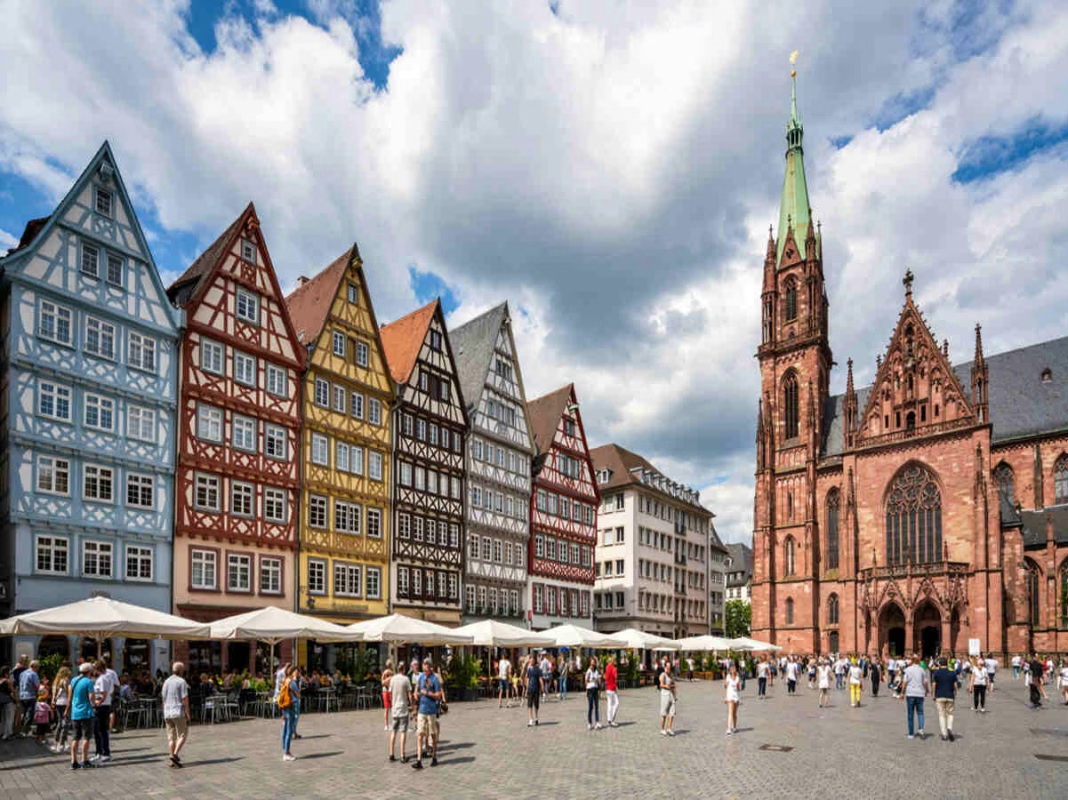
- Sightseeing Checkpoints and Unpredictable Access: While premier landmarks like the Louvre, Notre-Dame, or the Frankfurt Römerberg remained nominally open, accessing them required navigating extensive security checkpoints, sudden bag searches, and recurring police crowd dispersals.
Diplomatic Travel Advisories and Behavioral Shifts
The persistence of weekend unrest is altering international consumer confidence:
- Heightened Consular Warnings: Embassies worldwide have reissued updated travel safety advisories, urging citizens to avoid large political gatherings, exercise elevated situational awareness, and avoid staying out after nightfall in high-density shopping districts.
- Drastic Booking Shifts: Hospitality data indicates that rather than booking accommodations near central railway stations or historic gathering points, inbound visitors are pivoting toward outer residential districts or canceling short weekend city breaks entirely.
- Severe Hospitality Revenue Deficits: Business federations and hotel associations across France and Germany estimate tens of millions of euros in unrecoverable weekend revenue losses, with independent restaurateurs, street vendors, and retail staff bearing the primary burden of the operational paralysis.
Structural Fallout and the Path Forward
The convergence of unrest in Germany and France underscores a profound shift in Europe’s post-inflation landscape. As long as economic anxieties, education deficits, and perceived government overreach remain unresolved, weekend demonstrations threaten to settle into a predictable, damaging cadence.
Violent protests, looting, and rapid closure of retail outlets in France and Germany have left urban centers shaken and shattered weekend tourism.
The question is one of navigating through this turbulence for the European tourism and leisure industry, balancing the need for security measures with the equally pressing need to sustain the welcoming and open urban fabric that has made European cities the most frequented destinations on Earth.