
Odisha has five semiconductor projects in the pipeline involving proposed investments of more than $4 billion as the state steps up efforts to establish a foothold in the global chip manufacturing and advanced electronics value chain.
The projects, which span semiconductor fabrication and advanced 3D chip packaging, are expected to mark a significant shift in Odisha’s industrial landscape, traditionally dominated by mining, metals and mineral-based industries.
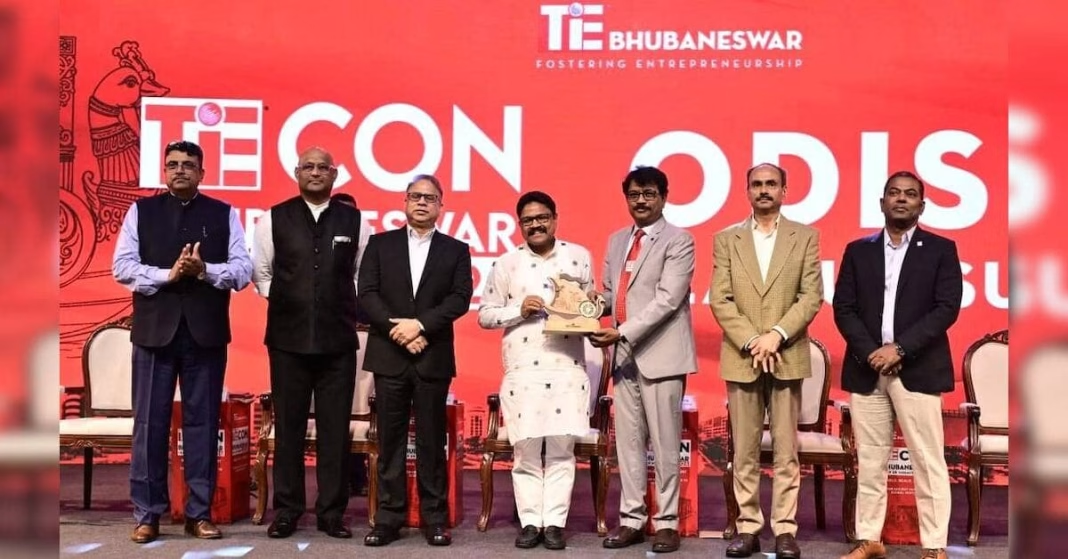
Speaking at the inauguration of TiECon Bhubaneswar 2026 on Friday, Vishal Kumar Dev, additional chief secretary (ACS) of the Electronics and Information Technology Department, said two of the 12 projects approved under the India Semiconductor Mission are coming up in Odisha.
“India’s first compound semiconductor fabrication unit and the first advanced 3D chip packaging unit are being built in the state at speed, with groundbreaking conducted within six to eight months of the approval,” he said.
Dev said Odisha is moving from a mine-based economy to a mind-based economy, with a strong emphasis on building future-ready infrastructure in semiconductors, AI data centres and global capability centres (GCCs).
“Advanced chip packaging is the next step and Odisha is taking an edge, among others, in pivoting towards advanced packaging units, especially in glass-core technology. Our collaboration with global companies like Intel and 3D Glass Solutions intends to take the lead in the global semiconductor value chain,” he said.
The ACS said while data was the new oil today, compute would become the new oil tomorrow, and Odisha had already taken a leap forward in this emerging domain. “Odisha is leading India’s AI transformation by becoming the first state to formulate an AI policy and announce an Odisha AI Mission, whose implementation is progressing at a rapid pace. The state is also building a first-of-its-kind sovereign AI hub. The vision is to ensure that AI is developed and deployed by Odisha, for Odisha and within Odisha,” Dev added.
In his address, Electronics and IT Minister Mukesh Mahaling said Odisha had several inherent advantages to emerge as a major investment destination, including abundant natural resources, surplus electricity, availability of land and water, and progressive industrial policies.
Emphasising the vision of “mines to microchips”, Mahaling said the state could use its mineral wealth and industrial capabilities to develop high-value manufacturing industries, including semiconductor facilities and data centres.
“Better digital connectivity, infrastructure and collaboration between industry and research institutions would be important to support the state’s transition into a technology-driven industrial economy,” he said.
The semiconductor investments are significant for Odisha’s ambition to build an integrated electronics manufacturing ecosystem rather than remain confined to attracting individual large projects. The proposed facilities would create opportunities for ancillary industries, component suppliers, specialised engineering services, research institutions and skilled employment.
Hemant Sharma, additional chief secretary of the Industries Department, said entrepreneurship would be critical to Odisha’s transition from an agrarian economy to a diversified industrial economy.
He underlined the importance of sustaining higher economic growth through industrial expansion, investment and entrepreneurship. “If Odisha maintained an annual growth rate of 7-8 per cent, its economy could double in around seven years, while growth of around 9 per cent could be achieved in about five years,” Sharma said.
Anil Kumar Singh, president of JSW BPSL (Bhushan Power and Steel Limited), stressed the importance of manufacturing scale, efficient logistics and global technology partnerships in expanding Odisha’s export potential.
TiE Bhubaneswar president Ayaskanta Mohanty said policy support needed to be complemented by large-scale infrastructure, quality standards and cost competitiveness to help Indian enterprises succeed in international markets.
TiE Bhubaneswar Academy and TiE Bhubaneswar HNI Connect were launched at the summit to strengthen entrepreneurship development, mentoring, and business and investment networks.
Malik Ahamadeen, CEO of MAS India, Murali Bukkapatnam, chairman and CEO of Volksy Technologies and EHAM, and Sanu Ratha, vice president of TiE Bhubaneswar, also spoke.