


In a joint representation reviewed by Business Standard, senior executives of Narayana Health, Manipal Hospitals, Fortis Healthcare, KIMS Hospitals, and Medanta, along with representatives of several healthcare associations, have called for rules that allow selected medical devices to be safely reprocessed and reused instead of banning the practice altogether.
The representation comes after an October 16 directive from the Directorate General of Health Services (DGHS), which banned the reuse of devices labelled by manufacturers for single use in both government and private hospitals.
The directive flagged risks to patient safety, including infections, and instances of hospitals charging patients the full price of devices that had already been used.
Girdhar Gyani, director general of the Association of Healthcare Providers (India), or AHPI, confirmed that the industry had submitted its representation to the government.
“We have submitted a detailed note only a couple of days back. We will wait for a response,” Gyani told Business Standard.
Siddhartha Bhattacharya, secretary general of NATHEALTH, said the association had also made representations to the government.
“The single-use order should be withdrawn unless a supply-chain risk assessment and a payer-readiness assessment have been carried out, including evaluating a regulatory system for reusing supplies safely,” Bhattacharya said.
He called for a clinical risk framework that balances patient safety and affordability, drawing on approaches adopted by countries with similar healthcare needs. He also sought a phased implementation of the oncology order over at least three to six months.
Dialysis services face immediate challenge
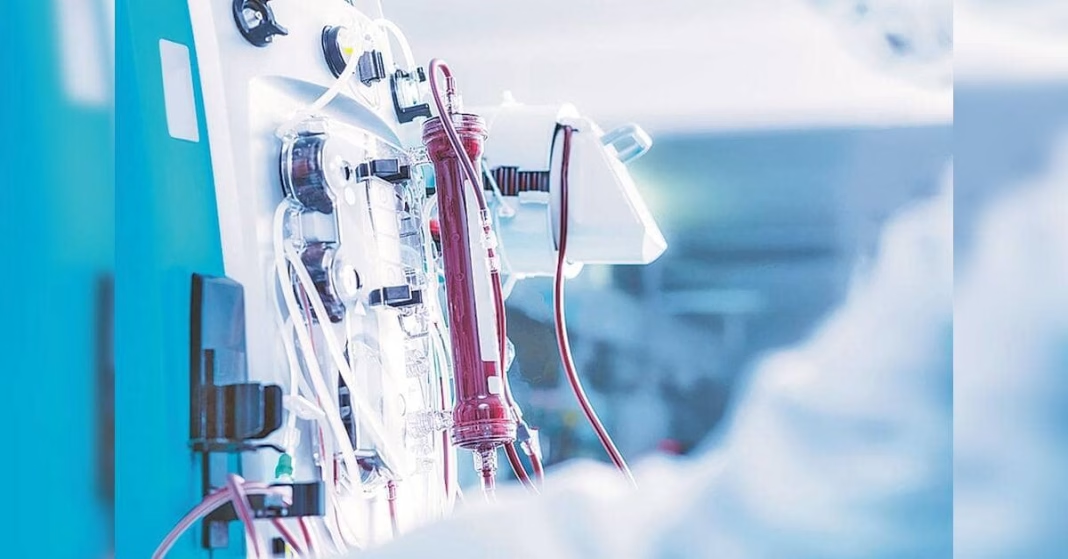
Industry estimates shared with Business Standard suggest that more than 60 per cent of dialysis sessions in India involve multiple-use dialysers, accounting for nearly 40 million sessions annually for approximately 500,000 patients.
If hospitals are required to use a new dialyser for every session, annual consumption could rise six to seven times, according to industry estimates.
The problem could be particularly serious for dialysis centres operating under public-private partnerships (PPPs) and government schemes, including Ayushman Bharat.
Their contracts and reimbursement rates are based on current treatment costs, which factor in the reuse of dialysers. Industry representatives warned that any disruption in dialysis services could put patients at risk, as those requiring maintenance haemodialysis cannot afford to miss treatment.
There is also a question over the government’s existing dialysis guidelines. The Pradhan Mantri National Dialysis Programme allows dialysers to be reused for the same patient, subject to prescribed conditions and limits.
Industry seeks transition time of 3-6 months
A healthcare industry source said hospitals would need at least three to six months to make changes to purchasing contracts, insurance reimbursement arrangements, supply chains, and technology.
“The entire downstream impact has been seen through the lens of one product, and a feasibility assessment or implementation plan requires a concerted discussion and design,” the source said.
The source also questioned whether government hospitals had enough money set aside to switch to single-use devices, particularly as reuse is believed to be more widespread in public hospitals than in private facilities.
Finances under pressure
Data shared by an industry source for 15 listed hospital companies showed combined net revenue of ₹86,221 crore and profit after tax of ₹8,618 crore in FY26, with disclosed dividends aggregating ₹993 crore.
The same compilation estimated planned capital expenditure of approximately ₹40,450 crore over the next three to four years, nearly five times the combined annual PAT.
Regulated reuse proposed
Instead of a complete ban, the hospital industry wants the government to identify which devices can be safely reused and lay down clear rules for doing so.
The proposed safeguards include proper sterilisation, checks to ensure devices continue to function safely, limits on the number of times they can be reused, regular audits, patient consent, and transparent billing.
To illustrate the cost implications, the representation cites a tissue stabiliser used in coronary artery bypass grafting that costs approximately ₹85,000.
The industry argues that buying a new device for every surgery could make it difficult for hospitals to perform such procedures at the rates paid under government health schemes.
Medical device manufacturers, however, have supported stricter enforcement of single-use labelling. They argue that reusing devices that were not designed or tested for multiple procedures could put patients at risk.


