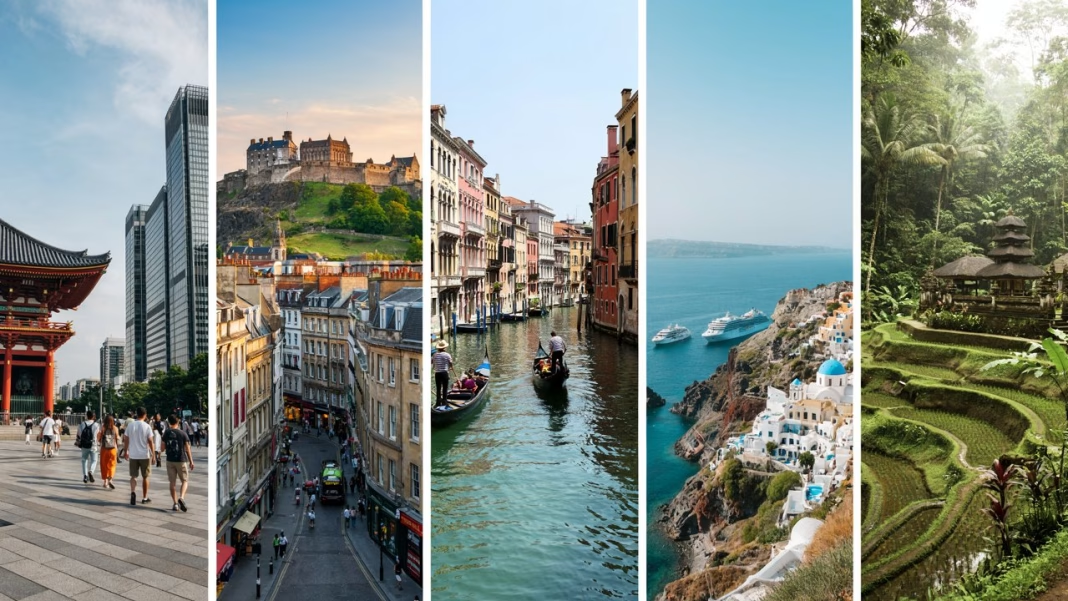


Japan, Scotland, Italy, Greece and Indonesia are reshaping international travel costs in 2026 through new, increased or continuing tourist charges. From Japan’s higher departure tax and Edinburgh’s accommodation levy to Venice’s visitor access system, Greece’s cruise passenger fees and Bali’s environmental contribution, holidaymakers face additional expenses beyond flights and hotels. These measures reflect growing efforts to manage tourism pressure, maintain infrastructure and protect cultural and natural attractions. Although the charges differ considerably between destinations, they highlight an important change in global tourism: visitors increasingly contribute directly towards maintaining the places they explore.
Why Are Popular Tourist Destinations Introducing Additional Travel Fees?
International tourism continues to generate valuable economic activity, but growing visitor numbers can also place pressure on transport systems, public spaces, historic landmarks and natural environments.
Governments and local authorities are responding through different charging systems designed around their destination’s particular needs.
Some countries collect taxes when international travellers depart, while others charge visitors for overnight accommodation, cruise arrivals or access to historic city centres.
These measures are not identical. Several apply only to specific cities or islands rather than entire countries.
For travellers, understanding these distinctions is essential because the amount payable can depend on accommodation arrangements, travel dates, transport methods and eligibility for exemptions.
Advertisement
Advertisement
Which Five Destinations Have Tourist Fees Affecting Travel in 2026?
The following comparison highlights the principal charges affecting international visitors.
| Country or destination | Tourist charge | Applicable amount | Main requirement |
|---|---|---|---|
| Japan | International departure tax | ¥3,000 | Generally collected through international tickets |
| Scotland, UK | Edinburgh visitor levy | 5% of eligible accommodation cost | First five consecutive nights |
| Italy | Venice access fee | €5–€10 | Applicable day visits to the historic centre |
| Greece | Cruise passenger levy | Up to €20 | Cruise passengers disembarking at Greek ports |
| Indonesia | Bali foreign tourist levy | IDR 150,000 | Eligible international visitors to Bali |
Japan’s increase and Edinburgh’s levy began in 2026. Venice expanded its existing trial, while Greece and Bali continued schemes introduced earlier.
How Has Japan’s Departure Tax Changed International Travel Costs?
Japan increased its international tourist departure tax from ¥1,000 to ¥3,000 on 1 July 2026.
The charge generally applies to passengers departing Japan by international aircraft or ship, regardless of whether they travelled for leisure or business.
Airlines and shipping companies ordinarily collect the tax through passenger fares, reducing the need for a separate payment during departure.
Certain travellers qualify for exemptions, including children under two and eligible short-term transit passengers.
Advertisement
Advertisement
Some qualifying tickets issued before the increase remain subject to the previous rate.
The higher charge affects visitors travelling through major international gateways such as Tokyo, Osaka and other Japanese departure points.
Why Is Edinburgh Charging Visitors for Overnight Accommodation?
Scotland’s capital introduced its visitor levy on 24 July 2026, marking a significant development in the United Kingdom’s tourism taxation landscape.
The scheme adds 5% to eligible overnight accommodation costs, calculated before VAT and limited to the first five consecutive nights.
Hotels, guesthouses, hostels, serviced apartments and other paid accommodation types fall within its scope.
The levy applies to qualifying bookings made from October 2025 for stays beginning when the scheme took effect.
Advertisement
Advertisement
Edinburgh intends to use the revenue to support infrastructure, cultural attractions, visitor management and improvements benefiting the city.
Visitors exploring Edinburgh Castle, the Royal Mile and the city’s historic neighbourhoods should account for the additional accommodation expense when planning their budgets.
How Does Venice’s Visitor Access Fee Affect Holidays in Italy?
Venice has continued its visitor access fee experiment in 2026, applying the charge on selected dates between April and July.
Day visitors entering the historic city during designated hours must generally pay unless they qualify for an exemption.
Travellers booking sufficiently early pay €5, while those paying closer to their visit face a €10 charge.
Visitors staying overnight in accommodation within the municipality are generally exempt from the access fee, although registration requirements may apply. Separate accommodation taxes can still be payable.
Advertisement
Advertisement
The scheme aims to improve visitor management in one of Italy’s most internationally recognised historic destinations.
Travellers should remember that Venice’s charge is a municipal measure, not a nationwide Italian entry tax.
Why Are Greece’s Santorini and Mykonos Charging Cruise Passengers?
Greece has introduced a seasonal cruise passenger levy affecting travellers who disembark at the country’s ports.
Santorini and Mykonos attract higher charges during the busiest summer months, reflecting their popularity among international cruise itineraries.
During peak season, passengers disembarking at either island pay €20, while other Greek ports generally charge €5.
Lower rates apply outside summer, making the cost dependent on the month and destination.
Advertisement
Advertisement
The Greek Ministry of Tourism identifies the levy as part of a broader approach to improving infrastructure and managing cruise tourism.
Why Does Indonesia Require International Tourists to Pay a Bali Levy?
Bali’s foreign tourist levy remains an important consideration for travellers visiting Indonesia’s celebrated island destination.
Introduced in February 2024, the contribution requires eligible international visitors to pay IDR 150,000.
The levy supports initiatives associated with cultural preservation and environmental protection.
Visitors can arrange payment through Bali’s designated electronic system and retain the confirmation issued afterwards.
The charge is separate from any applicable Indonesian visa fees.
Advertisement
Advertisement
Unlike Japan’s nationwide departure tax, Bali’s contribution is specific to the island and should not be confused with a general entry charge for every Indonesian destination.
Travellers visiting Ubud, Kuta, Seminyak and other parts of Bali should include the levy in their holiday planning.
How Do Tourist Taxes Differ Across the Five Destinations?
| Destination | When visitors pay | Important distinction |
|---|---|---|
| Japan | Usually through international transport fares | Departure-based national tax |
| Edinburgh, Scotland | Through eligible accommodation charges | Applies to overnight stays |
| Venice, Italy | Before entering on designated dates | Day-visitor access scheme |
| Santorini and Mykonos, Greece | When cruise passengers disembark | Seasonal port-specific levy |
| Bali, Indonesia | During the visitor payment process | Island-specific tourism contribution |
Understanding these differences can prevent confusion between taxes already included in bookings and charges requiring separate payment.
What Do These Tourist Fees Mean for International Holidaymakers?
The growing use of visitor levies reflects a shift towards making tourism contribute more directly to destination management.
For individual travellers, the charges may appear relatively modest. However, families and tourists visiting several countries can face multiple additional expenses.
Holidaymakers should examine accommodation invoices, cruise itineraries and airline ticket breakdowns before departure.
Advertisement
Advertisement
Travellers should also check whether exemptions apply, particularly for children, residents and specific visitor categories.
Advance planning is especially useful where payment timing influences the amount charged, as demonstrated by Venice.
Frequently Asked Questions
1. Which country increased its international departure tax in 2026?
Japan increased its international departure tax to ¥3,000 from July 2026.
2. Does Scotland charge tourists everywhere?
No. Edinburgh introduced a citywide accommodation levy, but this does not mean every Scottish destination charges the same tax.
Advertisement
Advertisement
3. Do all tourists visiting Italy pay Venice’s access fee?
No. The charge applies under specific conditions, including designated dates, times and visitor categories.
4. Are Greece’s cruise fees identical throughout the year?
No. Charges vary by season and port, with Santorini and Mykonos attracting higher rates during summer.
5. Is Bali’s tourist levy included in Indonesian visa fees?
No. Bali’s foreign tourist levy is separate from applicable visa charges.
Advertisement
Advertisement
6. Can tourists avoid unnecessary additional expenses?
Travellers can reduce surprises by checking exemptions, confirming which fees are already included in bookings and arranging advance payments where permitted.
Why Are Tourist Fees Becoming Part of the Future of International Travel?
Japan, Scotland, Italy, Greece and Indonesia illustrate how destinations are adopting different financial measures to address tourism-related pressures.
While the systems vary, they share an emphasis on managing visitor activity, supporting infrastructure or protecting important attractions.
For travellers, these changes make careful budgeting increasingly valuable.
Understanding the charges before departure allows holidaymakers to explore international destinations with greater confidence and fewer unexpected expenses.
As tourism continues to evolve, visitor contributions are likely to remain an important element of destination management.