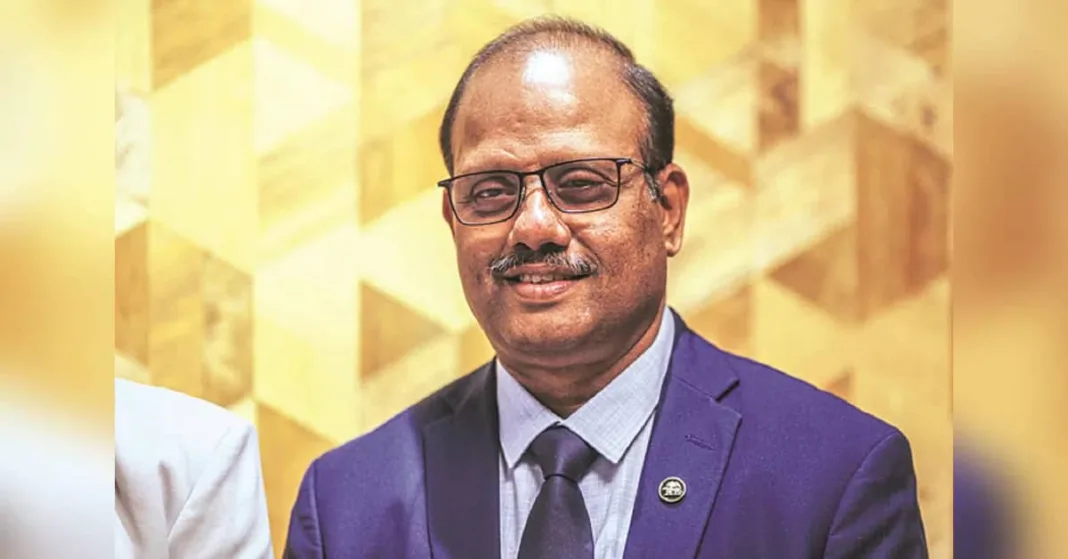

Not every friction in finance is an inefficiency, as some checks and balances perform an important control function and can reduce the probability of errors, fraud or adverse selection, according to Reserve Bank of India (RBI) Deputy Governor Swaminathan J.
“An independent verification, a maker-checker arrangement or a cooling-off period may add time to a process, but they can also reduce the probability of error, fraud or adverse selection,” he said in his special address at the FE Modern BFSI Summit 2026 in Mumbai on October 15.
Swaminathan said technology could allow some of these steps to be removed, redesigned or automated, but institutions should first understand the function they performed.
“If a manual check is replaced by an algorithm, or underwriting becomes instantaneous, the underlying risk does not disappear; the control must therefore evolve with the process,” he said. “In supervisory terms, the control environment must remain commensurate with the pace and nature of growth,” he added.
The same principle applied when activities were carried out through third parties, he said. A loan could be sourced through a fintech, a product distributed through an external platform, or a decision supported by a third-party model. However, outsourcing the process did not transfer the responsibility associated with the institution’s licence.
Swaminathan also spoke about the importance of trust in financial institutions, saying it did not appear explicitly on their balance sheets but could have visible consequences when impaired. These consequences could include customer attrition, litigation, regulatory penalties and reputational damage, he said.
He identified the sale of financial products, the use of customer data and grievance handling as areas where trust was tested.
On customer data, Swaminathan said the question was not only whether consent had been obtained, but also whether the use of the data was consistent with what the customer would reasonably expect.
He also said complaints should not be seen merely as service issues to be resolved and closed. A pattern of complaints could reveal weaknesses in product design, incentive structures, digital journeys or third-party arrangements.
“Institutions that learn from grievances, rather than simply dispose of them, are likely to identify emerging problems earlier,” he said.
Swaminathan said trust also had a system-wide dimension. A customer who lost money through fraud might not distinguish between the institution where the fraud originated, the institution through which the funds moved and the institution that hosted a mule account.
“From the customer’s perspective, the financial system has failed,” he said, adding that weak controls in one part of the system could impose a trust cost on the entire system.
Swaminathan highlighted that capital, liquidity and provisioning remained fundamental, but resilience in a more digital and interconnected financial system also needed to be understood in terms of how quickly an institution could detect a problem, comprehend its implications, make decisions and restore critical services.