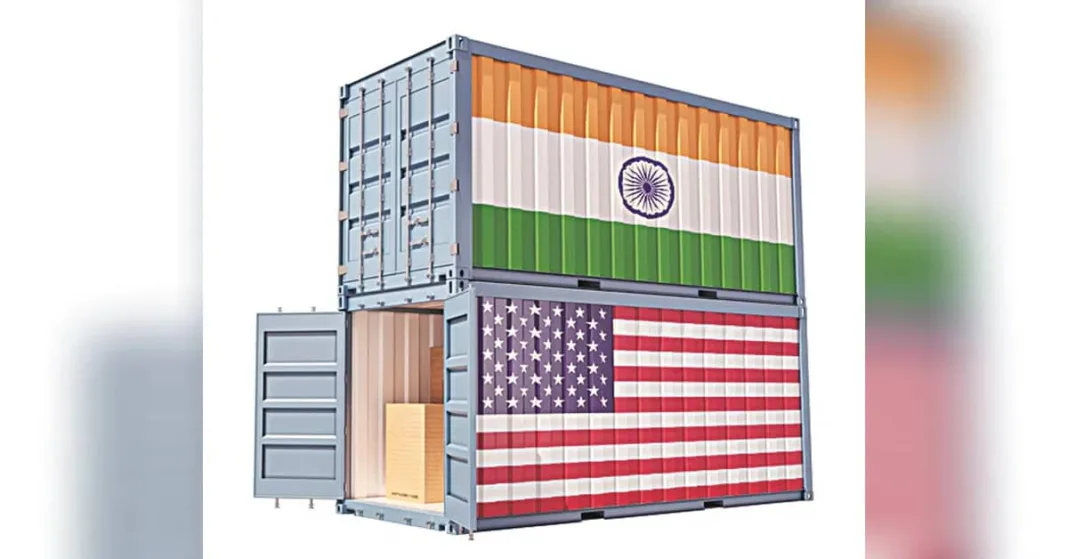

India and the US are unlikely to see a breakthrough in trade negotiations in the near term, as the two sides remain divided over market access, agriculture, purchases of US goods, and India’s imports of Russian oil, according to BMI (formerly Business Monitor International), a FitchSolutions company. However, the agency said they may eventually conclude only a narrow interim trade deal.
“We expect India and the US eventually to conclude a narrow interim trade deal, although the remaining differences make a near-term breakthrough unlikely,” the agency said in a report on the outlook for the India-US interim trade agreement.
India and the US began negotiations for a bilateral trade agreement in March last year, with the aim of concluding an interim deal by the fall of 2025. More than a year after that target, with the fall of 2026 underway, talks are still ongoing.
BMI expects negotiations to continue towards the December 14-15 Group of Twenty summit in Miami, which could serve as the next political anchor, although it considers an agreement by then unlikely.
The two countries had reached an agreement in February and issued a joint statement, under which the US committed to cut reciprocal tariffs on India to 18 per cent from 25 per cent, while India committed to ramping up energy purchases from the US. However, soon after, the Supreme Court of the United States struck down the legal basis for the reciprocal tariff.
Since then, New Delhi and Washington have again engaged in negotiations to finalise updated terms of the deal. India has also sought a mechanism to ensure it gets a tariff advantage in the US over other competing economies under the trade deal.
While India and the US have narrowed their differences, the remaining issues will be the hardest to resolve, the BMI report observed.
Earlier this week, Union Finance Minister Nirmala Sitharaman said the two partners had reached a plateau in the negotiations, beyond which it was difficult for either side to offer further concessions. Last week, United States Trade Representative (USTR) Jamieson Greer also said negotiators had identified the full set of sticking points, but an agreement was not imminent.
Following the comments from the two leaders, concerns arose that Washington has again sought access to India’s farm sector under the deal — a demand that brought talks to a stalemate last year during July-August. New Delhi has not opened its politically and socially sensitive farm sector under any trade agreement.
“India wants meaningful preferential access, while Washington seeks agricultural concessions, larger US purchases and a smaller bilateral trade deficit,” the BMI report said. The remaining differences are likely to be the hardest to resolve, BMI added.
The US had a trade deficit of around $34 billion with India in 2025-26.
India is unlikely to offer costly concessions unless Washington provides it with a clear advantage over competing exporters. India’s effective tariff rate on US imports currently stands at 13.6 per cent, according to BMI’s Operational Risk team, significantly below the roughly 35 per cent starting point used in February. This means a narrow deal would deliver only modest direct gains unless it covers commercially important sectors, the report said.
India’s continued reliance on Russian crude oil has also been an obstacle to the negotiations. The February framework appeared to link tariff relief with reduced Russian oil purchases. However, supply disruptions following the West Asia conflict have increased India’s incentive to retain alternative oil sources.
Russia accounted for half of India’s crude import volumes in July, the BMI report said.
US President Donald Trump signed the Lindsey O Graham Sanctioning Russia and Iran Act of 2026 last month, which authorises him to impose duties of up to 100% on economies that purchase energy products from Russia.
The Office of the USTR has also initiated two investigations against India under Section 301 of the US Trade Act of 1974, and has imposed a 10 per cent additional duty on Indian goods after concluding one of the investigations, which alleged the presence of forced labour in supply chains. The other probe, alleging excess structural capacity, remains underway.
A narrow agreement could allow both sides to defer their most contentious issues. “India could lower tariffs on selected US agricultural and industrial products and commit to larger purchases, while Washington could provide preferential treatment to selected Indian exports and leave issues such as dairy, genetically modified products, and some regulatory barriers for later negotiations,” the report said.
Trump’s action in relation to the Russia sanctions law over the next 30 days is likely to be a near-term trigger for the talks, the BMI report said.
The agreement would only reduce policy uncertainty and support selected Indian exporters, but its direct effect on growth is likely to be modest, BMI said.