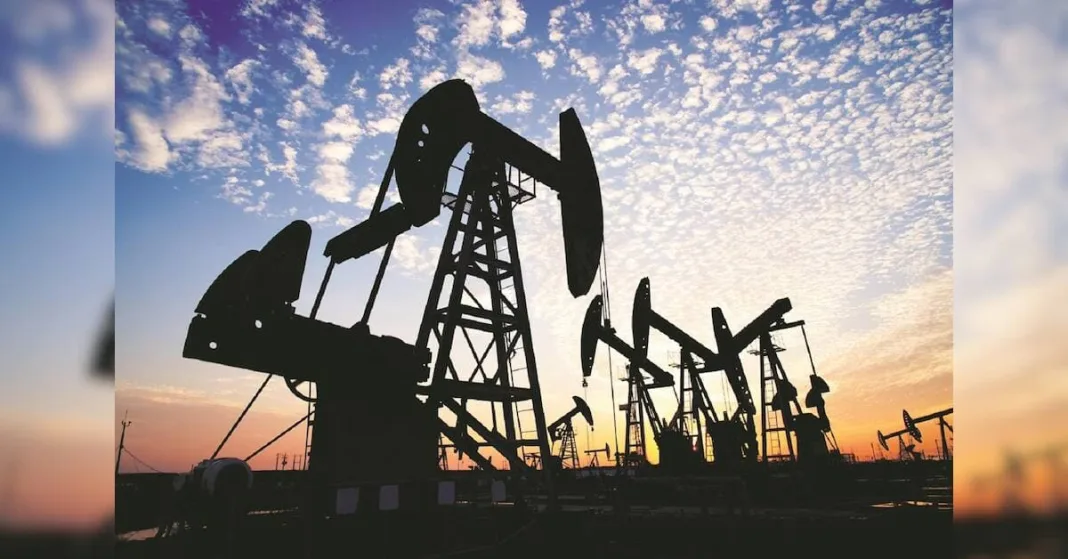

Russia continues to be the largest source of crude oil for India in September so far, maintaining almost last month’s volumes, as a knock-on effect of peace efforts in West Asia turning fragile, further constraining the flow of crude oil via the Persian Gulf route.
The Eurasian country’s continued dominance also comes against the backdrop of the recent approval of the United States’ (US’) sanctions Bill, which has cleared the way for imposing 100 per cent tariffs on goods from India and other buyers of Russian energy.
However, the supply from Russia in September 27 is the lowest after April, when it was 1,721,000 barrels a day for the whole month.
India imported 5.251 million barrels of crude oil per day this month till September 27. That is a 13 per cent jump over the 4.654 million imported in the whole of August, according to the fresh data sourced from maritime intelligence and research firm Kpler.
Among the top five suppliers of crude oil in September, Russia supplied 1,742,000 barrels per day, followed by Iraq’s 579,000, Saudi Arabia’s 570,000, the United Arab Emirates’ (UAE’s) 483,000, and Kuwait’s 333,000.
Last month, the top supplier was Russia, followed by Saudi Arabia, Iraq, the UAE, and the US.
Experts do not expect Indian refiners to significantly reduce imports of Russian Urals crude oil in the near term, at least until physical barrel availability improves.
India has clarified its stand that its energy security remains paramount.
“In the current market, physical crude balances are tight, particularly for medium grade barrels, which remain an important part of the feedstock mix for Indian refiners given the country’s middle distillate heavy product slate,” said Nikhil Dubey, lead analyst (refining), Kpler.
However, the key consideration for refiners will be to maintain flexibility in sourcing crude oil while ensuring the security of supplies, and with availability from West Asia also constrained by the US-Iran conflict, replacing Russian barrels would be challenging.
“Once supplies stabilise and West Asian availability improves, Indian refiners are likely to naturally tilt more towards West Asian barrels, given their proximity, lower freight costs and suitability for the domestic product mix,” Dubey said.
According to Prashant Vasisht, senior vice-president and co-group head, corporate sector ratings, Icra, even if India reduces Russian oil imports by 20-30 per cent, it will still be importing large volumes from the country.
“That is not enough for the US to not impose sanctions for purchasing Russian energy. Besides, replacing a supply of around 2 million barrels from Russia is difficult currently because supplies from Saudi Arabia are also impacted,” he told Business Standard.
Vasisht also added that the government could not risk fuel shortages in the country, and so it would either negotiate or bear the tariffs, but likely continue Russian oil purchases.
“The global crude-oil supply situation is not allowing India to cut oil imports from Russia in the foreseeable future,” he said.
Meanwhile, Brent crude oil surged more than 2 per cent to $107 per barrel on Monday after US President Donald Trump rejected a peace deal from Iran to resolve their conflict and reopen the Strait of Hormuz. Since the beginning of the conflict at the end of February, Brent crude has risen 50 per cent from $71 per barrel.
Speaking at an industry event last week in New Delhi, Minister of Petroleum and Natural Gas Hardeep Singh Puri had said the West Asia crisis had the potential to exacerbate as tensions between the US and Iran escalated in recent weeks, and while India had successfully navigated the crisis so far, the escalating conflict might pose challenges.