

Swedish private equity firm EQT plans to invest around $50 billion in India by 2030, with data centres accounting for about $30 billion, as the private equity major significantly steps up its bets on artificial intelligence (AI), digital infrastructure and technology in the country.
The proposed investment will span data centres, renewable energy and private equity. EQT expects around $5 billion to go into solar and renewables and $15-20 billion into private equity.
“India is one of our most important markets globally, not just within Asia. Since inception we have invested $26 billion in the country. We started off investing primarily in technology services and tech services, but since then we’ve expanded into healthcare, as well as now significantly into digital data centers and infrastructure. That’s becoming probably the most significant part of our investment strategy,” said Jean Eric Salata, chair of EQT Group, at a media briefing in Mumbai.
Salata added, “India is going to play a disproportionately large role in our strategy going forward, just because the sheer size of the opportunity that we’ve been discussing today.”
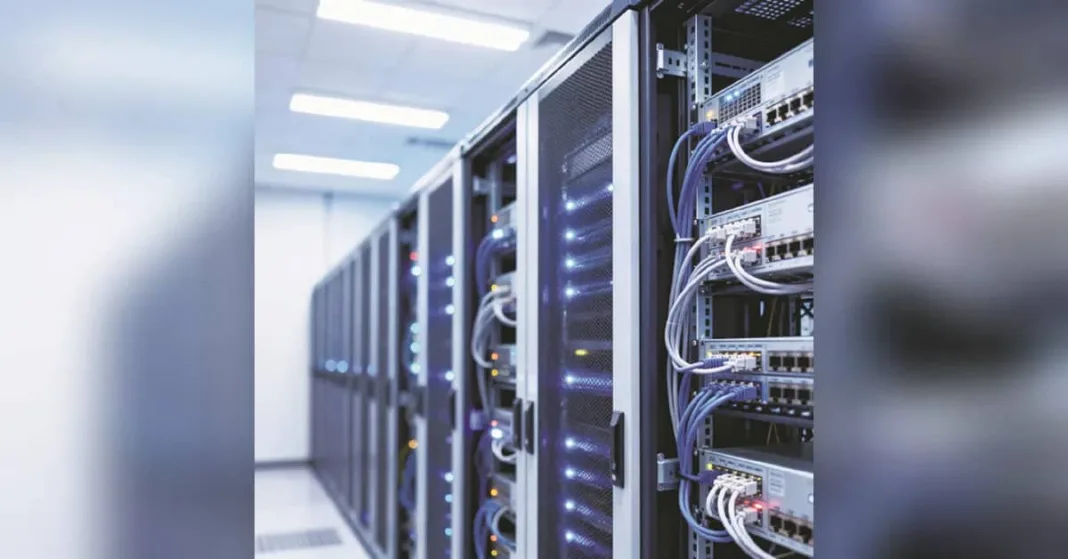
EQT has already invested about $10 billion in data centres in India and expects to deploy another $20 billion by 2030, taking its total investment in the segment to around $30 billion. Much of this expansion will happen through EdgeConneX, EQT’s global data-centre platform, and its joint venture, AdaniConneX.
The firm expects its data-centre capacity in India to increase from around one gigawatt currently to as much as five gigawatts. The expansion is increasingly being driven by the computing infrastructure required for AI, with hyperscalers leasing data-centre capacity to provide cloud and AI services.
The investment strategy also reflects how EQT’s India play has evolved over the past two decades. The firm started by investing primarily in technology and IT services before expanding into healthcare, pharmaceuticals and, more recently, digital infrastructure and data centres. Infrastructure is expected to become one of the largest areas for capital deployment in India.
Speaking about its technology investments and the impact of AI, Hari Gopalakrishnan, co-head of Private Capital Asia, said, “Just like we went through the digital wave, we think tech service companies will go through the AI wave as well. For our portfolio, every single company is growing well.”
This evolution is also playing out within EQT’s technology services portfolio as AI changes how enterprises consume technology.
“I think AI is definitely disrupting the industry, but it’s also a source of growth right now for the industry,” said Salata.
Enterprises, he added, still need engineers and technology partners to implement AI, requiring IT services firms to reposition their offerings, much as they did during earlier technology shifts such as cloud and mobile.
“The biggest gap to AI adoption continues to be skill shortages in how to diffuse AI into the enterprise. And that’s where the tech services portfolio that we have is a key enabler of AI adoption,” added Nicholas Macksey, co-head of Private Capital Asia and head of Mid-Market Asia at EQT.
EQT is also looking to widen its investment play in India to younger technology companies. It is putting together an Early Stage Asia Strategy, which is expected to expand into a regional programme that includes India. The strategy will typically target Series B and Series C companies where product-market fit has already been established.
EQT expects to write equity cheques of around $20-50 million for stakes of roughly 3-10 per cent in such companies. It is also evaluating AI-first businesses as part of its early-stage strategy.
The move will give EQT exposure across the lifecycle of companies in India — from early-stage technology ventures and mid-market businesses to mature companies through its flagship buyout funds — alongside investments in the infrastructure underpinning the AI economy.
Gopalakrishnan also said the total buyout market in India had grown sevenfold in the past 13 years because more founders and founding families were looking for good homes for their businesses.
“More founding families are looking for, you know, succession planning and good homes for their businesses that they’ve built their entire life, and so buyout funds can offer that opportunity. And this is again where that sector expertise is really important,” he added. This is also an opportunity for players such as EQT.
“Because a founder wants to know that you understand the business, you understand how to drive value creation, so that when they guys don’t give up control, they want to know that you’re going to be able to differentiate and drive incremental value creation,” he said.