Published on August 22, 2026 |
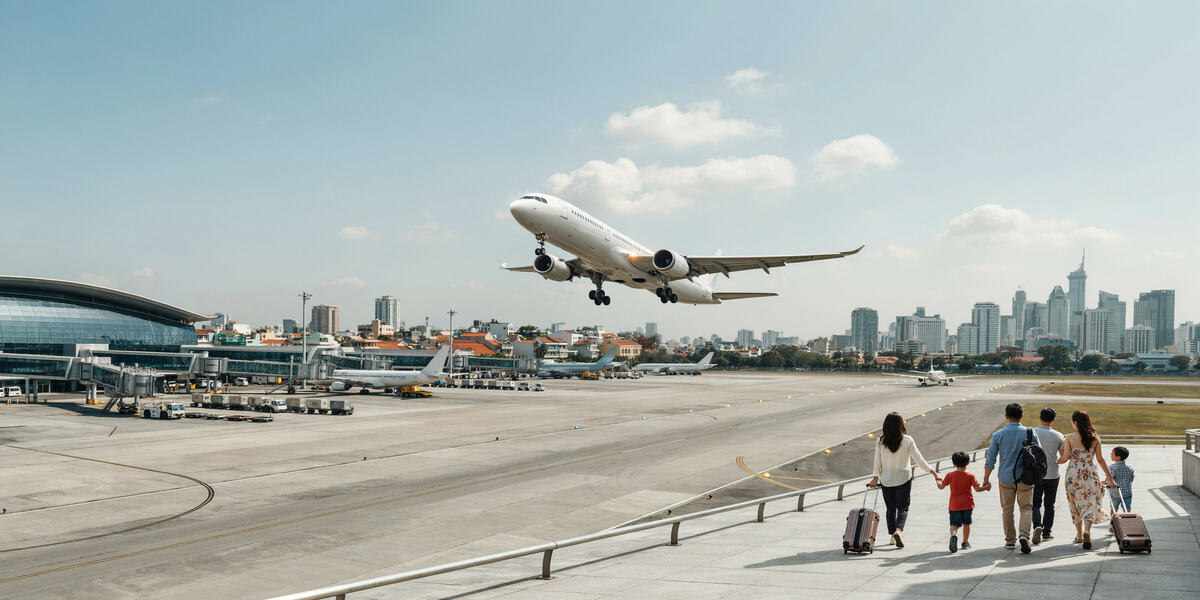
Image generated with Ai
Vietnam has moved ahead of Thailand in Southeast Asia’s aviation race as Vietnam airline capacity rises on stronger domestic demand, more international routes and growing tourism traffic. In August 2026, Vietnam offers 7.27 million scheduled departing seats, slightly above Thailand’s 7.19 million, showing how quickly the regional aviation balance is shifting.
Vietnam has overtaken Thailand in scheduled airline capacity, creating one of the biggest shifts in Southeast Asia’s aviation market in 2026. The latest OAG data shows Vietnam with 7.27 million departing seats in August, up 10% from a year earlier. Thailand has 7.19 million seats, down 1.7%. Indonesia remains far ahead with 11.01 million seats. The gap between Vietnam and Thailand is still small, at around 80,000 seats. Yet the direction is striking. Vietnam is expanding quickly while Thailand faces softer capacity across important parts of its network.
Vietnam’s 10% Surge Changes the ASEAN Aviation Ranking
Southeast Asia has around 51 million scheduled airline seats in August 2026. That is only 0.8% more than August 2025. Yet this calm regional number hides a dramatic change underneath.
Vietnam is now the second-largest aviation market in Southeast Asia by scheduled departing seats. Thailand has slipped to third. Vietnam is also the fastest-growing market among the region’s five largest aviation countries.
Advertisement
Advertisement
This does not mean Vietnam has already replaced Bangkok as Southeast Asia’s leading airport hub. Bangkok Suvarnabhumi remains larger than any individual Vietnamese airport. But at national level, Vietnam now offers slightly more scheduled airline capacity than Thailand.
That makes the August ranking an important signal for airlines, airports, investors and tourism businesses watching where Asian travel demand is moving.
Domestic Flying Gives Vietnam a Powerful Lift
Vietnam’s domestic market is one of the strongest engines behind the change.
OAG says Vietnam’s domestic scheduled seat capacity has jumped 13.8% year on year in August 2026. That represents about 575,400 additional domestic seats compared with August 2025.
Official Vietnamese aviation figures support this growth story.
The Civil Aviation Authority of Vietnam says the country’s aviation market handled 45.49 million passengers during the first six months of 2026. Passenger traffic rose 9.8%, while cargo increased 16.4% to 813,200 tonnes.
By the end of June, Vietnamese airlines were operating 225 aircraft on scheduled services, 21 more than a year earlier.
Vietnam is also putting far more flights into the sky. Airlines are operating 6,094 domestic flights each week during the 2026 summer season. That is 1,816 more weekly flights than during the comparable summer period of 2025.
International Connectivity Is Expanding at High Speed
Vietnam’s aviation rise is not only a domestic story.
Four Vietnamese airlines and 77 foreign airlines are operating regular international services to Vietnam during the 2026 summer season.
Together, they provide 3,089 international round trips every week. That is 273 more weekly round trips, or nearly 10% more, than in summer 2025.
Tourism is providing another powerful push.
Vietnam welcomed 13.9 million international visitors between January and July 2026, up 13.8% year on year. July alone brought 1.67 million international visitors.
Vietnam’s government says favourable visa policies, wider international flight networks, stronger tourism promotion and improvements in tourism products are supporting the increase.
More air links make Vietnam easier to reach. Strong tourism demand can then give airlines greater confidence to add routes and seats. This creates an important growth cycle for the country’s aviation economy.
Vietnam Airlines Emerges as Southeast Asia’s Capacity Leader
The airline ranking tells another remarkable part of the story.
OAG places Vietnam Airlines as Southeast Asia’s largest airline by scheduled seat capacity in August 2026. The national carrier has 2.80 million seats, an increase of 8.2% from August 2025.
Thai AirAsia is moving sharply in the opposite direction. Its capacity has fallen 23.4% to 1.44 million seats.
AirAsia is also down 17%.
This reflects a wider change across Southeast Asia. Mainline carriers now account for 56% of regional capacity, with 28.5 million seats. Low-cost carrier capacity has fallen 4.9% to 22.5 million seats.
That low-cost slowdown helps explain Thailand’s weaker numbers.
Bangkok Don Mueang, heavily used by budget airlines, has about 1.52 million seats in August, down 7.5%. Bangkok Suvarnabhumi performs better with 3.22 million seats, up 1%.
Thailand Remains an Aviation Giant Despite Losing Second Place
Thailand’s weaker August ranking should not be mistaken for an aviation collapse.
Suvarnabhumi remains Southeast Asia’s third-largest airport by scheduled seat capacity, behind Singapore Changi and Jakarta.
Thailand also continues to handle enormous passenger volumes.
The Thai government says Suvarnabhumi can receive around 190,000 passengers per day during peak tourism periods. International arrivals can reach roughly 70,000 passengers daily. At the busiest hours, 5,000 to 6,000 travellers can enter immigration processing every hour.
Thailand is responding with airport expansion and faster passenger processing. The government is working to expand automated immigration access and ease congestion.
Airports of Thailand also reported that its six airports handled 90.98 million passengers during the first eight months of fiscal 2026, up 2.76%.
So the story is not that Thailand has stopped growing. The bigger story is that Vietnam is currently growing much faster.
Long Thanh Airport Could Make the Vietnam–Thailand Battle Even Bigger
The most dramatic part may still be ahead.
Vietnam overtook Thailand before Long Thanh International Airport had even started commercial operations.
Vietnam plans trial operations from September to November 2026, with commercial operations targeted to begin on 1 December 2026. Phase one is designed for 25 million passengers and 1.2 million tonnes of cargo every year.
International flights are then expected to shift from Tan Son Nhat to Long Thanh in stages during 2027, beginning voluntarily before long-haul international services transfer more widely.
That means August’s remarkable crossover could be only the opening chapter.
Vietnam’s Aviation Rise Signals a New Regional Power Shift
Vietnam already has faster seat growth, rising passenger traffic, more aircraft, more weekly services and powerful tourism demand. Thailand still has huge airports, established airlines and one of Asia’s strongest tourism brands.
Vietnam has moved ahead of Thailand in Southeast Asia’s aviation market as rising domestic demand, stronger tourism and more international flights push its airline capacity higher. The shift shows how quickly Vietnam is gaining ground while Thailand faces softer growth in key parts of its network.
Vietnam’s rise above Thailand in airline capacity shows how quickly Southeast Asia’s aviation map is changing. Strong domestic travel, growing tourism demand and wider international connectivity are giving Vietnam fresh momentum, while Thailand is seeing weaker capacity in parts of its network. The gap remains small, but with Long Thanh International Airport preparing to open, Vietnam now has a stronger platform to expand its role as one of the region’s most important aviation markets.
Advertisement
Advertisement