
Published on August 22, 2026 |
Image generated with Ai
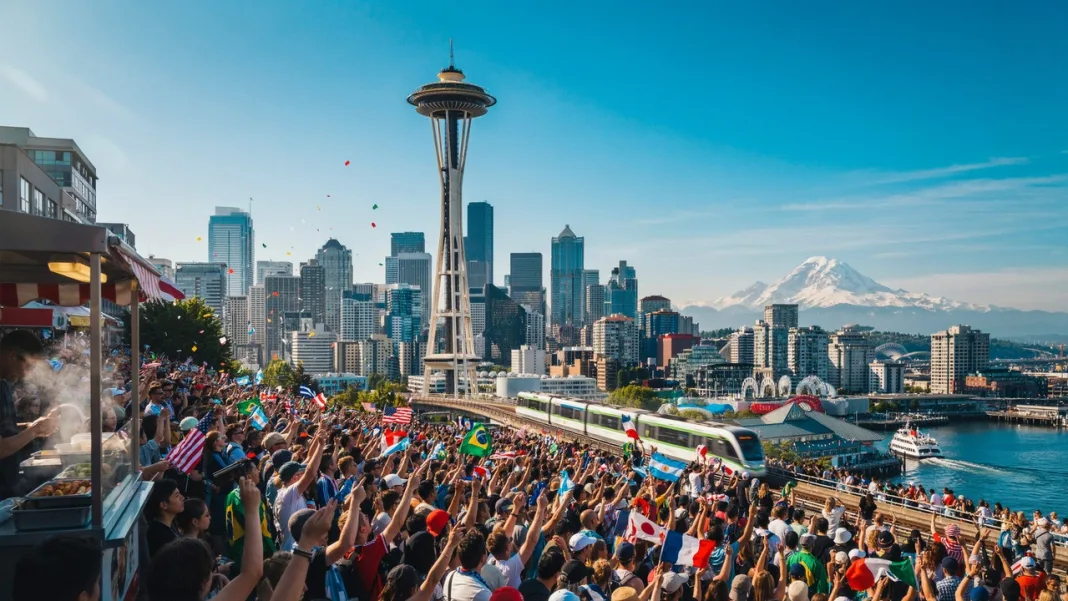
Downtown Seattle tells a powerful tourism tale as over three million July visitors put Washington cities in a fierce race for attention, spending and future growth. July delivered a major boost, while visitors filled streets, explored the waterfront and used public transport in record numbers. Moreover, Seattle’s strong performance highlights how travel, events and accessible attractions can transform a city centre. The tourism race now matters across Washington cities as destinations compete to attract more travellers. Therefore, Seattle’s visitor surge offers a clear answer: vibrant public spaces, major events and reliable transport can drive demand and strengthen a destination’s appeal throughout the year.
Downtown Seattle tells a powerful tourism tale as over three million July visitors put Washington cities in a fierce race, boosting travel, waterfront trips and light rail demand.
Washington’s 2025 visitor economy was led by Seattle and King County, which welcomed 39.7 million visitors and generated $8.8 billion in visitor spending, while Bellevue recorded 2.2 million overnight visitors and more than $2 billion in total economic impact. Spokane, Tacoma, Everett, Bellingham, Vancouver, Yakima and Olympia also remained important travel and tourism destinations, although Washington State’s official 2025 reporting measures many of these markets through broader regional datasets rather than publishing directly comparable city-level visitor totals.
Why Seattle and Bellevue Cannot Be Compared by Visitor Numbers Alone
Washington’s 2025 travel and tourism data tells a powerful story, but the figures must be interpreted carefully because Seattle and King County reported a combined 39.7 million visitors while Bellevue reported 2.2 million overnight visitors, meaning the two destinations used different geographical coverage and visitor measurement categories. Visit Seattle’s annual tourism data covers the wider Seattle and King County destination, whereas Visit Bellevue’s 2025 report focuses specifically on overnight visitors and their economic contribution.
Advertisement
Advertisement
This distinction makes Seattle Washington’s largest measured visitor economy by scale, while Bellevue emerges as a highly successful destination for valuable overnight stays, meetings, leisure trips and business-related travel. For the travel industry, the comparison demonstrates why visitor totals, overnight demand, expenditure, employment and tax revenue should all be considered before deciding which destination has delivered the strongest tourism performance.
Downtown Seattle Surpasses 3.7 Million July Visitors as Waterfront Tourism and Light Rail Ridership Soar
Downtown Seattle welcomed more than 3.7 million domestic visitors in July 2026, marking a strong month for tourism as trips to the revitalised waterfront increased and Link light rail recorded historic Sunday ridership. The latest figures point to growing confidence in downtown as a destination for leisure, events, walking and public transport.
July Visitor Numbers Rise Above Pre-Pandemic Levels
New data from the Downtown Seattle Association shows that domestic visitor numbers in July were 5 percentage points higher than in July 2025 and 12% above July 2019 levels, before the pandemic disrupted travel patterns and city centres. The figures demonstrate a significant recovery in downtown activity, with Seattle benefiting from major events, seasonal tourism and renewed interest in its public spaces.
The data does not include international travellers, meaning the overall number of people visiting Seattle from outside the downtown area could be substantially higher. For the travel and tourism sector, the strong July performance provides another indication that major urban destinations can attract large crowds when entertainment, attractions, transport and pedestrian experiences work together.
Advertisement
Advertisement
Seattle Waterfront Draws Record Local Visits
Seattle’s waterfront also experienced a major rise in activity during July, with 351,284 visits recorded from people living within 10 miles of downtown. That figure was around 25,000 visits higher than the previous record set in August 2019, underlining the growing importance of the waterfront as a leisure and recreation destination.
The increased activity reflects how public-space improvements and accessible attractions can encourage both residents and visitors to spend more time in the city centre. Downtown Seattle Association leaders have highlighted the potential for further activation of parks, squares and pedestrian-friendly areas to sustain visitor numbers beyond major events.
FIFA World Cup Matches Delivered a Major Tourism Boost
Seattle’s six FIFA World Cup matches at Lumen Field provided an additional surge in downtown footfall during the summer. More than 3 million downtown visitors were measured across the six match days, creating one of the strongest concentrated periods of visitor activity for the city.
The tournament demonstrated the ability of global sporting events to drive tourism, transport use and spending across a wider urban area. Downtown leaders now believe the operational strategies and public-space initiatives used during the World Cup could help Seattle maintain stronger visitor flows after the tournament, rather than allowing the momentum to disappear once the event has ended.
Link Light Rail Records Its Strongest July Sunday Ridership
Public transport also benefited from the increase in downtown activity. Sound Transit recorded 743,041 Link light rail Sunday boardings during July, averaging approximately 123,000 boardings each Sunday.
According to the Downtown Seattle Association, this was the highest Sunday ridership recorded for a single month in Sound Transit history. The increase was particularly notable because it reflected stronger travel outside traditional commuting periods, suggesting that tourism, leisure, events and weekend activities are increasingly contributing to public transport demand.
Can Seattle Sustain Its Tourism Momentum?
The July figures show that Seattle’s tourism growth is increasingly connected to walkability, public spaces, major events and convenient transport. Downtown Seattle Association leaders argue that expanding pedestrian experiences and activating parks and public squares could help keep people returning throughout the year.
With visitor numbers already above pre-pandemic levels and waterfront activity reaching a new record, Seattle now faces the challenge of converting a successful summer into long-term tourism momentum. The city’s World Cup experience may provide a blueprint for keeping downtown vibrant, accessible and attractive to visitors well after the tournament crowds have gone.
Seattle and King County Remain Washington’s Largest Visitor Economy
Seattle and King County welcomed 39.7 million visitors during 2025, with visitors generating $8.8 billion in spending across hotels, restaurants, attractions, transport, entertainment and other businesses connected to the visitor economy. Tourism supported 68,623 jobs and generated $840 million in state and local taxes, illustrating how deeply travel activity is integrated into the economic structure of Washington’s largest urban destination.
The total visitor number was 0.6% lower than the previous year, but Seattle maintained substantial demand and showed continued strength in high-value segments including conventions, leisure, cruise activity, sports and cultural events. Seattle’s 2025 summer tourism performance also showed July hotel occupancy of 89.2%, close to the 89.4% recorded in July 2019, suggesting that the city had largely restored strong peak-season accommodation demand.
Available 2025 city-wise data
| City/Area | 2025 visitors | Other key tourism data |
|---|---|---|
| Seattle & King County | 39.7 million | $8.8 billion visitor spending; 68,623 jobs supported; $840 million in state and local taxes |
| Bellevue | 2.2 million overnight visitors | $760 million overnight visitor spending; $2.03–$2.3 billion total economic impact |
| Spokane | State data available regionally | Included in Washington’s Eastern regional 2025 visitation report |
| Tacoma | State data available regionally | Included in Metro Puget Sound regional 2025 visitation reporting |
| Everett | State data available regionally | Included in Metro Puget Sound regional reporting |
| Bellingham | State data available regionally | Included in Northwest regional reporting |
| Vancouver | State data available regionally | Included in Southwest regional reporting |
| Yakima | State data available regionally | Included in Wine Country regional reporting |
| Olympia | State data available regionally | Included in Metro Puget Sound regional reporting |
Bellevue Converts Overnight Travel into Economic Value
Bellevue welcomed 2.2 million overnight visitors in 2025, generating $760 million in overnight visitor spending and more than $2 billion in total economic impact across the local economy. The destination’s visitor sector also supported approximately 14,500 hospitality jobs, highlighting the growing importance of hotels, meetings, restaurants, retail and leisure experiences to the city.
Compared with Seattle’s massive overall visitor scale, Bellevue’s competitive strength lies in its ability to attract overnight guests and generate significant expenditure from each visitor stay. The city has increasingly positioned itself as both an independent destination and a strategically connected part of the wider Puget Sound travel market, giving visitors access to urban amenities while benefiting from its proximity to Seattle and regional transport networks.
Tacoma Benefits from the Wider Metro Puget Sound Market
Tacoma is covered within Washington State Tourism’s Metro Puget Sound regional reporting framework, meaning official 2025 research measures its visitor market within a wider regional ecosystem rather than through a directly comparable standalone city total. This means Tacoma should not be artificially ranked against Seattle’s 39.7 million visitors or Bellevue’s 2.2 million overnight visitors without first accounting for the significant differences in reporting methodology.
The city nevertheless remains an important part of Washington tourism through its waterfront, museums, arts, heritage and accommodation infrastructure, while its location creates opportunities for visitors to include Tacoma within wider Puget Sound itineraries. From a comparative travel perspective, Tacoma benefits from complementing Seattle rather than competing directly with it, particularly as multi-city trips allow visitor expenditure to move between different destinations during the same journey.
Everett and Olympia Depend on Regional Travel Connectivity
Everett and Olympia are also represented within Washington State Tourism’s Metro Puget Sound data, reflecting the way visitor movements frequently cross municipal boundaries across King, Pierce, Snohomish and Thurston counties. The absence of a universally comparable city-only visitor number should therefore not be interpreted as limited tourism activity, but as evidence that the state’s research methodology is structured around practical travel regions.
Everett brings waterfront, aerospace and Snohomish County experiences into the broader visitor economy, while Olympia combines government-related travel with heritage, cultural attractions and access to surrounding natural landscapes. Their long-term tourism opportunity depends heavily on converting regional connectivity into longer stays, encouraging visitors to move beyond major gateways and spend time in smaller but distinctive urban destinations.
Bellingham Expands Washington’s Northwest Tourism Appeal
Bellingham is included within Washington State Tourism’s Northwest regional reporting system, which also covers visitor activity across Whatcom, Skagit, San Juan and Island counties. As a result, the available official 2025 framework does not provide a directly comparable standalone visitor total that would allow Bellingham to be accurately ranked against Seattle or Bellevue.
The city’s advantage lies in its combination of an urban centre with access to coastal and outdoor experiences, providing a different proposition for travellers seeking mountains, water, islands and Pacific Northwest landscapes. This diversification strengthens Washington tourism because the state can market different experiences to different audiences, reducing dependence on a single metropolitan destination and creating broader opportunities for accommodation providers and local businesses.
Spokane Anchors the Eastern Washington Visitor Market
Spokane forms part of Washington State Tourism’s Eastern region, placing the city at the centre of a large visitor market extending across several counties and offering an experience distinctly different from Seattle and the Puget Sound corridor. The regional data approach makes it difficult to publish a verified city-by-city numerical ranking, but it clearly confirms Spokane’s strategic importance within Washington’s wider travel geography.
Spokane’s urban attractions, cultural events, educational institutions and riverfront environment create reasons for visitors to explore Eastern Washington, while the city also functions as a gateway for journeys into surrounding landscapes. Its contribution to tourism is particularly important for geographical diversification, helping spread visitor activity and spending beyond the western part of the state.
Vancouver Strengthens Southwest Washington’s Travel Position
Vancouver is included in Washington State Tourism’s Southwest regional reporting area, covering a visitor market shaped by Clark County and surrounding destinations, interstate movement and access to the Columbia River region. The official state data reviewed does not provide a standardised standalone Vancouver visitor figure equivalent to the Seattle and Bellevue statistics, making unsupported numerical comparisons inappropriate.
However, Vancouver holds a strategically important position within Pacific Northwest travel because visitors can combine urban attractions, riverfront experiences and wider regional journeys within the same itinerary. Its tourism future is therefore closely connected to transport access, cross-regional partnerships and the ability to encourage travellers to stay longer rather than simply pass through.
Yakima Brings Wine and Agricultural Tourism into the Comparison
Yakima forms part of Washington State Tourism’s Wine Country region, which represents one of the clearest examples of the state’s diverse visitor economy and its ability to attract travellers through food, wine, agriculture and landscape experiences. Unlike Seattle’s large urban visitor market or Bellevue’s concentrated overnight sector, Yakima’s tourism proposition is strongly connected to experience-led travel and longer journeys through Washington’s wine-producing areas.
This creates an important comparative advantage because visitors seeking wineries, local food, agricultural attractions and rural landscapes represent a different market from convention delegates or city-break travellers. Washington benefits from maintaining this diversity, allowing tourism organisations to promote multi-destination itineraries that combine Seattle’s urban attractions with Bellevue’s accommodation and business strengths and Wine Country’s experiential travel.
What About the City-Wise Comparison for 2025?
The most accurate city-wise comparison places Seattle and King County at the top by measured visitor scale, followed by Bellevue as a major overnight visitor destination with exceptionally strong economic impact relative to its size. Tacoma, Everett and Olympia contribute through the Metro Puget Sound market, while Bellingham strengthens the Northwest, Spokane anchors Eastern Washington, Vancouver supports Southwest travel and Yakima expands the state’s Wine Country appeal.
The comparison does not mean that Seattle is automatically more successful in every tourism category, because each destination serves different visitor segments and is measured differently. Instead, it shows a layered Washington travel economy in which Seattle delivers scale, Bellevue delivers strong overnight value and the other cities strengthen regional diversity through culture, nature, wine, waterfronts, events and gateway connectivity.
Seattle’s 2026 Momentum Could Reshape Future Comparisons
The 2025 figures are particularly important because they provide a baseline before the FIFA World Cup created major visitor activity in Washington during 2026, with Seattle hosting matches and wider destinations preparing for fan travel and associated events. Visit Seattle had previously outlined the destination’s preparations and visitor expectations around the tournament, demonstrating the potential for a major global event to affect accommodation, transport and visitor movement across the wider region.
The impact could extend beyond Seattle because visitors attending major events often explore neighbouring cities, creating potential opportunities for Bellevue, Tacoma, Everett and other connected destinations to capture accommodation and leisure spending. Future official data will therefore be important in determining whether the 2026 surge produces a lasting tourism benefit or represents a short-term redistribution of travel demand around Washington.
“Washington’s visitor economy shows the enormous advantage of offering travellers many different reasons to visit, from Seattle’s global urban appeal to Bellevue’s powerful overnight market and the distinctive experiences found across Spokane, Tacoma, Everett, Bellingham, Vancouver, Yakima and Olympia. The 2025 figures demonstrate that tourism is not simply about counting arrivals; it is about measuring economic value, visitor experiences, employment and the ability of destinations to work together. Washington has a strong foundation for future growth, and better city-level data can help the travel industry understand where opportunities are emerging and how benefits can reach communities across the entire state.” — Anup Kumar Keshan, Editor-in-Chief, Travel And Tour World
The cause behind Downtown Seattle’s powerful July tourism tale was a combination of strong summer travel, major events, waterfront activity, pedestrian-friendly experiences and rising public transport use. The answer to why over three million visitors arrived is simple: Seattle offered multiple reasons to visit at once. FIFA World Cup matches, entertainment, attractions and an active city centre helped create exceptional demand. The reason this matters for Washington cities is competition. Destinations must now improve accessibility, experiences and public spaces to attract travellers. Consequently, Seattle’s July success provides a practical tourism lesson: coordinated events, mobility and destination investment can generate powerful visitor momentum.
Downtown Seattle’s powerful tourism tale shows how over three million July visitors can reshape the conversation around Washington’s visitor economy. The city’s strong waterfront activity, major events and rising light rail use created an impressive summer travel story. Meanwhile, other Washington cities continue developing distinct tourism strengths through urban attractions, outdoor experiences, wine, culture and regional connectivity. Seattle’s advantage is scale, but competition creates opportunities for destinations across the state. Ultimately, the fierce race for visitors is not simply about numbers; it is about delivering better experiences, easier movement and stronger reasons to stay longer, spend more and return.
Frequently Asked Questions
Which Washington destination had the largest reported visitor market in 2025?
Seattle and King County welcomed 39.7 million visitors in 2025, making it the largest measured visitor market among the directly available figures used in this comparison.
How many overnight visitors did Bellevue receive in 2025?
Visit Bellevue reported 2.2 million overnight visitors, generating $760 million in overnight visitor spending and more than $2 billion in total economic impact.
Why are Seattle and Bellevue figures different?
Seattle’s 39.7 million figure covers visitors to Seattle and King County, while Bellevue’s 2.2 million figure specifically refers to overnight visitors, so the two datasets use different geographical and visitor definitions.
Which cities are included in Washington State’s regional tourism reporting?
According to Washington State Tourism’s data and research programme, regional reporting covers areas containing Tacoma, Everett, Olympia, Bellingham, Spokane, Vancouver and Yakima, among other destinations across the state.
What is the main conclusion from the 2025 comparison?
Washington’s travel and tourism economy is highly diversified: Seattle leads in measured visitor scale, Bellevue demonstrates strong overnight economic value and other major cities contribute through distinctive regional markets, creating a broad destination portfolio for domestic and international travellers.
Advertisement
Advertisement