
Hello, and welcome to the Best of BS Opinion, our wrap of the day’s Opinion page.
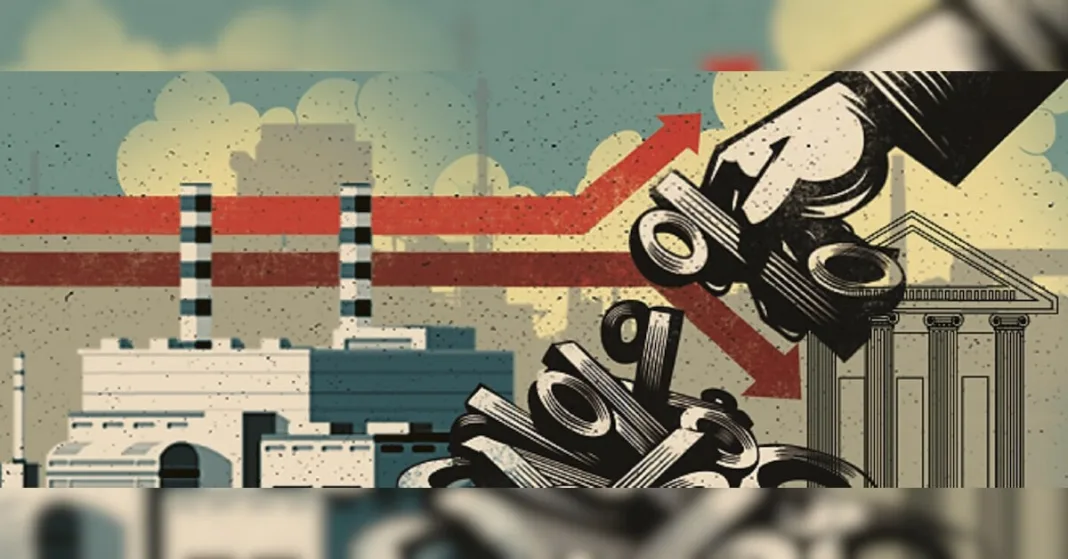
The RBI’s decision to keep the repo rate unchanged was prudent amid geopolitical uncertainty, volatile crude oil prices and concerns over the monsoon’s impact on agricultural output. However, the MPC minutes indicate that further easing is unlikely, with inflation projected to remain above 5 per cent for three quarters and peak at 5.9 per cent in Q3 2026-27. As today’s first editorial notes, this would push the real policy rate into negative territory, making a rate hike increasingly likely, particularly given monetary policy’s lagged effects. The timing will depend on forthcoming inflation projections, while higher rates could also support debt capital flows into India.
Student protests over examination irregularities in Delhi and Jharkhand expose deep institutional failures in India’s public examination system, from flawed recruitment processes to inadequate accountability. Jharkhand’s cancellation of 22 recruitment exams since 2014, including those conducted by the JPSC and outsourced agencies, has now created uncertainty for candidates who cleared the tests and secured government jobs. Today’s second editorial points to technology, audits and stronger monitoring as practical reforms, drawing on recommendations from expert panels led by K Radhakrishnan and Nandan Nilekani. But it identifies a deeper problem: intense competition for scarce university seats and secure jobs. Without expanding quality education and employment, exam-related irregularities will remain incentivised.
The examination crisis reflects deeper failures in higher-education policy and state capacity, rather than simply inadequate technology or weak penalties for malpractice. Centralised testing has become necessary amid scarce higher-education opportunities, creating intense competition and incentives for irregularities. K P Krishnan focuses on the National Testing Agency’s (NTA) institutional weaknesses, including its vast workload, tiny permanent workforce, reliance on deputation and outsourcing, and limited statutory accountability. Comparing it with the UK’s framework for public bodies, he calls for statutory, professionally staffed agencies with stronger financial controls, audits and parliamentary oversight. Better institutional design, he argues, is essential to building effective state capacity.
India needs about ₹57 trillion of private infrastructure capital over the next five years, or roughly ₹11.4 trillion annually. Given a four-year project cycle, this requires a shovel-ready pipeline of about ₹45.6 trillion, which Vinayak Chatterjee says does not exist. He identifies two obstacles to private investment: inadequate de-risked projects and a playing field tilted against private players. The column proposes seven reforms, including reviving a dedicated PPP institution, allowing renegotiations, creating independent regulators and faster dispute resolution, strengthening NABFID’s project-development role, encouraging the Swiss Challenge method and using government-backed plug-and-play structures. Chatterjee urges institutional reform before expecting private capital to return to infrastructure.
Omer Bartov’s Israel: What Went Wrong? traces Israel’s evolution from its founding ideals towards an increasingly extremist state, drawing on the Israeli-American Holocaust and genocide scholar’s own family history and military service in the occupied territories. Reviewing the book, Kanika Datta highlights Bartov’s examination of how Holocaust memory has been politically instrumentalised to deflect criticism of Israel, and his argument that the absence of a constitution and the omissions in its Declaration of Independence enabled territorial expansion and unequal treatment. Bartov ultimately contends that Zionism’s commitment to privileging one ethnicity undermined its claims to democracy and equality, with Western support helping sustain Israel’s conduct towards Palestinians.