
Published on August 18, 2026 |
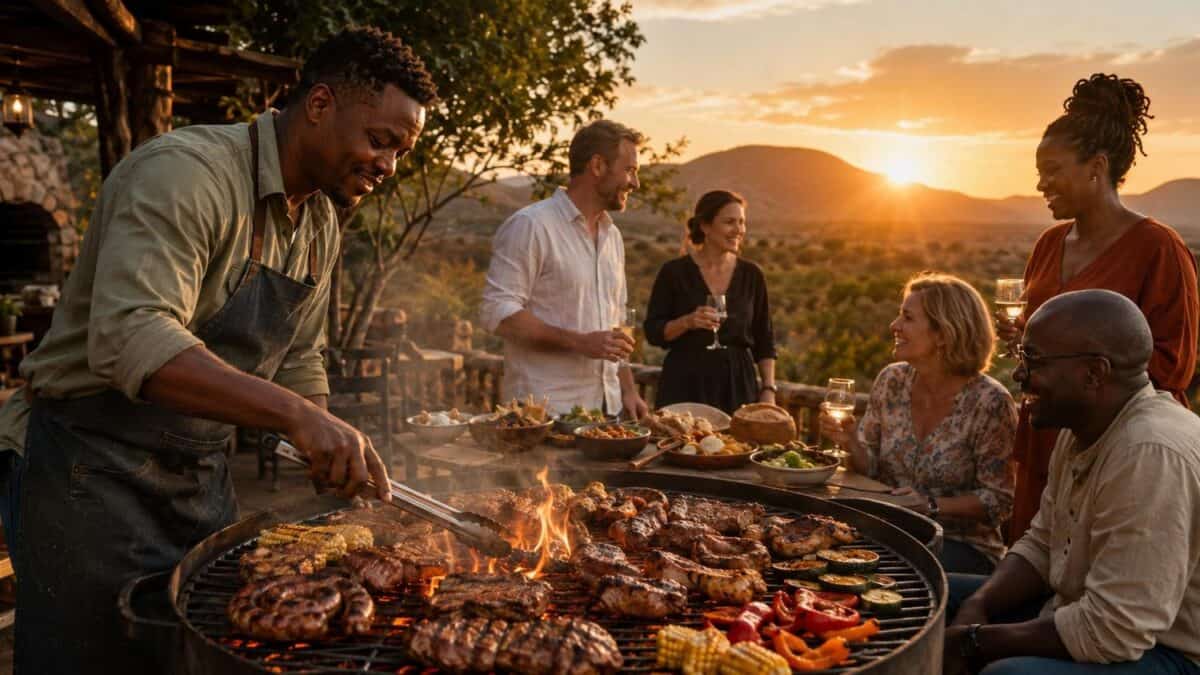
Image generated with Ai
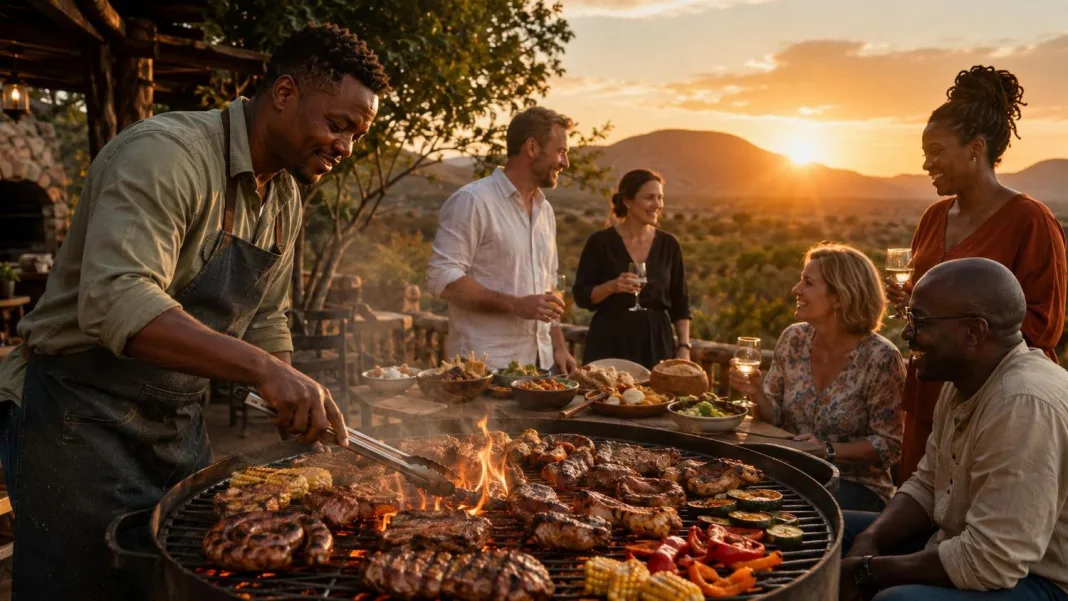
In 2026, South African travelers will bring direct contact with the country’s food and heritage through the braai tradition. A braai is not simply meat cooked on a fire. A braai is a social activity that takes place in all parts of South Africa. South Africa encourages travelers with a record high of visitors coming to the country as the focus shifts to building more cultural experiences than just wildlife and scenic views. With communal meals, travelers make friends with the local people, taste the local dishes, and aid a small business all at once as the travelers engage with the local customs firsthand.
South Africa’s Braai Tradition Becomes a Gateway to Local Life
Fire, food and conversation sit at the centre of a South African braai. Yet the experience cannot be reduced to a standard barbecue. The cooking method matters, but the gathering matters more.
People stand near the fire. Food cooks slowly. Guests talk while the host controls the heat. Plates arrive when they are ready, rather than according to a rigid restaurant timetable. This slower rhythm creates time for human contact.
For an international visitor, that social setting can reveal parts of South Africa that are difficult to understand from a sightseeing vehicle. A shared meal can introduce local humour, family stories, music, languages and everyday customs. It turns eating into cultural participation.
Advertisement
Advertisement
The South Africa braai tradition also works across several kinds of holidays. A visitor may encounter it after a safari drive, during a township food tour, at a guesthouse, beside the coast or at a vineyard. The location changes, as do the recipes, but the idea of gathering around food remains recognisable.
This gives South Africa an important cultural-tourism asset. The country is already famous for wildlife, dramatic landscapes and major cities. Braai experiences can add a more personal layer. They invite travellers to engage with people rather than only places.
There is no official national count of overseas visitors who travel specifically for braai experiences. It would therefore be misleading to describe braai as a separately measured tourism market. However, its value becomes clear within the wider movement towards food-led, community-based and experience-rich travel.
What Makes a Braai Different from an Ordinary Barbecue
The word “braai” comes from Afrikaans and refers both to grilling food over fire and to the social event built around it. In everyday use, people may speak about having a braai, attending one or preparing food for one.
Advertisement
Advertisement
Wood or charcoal commonly supplies the heat. Gas may be used in some settings, but an open flame and glowing coals remain central to the traditional image. The host, sometimes called the braai master, watches the fire and decides when the cooking surface is ready.
Meat frequently dominates the grill. Beef, lamb, chicken and sausage can appear, including boerewors, a seasoned South African sausage. Side dishes may include pap, chakalaka, salads, bread, potatoes or vegetables. Seafood can feature in coastal areas. Vegetarian dishes are also possible, particularly as tourism businesses adapt menus for a wider range of guests.
There is no single menu that defines every braai. Recipes change according to province, community, religion, family preference, available produce and personal taste.
That diversity is important for travellers. A luxury lodge dinner and a neighbourhood shisa nyama visit may both involve meat cooked over fire, but they do not offer identical cultural settings. One may emphasise wilderness and formal hospitality. The other may involve music, lively conversation and a strong township social atmosphere.
Visitors should therefore avoid treating braai as a fixed performance. It is a living tradition. Its meaning comes from the people, place and occasion surrounding the fire.
A Tradition with a Long and Diverse Cultural Background
Cooking over fire is one of humanity’s oldest food practices. In southern Africa, communities used open flames long before the modern word “braai” entered common speech. The present tradition reflects layers of indigenous knowledge, migration, farming, colonial history and changing urban life.
This history means that no single group can adequately represent every form of South African fire cooking. The familiar Afrikaans term became widely used, but related customs appear across the country’s many communities.
South Africa’s food identity developed through interaction among African, Dutch, Malay, Indian, French, British and other influences. Enslaved people, indigenous communities, migrants, farmers, fishers and urban workers all contributed to the country’s culinary landscape.
Braai culture continued to evolve as people moved into towns and cities. It became associated with homes, parks, sporting occasions, holidays, workplaces and public celebrations. It also became a commercial experience through restaurants, food venues, lodges and visitor attractions.
Today, the ritual is familiar across social and economic lines, although experiences differ greatly. Some gatherings are intimate family meals. Others are large public events. Some use simple equipment beside a road or at a beach. Others are carefully designed dinners within premium accommodation.
This breadth gives culinary tourism an honest foundation. Visitors do not need to be told that one version is the only authentic model. They can instead learn how food practices change across South Africa’s provinces and communities.
Shisa Nyama Adds a Powerful Township-Tourism Dimension
One of the most significant visitor angles is shisa nyama, a term commonly associated with township venues where customers select meat that is then prepared over fire. The words are often translated from isiZulu as “burn meat”.
A shisa nyama is not merely a place to buy lunch. Many venues combine food, music and social energy. Friends meet there. Families gather. People celebrate weekends, sporting moments and personal milestones.
For travellers, a responsibly managed visit can offer an introduction to contemporary township culture. It can also direct spending towards local restaurants, drivers, guides, musicians and food suppliers.
However, the experience requires care. A township is a living community, not a tourism exhibit. Operators should work with residents and locally owned businesses. Guests should understand where they are going, what is included and how their spending supports the community.
Travellers should ask before photographing people. They should follow the guidance of local hosts and avoid intrusive behaviour. Respectful participation is far more valuable than treating a meal as visual content.
When handled well, a shisa nyama visit can challenge narrow images of South African tourism. It brings attention to entrepreneurship, creativity and social life beyond conventional attractions. It also gives local businesses a route into the visitor economy without requiring a large resort or major capital investment.
Food Tourism Can Take Visitors Beyond South Africa’s Famous Sights
South Africa’s international image often begins with safari landscapes, Cape Town, the Garden Route, beaches and wine country. These remain major strengths. Yet culinary tourism can encourage visitors to stay longer and travel more widely.
A braai experience can be added to almost any regional itinerary. In the Western Cape, visitors may combine fire-cooked dishes with wine tasting. In KwaZulu-Natal, a culinary journey may connect shisa nyama culture with Indian-influenced foods and coastal travel. In the Eastern Cape, community meals can accompany heritage or nature-based routes.
Gauteng can offer urban food experiences in Johannesburg, Soweto, Pretoria and surrounding areas. Limpopo, Mpumalanga and North West can connect braai dining with lodge stays and wildlife journeys. The Northern Cape offers wide landscapes and open-air settings suited to slow evening meals.
This geographical flexibility is valuable because tourism spending often concentrates in famous districts. Food experiences can help distribute demand towards smaller towns, townships, farms and rural businesses.
They can also strengthen travel outside peak sightseeing hours. Visitors often tour during the day. A communal dinner extends activity into the evening, creating additional demand for transport, guiding, hospitality and entertainment.
Braai cannot solve unequal tourism distribution by itself. Nevertheless, it gives destinations a familiar theme that can be adapted to local products and stories.
Record Visitor Growth Creates a Stronger Market for Cultural Experiences
South Africa entered 2026 with powerful tourism momentum. Statistics South Africa reported that the country welcomed 10.5 million tourists in 2025, an increase of 17.7% from the 8.9 million recorded in 2024.
The 2025 result also moved South Africa above its 2019 pre-pandemic tourism level. This recovery matters for culinary businesses because more arrivals create more potential customers for restaurants, tours, accommodation and cultural activities.
The improvement continued into 2026. The Department of Tourism reported more than 2.9 million inbound travellers during the first quarter, representing growth of 12.6% compared with the same period of 2025.
These figures measure tourism at national level. They do not show how many visitors attended a braai or booked a food experience. Still, the direction is important. A growing visitor base creates space for businesses to offer more distinctive local products.
| Official tourism indicator | Period | Result | Context |
|---|---|---|---|
| International tourists | 2024 | 8.9 million | Up 5.1% from 2023 |
| International tourists | 2025 | 10.5 million | Up 17.7% from 2024 |
| First-quarter inbound travellers | 2026 | More than 2.9 million | Up 12.6% year on year |
| Direct tourism share of GDP | 2024 | 4.9% | Tourism Satellite Account measure |
| Direct tourism employment share | 2024 | 5.7% | About one in every 18 workers |
Sources: Statistics South Africa and the South African Department of Tourism. National totals do not measure braai tourism separately.
The recovery also raises expectations. Travellers who have already seen major landmarks may want more participatory experiences. A shared meal, cooking demonstration or locally guided food journey can answer that demand.
Tourism’s Economic Importance Gives Local Food Greater Relevance
Tourism is not a minor cultural activity in South Africa. It supports a large employment network and brings visitor spending into transport, accommodation, retail, entertainment and food services.
Statistics South Africa’s Tourism Satellite Account found that tourism directly contributed 4.9% of national gross domestic product in 2024. Direct tourism employment accounted for 5.7% of all jobs, equivalent to approximately one in every 18 workers.
The employment share exceeded the 4.8% recorded in 2019. Stats SA also found that tourism directly employed more people than agriculture, mining or utilities when those industries were considered separately.
These official measurements cover the whole tourism economy, not braai venues alone. They nevertheless show why food experiences deserve serious attention. The visitor who pays for a communal meal may also pay a guide, driver, lodge, market trader or craft producer.
Food and beverage businesses often create entry points for smaller operators. A local entrepreneur may not be able to develop a large attraction, but may be able to offer a well-managed meal, tasting, workshop or guided neighbourhood visit.
Tourism spending can move through several local supply chains. Meat may come from a butcher or farmer. Vegetables may come from a market. A musician may perform. A guide may interpret the setting. Transport may come from a community operator.
The more locally connected the experience becomes, the greater its potential to retain spending within the destination.
Domestic Tourism Remains the Foundation of Braai Culture
International interest is important, but braai culture exists because South Africans practise it themselves. It is not an imported tourism product created for foreign guests.
This distinction protects its cultural meaning. Visitors enter an established social tradition rather than a staged idea invented solely for marketing.
Domestic tourism also remains economically important. The Department of Tourism reported domestic spending of R111.6 billion, compared with international visitor spending of R102.2 billion, in data presented during the 2026 Budget Vote.
Those numbers show why tourism businesses should not design culinary experiences only for overseas markets. Local travellers provide a large and resilient customer base. They travel for family events, school holidays, weekend breaks, sport, business and celebrations.
A braai-based product can therefore serve both domestic and international guests. South Africans bring familiarity and expectations. Overseas visitors bring curiosity and demand for interpretation. A carefully designed experience can respect both groups.
Domestic demand may also help businesses operate throughout the year. International arrivals fluctuate by season and source market. Local customers can support restaurants, venues and tour operators during quieter inbound periods.
This strengthens the case for inclusive pricing and varied formats, from affordable neighbourhood dining to high-end lodge experiences.
Government Strategy Supports Immersive Tourism Products
South Africa’s national tourism policy does not identify braai as a standalone strategic sector. It does, however, prioritise the kind of visitor experience into which braai tourism naturally fits.
The Department of Tourism’s 2026 Budget Vote reaffirmed the Tourism Growth Partnership Plan. The framework focuses on access, destination marketing, visitor safety, tourism product development and job creation.
“Tourism product development” is particularly relevant. Government policy calls for quality infrastructure and immersive route and experience design. A food journey built around local hosts, markets, farms, restaurants and fire-cooking traditions can contribute directly to that goal.
| Tourism Growth Partnership pillar | Relevance to culinary and braai tourism |
|---|---|
| Ease of access | Helps international visitors reach South Africa and its regions |
| Coordinated marketing | Can position food and community life beside wildlife and scenery |
| Safety and security | Supports trusted tours, transport and visitor assistance |
| Product development | Encourages bookable routes and immersive local experiences |
| Job creation | Builds pathways for guides, cooks, hosts and young workers |
Government strategy also stresses regional dispersal. This is important because culinary heritage exists in every province. Tourism need not remain limited to a small number of established hubs.
A national food narrative can attract interest, while local interpretation keeps each experience distinctive. The goal should not be to make every braai identical. It should be to help travellers understand regional and community differences.
Visa Reform Could Bring New Culinary Travellers into the Market
Ease of entry is central to tourism growth. South Africa’s government has treated visa reform as one of the main tools for expanding inbound travel.
The Electronic Travel Authorisation system was officially launched in August 2026. The digital process allows eligible visitors to apply online without travelling to a mission or visa-processing centre.
The government has begun implementing the system for travellers from important source markets, including China, India, Indonesia and Mexico. Tourism authorities reported in May 2026 that applicants in these markets could receive digital outcomes within 24 hours.
The official South African ETA launch information says the system will progressively apply to short-stay travellers from countries that require port-of-entry visas.
This development has a practical connection to culinary tourism. Reducing administrative friction can make short holidays, group journeys and specialist food itineraries easier to arrange.
It can also help tour operators market South African experiences to large outbound markets. A traveller interested in cuisine may combine Cape Town, wine country, Johannesburg, Durban or a safari circuit within one trip.
However, visitors must still check their own eligibility, passport conditions and permitted length of stay. The ETA is being introduced progressively. Rules may differ by nationality and purpose of travel.
Travellers should use official government channels and avoid unofficial websites that imitate visa services or charge unnecessary fees.
Air Connectivity Determines Who Can Reach the Experience
Braai tourism may happen on the ground, but aviation determines access for many international visitors. South Africa’s geography makes direct and well-timed flights especially important.
O.R. Tambo International Airport in Johannesburg remains the country’s principal long-haul gateway. Cape Town International Airport serves strong leisure demand, while King Shaka International Airport provides access to Durban and KwaZulu-Natal.
Regional airports then connect visitors with wildlife areas, coastal destinations and smaller cities. Road transfers remain important for rural lodges, wine estates and community-based projects.
South Africa has made air access part of its national tourism growth programme. Government priorities include securing more direct flights, restoring lost capacity and aligning aviation development with destination marketing.
Airport traffic strengthened during 2025. Airports Company South Africa reported that its network handled more than four million passengers in December 2025, reaching 98% of the comparable pre-pandemic level and recording annual growth.
Better air access does more than increase headline arrival totals. It can improve the commercial viability of food tours and regional itineraries. Tour operators need reliable schedules to connect airports, hotels, restaurants and rural destinations.
Airlines can also support culinary tourism through stopover promotions and destination content. Yet such campaigns should describe real, bookable experiences rather than relying on vague cultural imagery.
Hotels and Lodges Can Turn Dinner into Destination Storytelling
Hotels occupy a strong position in the growth of braai-led tourism. They already provide accommodation, kitchens, staff and guest access. The challenge is to make the meal culturally informative without making it feel artificial.
A lodge may serve a braai after a game drive. A city hotel may organise a chef-led fire-cooking evening. A coastal property may use local seafood. A wine-estate stay may pair grilled dishes with regional wines.
Each format can create value when it reflects its location. Guests should know what is being cooked, where ingredients originate and why particular side dishes matter.
Local participation is also essential. Hotels can work with nearby cooks, farmers, storytellers and performers. This approach spreads economic benefits and prevents the experience from becoming an isolated resort production.
Dietary inclusion needs close attention. South African braai culture is strongly associated with meat, but international groups may include vegetarians, vegans, people avoiding pork or beef, and guests with religious or medical requirements.
Hotels should explain menus before booking. Separate preparation surfaces may be necessary. Allergy information should be accurate. Clear service standards will help make the experience welcoming without removing its local character.
Tour Operators Can Build Responsible Culinary Routes
Tour operators can turn individual meals into coherent journeys. A strong route might combine a food market, historic district, community restaurant, cooking lesson, wine estate and evening braai.
The operator’s role extends beyond logistics. Guides must explain cultural context. They should introduce differences among braai, shisa nyama and other local dining traditions without presenting communities as interchangeable.
Small group sizes can improve interaction and reduce pressure on neighbourhood venues. Advance reservations allow hosts to prepare food safely and pay staff fairly.
Operators should also state what the booking price includes and how local partners benefit. Transparent commercial relationships build trust between communities and the tourism industry.
A culinary route can complement existing safari, heritage, conference or beach packages. This reduces the need to create demand from nothing. Visitors already travelling through South Africa can add a half-day or evening experience.
Specialist itineraries may also appeal to repeat visitors. Someone who has completed a conventional first trip may return for regional food, wine, art or music.
The opportunity is strongest when the tour treats food as a way to understand South Africa, not simply as a series of dishes to photograph.
Local Businesses Could Capture More Visitor Spending
Braai tourism has a relatively broad potential supply chain. But spending does not automatically reach small businesses. Product design determines who benefits.
Locally owned venues can earn from meals and beverages. Butchers and farmers can supply ingredients. Drivers can provide transfers. Guides can interpret the destination. Musicians and craftspeople can add cultural depth where appropriate.
Accommodation providers may earn from longer stays if culinary experiences give travellers additional reasons to remain overnight.
Regional development benefits become more likely when routes include communities outside famous tourism centres. A visitor who travels to a small town or township venue may spend money that would otherwise remain inside a central business or resort district.
Business support is still necessary. Small operators may need assistance with permits, insurance, digital bookings, financial management, food safety and international marketing.
Reliable infrastructure also matters. Roads, water, electricity, mobile coverage and safe transport affect the quality of the visitor experience.
Government policy can create favourable conditions, but businesses must still develop products that visitors can find, trust and reserve. A compelling tradition has limited economic impact when it remains invisible online or unavailable through recognised booking channels.
Employment Opportunities Extend Beyond the Kitchen
The economic value of food tourism is often described through chefs and restaurant workers. Braai experiences can support a wider range of roles.
Potential jobs include guiding, driving, event coordination, food sourcing, cleaning, security, entertainment, accommodation and digital marketing. Young people may enter through hospitality training or small-business development.
Women-led enterprises can participate through catering, baking, produce supply, craft production and guest hosting. Rural producers may benefit when tourism businesses purchase locally and consistently.
The official figure showing that tourism directly supported 5.7% of South African employment in 2024 gives this discussion national context. However, it should not be used to claim that braai alone created those jobs.
No official dataset isolates employment generated by braai tourism. Any precise number attached to the niche without a transparent study would be unreliable.
The stronger argument is structural. Food service is connected to the broader tourism economy. When visitor arrivals, length of stay and local expenditure grow, well-positioned culinary businesses can participate.
Skills remain critical. Friendly hosting alone is insufficient. Operators need food hygiene, customer care, costing, language support, emergency planning and responsible alcohol service.
Braai Tourism Can Support Regional Development
South Africa’s culinary diversity creates opportunities far beyond its principal gateways. Every province has ingredients, cooking methods and social customs that can enrich a visitor itinerary.
Regional tourism authorities and municipalities can identify clusters rather than isolated venues. A route becomes more attractive when visitors can combine meals with accommodation, landscapes, heritage, markets and outdoor activity.
Wine regions already demonstrate how food and drink can anchor travel. Similar thinking could connect livestock areas, fishing communities, farming districts and urban neighbourhoods.
Local stories should guide development. A national label may attract attention, but communities should decide how their heritage is presented.
Regional routes can also encourage overnight stays. Visitors may not travel several hours for one meal, but they may do so for a complete weekend involving scenery, food, culture and accommodation.
Infrastructure investment remains necessary. Poor roads or unreliable services can prevent small destinations from converting cultural assets into viable tourism.
The national growth strategy’s focus on destination development and access therefore matters to the South Africa braai tradition. The fire may be local, but the visitor journey depends on a complete system.
Sustainability Begins with Ingredients and Energy
Braai tourism also raises environmental questions. Wood and charcoal create atmosphere, but their sourcing and use require care.
Tourism businesses should buy fuel from lawful and responsible suppliers. They should avoid wood linked to illegal harvesting or ecological damage. Efficient equipment can reduce unnecessary fuel consumption.
Food sourcing matters too. Local purchasing can shorten supply chains and support nearby producers, although “local” does not automatically mean environmentally sustainable. Businesses need to consider farming practices, transport, refrigeration and waste.
Meat carries a significant environmental footprint. Operators can offer sensible portions, make better use of ingredients and include vegetables, grains and plant-based dishes without pretending that meat is absent from braai culture.
Food waste should be measured and reduced. Advance bookings help businesses prepare realistic quantities. Safe surplus redistribution may be possible through suitable local systems.
Reusable plates, glasses and cutlery can limit single-use waste. Water use, wastewater and cleaning procedures also require planning, especially in areas facing supply pressure.
Sustainability should not become a decorative claim. Visitors increasingly expect evidence. Clear procurement standards and practical waste policies carry more credibility than broad green language.
Protecting Cultural Integrity Is Essential
Commercial success can place pressure on living traditions. A meal designed entirely around tourist expectations may lose the very character that attracted visitors.
The answer is not to freeze braai culture in the past. Traditions naturally evolve. The goal is to ensure that local people retain agency over how they are represented.
Hosts should lead the story. Guides should explain rather than exaggerate. Marketing should avoid presenting South Africans as props within an exotic spectacle.
Tourism businesses must also recognise diversity. Braai is widely shared, but South Africa is not culturally uniform. Language, religion, class, geography and family history influence food practices.
Terms such as “authentic” should be used carefully. A polished hotel experience can be genuine if it is rooted in place and honest about its format. A neighbourhood venue can also adapt to visitors without losing legitimacy.
Cultural integrity depends on relationships, fair payment and accurate interpretation. It cannot be created through décor alone.
Travellers play a role as well. They should arrive with curiosity rather than demands for a performance. Listening, asking respectful questions and following local etiquette can turn a commercial meal into meaningful exchange.
Food Safety and Visitor Protection Must Remain Priorities
Open-fire cooking creates practical risks. Flames, hot equipment, smoke, raw meat and outdoor service all require proper management.
Commercial operators should follow applicable food-safety, licensing, fire and workplace requirements. Raw and cooked foods must remain separate. Cold storage must be reliable. Staff need clean water and hygienic preparation areas.
Guests should disclose allergies and dietary requirements in advance. They should not assume every sausage, marinade or side dish contains familiar ingredients.
Responsible alcohol service is equally important. Braai gatherings may include beer or wine, but visitors still need safe transport. Tour operators and hotels should arrange designated drivers or professional transfers.
Neighbourhood visits should use trusted guides and agreed meeting points. Travellers should follow current official safety guidance and avoid wandering into unfamiliar areas without local knowledge.
These safeguards do not weaken spontaneity. They protect hosts, residents and visitors. A well-managed experience allows the social warmth of the meal to remain central.
Tourism growth depends on reputation. One poorly controlled event can harm a small operator and reduce confidence in a wider destination.
What International Travellers Need to Know
Visitors should understand that a traditional braai can take time. The fire must settle before cooking begins. Food may arrive in stages. The waiting period is part of the social experience.
Guests may be invited to bring a side dish or beverage at a private gathering. Commercial tours should state clearly whether food, drinks and transport are included.
Menus often centre on meat, but alternatives are increasingly available. Travellers with dietary needs should communicate early rather than waiting until arrival.
Clothing should suit the setting. Outdoor evenings can become cool, even after warm days. Smoke may cling to fabric. Comfortable shoes are useful at farms, lodges and informal venues.
Cashless payments are widely used in cities, although travellers visiting smaller businesses should confirm accepted methods. Tipping expectations vary by service and should be checked with the operator.
Visitors should also learn a few food names before arriving. Understanding boerewors, pap, chakalaka, braaibroodjie and shisa nyama makes menus easier to navigate.
Most importantly, travellers should approach the gathering as a shared occasion. The best part may not be a single dish. It may be the conversation that takes place while everyone waits beside the fire.
Braai Can Strengthen Safari, Wine and City Tourism
Braai experiences do not need to compete with South Africa’s established attractions. Their greatest strength may be the ability to deepen them.
After a safari, a fire-cooked dinner can connect the landscape with regional produce and local hosting. In wine country, braai dishes can create distinctive pairings and make tastings feel less formal.
In Cape Town or Johannesburg, a guided food journey can help visitors understand neighbourhoods that a conventional city tour may pass without explanation.
In Durban, fire-cooked food can form part of a wider culinary itinerary shaped by African, Indian and coastal influences. Along the Garden Route, outdoor meals can complement beaches, forests and small-town stays.
Business events also offer an opportunity. Conference delegates often have limited time. A carefully organised communal dinner can introduce culture without requiring a full additional travel day.
The same applies to cruise passengers and short-stay visitors. A safe, well-timed food experience near a port or city centre can create a meaningful encounter within a restricted itinerary.
This flexibility makes braai a useful tourism connector. It does not replace South Africa’s major products. It gives them a human and sensory dimension.
The Future Outlook Must Remain Grounded in Official Plans
South Africa’s official outlook is built around broader tourism expansion rather than a numerical target for braai tourism.
The Tourism Growth Partnership Plan runs to 2030. It prioritises easier access, coordinated marketing, safety, product development and employment. These published objectives create favourable conditions for cultural and culinary experiences.
The ETA rollout is designed to simplify entry for eligible international markets. Government is also prioritising air connectivity and more effective destination marketing.
Official statistics show that tourism had already exceeded its pre-pandemic arrival level in 2025 and maintained growth during early 2026.
These developments support opportunity, but they do not guarantee commercial success for every food business. Operators will still need quality, safety, digital visibility, fair partnerships and reliable access.
Nor should the future be described through unsupported forecasts. There is no official target for the number of braai travellers, braai-tourism revenue or jobs created specifically by this tradition.
The credible outlook is therefore clear but measured. South Africa is growing its visitor economy and seeking more immersive products. Braai experiences align strongly with that direction when they are locally led, responsibly operated and connected to wider regional itineraries.
Conclusion
The South African braai tradition welcomes visitors with the opportunity to share a fire, something no landmark has the ability to do. This tradition celebrates and showcases the Regional culinary dishes, fosters conversations and brings people together. In light of this, it is safe to say braai is the backbone of South Africa’s tourism. South Africa is a great place for foodie travel, more travelers coming to South Africa, more visitor visas, established air routes, and a supportive government for tourism. South Africa will have to stop the growth to protect local ownership, food safety, cultural norms and the environment. The braai tradition must never be represented as a posed, over done, cliche tradition. The true sustainability for tourism comes from South African communities taking ownership over the experiences while visitors take ownership to respect the local South African communities.
Advertisement
Advertisement