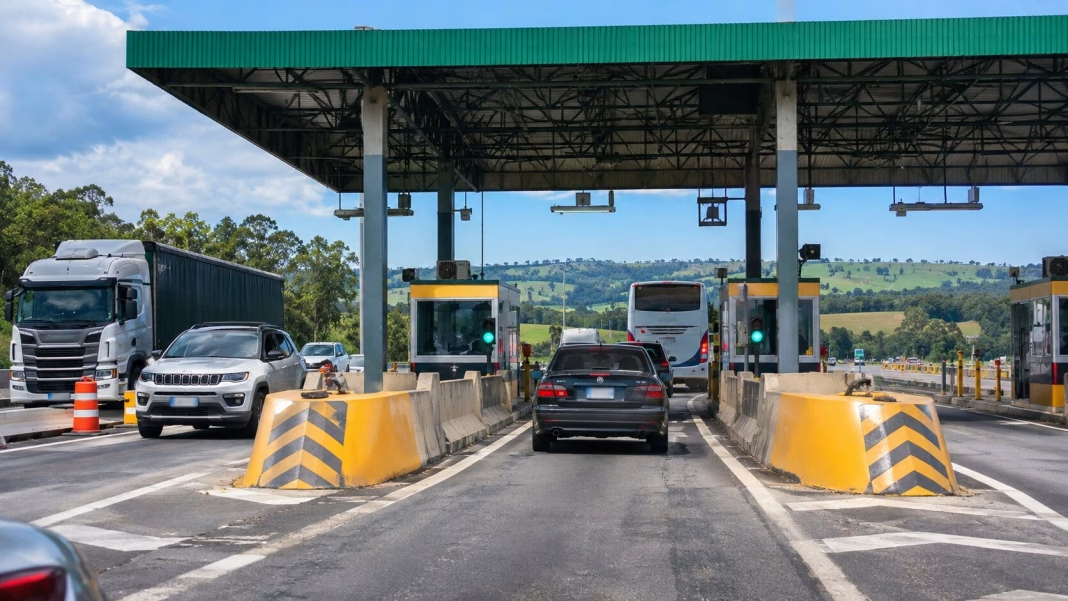


Brazil has introduced revised highway toll charges across Cascavel and eight other locations in Paraná, effective from midnight on Sunday, 8 November 2026, following approval by the National Land Transport Agency (ANTT). The new tariffs apply to 662.1 kilometres of federal and state highways managed by EPR Iguaçu S.A., including sections of BR-163, BR-277, PR-182 and PR-280. The changes affect motorists using toll collection points in Lindoeste, Prudentópolis, Candói, Laranjeiras do Sul, Cascavel, Céu Azul, São Miguel do Iguaçu, Ampére and Pato Branco. According to ANTT’s official announcement of 6 November, the adjustments form part of the concession’s first ordinary tariff review and reflect inflation and other contractual factors. The new charges are relevant to residents, road travellers, commercial transport operators and visitors planning journeys through western and south-western Paraná.
Brazil Implements Revised Toll Charges Across Paraná’s Highway Network
Brazil’s National Land Transport Agency has approved updated road toll tariffs for the EPR Iguaçu concession, introducing new charges at nine collection locations across Paraná. The decision covers a highway network extending 662.1 kilometres, including federal and state roads under the concessionaire’s management. The revised rates took effect at midnight on 8 November 2026, following publication of the regulatory decision in the Federal Official Gazette. The adjustment applies to different vehicle categories, with specific amounts determined by the toll location and vehicle classification. Motorists travelling through the affected corridors must therefore account for the revised charges when planning their journeys.
ANTT Confirms First Ordinary Tariff Review Under EPR Iguaçu Concession
The revised charges were authorised through SUROD Decision No. 1,846, dated 3 November 2026 and published on 6 November. The decision approves the first ordinary review and adjustment of the Basic Toll Tariff under the EPR Iguaçu concession agreement. According to ANTT, the review follows mechanisms established in the contract and incorporates inflation and other specified components used to calculate the tariffs. The concessionaire is responsible for the administration of the designated highway network, while the regulator oversees the application of the approved charging structure. The published decision establishes the legal basis for the new rates and their implementation date.
Nine Toll Collection Locations Receive Updated Passenger Vehicle Rates
The new toll schedule covers nine locations in Paraná distributed across four highways. On BR-163, the charge at Lindoeste has increased from R$18.10 to R$19.10. BR-277 accounts for six locations, including Prudentópolis, Candói, Laranjeiras do Sul, Cascavel, Céu Azul and São Miguel do Iguaçu. Additional changes apply at Ampére on PR-182 and Pato Branco on PR-280. The adjustments vary by location, reflecting the rates approved for each toll collection point. ANTT has published the complete list of charges for category 1 vehicles, providing motorists with the information needed to calculate the cost of individual journeys.
Advertisement
Advertisement
Official Highway Toll Charges Effective 8 November 2026
| Highway | Toll location | Previous rate | New rate |
|---|---|---|---|
| BR-163 | Lindoeste | R$18.10 | R$19.10 |
| BR-277 | Prudentópolis | R$16.70 | R$17.70 |
| BR-277 | Candói | R$16.10 | R$17.00 |
| BR-277 | Laranjeiras do Sul | R$15.20 | R$16.10 |
| BR-277 | Cascavel | R$15.10 | R$16.00 |
| BR-277 | Céu Azul | R$15.20 | R$16.00 |
| BR-277 | São Miguel do Iguaçu | R$17.40 | R$18.40 |
| PR-182 | Ampére | R$13.40 | R$14.20 |
| PR-280 | Pato Branco | R$11.00 | R$11.60 |
Rates apply to category 1 vehicles, including passenger cars, pickup trucks and vans with two axles and single tyres. Source: ANTT, 6 November 2026. ANTT
BR-277 Accounts for Six of the Nine Revised Toll Locations
BR-277 is the most extensively represented highway in the revised tariff announcement, accounting for six of the nine collection locations. The affected points extend from Prudentópolis through Candói, Laranjeiras do Sul, Cascavel and Céu Azul to São Miguel do Iguaçu. These locations form part of an important road corridor across Paraná. Under the new schedule, category 1 vehicle charges range from R$16.00 at Cascavel and Céu Azul to R$18.40 at São Miguel do Iguaçu. The rates apply at individual collection points, meaning a motorist’s total toll expenditure depends on the number and location of points encountered during the journey.
Advertisement
Advertisement
São Miguel do Iguaçu and Cascavel Included in New Road Charging Schedule
The revised tariffs include locations relevant to road travel in western Paraná. At São Miguel do Iguaçu, the category 1 rate has increased from R$17.40 to R$18.40. Cascavel’s charge has increased from R$15.10 to R$16.00, while Céu Azul’s rate has changed from R$15.20 to R$16.00. These collection points are located along BR-277, a corridor used for journeys through western Paraná, including travel towards the Foz do Iguaçu region. The confirmed changes concern toll prices, not the introduction of new road closures or restrictions on tourist access. Travellers using these roads should check which collection points fall along their intended route.
Inflation and Contractual Adjustments Form the Basis of the New Tariffs
ANTT has explained that the tariff review includes an adjustment index of 1.17259, together with other calculations specified in the concession agreement. The regulator identified a positive 5.76 per cent variation in Brazil’s Broad National Consumer Price Index, known as IPCA, between the beginning of toll collection and September 2026. The calculation also incorporates a negative Factor C adjustment of R$0.03403. According to the agency, the final charges result from the application of contractual review and adjustment mechanisms, including the prescribed rounding rules. The published tariff changes should therefore not be interpreted as a uniform percentage increase at every location.
Advertisement
Advertisement
Electronic Toll Tag Users Remain Eligible for Five Per Cent Discount
The updated tariff arrangements preserve discounts for motorists using eligible electronic toll tags. ANTT confirms that the Basic Tariff Discount, or DBT, provides a five per cent reduction for all vehicle categories on qualifying transactions. The discount is applied automatically under the concession’s contractual rules. This arrangement is relevant to motorists who regularly use the affected roads or prefer electronic payment systems. However, the five per cent reduction is subject to eligibility requirements and should not be described as a universal discount for all methods of payment. The regulator has also confirmed a separate scheme designed to benefit qualifying frequent users of light vehicles.
Frequent Road Users Can Receive Progressive Toll Discounts
The Frequent User Discount, known as DUF, provides progressive reductions for eligible light vehicles using the same toll collection point repeatedly. According to ANTT, the discount begins with the second eligible passage through the same location, in the same direction, during the same calendar month. The reduction increases with qualifying usage, and from the thirtieth eligible passage, the minimum contractual tariff applies for the remainder of that month. These benefits are applied automatically according to the concession’s rules, without additional registration with the concessionaire. The arrangement is particularly relevant to motorists making repeated journeys along the same highway corridor.
Different Vehicle Categories Are Subject to Separate Toll Calculations
The revised schedule is not limited to ordinary passenger cars. ANTT’s formal decision includes separate charges for commercial vehicles, buses, trucks and vehicles with trailers or semi-trailers. These rates are calculated using the vehicle-category multipliers established under the concession agreement. Consequently, charges for larger vehicles can differ substantially from the category 1 figures listed for passenger cars. The regulator’s published tariff annex provides the applicable rates for the different classifications at all nine locations. Transport operators should therefore consult the full official schedule when calculating costs, rather than applying passenger-car rates to buses or other commercial vehicles.
What the New Toll Rates Mean for Road Travellers and Tourism Operators
The revised charges have practical implications for motorists planning journeys through the EPR Iguaçu highway network. Travellers using private cars, hired vehicles or road-based tourism services should identify the toll points along their routes and account for the relevant charges. Tour operators and passenger transport providers also need to consider the appropriate vehicle classifications when calculating transport costs. The new rates may affect the toll component of travel expenditure, although the official decision does not establish any specific increase in package holiday prices, coach fares or tourism spending. Such wider commercial effects should not be presented as confirmed consequences of the regulatory adjustment.
Advertisement
Advertisement
EPR Iguaçu Required to Publicise New Toll Rates Before Implementation
The formal regulatory decision requires EPR Iguaçu to provide broad publicity for the revised charges before collection begins. This requirement is intended to ensure that highway users receive information about the new tariffs and can prepare for journeys under the updated schedule. ANTT published the approved amounts on 6 November, two days before their implementation. The agency also provided information about electronic payment discounts and the frequent-user scheme. These details form part of the regulator’s official communication on the tariff review, giving motorists and transport operators a reference for determining the charges applicable at the concession’s nine collection points.
Brazil’s Paraná Toll Adjustment Takes Effect Under Established Concession Rules
The implementation of revised toll charges on 8 November marks the first ordinary tariff review under the EPR Iguaçu concession. The changes apply across 662.1 kilometres of roads and nine collection locations, with rates determined by the regulatory decision and the concession’s contractual framework. Passenger-car charges have increased at each listed point, while eligible electronic-tag users retain access to basic and frequent-user discounts. For travellers and transport businesses, the principal requirement is to account for the updated rates when using the affected highways. The official announcement concerns the regulation of toll charges and does not establish new travel restrictions, road closures or changes to visitor entry requirements.