
The Union Cabinet on Wednesday approved a ₹4,371.10-crore central sector scheme to overhaul India’s official statistical system, bringing all of the statistics ministry’s survey, data and economic census work under one umbrella for the five years from 2026-27 (FY27) to 2030-31 (FY31).
The Viksit Bharat Initiative for Statistical Transformation, Analytics & Research (VISTAR), cleared at a meeting chaired by Prime Minister Narendra Modi, will fund 59 surveys over the 16th Finance Commission cycle (FY27-FY31) to fill “critical data gaps in various sectors”, against 43 major surveys conducted previously. It will also fund the long-delayed 8th Economic Census and a revamped programme of support to state statistical bureaus.
“Aligned with the central objective of Viksit Bharat 2047, the VISTAR Scheme is designed to establish a dynamic, real-time and future-ready official statistical architecture for enhanced timeliness, data granularity, interoperability with harmonised and AI ready datasets,” according to the government’s statement.
The scheme has three components: comprehensive statistical operations and strengthening of the ecosystem; Support for Statistical Strengthening (SSS) for states; and the Economic Census.
Under the first component, the Ministry of Statistics and Programme Implementation (Mospi) will digitise statistical processes and embed artificial intelligence and machine learning in data processing, validation and analysis.
The ministry plans new measures, including a Headline Index of Services Production and an Index of Unincorporated Sector Enterprises. It will also tap alternative sources such as mobile phone, scanner and e-commerce data to complement traditional surveys and ease the burden on respondents.
Mospi released a trial Index of Services Production covering 19 sub-sectors in July this year, but the headline index, a single composite index, is yet to be launched.
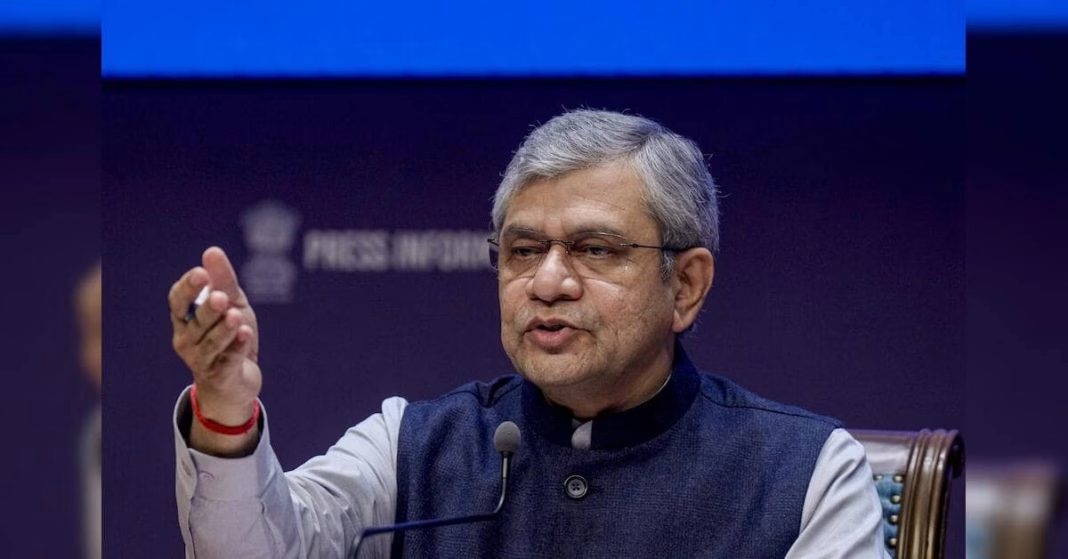
Briefing reporters after the meeting, Union Minister Ashwini Vaishnaw said the Prime Minister had always stressed “objective data collection” and “a systematic and methodical statistical system.”
“We must move beyond the long-standing attitude of merely continuing as before: conduct thorough investigation, thorough analysis, and examine matters carefully. Decisions should then be made on that basis,” he said.
“[The scheme] will essentially revamp the country’s entire statistical system and give it new strength,” Vaishnaw added.
Under a redesigned Support for Statistical Strengthening framework, dubbed SSS 2.0, central funds to states and Union Territories will be “deliverable-linked”. Mospi will help scale up district-level and million-plus city estimates in flagship surveys such as the Periodic Labour Force Survey, and in compiling state gross domestic product (GDP) and district GDP.
The 8th Economic Census, to be conducted with the states, will count all non-farm establishments and their workers down to the gram panchayat and ward levels. It will form the baseline for a National Statistical Business Register (SBR) and help estimate the unorganised sector’s share of GDP.
The approval caps a year of rebasing at Mospi. In February, the ministry released a new Consumer Price Index series with 2024 as the base year, followed by a GDP series with 2022-23 as the base, replacing the 2011-12 series. A new Index of Industrial Production was also launched in June with a 2022-23 base.
“With attention to data collection, surveys, bias reduction, data validation, and ground truthing, statistics will gain new prestige,” Vaishnaw said. He added that it would also include new types of surveys and new periodic assessments.