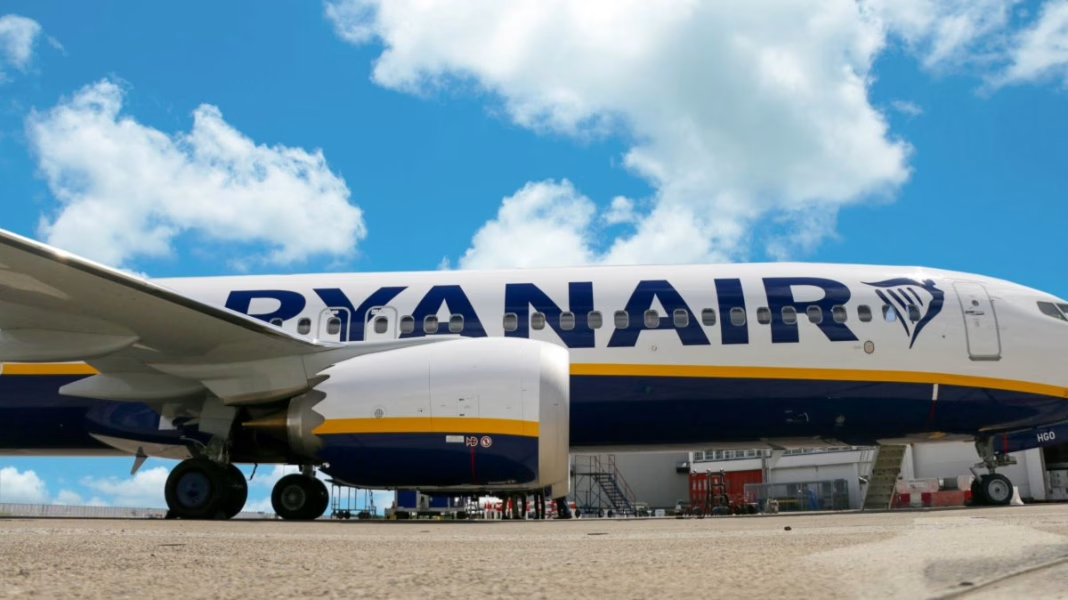


Spain and other countries across Europe faced tourist flight disruptions as seven aircraft underwent security inspections following suspected bomb threats on 3 November 2026. The incidents affected Poland, Italy and Bulgaria alongside Spain, prompting emergency responses, aircraft searches and precautionary measures at five airports. Ryanair, LOT Polish Airlines, Scandinavian Airlines and Wizz Air operated the affected flights, connecting major European destinations with the United Kingdom, Ireland, Denmark and Portugal. Authorities inspected aircraft and baggage, while Warsaw-Modlin Airport temporarily suspended operations after a diverted flight arrived from London Heathrow. Italian military aircraft also escorted a Dublin–Rome service as part of the security response. Fortunately, all seven flights landed safely, and no explosive devices were reported discovered. Although the alerts caused operational interruptions, investigators have not established whether the threats were connected. For international travellers, the incidents highlight the importance of aviation security, reliable flight information and emergency preparedness.
What Happened When Seven European Flights Received Bomb Threats?
Seven passenger flights faced suspected bomb threats on 3 November 2026, prompting security responses at airports in Poland, Spain, Italy and Bulgaria. The affected services included international routes connecting several European countries.
Ryanair operated four of the seven flights, representing approximately 57.1% of the affected services. LOT Polish Airlines, Scandinavian Airlines and Wizz Air operated the remaining three.
Authorities responded by inspecting aircraft, examining baggage and coordinating emergency procedures. Some flights landed at their intended destinations, while others required additional operational measures.
Advertisement
Advertisement
The most significant documented diversion involved a LOT Polish Airlines flight travelling from London Heathrow to Warsaw Chopin Airport. The aircraft instead landed at Warsaw-Modlin Airport.
Italian military aircraft also escorted a Ryanair service arriving from Dublin.
Advertisement
Advertisement
Despite the seriousness of the alerts, no explosive devices were reported discovered. No fatalities or injuries were confirmed in connection with the seven incidents.
Which Airlines and European Destinations Were Affected?
The incidents involved four airlines and seven routes, demonstrating how security alerts can affect international travel across several interconnected aviation markets.
Advertisement
Advertisement
| Airline | Flight route | Country of security inspection | Reported passengers or people aboard |
|---|---|---|---|
| LOT Polish Airlines | London Heathrow–Warsaw | Poland | 181 people |
| Scandinavian Airlines | Copenhagen–Warsaw | Poland | Not officially established |
| Ryanair | Manchester–Murcia | Spain | 114 passengers, 7 crew |
| Ryanair | Lisbon–Rome | Italy | Not officially established |
| Ryanair | Dublin–Rome | Italy | Not officially established |
| Wizz Air | Milan Bergamo–Sofia | Bulgaria | 176 passengers |
| Ryanair | Dublin–Sofia | Bulgaria | 185 passengers |
The figures identify at least 663 people across four flights with published passenger or occupant counts. They do not represent the complete number affected across all seven services.
Poland, Italy and Bulgaria each received two affected flights, while Spain received one.
This distribution highlights the geographical reach of the alerts without establishing that they originated from a single source.
Why Did Warsaw-Modlin Airport Temporarily Suspend Flight Operations?
Warsaw-Modlin Airport experienced one of the most clearly documented disruptions after receiving notification of a suspected bomb threat involving a Boeing 737 MAX travelling from London Heathrow to Warsaw Chopin.
Advertisement
Advertisement
According to the airport’s official operational statements, the alert was recorded at approximately 9.54 am on 3 November.
The aircraft landed at Warsaw-Modlin at 10.01 am with 181 people aboard and approximately 3.7 tonnes of fuel.
Airport authorities temporarily suspended flight operations while emergency services carried out the necessary procedures.
Operations resumed at approximately 11.50 am, although some restrictions remained in place. The airport formally cancelled the bomb alert at 12.21 pm.
The timeline indicates that normal flight operations began resuming approximately 109 minutes after the aircraft landed.
This incident demonstrates how security threats can affect an entire airport, even when the immediate concern involves a single aircraft.
Advertisement
Advertisement
How Did Spain, Italy and Bulgaria Respond to the Security Alerts?
Security authorities across southern and eastern Europe adopted precautionary measures following the threats.
At Murcia Airport in Spain, a Ryanair service arriving from Manchester underwent inspection after passengers disembarked. The aircraft carried 114 passengers and seven crew members.
In Italy, two Ryanair flights arriving at Rome Fiumicino Airport from Lisbon and Dublin faced security checks. Italian military aircraft escorted the Dublin service before landing.
Authorities inspected aircraft and baggage as part of the emergency response.
Meanwhile, Sofia Airport in Bulgaria received two affected flights, one operated by Wizz Air from Milan Bergamo and another by Ryanair from Dublin.
The Bulgarian services carried a reported combined 361 passengers, excluding crew.
Advertisement
Advertisement
Both aircraft landed safely and underwent security inspections.
No explosives were reported discovered in any of these incidents.
The responses illustrate the importance of coordination between airports, airlines, police and specialist security personnel.
What Do the Statistics Reveal About the Scale of Europe’s Aviation Disruption?
The seven incidents affected multiple international routes, but the available information does not establish a Europe-wide total for delayed flights, cancellations or missed connections.
The confirmed and reported operational figures provide a more reliable picture.
| Aviation security indicator | Reported figure |
|---|---|
| Flights affected on 3 November | 7 |
| Airlines involved | 4 |
| Countries receiving affected aircraft | 4 |
| Airports receiving affected aircraft | 5 |
| Ryanair flights involved | 4 |
| Flights inspected in Poland | 2 |
| Flights inspected in Italy | 2 |
| Flights inspected in Bulgaria | 2 |
| Flights inspected in Spain | 1 |
| Minimum documented people aboard four flights | 663 |
| Explosive devices reported discovered | 0 |
| Confirmed fatalities | 0 |
The table demonstrates that Ryanair accounted for more than half of the affected flights.
Advertisement
Advertisement
However, the figures do not establish whether Ryanair was deliberately targeted or whether the threats were coordinated.
The absence of verified cancellation totals also means that broader passenger disruption cannot be quantified accurately.
Was There Another Bomb Threat Involving a European Flight?
A separate incident occurred on 2 November 2026, one day before the seven-flight sequence.
A Wizz Air service travelling from London Luton to Sofia was diverted to Budapest following a suspected bomb threat.
The aircraft landed safely at Budapest Liszt Ferenc International Airport, where authorities carried out security inspections.
No explosive device was reported discovered.
Advertisement
Advertisement
The aircraft subsequently continued towards Sofia after the necessary checks.
Including this earlier incident brings the documented two-day total to eight affected flights.
However, the headline figure of seven refers specifically to 3 November.
Bulgarian authorities indicated that investigations into the origins of threatening communications were continuing.
The available information does not establish whether the earlier incident was connected to the seven alerts the following day.
This distinction is important because incidents occurring close together do not automatically demonstrate coordinated criminal activity.
Advertisement
Advertisement
How Could Bomb Threats Affect Tourists Travelling Across Europe?
Aviation security alerts can create practical difficulties for tourists, particularly those travelling on multi-city holidays or connecting itineraries.
Unexpected diversions may lead to delayed arrivals, missed onward flights, additional transport requirements and changes to accommodation arrangements.
Passengers may also experience extended security screening, temporary airport restrictions or additional baggage inspections.
However, the seven incidents do not establish that European aviation generally became unsafe.
All affected aircraft landed safely, and no explosive devices were reported discovered.
Travellers should check official airline notifications before departure and monitor airport operational announcements when disruptions occur.
Advertisement
Advertisement
Those facing significant delays should retain receipts for necessary meals, accommodation and transport expenses.
Passengers travelling on qualifying European routes may have rights to assistance under applicable passenger protection regulations.
However, fixed financial compensation is not automatic when extraordinary security circumstances affect flight operations.
Why Are Aviation Security Procedures Important for European Tourism?
European tourism depends heavily on reliable air connections between major cities, regional destinations and international gateways.
Airports such as Warsaw Chopin, Rome Fiumicino and Sofia support leisure travel, business journeys and onward connections.
Security alerts can interrupt these movements even when investigations ultimately find no dangerous devices.
Advertisement
Advertisement
The Warsaw-Modlin incident illustrates how a single diverted aircraft can temporarily restrict airport operations.
Similarly, inspections in Rome, Murcia and Sofia demonstrate how precautionary measures can affect passenger journeys after landing.
For tourism businesses, reliable communication becomes particularly important during such emergencies.
Hotels, tour operators and transport providers may need to accommodate travellers whose arrival times change unexpectedly.
However, no official figures establish measurable tourism revenue losses from these incidents.
The wider lesson concerns maintaining effective emergency procedures while minimising unnecessary disruption to legitimate passenger travel.
Advertisement
Advertisement
What Caused the Alerts and Why Were Emergency Measures Necessary?
The immediate cause of the disruption was the receipt of suspected bomb threats involving seven aircraft travelling across Europe.
Bulgarian officials indicated that threatening messages affecting flights arriving in Sofia had been received by email.
However, authorities had not established a confirmed common origin for all seven alerts.
The threats required precautionary responses because aviation security procedures must address potentially serious risks before investigators can determine whether a warning is genuine.
Aircraft inspections, passenger screening and temporary operational restrictions therefore formed part of the response.
The absence of discovered explosives does not mean authorities could safely have ignored the initial warnings.
Advertisement
Advertisement
At the same time, investigators must distinguish between confirmed threats, malicious communications and unsupported allegations.
The available official information does not identify a responsible organisation or establish a coordinated terrorist operation.
Conclusion: What Should European Travellers Understand About the Seven Flight Alerts?
Seven flights faced suspected bomb threats across Europe on 3 November 2026, triggering security inspections in Poland, Spain, Italy and Bulgaria. Ryanair, LOT Polish Airlines, Scandinavian Airlines and Wizz Air were involved, while Warsaw-Modlin experienced a temporary operational suspension. All seven aircraft landed safely, and no explosive devices were reported discovered. Although the incidents affected several international routes, their origins and possible connections remain unconfirmed. For travellers, the events highlight the importance of monitoring airline updates, understanding passenger rights and allowing flexibility during unexpected security disruptions. Effective emergency coordination remains essential for protecting passengers and maintaining confidence in European aviation.