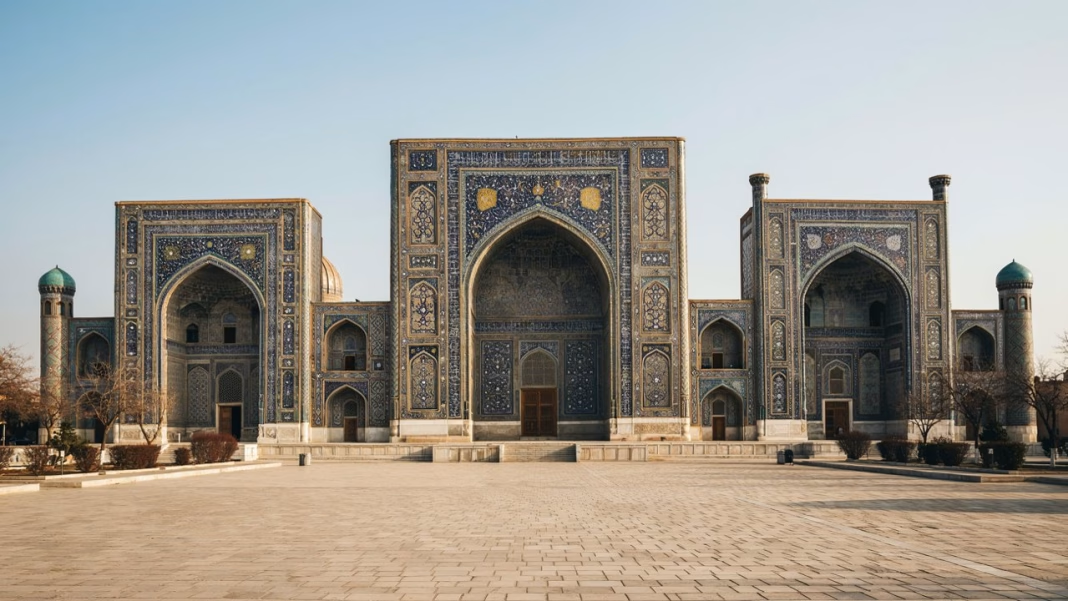


Uzbekistan is examining what families can afford in Samarkand’s old neighbourhoods as visitor numbers rise. In July, Uzbek officials and UN-Habitat reviewed early findings from the city’s housing study. By the end of August, Samarkand had welcomed nearly five million domestic tourists and more than 3.5 million foreign tourists. The Samarkand tourism figures sharpen the question facing the city. How can it protect Silk Road monuments and keep nearby homes within residents’ reach? For travellers planning a November visit, the immediate change is at Registan Square, where the gates will close four hours earlier.
Where the Samarkand tourism evidence is strongest
The city has records of visitors, market sales and opening hours. Housing costs pose a harder question. The table gives the most weight to the housing study and the conservation decisions that affect the historic centre. The percentages are an editorial assessment of the story’s focus.
| News component | Share of story | Officially verified finding | Relevance to travellers | Official source link |
|---|---|---|---|---|
| Heritage conservation | 30% | A conservation update is due by 1 December 2026. | Concerns proposed work in and around the historic centre. | World Heritage Committee decision |
| Housing | 25% | The pilot housing study examines affordability, quality and maintenance. | Covers the neighbourhoods visitors explore on foot. | Uzbekistan construction ministry |
| Visitor demand | 25% | Nearly five million domestic and over 3.5 million foreign tourists visited the city in January–August 2026. | Shows the importance of travel within Uzbekistan. | Samarkand city administration |
| Winter visiting hours | 15% | Registan’s daily winter timetable runs from 08:00 to 20:00 from 20 November. | Changes the time available for evening visits. | Registan Ensemble Directorate |
| Road access | 5% | The new Tashkent–Samarkand highway has a 2030 opening target. | The projected shorter drive applies after completion. | Presidential project announcement |
The city recorded three million foreign tourists in the whole of 2025. Its foreign visitor count had already passed that figure by August 2026. The November change affects admission to Registan. The December deadline concerns a report Uzbekistan must submit to UNESCO. Neither document introduces a citywide visitor limit, and the housing study gives no figure for how much tourism has changed local rents.
The dates behind Samarkand tourism growth and the housing review
Samarkand’s historic centre joined the World Heritage List in 2001. In August 2024, an independent UN housing expert raised concerns about homes becoming visitor accommodation in Samarkand and Bukhara. In 2025, the World Heritage Committee asked Uzbekistan to maintain a pause on new development inside the listed site and its surrounding buffer zone until advisers had favourably reviewed revised plans. In July 2026, the government discussed preliminary findings from the Samarkand Housing Profile, including the condition of existing homes and the cost of housing.
Advertisement
Advertisement
On 22 July, construction began on the highway from Tashkent. On 20 August, Samarkand and Tashkent joined the UN Green Cities Network. City visitor figures followed on 7 September, and the tourism authorities published later opening hours for markets and museums two days later. A United Nations account on 31 October put the city’s nine-month visitor estimate above ten million and the expected full-year total at around 14 million, against an estimated seven million in 2025. Those figures remain an attributed estimate and forecast. The city’s published eight-month breakdown provides the independently documented baseline.
Understanding the Context Behind the Development
The streets around the monuments are home to families
The July housing assessment was already under way before the September visitor figures appeared. The public record establishes no single cause for the increase in visitors or for changes in housing costs. The connection lies in the layout of the old town. In a traditional neighbourhood, or mahalla, homes cluster around lanes, places of worship and meeting spaces. In September, the ecology committee reported work to shade pavements used by residents in the Saykal neighbourhood. UNESCO wants the proposed boundary of the buffer zone, the area surrounding the protected site, to follow those neighbourhoods. That would let planners consider an entire street when deciding how to protect Silk Road monuments.
Advertisement
Advertisement
A conservation decision can reach the workshop next door
At Registan, three historic schools face onto one square. Beyond them, the UNESCO heritage atlas records workshops making doors, window frames, bricks and silk paper. Some of those skills keep older houses in repair. Researchers can compare laser scans taken at different times to detect movement in a historic building. A scan cannot show whether a household can afford the repair. The Samarkand tourism debate therefore matters to a carpenter as well as a hotel owner. The committee has requested a revised hotel design and more detail on proposed mosque conservation. Checking what each project could change before construction begins is one way to protect Silk Road monuments.
What Samarkand tourism figures mean for hotels and market traders
Uzbekistan recorded 10,306,786 foreign tourist arrivals between January and September 2026, up 20.4% on the same months of 2025. Kyrgyzstan, Kazakhstan and Tajikistan accounted for 7.52 million together, about 73% of that national total. A visitor arriving from Kazakhstan can appear in both the border figures and the city count. A family travelling from Tashkent appears only in the latter. Neither series reveals how many visitors booked a room, making hotel occupancy impossible to calculate from arrivals alone.
Advertisement
Advertisement
Siyob Bazaar offers a closer look at trade. On 7 September, the city administration reported an average of 10,000 visitors a day after evening trading began, with daily sales reaching US$165,000. The figures cover the whole market and do not distinguish local shoppers from tourists or daytime sales from evening purchases. Nationwide, tourism service exports reached US$5.3 billion in the first nine months, up 51.2% year on year. Neither the market figures nor national earnings establish what an individual visitor spent in Samarkand. A tourism observatory in preparation at the local university would track jobs, the environment and residents’ daily lives alongside visitor numbers. Its findings could help explain how much of the activity translates into lasting work.
Plan an evening visit and the journey from Tashkent
Anyone arriving late by train or planning a visit after dinner should check the date on the itinerary. The September announcement extended evening access at several places, including Siyob Bazaar. Registan publishes its own seasonal timetable.
- Visit Registan before closing. Main-season hours run from 07:00 to midnight. From 20 November to 20 February, the published hours are 08:00 to 20:00 daily.
- Check the journey you can book. Use the passenger rail timetable for trains from Tashkent. The government expects the future highway to cut the drive from five hours to two and a half.
- Check entry rules for your passport. The housing and heritage measures contain no new border procedure. Uzbekistan’s foreign ministry lists eligibility and a US$20 fee for a single-entry electronic visa.
Guides planning winter itineraries need to leave time for a visit before the square closes at 20:00. The December reporting deadline requires no action from visitors. It gives the authorities a date to explain their progress on efforts to protect Silk Road monuments.
What comes next for Samarkand tourism
Two dates put the city’s priorities in perspective. On 20 November, the winter timetable takes effect at Registan, giving visitors a clear deadline for an evening visit. By 1 December, Uzbekistan is due to explain how conservation work and planning are progressing. The housing assessment asks what families need to stay in the old town, while visitor records show how many people come from within Uzbekistan. Neither establishes the effect on rents. For Samarkand tourism, the longer test is whether efforts to protect Silk Road monuments can sustain the neighbourhoods, homes and workshops that give visitors a reason to come.