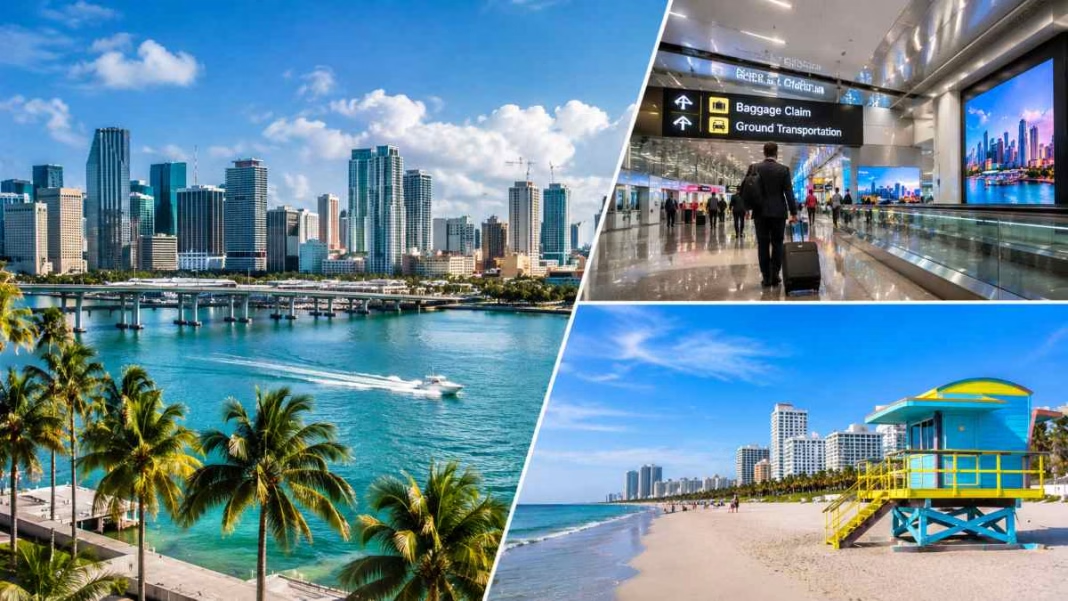

 Image generated with Ai
Miami consolidates its role as a platform for business and leisure visits from foreign countries in the days following the promotion programme with the Valencian Community (Comunitat Valenciana) at WTE Miami 2026 The programme promoted by Turisme Comunitat Valenciana and the Federation of Leisure and Tourism of the Valencian Community (FOTUR) gathered Tourism Authorities, Business and industry bodies to put a bridge between US, Spain, and the rest of the world. The delegation of the Valencian Community cooperation was coordinated in partnership with the Spanish Tourism Office in Miami, the Council of the Chambers of Commerce of the Valencian Community, and the Spanish Chamber of Commerce in the United States. During the period from 26 to 29 October, the Valencian delegation engaged in business meetings, promotion, and industry networking. The focus was on Premium Tourism, Gastronomy, Wellness, Golf, Cruises, Music, Festivals, and Air Connectivity. The program also focused on the presentation of the Valencian Community’s music, nightlife, and festivals as a competitive advantage that can appeal to the American population.
WTE Miami Creates Opportunities for MICE Tourism
The World Travel Expo provided a platform for the Valencian delegation to meet North American travel operators, agencies and tourism businesses. Meetings focused on opportunities in the MICE sector, which covers meetings, incentives, conferences and exhibitions.
For Miami, the engagement reflects its importance as a commercial gateway between the United States, Latin America and Europe. Its international flight network, convention facilities, hotels and established hospitality sector make the city a natural location for tourism trade discussions.
The Spanish delegation also explored potential opportunities involving cruise tourism and premium travel experiences. Separate discussions addressed air connectivity between the US market and airports serving Valencia and Alicante-Elche.
Advertisement
Advertisement
However, the initiative should be understood as a promotional and institutional business mission rather than evidence that a formal, fully operational Euro-Mediterranean MICE corridor has already been established. Its longer-term impact will depend on commercial agreements, travel demand and improved transport links.
MIA Expands Its Biometric Boarding Technology
Miami International Airport (MIA) continues to develop biometric technology to streamline passenger processing. Its facial comparison system is already used for international arrivals across all terminals, while biometric boarding is available at most international departure gates in the South and Central terminals.
Advertisement
Advertisement
The airport is also expanding the technology towards the North Terminal. Its published project information describes a wider biometric boarding programme covering more than 130 gates, although the project does not confirm that a final airport-wide deployment has been completed.
The technology allows participating passengers to have their identity checked through facial comparison at the boarding gate, reducing the need to present a physical boarding pass or passport during that step.
There is no verified official evidence that MIA has introduced a universal biometric exit system that reduces boarding waits to under three minutes. Nor is the process described as a benefit restricted to corporate passengers using premium global card programmes.
For international travellers, the expansion nevertheless forms part of a wider effort to improve airport operations and make passenger journeys more efficient.
Miami’s Hotel Market Adds New Boutique Options
Miami’s hospitality sector is continuing to attract investment, with new and renovated properties adding to the city’s accommodation choices. The Greater Miami Convention & Visitors Bureau has highlighted hotel developments across the destination, including properties aimed at visitors seeking design-led stays, dining and neighbourhood experiences.
Wynwood and the Miami Design District are particularly relevant to travellers combining business with leisure. Their galleries, restaurants, retail outlets and cultural attractions offer alternatives to the traditional hotel districts around Downtown and Miami Beach.
Advertisement
Advertisement
Recent boutique openings include Casa Cañita, a 24-room property on Ocean Drive, and El Jardín Inn, an 18-room hotel in Little Havana. The Moore in the Design District also offers a small-scale accommodation option for visitors seeking proximity to the area’s art and design scene.
These developments support Miami’s appeal to travellers who want to extend a business visit into a leisure stay. However, the specific claim that 64% of Miami corporate travellers extend mid-week trips into luxury weekends has not been substantiated by a reliable local survey. It should not be treated as an established market statistic.
Brightline Supports Business Travel Across Florida
Brightline remains an important part of Florida’s intercity transport network, connecting Miami with Fort Lauderdale, West Palm Beach and Orlando. Its service offers an alternative to road travel for business passengers moving between South Florida’s commercial centres and Central Florida.
The operator’s Brightline Rewards programme awards five points for every US$1 spent on eligible purchases made through its website or app while logged into an account. Eligible spending includes train tickets, passes, parking and certain upgrades.
Brightline’s Premium fares also include access to its Premium Lounges, alongside selected food and drink benefits. These are fare-class benefits rather than evidence of a newly introduced corporate credit-card promotion offering triple points and complimentary lounge access across the MiamiCentral network.
For companies arranging regional meetings, the rail service provides a practical option for travel between key Florida destinations.
Miami Beach Convention Centre Advances Sustainable Events
The Miami Beach Convention Centre (MBCC) continues to advance its environmental programme for meetings, exhibitions and mass events. This has secured LEED Silver for the venue and the Events Industry Council Gold Certificate for 2025. Its existing measures cover energy-efficient building systems; water efficiency; recycling; donating excess food; and composting. Catering use of plant-based menus and compostable, reusable or recyclable serviceware forms part of the strategy. The Miami Beach City Council passed new guidelines for special events in April 2026, urging organisers to reflect on their event’s impact on waste, recycling and the city’s natural resources. Yet the city council has not publicly announced the approval of a new municipal tax offset for corporate organisers providing 100% local clean power and zero-waste catering. The venue’s announced sustainability programme should not be confused with any such economic incentive. For Miami, its international tourism promotion, airport expansion, intercity rail connections and more sustainable event operations all strengthen its case as a business travel destination. The October engagement with Spain provides a further route for business cooperation, while the city’s existing visitor infrastructure provides a platform for future growth.