

Village artisans are giving Dong Nai tourism a more personal voice as ethnic communities share their music, dances and ceremonies beyond their home villages. An October 30, 2026 report on Vietnam’s government-operated promotional platform describes cultural appearances involving Mạ, S’tiêng and Chơ-ro participants. Their performances introduce audiences to the people behind the destination’s heritage. The tourism opportunity begins after the applause: connecting that interest with visits that communities welcome and help shape. Official development plans provide a framework for those journeys, linking cultural preservation with accommodation, traditional crafts and livelihoods. However, festival exposure alone does not establish increased village bookings.
Dong Nai tourism faces the journey from applause to arrival
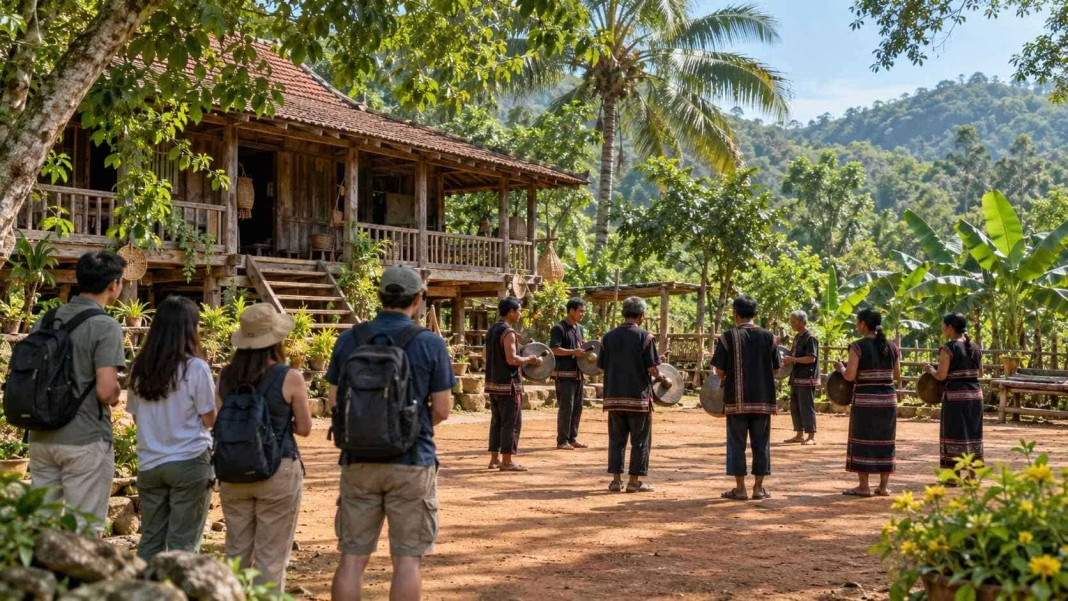
The latest cultural outreach puts people at the centre of the destination’s story. The supplied government-platform report describes Mạ artisans from Ta Lai participating in a Gia Lai festival programme running from October 30 to November 8, 2026.
Advertisement
Advertisement
It also records S’tiêng cultural activities in Hanoi and previous Chơ-ro appearances at national events. These exchanges introduce audiences to traditions that have meaning beyond a performance setting. www.vietnam.vn
For tourism, the unanswered question is practical. Can someone who encounters a troupe away from home discover where its members live, arrange an appropriate visit and pay for locally provided services?
Advertisement
Advertisement
The published material does not establish that these appearances have increased village bookings. That distinction keeps the story focused on an opportunity whose results still need measuring.
The village must remain part of the story
Gong music, dances and agricultural ceremonies are connected to community knowledge and relationships. Presenting them on a distant stage can introduce a tradition, but cannot convey every aspect of its setting.
Advertisement
Advertisement
The October report makes this connection explicit. It argues that preservation must extend beyond occasional performances and remain rooted in communities’ cultural spaces.
It also describes plans for heritage digitisation and gong-training classes. These activities concern the continuity of cultural practice, which gives tourism something meaningful to encounter. www.vietnam.vn
Advertisement
Advertisement
For visitors, the implication is straightforward: seek experiences explained by their custodians. Ask whether an activity is a public performance, an educational encounter or a ceremony with particular attendance rules.
Ta Lai already has an official development framework
A Ta Lai People’s Committee account of a June 18, 2026 planning visit identifies sustainable livelihoods as a central objective. Participants included tourism officials, Cat Tien National Park representatives, the commune administration and Oxalis.
The published direction connects community-based tourism with accommodation, agriculture and traditional crafts. It also identifies brocade weaving restoration and reduced pressure on forests as priorities.
This provides a specific foundation for linking cultural interest with a longer visit. However, the announcement is a development framework, rather than confirmation that every proposed community experience is available daily.
Advertisement
Advertisement
Travellers should therefore confirm their itinerary directly with the host or operator. Cultural activities need the same booking clarity as accommodation and transport.
What the official visitor figures show
Dong Nai’s Statistics Office estimates approximately 4.926 million tourist visits and VND3.7 trillion in tourism revenue during January–October 2026. For October alone, it reports an estimated 470,000 visits, including 14,000 international visits. thongke.dongnai.gov.vn
| Indicator | Official figure | Reporting context |
|---|---|---|
| Tourist visits | Approximately 4.926 million | January–October 2026 |
| Tourism revenue | Estimated VND3.7 trillion | January–October 2026 |
| Tourist visits in October | Estimated 470,000 | October 2026 |
| International visits in October | Estimated 14,000 | October 2026 |
These destination-wide figures do not identify visits generated by ethnic cultural performances. Nor do they measure spending reaching individual artisans.
That missing connection matters. Overall visitor activity can provide context, but cannot demonstrate that a particular festival appearance produced village income.
Follow the booking and the payment
The strongest commercial connection would make the next step clear to an interested spectator. An operator should be able to explain who hosts the visit, what it includes and which services community members provide.
For travellers, useful questions include:
Advertisement
Advertisement
- Who leads and interprets the cultural experience?
- Are performers and craft demonstrators paid separately?
- Does the itinerary include locally provided meals or accommodation?
- Have photography and participation rules been explained?
These are purchasing questions, rather than claims about existing arrangements. Their answers help distinguish a brief performance stop from a visit built around community participation.
For accommodation providers and tour operators, the opportunity is to organise the whole journey reliably. Interest alone cannot resolve transport, availability or language needs.
Government plans connect culture with wider investment
Dong Nai’s Resolution 10-NQ/TU, issued on August 20, 2026, identifies cultural, rural and community tourism among its principal products. Its implementation priorities include transport infrastructure, digital systems and workforce training.
The published 2030 targets include 11.5 million tourist visits, VND11.95 trillion in tourism service revenue and 13,000 direct tourism jobs. These are future objectives, not current achievements. svhttdl.dongnai.gov.vn
The strategy also connects future tourism development with Long Thanh airport. It does not establish that artisan outreach has created airline demand or new flight services.
For village tourism, the relevant issue is how wider investment translates into accessible, well-managed experiences. Airport connectivity and local hosting need to work together.
Advertisement
Advertisement
Frequently asked questions
Can travellers book a village visit after seeing a performance?
Ask for a verified host or operator contact. A festival appearance does not automatically include a bookable village programme.
Can visitors attend Sayangva ceremonies?
Confirm access with community organisers. A public recreation and a ceremony within the community may have different arrangements.
What should visitors confirm before paying?
Check transport, accommodation, activity availability, interpretation, cancellation terms and photography permissions. Ask which parts of the booking local residents provide.
Advertisement
Advertisement
The next journey begins with the host
Dong Nai’s cultural outreach gives travellers an introduction to communities whose knowledge deserves more than a passing audience. The meaningful next step is a visit arranged around local availability, clear interpretation and fair payment. Official plans support that direction through community livelihoods, craft preservation and tourism development. They do not yet prove that festival spectators are becoming village guests. For readers considering a journey, that distinction is useful. Choose a host who can explain the experience, confirm what is available and identify who benefits. The strongest cultural connection begins when the people sharing their heritage also shape the visitor’s welcome.
Official Sources