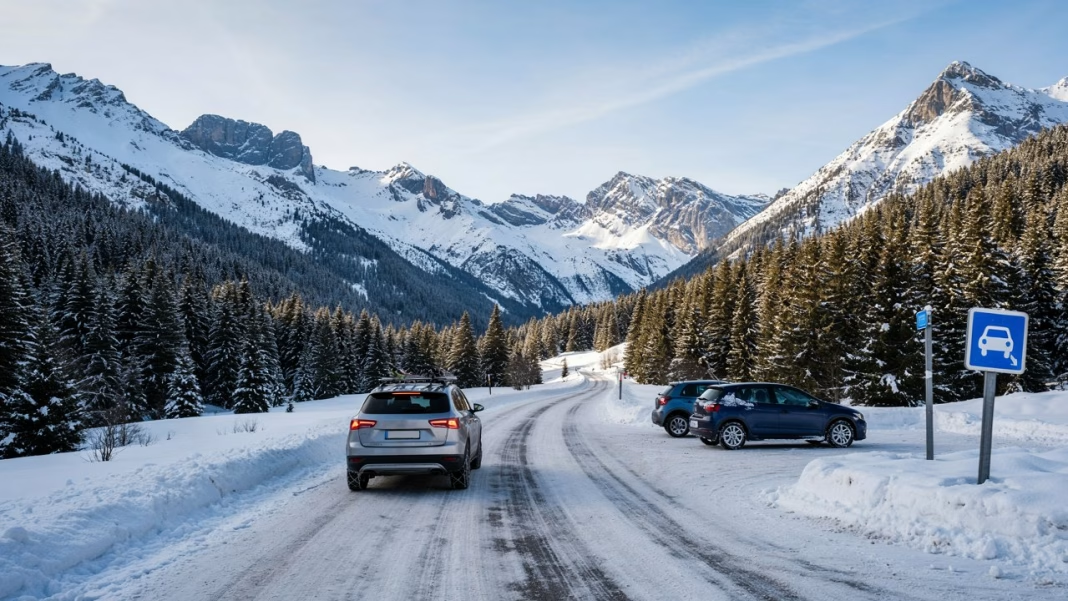


France will enforce its seasonal winter driving equipment requirements from 1 November 2026 until 31 March 2027, affecting tourists and motorists travelling through designated mountain areas. Drivers visiting the French Alps, Pyrenees, Jura, Vosges, Massif Central and Corsica must carry suitable snow chains or snow socks, or use approved winter tyres. The regulations apply to selected roads and municipalities across 34 departments, including popular winter holiday destinations. International visitors, rental car users and motorists arriving from neighbouring European countries must follow the same requirements. The measures aim to improve road safety, prevent traffic disruption and reduce accidents during snowy and icy conditions.
France Begins Winter Road Safety Requirements Ahead of the 2026–2027 Ski Season
France’s seasonal mountain driving regulations return on 1 November 2026 as the country prepares for winter tourism and increased traffic towards its mountain resorts.
Introduced in 2021 under France’s Mountain Law, the requirements aim to reduce accidents and prevent vehicles from becoming stranded on snow-covered or icy roads. The rules apply within designated mountain zones rather than across the entire country. Drivers must carry suitable traction equipment or use approved winter tyres throughout the regulated period, even when roads appear clear.
The regulations are particularly relevant for international tourists travelling by car to ski resorts, alpine villages and winter holiday destinations.
Advertisement
Advertisement
French Alps, Pyrenees and Other Mountain Regions Face Seasonal Driving Restrictions
Winter equipment requirements affect specified municipalities within six French mountain regions. The Alps and Pyrenees are especially significant for international travellers because of their established ski resorts and popular scenic driving routes.
Departments including Savoie, Haute-Savoie, Isère, Hautes-Alpes, Ariège and Pyrénées-Orientales contain areas covered by the regulations. The Massif Central, Jura, Vosges and Corsican mountains also have designated zones where the requirements apply.
Advertisement
Advertisement
However, not every road within these departments is automatically subject to the obligation. Travellers should check their planned routes and follow road signs identifying regulated areas.
Winter Tyres, Snow Chains and Snow Socks Provide Different Ways to Comply
Drivers entering designated mountain zones can satisfy the requirements through approved winter tyres or suitable removable traction equipment.
Advertisement
Advertisement
Passenger cars, light commercial vehicles and motorhomes must either have four winter tyres carrying the 3PMSF certification or transport snow chains or snow socks capable of fitting at least two driven wheels.
The 3PMSF symbol features a mountain with three peaks and a snowflake, indicating that the tyre meets recognised winter performance standards. Tyres carrying only the M+S marking are no longer sufficient on their own. Vehicles using these tyres must also carry suitable removable traction equipment.
France’s Winter Driving Equipment Requirements Explained
| Equipment | Requirement | Important information |
|---|---|---|
| Certified winter tyres | Four 3PMSF tyres | Accepted in designated mountain zones |
| Metal snow chains | Suitable for at least two driven wheels | Must be carried and fitted when required |
| Textile snow socks | Suitable for at least two driven wheels | Accepted as removable traction equipment |
| All-season tyres | Must carry 3PMSF certification | M+S marking alone is insufficient |
| Summer tyres | Permitted with suitable chains or snow socks carried | Additional equipment may be needed on snowy roads |
| Studded tyres | Exempt from the seasonal equipment requirement | Separate rules governing their use still apply |
International Tourists and Rental Car Drivers Must Prepare Before Entering Mountain Regions
France’s regulations also affect international visitors arriving in vehicles registered in other countries.
Motorists travelling from Spain, Germany, Switzerland, Italy, Belgium or the United Kingdom must comply with the relevant French requirements when entering designated mountain areas. Tourists hiring vehicles in France should confirm that suitable winter equipment is included before collecting their rental car.
Advertisement
Advertisement
Rental companies may offer certified winter tyres, chains or snow socks, but availability and additional charges can vary. Drivers should also ensure that their equipment matches the vehicle’s wheel dimensions. Four-wheel-drive vehicles and SUVs are not automatically exempt from the regulations.
French Ski Resorts and Mountain Holiday Destinations Require Additional Travel Preparation
The seasonal rules are particularly important for travellers visiting established French winter sports destinations. Resorts in the Alps, including Chamonix, Megève, Val Thorens, Tignes and Les Deux Alpes, attract international visitors throughout the winter season.
The Pyrenees also offer skiing, mountain scenery and outdoor activities, while the Jura and Vosges attract travellers seeking smaller-scale winter experiences.
Although the requirements primarily concern road safety, suitable equipment can also help visitors avoid unnecessary delays during changing weather conditions. Drivers should check local forecasts, mountain pass conditions and temporary traffic restrictions before departure.
Can Motorists Face Penalties for Missing Winter Equipment in France?
France’s winter equipment obligation remains legally applicable, although the specific penalty arrangements have not been fully implemented. A French Interior Ministry response published in February 2026 confirmed that a separate decree was necessary to introduce penalties for breaches of the seasonal equipment requirement.
As of 30 October 2026, the commonly reported €135 penalty for failing to carry the required seasonal equipment was not enforceable under that specific provision.
Advertisement
Advertisement
Nevertheless, this does not eliminate other road safety obligations. Motorists may encounter temporary restrictions, mandatory chain requirements or road closures during severe weather. Drivers must obey applicable signs and instructions regardless of the seasonal penalty arrangements.
France’s Winter Mountain Regions and Travel Considerations
| Mountain region | Popular destinations | Winter travel considerations |
|---|---|---|
| French Alps | Chamonix, Tignes, Val Thorens | Snow, icy roads, mountain access |
| Pyrenees | Font-Romeu, Saint-Lary-Soulan | Snowfall, steep mountain routes |
| Jura | Les Rousses, Métabief | Freezing temperatures, winter road conditions |
| Vosges | Gérardmer, La Bresse | Snowfall, forest and mountain roads |
| Massif Central | Le Mont-Dore, Super-Besse | Changing weather, elevated roads |
| Corsica | Corte, mountain villages | Mountain conditions, seasonal restrictions |
Frequently Asked Questions
1. When do France’s winter driving requirements begin?
The seasonal regulations apply from 1 November 2026 until 31 March 2027 in designated mountain zones.
2. Are winter tyres compulsory throughout France?
No. Drivers in designated areas may use approved winter tyres or carry suitable snow chains or snow socks.
3. Can tourists drive with ordinary summer tyres?
Advertisement
Advertisement
Yes, provided they carry compatible chains or snow socks when entering regulated zones and comply with any additional road restrictions.
4. Do rental vehicles need winter equipment?
Yes. Rental cars must meet the same requirements as privately owned vehicles.
5. Are all roads in the French Alps affected?
No. The obligation applies to designated municipalities and signed zones, not necessarily every road within a mountain department.
What Travellers Should Know Before Driving in France This Winter?
France’s winter equipment requirements are intended to improve safety and reduce disruption across its mountain tourism destinations. Travellers planning ski holidays, alpine road trips or journeys through mountainous regions should ensure their vehicles meet the applicable requirements before departure.
Checking tyre certification, carrying compatible traction equipment and monitoring local weather conditions can help avoid preventable difficulties. With France preparing for another winter tourism season, understanding the regulations remains an important part of planning a safe and enjoyable mountain holiday.