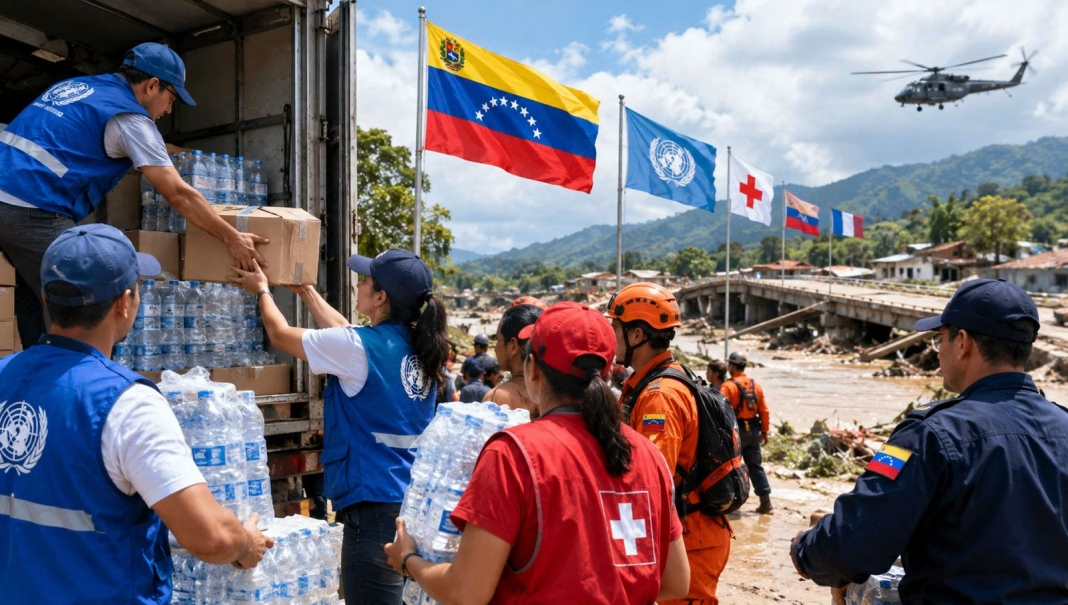


Venezuela is working alongside others to help deal with the catastrophic damage caused by earthquakes and ensure people get help. Local authorities have quickly worked with international allies to send search and rescue experts, large machines and mobile hospitals to the areas. This has ensured that relief teams have delivered vital medical supplies, clean drinking water and shelter to families who have been displaced. Through working together with international allies they have sped up their supply chains to get essential items to those who need it. They have also helped to restore electricity grids and create strong infrastructure to keep people safe whilst they recover.
Catastrophic events such as earthquakes, heavy rain and flash flooding in the mountains are putting great strain on countries like Venezuela, The Democratic Republic of the Congo, Niger and Nepal. These countries are fighting against a series of natural disasters to prevent people’s lives being put at risk and damage to fragile infrastructure.
What triggered the massive earthquake crisis in Venezuela?
Venezuela was rocked by strong earthquakes—reaching preliminary magnitudes of up to 7.5—that struck near Carabobo State and sent severe shockwaves across central regions, including Caracas. The seismic shocks led to widespread structural damage, widespread utility blackouts, and extensive ground instability.
The sudden release of tectonic stress near the northern coastal mountain ranges destabilised densely populated urban centers and vulnerable rural hamlets alike. Authorities quickly scrambled search-and-rescue units to clear collapsed masonry, locate trapped residents, and restore disrupted emergency medical networks across affected municipalities.
Hundreds of persistent aftershocks continue to shake the region, forcing thousands of terrified families to sleep outdoors in public parks and makeshift camps. Structural engineers are working round the clock to inspect compromised high-rise residential buildings, hospitals, and critical bridge crossings before allowing citizens to return home. Meanwhile, local municipal teams face immense logistical hurdles as disrupted telecommunications and power outages hamper swift emergency updates. Humanitarian aid groups have launched urgent appeals for medical supplies, temporary shelters, and clean drinking water to prevent secondary public health crises from emerging in heavily impacted urban slums.
How are heavy rains drowning the Democratic Republic of the Congo?
In the Democratic Republic of the Congo, persistent torrential rainfall caused major rivers to overflow across the Likouala Department and surrounding equatorial regions. Expanding floodwaters submerged complete villages, inundated vast farmlands, and destroyed vital regional supply roads.
Advertisement
Advertisement
The intense seasonal downpours inundated low-lying river basins, leaving thousands of rural families stranded on elevated patches of ground without clean water. Local authorities and aid volunteers rely heavily on wooden canoes to deliver emergency food rations to isolated communities completely cut off from mainland transport networks.
The standing water has transformed extensive stretches of residential land into hazardous breeding grounds for waterborne diseases and malaria-bearing mosquitoes. Public health officials warn that cholera outbreaks could rapidly escalate if water purification tablets and medical supplies fail to reach inundated health centres promptly. Displaced farming families face immediate food insecurity after losing their standing crops and stored grain stocks to the rising mudwaters. Relief agency coordination remains severely hampered by the lack of paved infrastructure, making long-term rehabilitation efforts in the remote northern districts exceptionally difficult and costly.
Advertisement
Advertisement
Why are seasonal floods devastating agrarian communities in Niger?
Unprecedented cloudbursts swept across Niger, bringing severe flash flooding to regions like Maradi, Zinder, and Dosso. The surge swept away thousands of homes, collapsed educational facilities, and destroyed vital agricultural livestock and food stockpiles.
Intense rainfall hit fragile soil that was unable to absorb the massive volume of surface run-off, creating destructive torrents that tore through rural farming districts. Entire farming communities saw their seasonal harvests swept away in hours, pushing vulnerable rural populations deeper into severe food insecurity.
The loss of thousands of mud-brick houses has forced displaced populations into overcrowded temporary relief camps or informal temporary settlements. Emergency organizations are racing to distribute tarpaulins, basic cooking kits, and essential sanitation packages to prevent widespread illness among displaced children and the elderly. Destroyed school classrooms have disrupted the education of thousands of young students across affected provinces, leaving local administrators struggling to set up temporary learning centers. Agriculture experts emphasize that restoring lost livestock and depleted seed stocks will require sustained long-term international funding long after the floodwaters fully recede.
“Amid rising global challenges, international solidarity remains essential for restoring stability across regions severely impacted by natural disasters. By aligning policies, combining resources, and establishing unified aid channels, nations ensure rapid deployment of medical supplies, food aid, and structural engineering expertise to vulnerable communities. This collaborative approach strengthens frontline emergency response networks and supports critical long-term recovery efforts. As affected areas focus on rebuilding destroyed infrastructure and restoring public utilities, strategic global partnerships demonstrate how international cooperation can effectively safeguard human life and rebuild resilient communities during unprecedented crises.”
Advertisement
Advertisement
— Anup Kumar Keshan, Founder and Editor-in-Chief, Travel And Tour World
Which forces sparked catastrophic alpine floods and landslides in Nepal?
In northern Nepal, a sudden, powerful surge triggered massive flash floods and mudslides along the Bhote Koshi River and Rasuwa district. The rapid deluge obliterated crucial mountain highways, swept away vital border infrastructure, and isolated dozens of remote mountain villages.
Extreme weather events in high-altitude Himalayan catchments sent torrents of water and thick glacial mud tearing down steep alpine valleys at terrifying speeds. The destructive wall of mud washed away vital bridges and hydroelectric infrastructure, completely cutting off key transport corridors connecting Nepal with neighboring mountain passes.
Rescue teams continue searching for missing residents and stranded travelers amidst dangerous rockfalls and unstable mountain slopes. Ground operations remain extremely treacherous because heavy machinery cannot easily navigate the severed, landslide-blocked mountain routes. Helicopter evacuations are repeatedly delayed by dense fog and unpredictable mountain weather, preventing critical medical personnel from reaching injured survivors in remote settlements. As local mountain communities work tirelessly to dig out from tons of deposited debris, authorities face the staggering economic challenge of rebuilding critical road networks and border transit hubs destroyed by the relentless deluge.
To keep up with official updates and emergency assistance channels, citizens and international partners can visit the U.S. Department of State Disaster Response Portal for official aid coordination and public safety notices.
Global Emergency Comparison
| Affected Country | Disaster Type | Primary Impact Area | Critical Challenge |
| Venezuela | Major Earthquakes | Carabobo State & Caracas | Urban rescue & infrastructure restoration |
| DR Congo | Equatorial River Flooding | Likouala Department | Disease prevention in remote riverways |
| Niger | Flash Flooding | Maradi, Zinder, Dosso | Emergency shelter & food security |
| Nepal | Alpine Flash Floods & Debris | Rasuwa District / River Basins | Clearing blocked mountain supply lines |
Venezuela: Urban Search, Civil Defence & Medical Supply Corridors
- International Aid Initiatives: Foreign governments and international relief partners—including humanitarian networks such as Direct Relief and Caritas—have dispatched thousands of tonnes of emergency medical supplies, surgical equipment, and field trauma units to northern Venezuela.
- Emergency Distribution Strategy: Civil defense authorities in Carabobo State and Caracas have prioritized distributing heavy-duty shelter materials, portable water purification stations, and non-perishable food rations to municipal staging points. Mobile medical teams are deployed directly in makeshift camps to treat earthquake survivors and prevent disease outbreaks.
- Climate & Structural Adaptation Plans: Urban planners and structural engineering panels are updating national seismic building codes and retrofitting critical public utilities. Strategic efforts focus on reinforcing urban infrastructure along active fault lines to better withstand high-magnitude ground shocks in densely populated metropolitan zones.
Democratic Republic of the Congo: Riverway Logistics & Basin Management
- International Aid Initiatives: The UN Office for the Coordination of Humanitarian Affairs (OCHA), alongside the World Bank and global aid agencies, has organized regional emergency appeals to finance clean water access, hygiene kits, and emergency nutrition across the Likouala Department and northern flood zones.
- Emergency Distribution Strategy: Due to submerged mainland roads, distribution relies heavily on motorized river barges, traditional canoes, and localized supply hubs established along high-ground riverbanks. Direct distributions prioritize water purification tablets, mosquito nets, and cholera prevention kits.
- Climate & Structural Adaptation Plans: The World Bank-supported Urban Flood Resilience Project is assisting national authorities in developing comprehensive river basin management strategies. This includes strengthening drainage channels, building elevated community shelters, and expanding early warning systems for equatorial weather patterns.
Niger: Community-Led Aid & Agricultural Resilience
- International Aid Initiatives: Organizations like the International Federation of Red Cross and Red Crescent Societies (IFRC) and regional food security coalitions are mobilizing emergency support for displaced rural populations in Maradi, Zinder, and Dosso.
- Emergency Distribution Strategy: Relief operations rely on community-led distribution committees to identify high-risk families. Emergency distributions focus on temporary tarpaulins, cooking kits, livestock feed, and essential grains to address immediate food shortages caused by flooded crop stores.
- Climate & Structural Adaptation Plans: Niger’s climate adaptation plans center on sustainable land management, improved rural drainage systems, and drought/flood-tolerant seed strains. Community-based early warning networks are also being strengthened to notify agrarian villages ahead of heavy seasonal downpours.
Nepal: Transboundary Coordination & Alpine Disaster Risk Reduction
- International Aid Initiatives: Neighboring nations—including India—and international disaster response teams have assisted Nepal by providing emergency medical personnel, DNA identification teams, field equipment, and modular Bailey bridges to restore severed transport corridors.
- Emergency Distribution Strategy: In alpine districts like Rasuwa, heavy machinery is deployed to clear landslide debris while military and private helicopters airlift emergency medical aid and food rations into isolated mountain settlements.
- Climate & Structural Adaptation Plans: The United Nations Development Programme (UNDP) and the National Society for Earthquake Technology (NSET) are collaborating with Nepali authorities to enhance high-altitude monitoring. Efforts focus on satellite-based monitoring of glacial melt, automated SMS warning systems, and rebuilding resilient mountain transit hubs capable of surviving sudden debris flows.
Venezuela has united with other countries to help improve their emergency services and provide aid after the disaster. International aid groups are providing much needed funds to rebuild damaged medical centres and ensure clean water is available in all affected municipalities. Having a united strategy means that less people will be at risk of illness and damage to infrastructure can be repaired quickly. Search and rescue operations have begun to turn into long term rebuilding plans thanks to working together with international teams. This historic partnership means that those who have been displaced will have constant protection, funds and support.