
POLICY AT A GLANCE
| Item | Position |
| Official title | Uttar Pradesh Textile and Garmenting Policy, 2022 |
| Effective date | October 17, 2022 |
| Administrative department | Department of Handloom and Textiles, Uttar Pradesh |
| Main beneficiaries | Textile and garment manufacturing units, handloom and powerloom enterprises, sericulture units, textile parks and supporting facilities |
| Main capital subsidy | Up to 25 per cent of eligible plant and machinery investment, with higher support in Bundelkhand and Purvanchal |
| Maximum capital subsidy | Rs 100 crore per unit |
| Interest subsidy | 60 per cent of eligible annual interest for up to seven years, subject to regional ceilings |
| Land subsidy | 25 per cent of eligible land cost; 15 per cent in Gautam Buddha Nagar |
| Stamp-duty exemption | 100 per cent in most of Uttar Pradesh; 75 per cent in Gautam Buddha Nagar |
| Electricity-duty exemption | 100 per cent for ten years |
| Garment-export freight support | 75 per cent for first two years, 50 per cent for next two years and 25 per cent in fifth year |
| Textile-park model | Minimum 25 acres with plug-and-play infrastructure and common effluent-treatment facilities |
| Current status | Policy remains officially listed and is being used to support textile investment and infrastructure |
The policy covers a broad textile value chain, from sericulture, spinning, weaving and knitting to processing, garment manufacturing, technical textiles and common infrastructure. It replaced the earlier 2017 textile framework as the state’s principal sector-specific incentive policy.
What is the Uttar Pradesh Textile and Garmenting Policy?
Potentially eligible activities include:
- Spinning;
- Weaving;
- Knitting;
- Textile processing;
- Dyeing and finishing;
- Garment manufacturing;
- Technical textiles;
- Silk and sericulture activities;
- Handloom and powerloom production;
- Textile testing and certification;
- Worker housing and training infrastructure;
- Integrated textile and apparel parks.
The policy combines incentives for individual manufacturing units with support for common infrastructure such as effluent-treatment plants, testing laboratories, training facilities and industrial parks.
It should not be treated as a general subsidy for ordinary garment retail, trading or fashion-design businesses. Eligibility depends on an approved manufacturing, processing, infrastructure or textile-related activity.
Why was the policy introduced?
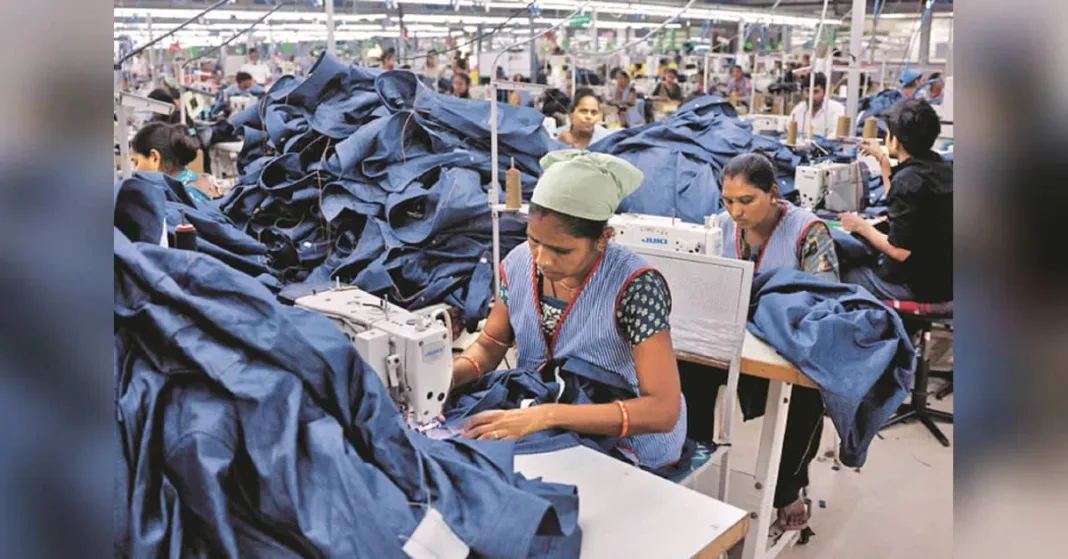
Uttar Pradesh has a large base of handloom and powerloom workers as well as established textile centres producing carpets, garments, silk, embroidery, home furnishings and other products. The state’s official sector information reports about 1.99 lakh handloom weavers and around 5 lakh powerloom weavers.
The policy seeks to build on this base while encouraging modern, larger manufacturing units. Its broad objectives include:
- Making Uttar Pradesh a major textile and apparel manufacturing hub;
- Attracting investment across the value chain;
- Generating employment;
- Encouraging development in Bundelkhand and Purvanchal;
- Promoting textile and apparel parks;
- Improving technology and productivity;
- Strengthening export competitiveness;
- Supporting handloom and powerloom workers;
- Creating common environmental, testing and training infrastructure.
The state had also announced an intention to promote five new textile and apparel parks through private or public-private participation. Such targets should be distinguished from parks actually completed and operational.
Who is eligible?
The policy applies to eligible new textile and garmenting units and specified infrastructure projects.
Potential beneficiaries include:
- Spinning mills;
- Weaving and knitting units;
- Processing and finishing units;
- Garment manufacturers;
- Technical-textile manufacturers;
- Silk and sericulture units;
- Handloom and powerloom enterprises;
- Private textile-park developers;
- Units establishing testing, training or environmental facilities.
Capital-subsidy eligibility is directly linked to both investment and employment. The state’s official incentive portal prescribes different subsidy ceilings according to the amount invested in plant and machinery and the number of jobs created.
An applicant therefore cannot calculate the subsidy only from the amount invested. Employment conditions must also be met.
What capital subsidy is available?
The standard capital subsidy is 25 per cent of eligible investment in plant and machinery for textile and garmenting units meeting the prescribed employment requirement.
Units in Purvanchal and Bundelkhand may receive an additional 10 percentage points, taking the headline rate to as much as 35 per cent for qualifying projects.
The maximum capital subsidy is Rs 100 crore per unit.
| Plant and machinery investment | Minimum employment | Standard subsidy | Potential rate in Purvanchal/Bundelkhand | Maximum subsidy |
| Up to Rs 10 crore | Below 50 | 15% | No additional subsidy | Rs 1 crore |
| Up to Rs 10 crore | 50 | 25% | 35% | Rs 2 crore |
| Above Rs 10 crore and up to Rs 50 crore | 200 | 25% | 35% | Rs 10 crore |
| Above Rs 50 crore and up to Rs 100 crore | 300 | 25% | 35% | Rs 20 crore |
| Above Rs 100 crore and up to Rs 200 crore | 500 | 25% | 35% | Rs 40 crore |
| Above Rs 200 crore | 1,000 | 25% | 35% | Rs 100 crore |
These rates apply only to eligible plant and machinery investment. Land, working capital and unrelated expenditure should not be included unless expressly permitted.
What support is available for worker housing?
The policy recognises that large textile and garment units may need accommodation for workers located away from established residential centres.
A subsidy equal to 25 per cent of eligible project cost is available for the construction of:
- Staff quarters;
- Worker hostels;
- Dormitories.
The maximum assistance is Rs 5 crore per unit.
The facility must be connected with the approved textile project. Ordinary residential or commercial real-estate development should not be treated as eligible worker housing.
What interest subsidy is available?
Eligible textile and garmenting units may receive reimbursement of 60 per cent of the annual interest paid on loans taken from commercial banks or recognised financial institutions for qualifying plant and machinery.
The benefit is available for a maximum of seven years.
The annual ceilings are:
- Rs 1.5 crore per unit in Uttar Pradesh outside Gautam Buddha Nagar;
- Rs 75 lakh per unit in Gautam Buddha Nagar.
The machinery must fall within the eligible framework linked to the Union government’s Technology Upgradation Fund Scheme, Amended Technology Upgradation Fund Scheme or the applicable successor arrangement referred to in the state policy.
Interest reimbursement does not cover the principal loan amount. Penal interest or additional charges arising from repayment default should not be assumed to qualify.
What land subsidy is available?
A textile or garmenting unit purchasing land directly from a state government agency, department or development authority may receive reimbursement of 25 per cent of the eligible land cost.
The benefit is subject to important restrictions:
- Land subsidy cannot exceed 10 per cent of the total project cost;
- Only the permitted portion of effective land cost is considered while calculating project cost;
- Commercial production must begin within five years of land purchase;
- The facility also applies to eligible land purchased for textile units within the proposed PM MITRA Park in the Lucknow-Hardoi area.
The policy does not therefore reimburse 25 per cent of every private-market land transaction.
Is stamp duty exempt?
Textile and garmenting units established in Uttar Pradesh, except in Gautam Buddha Nagar, may receive 100 per cent stamp-duty exemption on qualifying land transactions.
In Gautam Buddha Nagar, the exemption is 75 per cent.
Full exemption is also available for qualifying land acquired for textile infrastructure such as:
- Warehouses;
- Water-supply systems;
- Sewage networks;
- Sewage-treatment plants;
- Effluent-treatment plants;
- Solid-waste facilities;
- Exhibition centres;
- Integrated transport and commercial centres.
Developers of eligible PM MITRA and private textile parks also receive specified stamp-duty benefits. The first purchaser of a plot or unit in a PM MITRA Park may receive 100 per cent exemption, while the first buyer in a privately developed textile park may receive 50 per cent, subject to the policy conditions.
Where land is acquired from a government body, a bank guarantee may be required and released after commercial production and joint inspection.
What electricity-duty benefit is available?
New textile and garmenting units may receive 100 per cent exemption from electricity duty for ten years.
The same ten-year exemption applies to electricity generated by an eligible captive power plant and consumed by the textile unit itself.
The policy also provides for open-access facilitation where electricity consumption meets the applicable threshold and seeks to minimise power interruptions for clusters, parks and large units with dedicated feeders.
Electricity-duty exemption does not mean free power. Tariff, demand charges, wheeling charges and other non-exempt costs remain payable.
What environmental support is available?
Textile processing can generate substantial liquid effluent, particularly from dyeing, washing and finishing. The policy therefore provides support for environmental infrastructure.
Eligible units may receive 50 per cent of project cost, capped at Rs 5 crore per unit, for establishing:
- Effluent-treatment plants;
- Eligible diesel-generator sets linked to the approved facility.
The equipment must comply with standards prescribed by bodies such as the Central Pollution Control Board, National Green Tribunal or other competent authorities. The incentive is specified for qualifying units set up on undeveloped land parcels.
Policy subsidy does not replace the requirement to obtain pollution-control consent or comply continuously with discharge standards.
What support is available for testing and training?
The policy provides a subsidy equal to 25 per cent of eligible project cost, capped at Rs 2.5 crore per unit, for each of the following:
- Quality-certification laboratory;
- In-house testing laboratory;
- In-house training facility.
These facilities are intended to improve product quality, compliance, worker skills and access to domestic and international buyers.
The facilities must form part of an approved textile-related project. Ordinary office training rooms or unrelated laboratories should not automatically be counted as eligible assets.
What export freight assistance is available?
New garmenting units may receive reimbursement of the eligible cost of transporting export containers from the manufacturing unit to the port for five years.
The reimbursement is phased as follows:
- 75 per cent during the first two years;
- 50 per cent during the third and fourth years;
- 25 per cent during the fifth year.
A unit claiming freight assistance under the Uttar Pradesh Export Promotion Policy cannot simultaneously claim freight reimbursement under this policy for the same expenditure. It may, however, remain eligible for other non-freight benefits under the Export Promotion Policy.
Exporters should retain shipping bills, freight invoices, container records, bank-payment evidence and proof of origin.
What support is available for exhibitions and market access?
The state proposes four special exhibitions each year in major cities outside Uttar Pradesh to promote silk, handloom and powerloom products.
Eligible weavers, master weavers, cooperative societies and micro textile units may also receive assistance for participation in up to three recognised exhibitions or events in India.
The reimbursement may cover 90 per cent of eligible participation expenditure for up to two persons, subject to the prescribed process.
The policy also states that government departments and agencies should give preference, within applicable procurement rules, to handloom and powerloom products manufactured in Uttar Pradesh.
What incentives are available for textile parks?
The policy promotes Integrated Textile and Apparel Parks developed through private or public-private participation.
An eligible park must cover at least 25 acres and provide plug-and-play infrastructure, including a Common Effluent Treatment Plant.
Official policy summaries state that qualifying private textile parks may receive financial assistance of up to 50 per cent of eligible project cost, subject to the policy’s applicable ceilings and approval structure.
Common facilities can include:
- Internal roads;
- Power infrastructure;
- Water supply;
- Effluent treatment;
- Worker facilities;
- Testing and training centres;
- Warehousing;
- Shared production infrastructure.
The policy also connects the state’s textile strategy with the PM Mega Integrated Textile Regions and Apparel, or PM MITRA, programme. Uttar Pradesh is developing a PM MITRA project in the Lucknow-Hardoi region.
A proposed park should not be described as operational until infrastructure is completed and units begin production.
How can an investor apply?
The broad process involves:
- Identifying the eligible textile or garmenting activity;
- Preparing a detailed project report;
- Selecting land and documenting ownership or allotment;
- Applying through the state’s designated investment and incentive mechanism;
- Providing investment and employment projections;
- Obtaining eligibility approval or a Letter of Comfort;
- Securing statutory permissions;
- Purchasing and installing approved machinery;
- Beginning commercial production within the required period;
- Maintaining the promised employment level;
- Submitting audited expenditure, payroll and loan records;
- Claiming each incentive separately;
- Undergoing physical and documentary verification.
Because capital subsidy, land subsidy, interest reimbursement and stamp-duty relief operate under different conditions, approval for one benefit does not automatically guarantee the others.
Implementation and current status
The policy continues to be listed on the official Invest UP and MSME incentive portals. State government material issued in February 2025 reported that textile projects operationalised during the preceding five years had collectively generated employment for nearly 20,000 people. This is a sector-wide figure covering projects over several years and should not be attributed solely to investments sanctioned under the 2022 policy.
The government has also continued to promote the policy at textile-industry events and investment outreach programmes.
However, the official sources reviewed did not provide a consolidated policy dashboard showing:
- Applications received;
- Units finally approved;
- Capital subsidy sanctioned;
- Interest subsidy disbursed;
- Land subsidy released;
- Textile parks completed;
- Investment realised specifically under the policy;
- Employment generated specifically by approved policy beneficiaries.
Memoranda of understanding and proposed textile projects should therefore be distinguished from operational factories and investment actually realised.
Key challenges and practical considerations
- Employment thresholds: Larger subsidies depend on maintaining specified employment levels.
- Upfront financing: Many incentives are reimbursements and require the investor to incur expenditure first.
- Environmental compliance: Processing and dyeing projects need substantial investment in wastewater treatment.
- Power intensity: Spinning, weaving and processing can have high electricity requirements.
- Land and location differences: Gautam Buddha Nagar receives lower land and stamp-duty support than most other districts.
- Export competition: Garment units compete internationally on cost, quality, delivery time and compliance.
- Overlapping incentives: The same expenditure cannot generally be reimbursed twice under textile and export schemes.
Investors should therefore obtain project-specific confirmation of eligible expenditure, employment commitments and subsidy ceilings before finalising their financing model.
FAQs
What is the main capital subsidy?
Qualifying textile and garmenting units may receive 25 per cent of eligible plant and machinery investment, with an additional 10 percentage points in Purvanchal and Bundelkhand.
What is the maximum capital subsidy?
The overall maximum is Rs 100 crore per unit, subject to the investment and employment slab.
Is land cost subsidised?
Yes. Eligible government-agency land may receive 25 per cent reimbursement, reduced to 15 per cent in Gautam Buddha Nagar.
Is stamp duty exempt?
The policy provides 100 per cent exemption in most of Uttar Pradesh and 75 per cent in Gautam Buddha Nagar, subject to the applicable transaction and procedure.
Is electricity duty exempt?
Yes. New eligible units may receive full electricity-duty exemption for ten years.
Are exports supported?
Yes. New garmenting units may receive phased container-freight reimbursement for five years.
Are textile parks covered?
Yes. Integrated textile and apparel parks of at least 25 acres with plug-and-play facilities and common effluent treatment are supported.
Conclusion
The Uttar Pradesh Textile and Garmenting Policy, 2022 combines capital, land, financing, infrastructure and export assistance to encourage investment across the textile value chain.
Its strongest unit-level incentive is a capital subsidy of up to 25 per cent of eligible plant and machinery investment, rising to as much as 35 per cent in Purvanchal and Bundelkhand, subject to employment thresholds and ceilings. It also provides interest reimbursement, land and stamp-duty benefits, ten-year electricity-duty relief, environmental infrastructure support and phased freight assistance for garment exports.
The policy’s effectiveness should ultimately be measured through factories beginning commercial production, sustainable employment, functioning textile parks, exports generated and subsidies actually disbursed—not merely through investment proposals.
Sources
- Uttar Pradesh Textile and Garmenting Policy, 2022, Department of Handloom and Textiles, Government of Uttar Pradesh.
- UP Textile and Garmenting Policy, 2022 — official policy page, Invest UP, Government of Uttar Pradesh.
- UP Textile Policy, 2022 — incentive details, MSME 1-Connect, Government of Uttar Pradesh.
- Handloom and Textile Sector, Invest UP, Government of Uttar Pradesh.
- Official update on operational textile projects, Invest UP, Government of Uttar Pradesh; February 19, 2025.
- PM MITRA, Invest UP, Government of Uttar Pradesh.