
 "Stubble Burning")
Stubble burning is one source of India’s air pollution, but year-round emissions and persistently high PM2.5 levels point to a wider challenge.
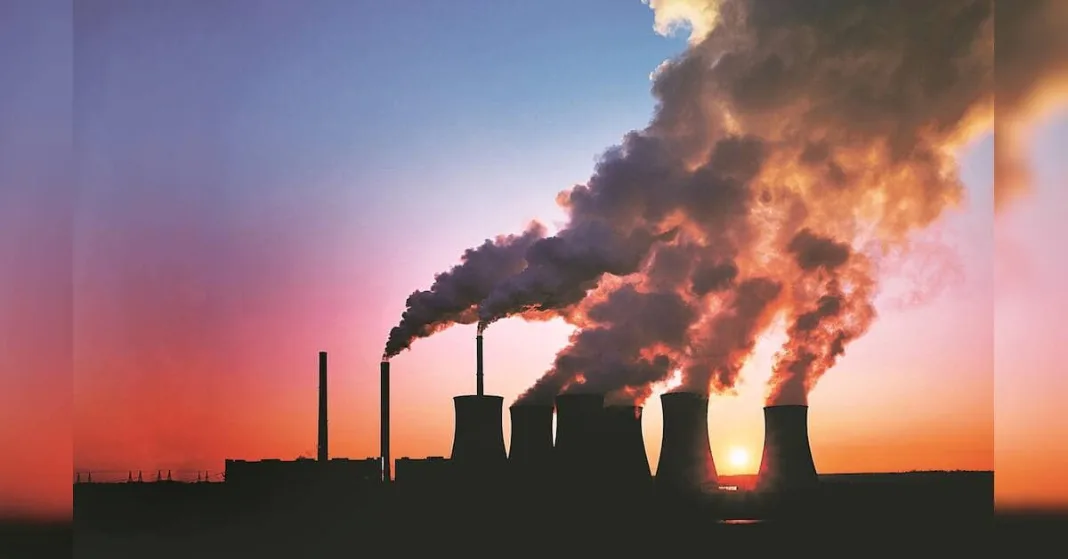
As winter nears, several Indian cities are already recording “poor” air quality. The blame often falls first on stubble burning, mostly in Punjab and Haryana. The roots of that burning lie partly in a policy change. Punjab’s Preservation of Sub-Soil Water Act, 2009, prohibits farmers from sowing paddy before May 10, leaving them 10-15 days to clear the leftover stubble, leading to a rise in burning. An ISRO study for 2002-2020 found paddy-season fires in Punjab and Haryana were 21 per cent higher after 2010 than before, against 1.4 per cent for wheat-season fires. But the map has shifted, with Madhya Pradesh now accounting for nearly half of such burning. Even so, farm fires do not tell the whole story: since 2010, power plants, not farms, have been the bigger source of emissions. However, it should be noted that stubble burning mainly confines to three months of September, October and November, while power emission is throughout the year and hence the two may not be strictly comparable.
India’s annual average PM2.5, the tiny pollution particles most harmful to health, fell 15.8 per cent between 2019 and 2025. But the latest level is still about 10 times the World Health Organization’s guideline of 5 µg/m³. That keeps India among the world’s most polluted countries, it ranks sixth globally in 2025. Pakistan tops the list, followed by Bangladesh. Among the metro cities, Mumbai has improved the most over the long term, with toxic air down 24.5 per cent between 2019 and 2025. Delhi is the world’s most polluted capital and fourth most polluted city. But the worst air is elsewhere. Loni in Uttar Pradesh and Byrnihat in Meghalaya rank first and third globally. Loni’s air is more than twice as polluted as the national average.
First Published: Oct 18 2026 | 11:08 PM IST