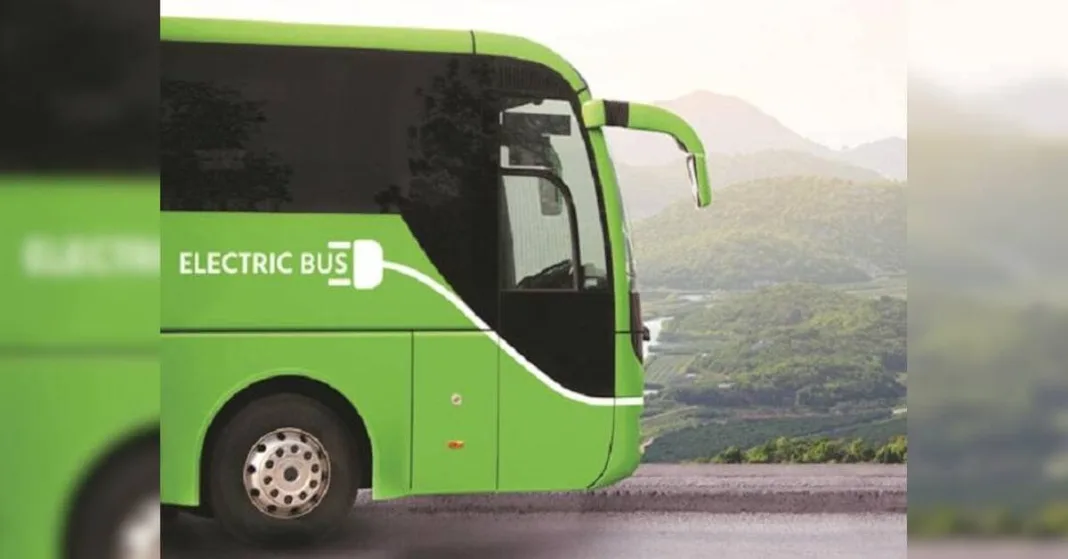

EaseMyTrip, an online travel-tech platform, launched its electric bus operations in Bhopal through its electric mobility arm, Easy Green Mobility (EMTev). The deployment, announced on Friday, supports the firm’s ambitious “Vision 2030” roadmap, under which it aims to build an annual manufacturing capacity of 5,000 electric buses within the next five years.
The electric bus programme builds on the operating experience of YOLO Bus, EMTev’s operating arm, which currently runs conventional intercity routes across multiple southern Indian markets. The company’s plan covers vehicle manufacturing, fleet operations, service support and progressive localisation of components.
Manoj Soni, CEO of EMTev, said, “At EMT EV, our focus is to build both intra- and intercity electric buses that combine long-range battery technology, fast charging, advanced safety systems, and passenger comfort, while delivering a significantly lower operating cost.” “Our objective is to build a scalable mobility ecosystem that can support India’s shift towards cleaner and more efficient transportation,” he added.
EMTev’s initial electric bus is a 12-metre electric seater coach designed for 45 passengers plus the driver. The coach is equipped with an LFP battery offering 423.9 kWh of total energy, a PMSM motor, air suspension and EHPS steering, offering a range of up to 350 km and a top speed of up to 100 km/h. In addition, the buses are equipped with EBS and ESC, along with camera-based monitoring systems.
“India’s transportation needs are evolving rapidly, and building reliable, sustainable mobility infrastructure will be essential to supporting the next phase of economic and tourism growth,” said Rikant Pittie, CEO & Co-Founder of EaseMyTrip.
EMTev is also developing AI-enabled driver monitoring and blind-spot detection capabilities, with ADAS features forming part of its broader technology roadmap. As of now, the company’s focus is on fulfilling committed electric bus deliveries while strengthening the operational and service infrastructure required for future scale. Progressive localisation of electric vehicle components also remains a key priority for EMTev.
The electric buses are expected to provide an alternative to conventional diesel-powered transportation and support efforts to reduce dependence on fossil fuels, alongside improved operating efficiency in intercity transportation. As the business scales, the initiative is also expected to create employment across manufacturing, fleet operations, service support and associated ancillary activities.