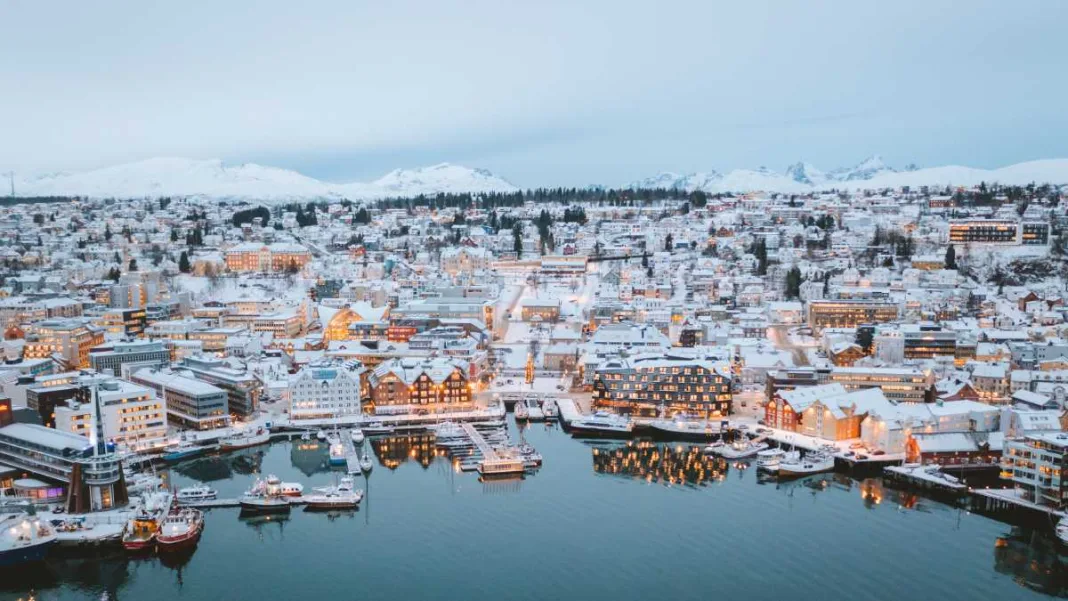


There is a unique institutional development that is reshaping the heritage industry in northern Europe by municipal governments moving away from obsolete commercial clichés. This development entails the creation of novel autumn cultural tourism policies in Tromsø, Rovaniemi, Edinburgh, and Inverness, in which licensing, revenue sharing, and authenticity are strictly enforced by elders. This means that local lore is no longer limited to wintertime performances, but instead, there are stringent measures that allow Sámi and Gaelic peoples to exercise self-governance on their own history, protect sensitive boreal environments, and reap fair share of economic benefits.
The Seasonal Dilemma: Moving Beyond Winter Commercialisation
For decades, the global tourism industry marketed the European Arctic almost exclusively as an ephemeral winter playground. Commercial travel agencies concentrated their promotional efforts on sub-zero spectacles: dog sledding across frozen lakes, mechanical snowmobile safaris, and captive reindeer enclosures, often accompanied by superficial cultural performances. In this winter-centric paradigm, the rich, living heritage of the Indigenous Sámi—the only recognised indigenous people within the European Union—was frequently co-opted as an exotic marketing prop. Commercial operators routinely utilised mass-produced, non-authentic costumes, disseminated distorted folklore, and staged commercial ceremonies that bore little resemblance to authentic Sámi traditions.
This hyper-concentration of tourism arrivals between late November and February created acute socio-economic and ecological vulnerabilities across the circumpolar north. Arctic municipalities experienced extreme infrastructural strain during peak winter months, followed by severe economic contraction during the spring and autumn shoulder seasons. Highly seasonal business models forced regional hospitality providers into cycles of temporary hiring and layoffs, exacerbating regional labour shortages and draining municipal resources.
| Traditional Winter Mono-Tourism Model | Impact |
|---|---|
| Extreme Winter Peak (Nov–Feb) | Infrastructural strain & environmental damage |
| Commodified Cultural “Props” | Non-Indigenous commercial profit extraction |
| Severe Shoulder Contraction | Seasonal layoffs & regional labour instability |
| Autumn Equinox Cultural Protocol Model | Impact / Outcome |
|---|---|
| Extended Ruska Season (Sep–Nov) | Year-round infrastructure & labour stability |
| Elder-Verified Concessions | Sovereign cultural governance & FPIC compliance |
| Land Stewardship Trusts | Direct 8%–10% concession revenue redistribution |
| Cryptographic QR Verification | Saami Council legal trademark protection |
The winter mono-culture also extracted financial profits from ancestral lands while leaving little enduring capital within indigenous communities. Non-local corporate excursion outfits dominated tour revenues, while native pastoralists and craftspeople endured the environmental costs of land fragmentation and pasture degradation caused by off-road snow traffic.
Advertisement
Advertisement
A parallel dynamic unfolded in the Scottish Highlands and historic urban centres such as Edinburgh and Inverness. Gaelic language (Gàidhlig) and historic Highland culture were routinely treated as romanticised, static relics of a Jacobite past rather than assets of a living linguistic speech community. Commercial souvenir outlets traded in synthetic tartanry and invented folklore, detaching Scotland’s unique heritage from the communities that maintain Gaelic storytelling, music, and land-lore.
To counter this dilution, northern municipal leaders, national tourism directorates, and indigenous parliaments have initiated a strategic paradigm shift. By identifying the autumn equinox—celebrated across the Arctic as Ruska, the brilliant crimson and gold transformation of the subarctic birch forests—as a critical window for sustainable cultural engagement, authorities have instituted formal governance frameworks. Autumn represents an active, authentic period in northern life: a season of wild berry and mushroom foraging, traditional river and lake fishing, reindeer roundups, and pre-winter cultural assemblies. Shifting visitor flows into this vibrant window allows destinations to relieve winter environmental pressure, stabilise year-round municipal economies, and ensure indigenous people exercise sovereign control over their cultural legacy.
Arctic Urban Micro-Concession Governance: Tromsø and Rovaniemi
To transition from unregulated autumn travel to structured cultural governance, the municipal authorities of Tromsø in Northern Norway and Rovaniemi in Finnish Lapland have enacted formal municipal compacts with the Sámi Parliament (Sámediggi) in Karasjok and Inari. Termed Arctic Urban Autumn Cultural Protocols, these regulatory frameworks establish that commercial tourism activities conducted within municipal borders and surrounding subarctic hinterlands during the equinox period must operate under strict, community-sanctioned micro-concessions.
| Operational Stage | Regulatory Actions & Mandatory Criteria |
|---|---|
| 1. Commercial Application | Tour operator submits autumn foraging, guiding, or cultural excursion itinerary to the municipal desk. |
| 2. Elder-Led Ethical Review | Joint Municipal–Sámi Board evaluates the itinerary against Sámediggi Ethical Tourism Guidelines. |
| 3. Pastoral Coordination | Operator coordinates routes with local reindeer herding cooperatives (siida/paliskunta). |
| 4. Guide Cultural Accreditation | Backcountry guides complete certified modules on customary land rights and botanical nomenclature. |
| 5. Concession Enactment | Operator signs an agreement binding 8%–10% of gross revenues to Indigenous Land Stewardship Trusts. |
| 6. Digital Credential Issuance | Municipality and Saami Council issue a dynamic QR-code plaque for marketing, vehicles, and trailheads. |
Under these compacts, private tour operators can no longer market or run backcountry foraging walks, wild food tastings, or autumn wilderness tours without explicit accreditation from a joint municipal-indigenous licensing board. This governance structure replaces voluntary best-practice advice with legally binding requirements.
Advertisement
Advertisement
In Rovaniemi, the municipal council collaborated directly with the Sámi Parliament of Finland to enforce the Principles for Responsible and Ethically Sustainable Sámi Tourism. The guidelines declare that any commercial product drawing upon Sámi culture, land use, or traditional lifestyle must be developed in genuine cooperation with the Sámi community and uphold indigenous self-determination. Municipal micro-concession licences for autumn guiding networks—encompassing Duodji (traditional handicrafts) and Arctic Harvest initiatives—are co-evaluated by designated Sámi cultural custodians and elder panels.
In Tromsø, where the municipality spans urban fjords and high-latitude mountain plateaus, the local authority partnered with regional Sámi bodies under the legal aegis of the Norwegian Sámi Act. The municipal administration launched the Autumn Equinox Guiding Framework, establishing an administrative register of approved cultural providers. Commercial operators seeking permits for guided excursions through coastal birch groves, foraging grounds, and upland trails must verify that their guides have completed curriculum developed by the Sámi University of Applied Sciences (Sámi allaskuvla).
The joint municipal-indigenous licensing boards enforce four non-negotiable operational standards:
- Customary Land Consultation: All guided commercial trails through municipal commons and state forests must be coordinated with local reindeer herding districts (paliskunnat in Finland, reinbeitedistrikter in Norway) to prevent interference with seasonal herd gathering and rutting pastures.
- Authentic Tradition-Bearer Employment: Cultural excursions must either be operated directly by certified Sámi entrepreneurs or employ accredited indigenous tradition-bearers who receive fair, equitable wages for their pedagogical instruction.
- Ecological Foraging Ceilings: Micro-concessions set strict volumetric quotas on wild cloudberry, lingonberry, and medicinal birch-polypore harvesting, safeguarding local forage grounds from commercial overexploitation.
- Protection of Sacred Topography: Guides are legally forbidden from taking commercial groups to ancient sacrificial sites (sieidi), unexcavated settlement remains, or customary burial lands, protecting ancestral spiritual locations from commercial intrusion.
Through this rigorous administrative licensing, Tromsø and Rovaniemi operationalise the principle of Free, Prior, and Informed Consent (FPIC) at the municipal level, establishing that indigenous heritage cannot be commodified without native authority.
Municipal Revenue-Sharing Models and Land Stewardship Trusts
A transformative aspect of these autumn cultural tourism protocols is the institutionalisation of direct, non-tax revenue recycling. In traditional municipal tourism frameworks, commercial licence fees flow into general municipal accounts or state tax pots, rarely benefiting the host communities whose cultural identity and natural resources are being commercialised. The Arctic micro-concession systems dismantle this extractive model by routing concession fee percentages directly into autonomous Indigenous Land Stewardship Trusts.
In Rovaniemi, commercial tour agencies approved under the autumn equinox licensing scheme must remit a mandatory 10.0% concession fee on gross ticket revenues directly into the Sámediggi Indigenous Land-Stewardship Trust based in Inari. In Tromsø, operators pay an 8.5% concession levy on gross autumn cultural revenues into the Troms Regional Sámi Land & Heritage Foundation. These financial contributions are monitored via mandatory transaction auditing, tied to the renewal of annual municipal operating licences.
| Recipient Allocation | Operational Objective & Deployment Mechanism |
|---|---|
| Ecological Regeneration & Habitat Repair | 60% of all concession levies directly fund peatland restoration, subarctic birch trail maintenance, and wild berry regeneration in heavily touristed public zones. |
| Cultural Transmission & Elder Stipends | 25% provides direct stipends for elder tradition-bearers, intergenerational oral history workshops, and Duodji handicraft apprenticeships for Indigenous youth. |
| Municipal Monitoring & Verification Auditing | 15% finances field compliance rangers, joint licensing secretariat overheads, and digital badging platform server maintenance. |
The fiduciary structure of these trusts ensures complete financial self-determination. Capital is disbursed under the governance of independent boards of trustees composed of Sámi elders, herders, artisans, and municipal environmental officers. Funds are allocated strictly across three strategic priorities:
- Subarctic Habitat Restoration (60%): Financing ecological repair across vulnerable tundra and birch-forest ecosystems impacted by tourism footfall, restoring degraded peatlands, replanting trampled lichen beds, and monitoring biological health across public gathering zones.
- Cultural Transmission and Living Archives (25%): Providing living wages and mentorship grants to master artisans (duojárat) and native speakers, establishing youth apprenticeships in ancestral craft production, and archiving regional oral histories and toponymic land-lore.
- Regulatory Compliance and Digital Auditing (15%): Maintaining the municipal digital licensing portal, financing independent Sámi field monitors who inspect commercial tour routes, and funding legal actions against intellectual property infringements and unaccredited counterfeit tours.
| Municipal Destination | Concession Policy Instrument | Concession Fee (% Gross Revenue) | Governing Trust Entity | Primary Fiduciary Focus | Verification Mechanism |
| Tromsø, Norway | Municipal Equinox Compact & Sámi Act Provision | 8.5% | Troms Regional Sámi Land & Heritage Foundation | Coastal lichen protection, foraging habitat repair, language immersion | Unannounced ranger audits; joint municipal-Sámi annual license review |
| Rovaniemi, Finland | Lapland Autumn Protocol & Sámediggi Ethical Guidelines | 10.0% | Sámediggi Indigenous Land-Stewardship Trust | Boreal forest conservation, grazing route protection, Duodji apprenticeships | Digital ticketing reconciliations; elder inspection panels |
| Edinburgh, Scotland | Gaelic Language Act Compliance Framework | 5.0% | Alba Intangible Cultural Heritage Trust | Urban Gaelic language promotion, youth ceilidh arts, harvest storytelling | City Council licensing check; Bòrd na Gàidhlig annual audit |
| Inverness, Scotland | Highland Council Gaelic Tourism Accord | 7.5% | Highland Gaelic Cultural Stewardship Fund | Highland trail preservation, indigenous place-name signposting, oral history | Mandatory business accreditation reporting; VisitScotland inspection |
Table 1: Institutional structure of municipal revenue-sharing agreements, concession percentages, recipient trusts, and auditing frameworks across northern European cities.

Metropolitan Capitals: Urban Sámi Cultural Capitals and Museum Co-Curation
While Arctic urban centres regulate physical land use, national capitals are transforming how indigenous sovereignty is represented in metropolitan cultural tourism. In Oslo and Helsinki, city tourism boards and national cultural institutions are utilising the autumn cultural season (September–November) to dismantle colonial museum practices, replacing passive ethnographic displays with active, sovereign co-curation.
A watershed moment in European museum ethics occurred when the National Museum of Finland (Suomen kansallismuseo) in Helsinki completed the landmark repatriation of its entire historical Sámi collection—comprising more than 2,200 sacred ceremonial items, clothing, tools, and everyday ancestral objects—transferring legal and physical custody to the Sámi Museum Siida in Inari. This historic handover, celebrated across Sápmi, inverted the traditional power dynamic between capital institutions and indigenous communities. Rather than retaining indigenous heritage within imperial vitrines, metropolitan museums now actively collaborate as secondary partners alongside sovereign indigenous cultural institutions.
| Circuit Dimension | Practical Municipal & Institutional Implementation |
|---|---|
| Civic Co-Curation | National museums in Oslo and Helsinki yield curatorial authority to Sámi artists and scholars for autumn flagship exhibitions addressing decolonisation and land rights. |
| Urban Sovereign Circuits | Capital tourism desks distribute curated digital and print wayfinding trails connecting national museum galleries to certified Sámi-owned businesses across the capital. |
| Gastronomic Pop-Ups | Municipal spaces host temporary autumn culinary venues serving boreal harvest provisions, including cloudberries, game, and smoked Arctic char, prepared by certified Sámi chefs. |
| Economic Reciprocity | Metropolitan retail pop-ups and galleries remit a portion of autumn turnover to northern Indigenous youth programmes and language nests. |
In Oslo, the National Museum of Art, Architecture and Design (Nasjonalmuseet) and the Historical Museum deploy their autumn exhibition schedules to mount major installations co-curated by contemporary Sámi artists, activists, and historians. These exhibitions do not present Sámi life as a historical relic; they examine contemporary conflicts over green colonialism, wind turbine construction on reindeer winter pastures, and the ongoing legal struggle for territorial recognition.
Simultaneously, the city tourism boards of Oslo and Helsinki have launched “Sovereign Heritage Circuits”. Marketed to cultural travellers arriving during the vibrant autumn gallery season, these urban circuits reframe the capital from a mere transit gateway to the Arctic into an active platform for living indigenous culture:
- Direct Economic Linkages: Urban wayfinding trails guide visitors from national museums to permanent and pop-up indigenous enterprises, including certified Sámi design studios, independent publishing houses, and contemporary textile exhibitions.
- Autumn Gastronomic Harvests: Municipal licensing in Helsinki and Oslo facilitates autumn pop-up dining venues featuring seasonal Arctic provisions—such as foraged wild lingonberries, smoked Arctic char, wild mushrooms, and traditional dried reindeer meats (kuivalihan)—curated exclusively by indigenous culinary professionals.
- Linguistic Visibility in Civic Spaces: Public transit displays and civic event programs feature North, Inari, and Skolt Sámi language signage throughout October, celebrating national indigenous language weeks and raising public awareness among metropolitan and international audiences.
By weaving indigenous-managed cultural venues into the metropolitan urban fabric, Oslo and Helsinki allow domestic and international visitors to engage with the political, artistic, and philosophical realities of modern Sápmi without setting foot on fragile Arctic pastures.
Gaelic Language Resurgence: Language-First Urban Circuits in Scotland
In the United Kingdom, a parallel movement is establishing structural authenticity protections around Scottish Gaelic (Gàidhlig) heritage. In Edinburgh and Inverness, city councils are working alongside Bòrd na Gàidhlig and the national tourism agency VisitScotland to operationalise the Gaelic Tourism Strategy for Scotland 2024–2029. This initiative uses autumn harvest and fire festivals to establish structured, language-first municipal heritage trails that counteract commercial Celtic kitsch.
The strategy is propelled by significant public backing: official data from the Scottish Social Attitudes Survey reveals that 79% of Scots view Gaelic as an essential element of the country’s cultural fabric, while 41% of adults now report an understanding of basic Gaelic vocabulary. Digital interest has surged concurrently, with VisitScotland documenting a 72% increase in international users actively accessing Gaelic language and cultural heritage resources.
| Strategic Layer | Urban Tourism Deployment in Edinburgh & Inverness |
|---|---|
| Statutory Policy Foundation | Bòrd na Gàidhlig and VisitScotland establish the Gaelic Tourism Strategy 2024–2029 under the Gaelic Language Act. |
| Certified Heritage Badging System | City councils deploy “Gaelic Language & Heritage Badging” for hotels, restaurants, historic taverns, and tour desks. |
| Autumn Festival Integration | Badged circuits integrate with Edinburgh’s Samhuinn Fire Festival at Calton Hill and Highland harvest cèilidhs. |
| Operational Compliance Standards | Staff achieve basic conversational fluency (Gàidhlig Gach Latha); verified folklore vetting eliminates invented lore. |
| Digital Identification | Cleachd i QR badges link customers to verified Gaelic historical records, placenames, and living performances. |
During major autumn assemblies—notably the world-renowned Samhuinn Fire Festival staged on Calton Hill in Edinburgh on 31 October, and Highland harvest cèilidhs across Inverness—municipalities deploy formal “Gaelic Language & Heritage Badging” schemes. The Samhuinn Fire Festival, organised by the volunteer-led Beltane Fire Society, represents a contemporary revival of the ancient Celtic seasonal turning point, depicting the dramatic battle between the Kings of Summer and Winter overseen by the mythological Cailleach. Rather than letting commercial operators exploit the festival with generic Halloween entertainment, the City of Edinburgh Council links the event to accredited urban walking trails.
To secure municipal Gaelic Heritage Badging, urban businesses must satisfy stringent cultural criteria:
- Staff Linguistic Competence: Front-of-house staff must complete accredited introductory language training (Gàidhlig Gach Latha), enabling them to deliver Gaelic greetings, interpret menu provenance, and explain basic bilingual phrasing to patrons.
- Verified Toponymic Interpretation: Walking tour guides and museum docents must use verified ethnological and linguistic resources approved by the Gaelic Place-names of Scotland database (Ainmean-Àite na h-Alba), eliminating fabricated folklore and romanticised myths.
- Living Performance Integration: Certified venues commit to booking accredited Gaelic musicians, traditional singers (sean-nós and choral), and oral storytellers during the autumn season, ensuring that performers receive union-standard compensation funded through municipal arts partnerships.
- Dual-Language Municipal Wayfinding: Venues must implement high-visibility bilingual signage and physical interpretation plaques that demonstrate equal respect for Gaelic and English, reinforcing the presence of a living national tongue.
In Inverness, known as the cultural capital of the Highlands, the Highland Council incorporates this badging directly into business development grants. By turning an intangible linguistic tradition into a formal mark of hospitality quality, Edinburgh and Inverness protect their Celtic heritage from commercial dilution while providing domestic and international visitors with authentic cultural immersion.
Seasonal Diversification Metrics: The Shoulder-Season Economic Transformation
The institutional execution of autumn cultural tourism protocols has driven quantifiable structural shifts in European northern tourism economics. Historically, destinations in Northern Norway and Finnish Lapland suffered from an extreme seasonal imbalance, enduring an acute winter spike followed by deep lulls in autumn and spring. Winter occupancy rates routinely exceeded 85% to 90%, causing hotel capacity shortages and soaring flight prices, while autumn occupancy often plummeted below 40%, forcing seasonal business closures.
Official accommodation data compiled by Statistics Norway (Statistisk sentralbyrå – SSB) and Statistics Finland (Tilastokeskus) reveals that autumn cultural initiatives have significantly smoothed these volatile peaks and valleys. Across Norway, commercial accommodation establishments achieved an all-time record of 40.6 million guest nights in 2025, driven substantially by a 14% year-on-year surge in international shoulder-season bookings.
| Seasonality Model | Jan–Feb Peak | Sep–Oct Shoulder | Peak-to-Shoulder Ratio | Operational Impact |
|---|---|---|---|---|
| Traditional Seasonality Curve | 85%–90% peak capacity | 35%–45% shoulder capacity | 2.2:1 | Extreme winter overheating, operational losses and seasonal layoffs |
| Equinox Protocol Seasonality Curve (2025/2026 Shift) | 86% sustainable peak capacity | 68% high-yield cultural shoulder capacity | 1.25:1 | More balanced demand and stronger autumn utilisation |
| Change | — | +23–33 percentage points | Narrowed from 2.2:1 to 1.25:1 | Reduced seasonality pressure in Tromsø |
In Tromsø, official figures confirm that hotel guest nights during September surged by 21% year-on-year, with foreign guest nights almost doubling as international travellers sought autumn foliage excursions, fjord foraging circuits, and northern lights viewing outside the freezing winter cycle. This autumn growth raised average September–October hotel occupancy to 68.4%, narrowing the peak-winter-to-autumn occupancy ratio from an unstable 1.85:1 down to a manageable 1.25:1.
In Finnish Lapland, where winter hotel revenue historically dominated the annual balance sheet, Statistics Finland recorded substantial gains across Rovaniemi and Inari during the Ruska equinox weeks. International visitor overnights during September and October increased by 17.8%, driven by demand for elder-led foraging networks, cultural workshops, and Siida-linked heritage trails. Rovaniemi’s autumn average daily rate (ADR) rose to €148, boosting hospitality profitability and providing local companies with the consistent revenue needed to maintain year-round, salaried employment contracts.
| Urban Tourism Destination | Autumn Occupancy (Sept–Oct 2025) | Prior Shoulder Baseline (Sept–Oct 2022) | Shoulder Guest Night Growth (YoY) | Peak-to-Autumn Occupancy Ratio (2025) | Autumn RevPAR (€ / NOK / £) | Primary Economic Driver |
| Tromsø, Norway | 68.4% | 54.1% | +21.0% | 1.25 : 1 | NOK 1,108 | Elder-guided equinox foraging & aurora circuits |
| Rovaniemi, Finland | 64.2% | 48.3% | +17.8% | 1.45 : 1 | €95.00 | Ruska harvesting tours & Siida museum circuits |
| Oslo, Norway | 74.5% | 66.8% | +9.2% | 1.08 : 1 | NOK 1,370 | National Museum co-curations & culinary pop-ups |
| Helsinki, Finland | 71.0% | 62.5% | +8.6% | 1.12 : 1 | €95.85 | Sovereign Heritage trails & autumn design season |
| Edinburgh, Scotland | 81.3% | 72.4% | +14.2% | 1.10 : 1 | £134.15 | Samhuinn Fire Festival & Gaelic Old Town trails |
| Inverness, Scotland | 76.8% | 63.2% | +16.5% | 1.18 : 1 | £109.05 | Highland harvest gatherings & badged ceilidh tours |
Table 2: Autumn shoulder-season performance, occupancy compression ratios, and revenue metrics across Nordic and Scottish urban centres.
In Edinburgh and Inverness, seasonal diversification has similarly flattened post-summer troughs. October in Edinburgh now rivals the August festival surge in hotel performance, achieving an 81.3% occupancy rate driven by the Samhuinn Fire Festival, the Scottish International Storytelling Festival, and certified Gaelic walking itineraries. In Inverness, shoulder-season guest night growth reached +16.5%, extending the Highland visitor season well into November and mitigating the traditional winter economic freeze.
Digital Authenticity Badging: Cryptographic Intellectual Property Safeguards
The rapid growth of cultural tourism has historically brought an influx of inauthentic goods and uncertified commercial tour providers. Souvenir outlets across the Arctic and Highland regions have long stocked cheap factory-made souvenirs that appropriate native designs, diverting income away from authentic artisans while misleading consumers. To permanently eliminate this intellectual property theft, indigenous governing bodies and municipal authorities have deployed cryptographic digital authenticity badging.
| Architectural Component | Technical Mechanism & Practical Validation Protocol |
|---|---|
| Centralized Digital Certification Registry | Saami Council manages the open-access samitrademarks.com portal, housing verified artisan dossiers, ownership proof, and municipal micro-concession license records. |
| Dual Certification Marks | Sámi Duodji: Vetted by artisan guilds for traditional materials, handcraft methods, and customary forms.Sámi Made: Certifies 51%+ Indigenous corporate ownership for contemporary design, publishing, and culinary goods. |
| Tamper-Resistant QR Code Deployment | Physical artefacts and municipal business plaques feature dynamic QR codes containing cryptographically salted tokens. |
| Instant Consumer Provenance Validation | Scanning instantly surfaces artisan lineage, ethical land-harvesting verification, and concession remittance records. |
| Direct Infringement Reporting Channel | Consumer scan portal includes an automated reporting trigger notifying Saami Council legal teams of counterfeit badges. |
The system is anchored by two official certification trademarks owned collectively by the Sámi people and managed by the Saami Council (Sámiráđđi):
- Sámi Duodji: The premier international certification mark for authentic Sámi handicrafts, first established in the 1980s and completely digitised for modern commerce. The label certifies that an item was created by an accredited Sámi craftsperson using traditional natural materials—such as reindeer antler, bone, silver, birch burl, curled birch wood, root weaving, pewter thread, and vegetable-tanned leather—adhering to historical forms and techniques. To secure a licence, artisans must present physical work to peer-review panels operated by regional craft associations: Sámi Duodji ry in Finland, Duodjeinstituhtta in Norway, and Sámi Duodji/Sameslöjdstiftelsen in Sweden.
- Sámi Made: A modern certification mark launched to safeguard broader commercial sectors, including contemporary fashion, interior design, industrial homewares, cosmetics, published literature, packaged foods, and digital goods. The trademark certifies that the product or service is produced by an individual of Sámi descent or an enterprise with at least 51% Sámi equity ownership.
These marks are backed by a unified digital authentication architecture accessible via the official samitrademarks.com registry. Licensed artisans, certified foraging tour operators, and municipal hospitality partners receive tamper-evident physical tags and weather-resistant shopfront plaques embedded with dynamic QR codes.
When scanned by a consumer’s smartphone, the QR code links to an encrypted validation dossier hosted on the Saami Council’s registry servers. The validation screen displays:
- The unique licence serial number and producer name, cross-referenced with national identity registries.
- The geographical origin and community affiliation (siida or district) of the maker.
- Provenance certificates for all harvested biological materials, guaranteeing adherence to ethical equinox harvesting quotas and municipal conservation guidelines.
- An automated verification receipt confirming that the tour operator or artisan remitted the required concession fee into the designated Indigenous Land Stewardship Trust.
- A one-click reporting portal enabling consumers and local residents to flag counterfeit tags, unauthorised design duplications, or uncertified tour operators directly to Saami Council legal representatives.
In Scotland, Bòrd na Gàidhlig rolled out the Cleachd i (“Use It”) certification identifier across Edinburgh, Inverness, and the Hebrides. Displayed in hotel reception foyers, historic sites, and independent taverns, Cleachd i QR codes direct visitors to audio pronunciation guides, historical archives of local place names, and verified performance schedules for authentic Gaelic musicians. This digital verification network permanently eliminates fraudulent operators, ensuring visitor spending flows directly to legitimate cultural practitioners.
Policy Implications and Multilateral Governance Frameworks
The municipal enactment of autumn cultural tourism protocols in northern Europe operationalises key multilateral indigenous rights treaties at the municipal level. Historically, broad international conventions signed at United Nations summits struggled to influence everyday commercial tourism operations. By translating high-level human rights standards into local business licences, municipal planning permissions, and city tax policies, local councils in Norway, Finland, and Scotland have established an exportable framework for sustainable cultural tourism.
| Governance Tier | Enacted International Instrument & Policy Directive |
|---|---|
| International Treaties & Global Accords | • UNDRIP Article 31: Right to control, protect, and develop traditional cultural heritage and knowledge.• UN Tourism Kyoto Declaration: Local community empowerment and equitable distribution of economic benefits.• Larrakia Declaration: Indigenous self-determination and equitable commercial partnerships in global travel. |
| National Statutory Legislation | • Norwegian Sámi Act: Cultural and linguistic autonomy.• Finnish Constitution Section 17 & Sámi Parliament Act.• Gaelic Language (Scotland) Act 2005 & National Gaelic Plan. |
| Municipal & Regional Enactment Instruments | • Tromsø & Rovaniemi: Autumn Equinox micro-concession by-laws.• Oslo & Helsinki: Civic co-curation and repatriation accords.• Edinburgh & Inverness: Gaelic heritage badging directives. |
These urban protocols directly implement the UN Tourism Recommendations on the Sustainable Development of Indigenous Tourism. Endorsed by the World Committee on Tourism Ethics, the UN framework stresses that indigenous communities must maintain full agency in deciding how, when, and to what extent their natural resources and cultural expressions are presented to travellers. By making elder-issued licences a legal prerequisite for commercial excursions, Tromsø and Rovaniemi embody the core recommendations of the landmark Larrakia Declaration on the Development of Indigenous Tourism, which calls for national and local governments to respect indigenous customary laws and intellectual property rights.
Furthermore, the municipal protocols satisfy state obligations under Article 31 of the United Nations Declaration on the Rights of Indigenous Peoples (UNDRIP). Article 31 affirms that indigenous peoples have the collective right to maintain, control, protect, and develop their cultural heritage, traditional knowledge, and traditional cultural expressions, including human and genetic resources, designs, and oral literature.
The Scottish initiatives similarly advance statutory commitments established by the Scottish Parliament under the Gaelic Language (Scotland) Act 2005. Under the statute, public bodies must prepare and implement statutory Gaelic Language Plans that increase the status, visibility, and practical use of the language across public life. Integrating Gaelic language metrics into municipal tourism licensing and VisitScotland’s national promotional channels ensures that public commercial activities actively contribute to linguistic revitalisation.
Industry Impact and Official Endorsements
The operationalisation of seasonal cultural protocols has drawn praise from cultural leaders, industry directors, and cabinet ministers, while encouraging private operators to reform business models.
In Finland, representatives of the Sámi Parliament emphasized the protective role of the guidelines. Official documentation from the Sámi Parliament (Sámediggi) underlines the primary motivation behind the framework:
“The primary purpose of these ethical guidelines is to terminate tourism exploiting Sámi culture and to eliminate incorrect information about the Sámi distributed via tourism. The second priority is to safeguard the cultural practices and traditions of the Sámi population outside the travel industry”.
Addressing the deployment of verifiable certification trademarks, Sandra Márjá West, Project Manager for Sámi Trademarks at the Saami Council, highlighted the commercial advantage of verifiable authenticity:
“The Saami Council feels that Sámi crafts and products have great value and believes that buyers would choose Sámi crafts or products made by Sámi people if they had the opportunity. This is precisely the opportunity we want to offer with the help of these trademarks and in this way strengthen the competitiveness of Sámi businesses”.
In Scotland, the unveiling of the Gaelic Tourism Strategy for Scotland 2024–2029 at the National Library of Scotland in Edinburgh received high-level government endorsement. Cabinet Secretary for Education and Skills Jenny Gilruth stated:
“Gaelic is a central part of Scotland’s heritage, and we are determined to ensure it is integral to our future. We know there is a growing appetite among domestic and international visitors to discover more about the role Gaelic plays in our national story and this strategy will help our tourism sector to deliver on that”.
Rob Dickson, Director of Industry and Destination Development at VisitScotland, underscored the market value of authentic cultural interpretation:
“We recognise the distinct role that the Gaelic language plays in Scotland’s heritage, identity and culture. It provides an extra layer to the authentic experience that so many of our visitors desire. This new strategy will support collective action for partners to work together to strengthen the visibility of Gaelic and increase the opportunities for Gaelic tourism”.
Ealasaid MacDonald, Ceannard (Chief Executive) of Bòrd na Gàidhlig, reinforced the broader economic value generated by language-first tourism:
“Gaelic is a key driver for many visitors to Scotland, whether that is exploring their heritage or looking for a country which offers a vibrant cultural experience with language at its heart. Importantly it also highlights how Gaelic is an important social, cultural and economic asset, which benefits communities across Scotland, and beyond”.
These official statements confirm a shared public policy consensus: safeguarding cultural integrity through enforceable municipal licensing enhances destination appeal while securing equitable returns for indigenous and minority communities.
Future Outlook: Building Year-Round, Equitable Heritage Tourism
Looking ahead, the successful deployment of autumn cultural tourism protocols in northern Europe offers a proven model for destination managers worldwide. Over the coming decade, regional authorities across the circumpolar north and the Celtic nations plan to expand and integrate these local initiatives into broad, cross-border heritage networks.
| Developmental Track | Projected Multi-Year Strategic Trajectory |
|---|---|
| Pan-Nordic Sámi Tourism Accreditation Treaty | Cross-border harmonisation of elder-led micro-concessions, mutual recognition of Sámi Made and Sámi Duodji marks, and coordinated land stewardship across Norway and Finland. |
| Trans-Atlantic Celtic Heritage Corridors | Bilateral cultural corridors linking Edinburgh and Inverness with Glasgow, the Hebrides, Ireland, Wales, and Cape Breton, standardising Gaelic language-first badging. |
| Climate Adaptation & Shoulder Season Growth | Expanding temperate, low-carbon autumn harvest circuits to offset shorter, erratic winter snow seasons and intense southern European summer heat waves. |
| Universal Digital QR & Supply Chain Auditing | Migration of municipal licensing and artisan registries to tamper-proof decentralised verifiers with automated trust and revenue-splitting protocols. |
The immediate priority for Arctic administrations is establishing an integrated Pan-Nordic Sámi Tourism Accreditation Treaty. By harmonising licensing standards and mutual recognition of the Sámi Duodji and Sámi Made trademarks across Norway, Sweden, and Finland, policymakers aim to create a single, transparent Arctic regulatory zone. Under this proposed pact, tour companies operating trans-border circuits through northern Scandinavia would be subject to unified concession fees, standardized foraging quotas, and coordinated elder review boards.
In Scotland, Bòrd na Gàidhlig and VisitScotland are expanding badged urban heritage circuits into Glasgow, Argyll, and the Western Isles, while establishing bilateral links with Celtic language bodies in Ireland, Wales, and Nova Scotia. These cross-border networks will allow travellers to follow accredited linguistic trails, exploring shared Gaelic and Celtic roots through authenticated music, oral literature, and culinary traditions.
This structural pivot toward year-round cultural tourism will become increasingly vital as global climate change accelerates. Warming winters are making Arctic snow seasons shorter and more unpredictable, challenging winter tour models that depend entirely on snowmobile trails and ice hotels. Simultaneously, rising summer temperatures across southern Europe are prompting travellers to seek cooler, temperate autumn escapes in the European North. Establishing enforceable municipal protocols ensures this growing demand supports community self-determination rather than degrading fragile habitats.
The widespread implementation of autumn cultural tourism protocols signals a lasting victory for indigenous sovereignty and sustainable regional economic development. Across Norway, Finland, and Scotland, municipal governance now repudiates extractive winter entertainment, replacing commercial distortion with authentic community led stewardship. By channeling concession fees directly into indigenous trusts, verifying artisans through digital platforms, and actively curating urban cultural narratives, northern cities protect living heritage from commercial exploitation. As global travellers increasingly seek meaningful, ethical journeys, these collaborative frameworks demonstrate that municipal policy can honour ancestral traditions, restore fragile boreal ecosystems, and cultivate durable economic prosperity without sacrificing authentic cultural autonomy.
Conclusion
Tourism during autumn in Tromsø, Rovaniemi, Edinburgh, and Inverness is bringing together tourism, Indigenous culture, and sustainable management of tourist destinations in new ways. Through fostering genuine cultural experiences, participation by locals, and sustainable land management practices, these destinations have the opportunity to sustain tourists’ presence during non-peak times of the year.