
That formula has broadly been steering India’s tax reform journey since. The mantra now is a trust-based tax system relying heavily on technology and transparency.
But the journey from a regime of high tax rates and complex laws at the central and state level to a more taxpayer friendly one has been staggered and unfinished, according to experts.
In 1991, the peak personal income tax rate was nearly 56 per cent (including surcharge) and the corporate tax rate for domestic companies was in the range of 40-50 per cent plus surcharge.
As part of the 1991 economic reforms, then Finance Minister Manmohan Singh slashed India’s exorbitant import tariffs by capping the general peak rate of Customs duty at 150 per cent.
Businesses also paid several indirect taxes such as excise duty, sales tax, octroi, entry tax, and Central Sales Tax (CST), often resulting in tax being levied on tax.
The Raja Chelliah Tax Reforms Committee, set up in August 1991, provided a broader road map for reforming both direct and indirect taxes. This laid the foundation for successive governments to continue rationalising tax rates, reducing exemptions, widening the tax base and simplifying the tax system.
35 years, successive governments reduced tax rates, widened the tax base, digitised tax administration and simplified tax laws.
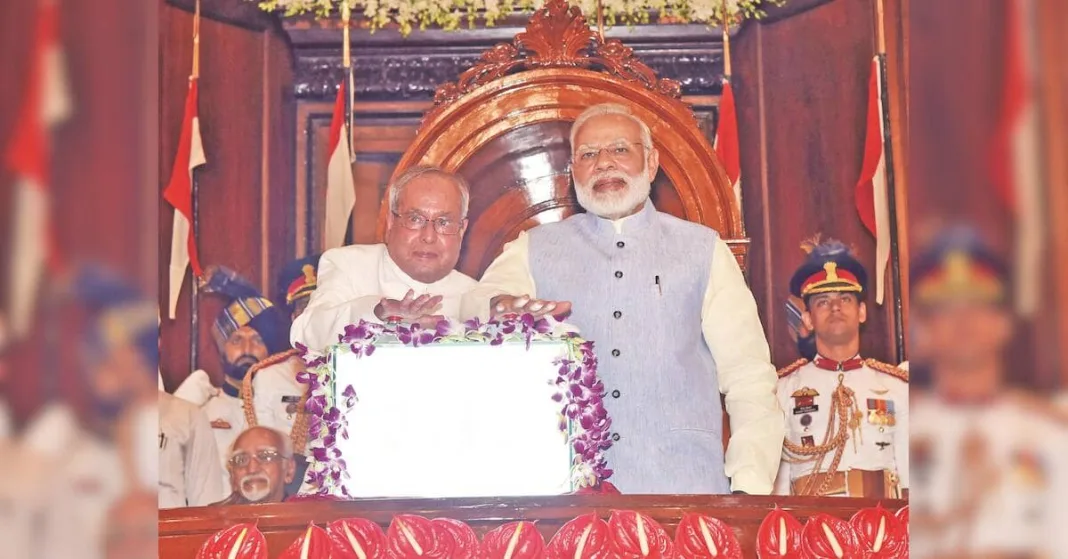
The biggest change in indirect taxation came with the rollout of the Goods and Services Tax (GST) in 2017, which replaced a fragmented tax system with a common national framework.
While the reform journey is still evolving, the tax system today is more open, technology-driven, and business-friendly than in 1991.
Direct tax revenue receipt as a share of GDP has risen from around 2 per cent in the early 1990s to about 6 per cent in recent years, and the number of income-tax returns has grown to over 80 million.
The latest milestone is the Income Tax (I-T) Act, 2025, which came into force on April 1, 2026. While it does not bring major policy changes, it rewrites the six-decade-old Income Tax Act, 1961, in a simpler and more organised manner, bringing together many reforms introduced over the last three decades.
Towards a simpler system
India’s direct tax system in 1991 was marked by high tax rates, several exemptions and low compliance. The Chelliah committee reports covering both direct and indirect taxes recommended lower tax rates, a broader tax base and a simpler tax structure. The committee argued that moderate tax rates would encourage voluntary compliance, reduce tax evasion and improve revenue collection.
The recommendations were implemented in phases during the early 1990s. Peak personal income tax rate was reduced to 40 per cent in the Union Budget for 1992-93 presented by Singh and later brought down to 30 per cent in former Finance Minister P Chidambaram’s 1997-98 ‘Dream Budget’.
Corporate tax rates were also gradually reduced — from the range of 40-50 per cent around 1991 to a uniform rate of 40 per cent in the 1994-95 Budget, and further to 35 per cent in 1997-98.
The number of tax slabs was reduced to three, exemptions were pruned, and the overall design moved towards encouraging voluntary compliance and improving revenue collection.
Looking back, Chidambaram said the central idea behind his ‘Dream Budget’ was that lower taxes encourage better compliance with tax laws, discourage evasion, raise more revenue and support economic growth.
“The journey has followed a consistent trajectory of lower and fewer tax rates, a broader tax base, progressively digital administration and finally, a rewritten statute,” says Jayesh Sanghvi, Tax Partner at EY India.
The push for a simpler direct tax system gained momentum in 2002 when the Vijay Kelkar Task Force recommended greater use of technology, fewer exemptions and a cleaner tax law.
In 2004, the government abolished long-term capital gains tax (LTCG) on listed equities held for more than a year and introduced the Securities Transaction Tax (STT) to encourage stock market participation and improve compliance.
However, LTCG above a threshold on listed shares was reintroduced in 2018, in the Budget presented by late Finance Minister Arun Jaitley.
In his 2015-16 Budget speech, Jaitley made black money “the first and foremost pillar” of his tax proposals and said it “eats into the vitals of our economy and society.”
That became the Black Money (Undisclosed Foreign Income and Assets) and Imposition of Tax Act, 2015 — it included rigorous imprisonment of up to 10 years, a penalty of 300 per cent of tax, and no Settlement Commission.
In that Budget he said a new Benami Transactions (Prohibition) Bill would be brought to confiscate such property, “especially in real estate.” Parliament passed the Benami Transactions (Prohibition) Amendment Act, 2016, which came into force on November 1, 2016, a week before demonetisation of high-value notes.
The foreign-asset law, the benami law and demonetisation were three legs of the same drive: Hidden wealth abroad, property held in another person’s name, and cash held at home.
A General Anti-Avoidance Rule (GAAR) provided for in law in 2012 when Pranab Mukherjee was finance minister took effect from April 1, 2017, so that the tax department could deny arrangements whose main purpose was a tax benefit. The rule was retained in the I-T Act of 2025. In January 2026, the Supreme Court, in the Tiger Global case, held that GAAR could apply even where the investment pre-dated April 1, 2017, if the tax benefit arose later, and that a tax-residency certificate was not conclusive.
On March 31, 2026, the Central Board of Direct Taxes (CBDT) amended the rules, with effect from April 1, 2026, to expressly keep income from the transfer of investments made before April 1, 2017, outside GAAR. Investments made after that date remain fully covered.
The most ambitious attempt at a complete overhaul came with the Direct Taxes Code. The first draft was released in August 2009, but the subsequent Bill lapsed with the dissolution of the 15th Lok Sabha.
In November 2017, a new Task Force was constituted that submitted its report to Finance Minister Nirmala Sitharaman in August 2019. Several of its recommendations were implemented. “These include major changes like reducing the corporate tax rate for domestic companies that avail of no tax exemptions to 22 per cent in September 2019 and allowing taxpayers to file updated returns with effect from April 1, 2022, declaring additional income without penal consequences,” said Ranjan.
During the presentation of Union Budget 2020-21, a new personal income tax regime with lower rates (in exchange for giving up most deductions) was introduced; it was later made the default regime. From a policy perspective, the government in 2019–20 moved towards a dual-regime structure in both corporate and personal taxation.
According to Suranjali Tandon, Associate Professor at the National Institute of Public Finance and Policy (NIPFP), this marked a gradual shift away from an incentive-driven tax system. Instead of forcing taxpayers to give up exemptions, the government offered them a choice between the old and new tax regimes. “The most litigated parts of the I-T Act were often the exemption and incentive provisions. As more taxpayers move to lower-rate regimes without exemptions, disputes are expected to reduce,” she said.
Technology has been one of the biggest drivers of change in tax administration. Electronic filing, PAN-Aadhaar linkage, pre-filled income tax returns, the Annual Information Statement and data analytics have improved compliance and strengthened enforcement. Faceless assessment, introduced in 2019, reduced direct interaction between taxpayers and tax officers and was aimed at improving transparency.
The I-T Act, 2025, marked the latest step in this journey. It reduced the number of sections from around 819 to 536, uses simpler language, tables and formulas to make the law easier to understand.
Before GST, businesses dealt with a patchwork of central and state levies including central excise duty, service tax, Customs duty, value added tax (VAT), central sales tax (CST), entry tax and octroi.
Differing state rules and procedures made compliance difficult. Goods moving across state borders often stopped at check-posts, raising transport costs and delivery times. Because full credit for taxes paid earlier was not available in many cases, tax was frequently levied on tax, inflating the cost of goods.
The journey to GST took nearly two decades. Successive governments worked with the states to build consensus. The Constitution was amended in 2016 to enable GST and create the GST Council, in which the Centre and states jointly decide rates, exemptions and major policy matters.
Chidambaram first named GST in the 2007-08 Budget and aimed at April 1, 2010. In the 2013-14 Budget he recalled that date and said, “Alas, that was not to be.” In the 2014-15 Budget, Jaitley said: “The debate whether to introduce a GST must now come to an end.” In the 2017-18 Budget, weeks before the launch, he called it “by far, the biggest tax reform since independence.”
Customs duties underwent, too, a major transformation after 1991. Highest rates, which exceeded 300 per cent on certain items, were cut to 150 per cent in 1991-92. By 1997-98, the peak rate had been brought down to 40 per cent.
Although the peak rate later rose again on some products, the government has continued the process of rationalisation. In the 2025 Budget, the highest rates of 100–150 per cent were removed and the peak Basic Customs Duty was brought down to 70 per cent. The 2026 Budget further simplified the tariff structure and reduced duties on certain categories.
The biggest reform arrived on July 1, 2017. Seventeen central and state taxes were subsumed into a dual GST, creating a common national market. GST is a destination-based tax, so revenue on inter-state sales accrues to the consuming state rather than the producing state.
Businesses gained the ability to claim input tax credit across much of the value chain, interstate check-posts largely disappeared, and supply chains became more efficient. GST registered taxpayers rose from around 6.7 million before GST to over 1.5 crore (reaching about 1.65 crore by mid-2026).
In September 2025, the GST Council carried out one of the largest rate rationalisations since the tax was introduced. Most goods and services were brought under two main slabs of 5 per cent and 18 per cent, while a higher special rate (40 per cent) was retained for a limited set of luxury and sin goods. This largely took effect from September 22, 2025.
Experts say the reform process is far from over. “The unfinished agenda on the direct tax side is clear, we need to clear the huge backlog of pending appeals, deal with the mountain of old tax demands that can no longer be collected, and make sure the new Income Tax Act is implemented smoothly with proper guidance,” said Ranjan, former CBDT member.
On the indirect tax side, M S Mani, Partner, Deloitte India, said the next phase of GST reforms should focus on making compliance easier for businesses. Since companies configure their Enterprise Resource Planning (ERP) systems around GST rules, major policy changes should ideally come into effect from April, the beginning of the financial year.
Experts also believe the GST structure needs further simplification. While rates on several goods have been rationalised over the years, multiple tax slabs continue to create classification disputes and increase compliance costs.
Pratik Jain, Partner, Price Waterhouse & Co LLP, said rationalisation of input tax credit should remain a priority.
Jain also argues that petroleum products, Aviation Turbine Fuel (ATF) and natural gas should eventually be brought under the GST.
Chidambaram said the relationship between taxpayers and the tax department also needs to change.
“The tax collector must first provide counselling and assistance, and in extreme circumstances, allow payment of overdue taxes in instalments. Only if these efforts fail may the tax collector take a strict view,” said the former Finance Minister.