

Published on August 25, 2026 |

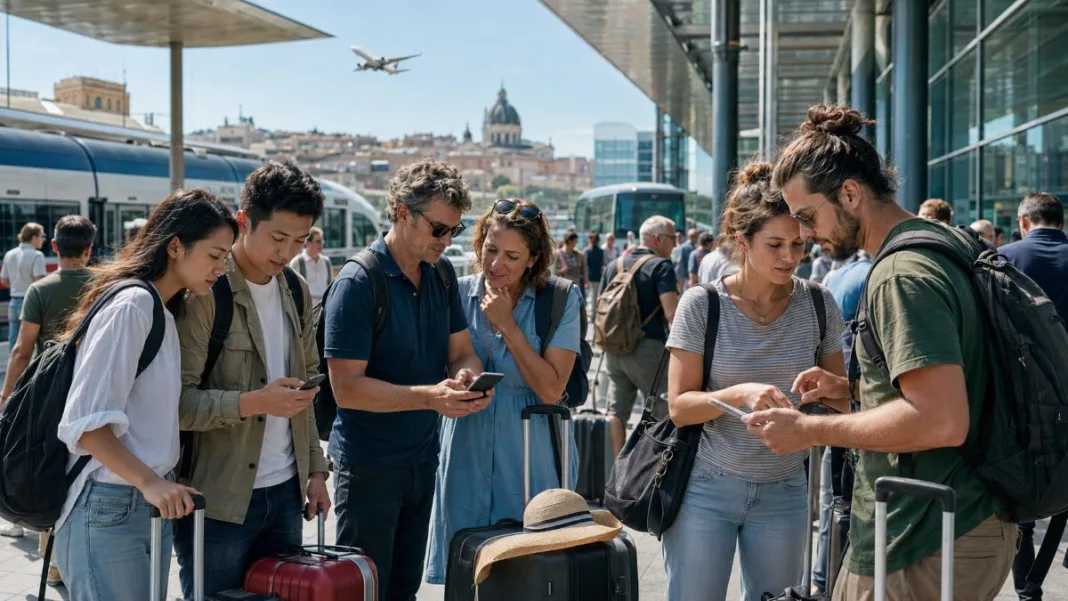
Image generated with Ai
Europe’s travel market is entering a more unpredictable pricing cycle. Italy, Greece, Spain, France and Germany are all facing pressure as airfares, hotel rates, fuel, transport and package holidays see a sharp increase, but not in one direction or at the same speed. And here’s why it matters for travellers, the cheapest flight can now lead to an expensive holiday once accommodation, transfers and local transport are added.
In fact, the EU Tourism Platform reported that 52% of 64 surveyed tour operators, wholesalers, online travel agencies and destination management companies faced greater uncertainty over prices for flights, hotels and coaches. Another galloping 62% reported weaker demand, added with another 29% reporting that travellers were already switching destinations within Europe. Some businesses were adjusting prices or postponing trips into 2027.
The key takeaway is simple: Europe tourism costs are not rising evenly. They are becoming harder to predict.
Europe Tourism Prices Shift Fast as Airfares Become More Volatile
Air travel shows how quickly Europe holiday costs can change.
Advertisement
Advertisement
Eurostat reported that EU passenger air-transport prices were 4.7% lower year on year in April 2026, then jumped 8.1% in May before settling at 3.1% growth in June. International air travel prices were 4.5% higher in June.
Those swings matter more than a single inflation figure.
Travellers do not buy an “average European airfare”. They buy one seat, on one route, for one date. A change in departure day, airport or destination can therefore produce a very different final price.
This gives flexible travellers a real advantage. Moving a trip by several days or choosing another airport can sometimes save more than switching hotels.
Advertisement
Advertisement
Italy Tourism Costs Feel Pressure From Energy and Transport
Italy’s tourism cost story is less about one dramatic jump and more about the operating costs sitting beneath hotels, restaurants and transport.
Istat recorded annual inflation of 2.9% in July 2026. Regulated energy prices, however, rose 14.8%, while non-regulated energy remained 11.4% higher. Transport-related services also increased.
These increases can work their way through the visitor economy.
They can affect:
- hotel operating costs;
- restaurant expenses;
- airport transfers;
- guided tours;
- local transport;
- packaged itineraries.
Travellers may never see an obvious “energy surcharge”. Instead, the pressure can appear through higher room prices, fewer discounts or more expensive transport.
Italy shows why headline inflation alone cannot tell travellers what a holiday will actually cost.
Greece Airfares Rise While Travellers Watch Their Spending
Greece offers one of Europe’s strongest airfare signals.
Eurostat recorded Greek air-transport prices 15.1% higher year on year in June 2026, far above the EU average.
Tourism demand remained strong, but spending patterns tell a more nuanced story.
Bank of Greece data showed inbound travellers rising 15.4% in the first half of 2026, while tourism receipts increased 14.8% to about €8.8 billion. Average expenditure per trip slipped slightly.
That gap matters.
Travellers can absorb a higher flight price by cutting spending elsewhere. They may:
- stay fewer nights;
- choose a cheaper hotel;
- skip an excursion;
- eat out less;
- reduce shopping.
For Greece, the challenge is not simply attracting visitors. It is protecting the value generated by each trip when getting there becomes more expensive.
Spain Hotel Prices Climb Faster Than Overnight Demand
Spain shows a different form of tourism price pressure.
INE reported more than 44.8 million hotel overnight stays in July 2026, only 0.3% higher than a year earlier. Yet Spain’s Hotel Price Index increased 5.9%, while the average daily room rate reached approximately €156.90, up 6.8%.
| Spain hotel indicator | July 2026 |
|---|---|
| Overnight-stay growth | +0.3% |
| Hotel Price Index | +5.9% |
| Average daily rate | About €156.90 |
| ADR growth | +6.8% |
The figures reveal something important: hotel pricing strengthened much faster than tourism volume.
That may benefit hotel revenue, but it puts pressure on travellers and tour operators assembling complete holiday packages.
A low-cost flight to Spain may therefore lose much of its advantage when accommodation, airport transfers and local transport are added.
France Shows Why Headline Inflation Can Hide Holiday Costs
France demonstrates why national inflation is a poor shortcut for measuring travel affordability.
Overall consumer inflation stood at 2.1% in July, but accommodation services were 7.3% more expensive than a year earlier, according to INSEE. Energy prices also rose strongly. (INSEE)
For travellers, the lesson is practical.
A modest increase in airfare does not guarantee a modest increase in the total cost of visiting France. Hotels, fuel and regional transport can move much faster than headline inflation.
This becomes especially important for road trips and multi-city itineraries, where travellers pay repeatedly for transport and accommodation.
A compact city break may therefore offer better value than a long driving itinerary even when both begin with the same airfare.
Germany Package Holiday Prices Send a Strong Warning
Germany provides some of Europe’s clearest evidence of rapid travel repricing.
Destatis reported that package holidays were 5.6% more expensive in July 2026 than a year earlier.
Compared with June:
- international package holidays rose 12.6%;
- international flight tickets increased 7.1%;
- motor fuels climbed 11.2%.
(Destatis)
Germany also shows why travellers should avoid assuming that tourism demand alone causes price changes. Destatis linked part of the fuel increase to the end of a temporary fuel-tax reduction and wider energy-market conditions.
That distinction is important. Holiday prices can change because of tax policy, fuel markets, seasonality, aviation costs and demand at the same time.
Europe Travel Cost Comparison Shows Five Different Pressure Points
| Country | Main price pressure | What travellers should watch |
|---|---|---|
| Italy | Energy and transport | Hotel and ground-transport costs |
| Greece | Airfares | Flight price versus daily spending |
| Spain | Hotel rates | Accommodation during peak dates |
| France | Hotels, fuel and transport | Total itinerary cost |
| Germany | Packages, flights and fuel | Booking timing |
The comparison exposes the central trend.
There is no single “Europe tourism price”. Each destination has its own cost structure, and that structure can change quickly.
Smart Travellers Should Compare the Total Europe Holiday Cost
The best way to respond is to stop comparing trips by airfare alone.
Before booking, calculate:
- return flights;
- baggage fees;
- accommodation;
- airport transfers;
- rail or local transport;
- car hire and fuel;
- package prices;
- cancellation terms;
- daily spending.
A €40 cheaper flight can become the more expensive option if it lands far from the city or coincides with higher hotel rates.
Equally, a more expensive central hotel may reduce transport costs enough to deliver better overall value.
The cheapest individual booking is not always the cheapest complete trip.
Rising Europe Tourism Costs Could Change Where Travellers Go
Perhaps the most important signal is that 29% of surveyed tourism businesses are already seeing customers switch destinations within Europe.
That suggests price pressure may redistribute tourism rather than simply reduce it.
Travellers can move towards places offering:
- better-value hotels;
- shorter flights;
- cheaper rail links;
- lower ground-transport costs;
- stronger package deals.
Italy, Greece, Spain, France and Germany therefore point to a wider shift in European tourism.
The next competitive battle will not depend only on landmarks, beaches or visitor numbers. It will increasingly depend on total holiday value.
For travellers, the smartest question in 2026 is no longer simply, “Which European destination is cheapest?”
It is:
“Which destination gives me the best complete trip for the money I want to spend?”
In conclusion, Italy joins Greece and others as Europe tourism costs rise on airfares, hotels and package holidays because travel prices are moving unevenly across key destinations. Higher transport, fuel, energy and accommodation costs are feeding into the wider holiday budget, while operators face greater uncertainty over what they must charge. Spain shows stronger hotel pricing, France highlights accommodation pressure, Germany reflects package-holiday increases, and Greece combines higher airfares with tighter visitor spending. For travellers, the result is a more complex market where value depends on the entire trip. Comparing flights, hotels, transfers and daily expenses is now essential before booking carefully.
Advertisement
Advertisement