
China said President Donald Trump’s threat to launch “economic warfare” on Iran and its trading partners wouldn’t work, urging cool heads to prevail.
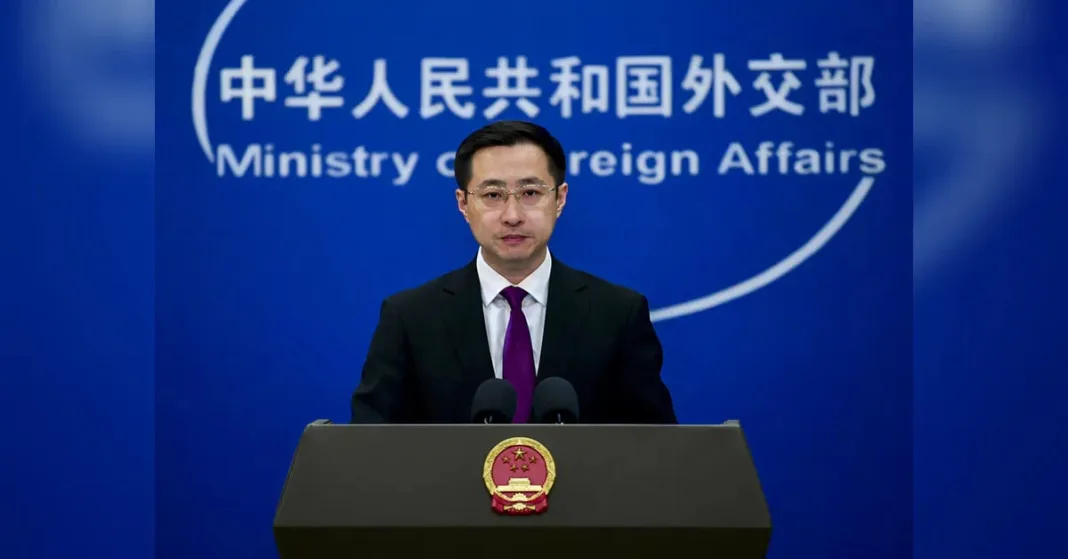
“Sanctions and pressure will not help resolve the issue,” Chinese Foreign Ministry spokesman Lin Jian told reporters at a regular news briefing in Beijing on Thursday. “China calls on relevant parties to take responsible measures and seek to solve the issue through diplomatic and political means.”
Lin was responding to a social media post from Trump outlining plans to isolate Iran and its trading partners. The US leader didn’t name other nations in his sights, but China, which buys more than 90% of Iran’s oil exports, is thought to be among them.
China was Iran’s second-largest trading partner in 2025, behind the United Arab Emirates, which this week cut all economic ties with Tehran after accusing it of firing ballistic missiles at UAE’s territory.
Beyond the economic impact, Trump’s threats risk further straining ties between Washington and Beijing ahead of his planned meeting with Chinese leader Xi Jinping next month.
China does not recognize unilateral sanctions, but its state-owned entities generally stay away from blacklisted oil. Its biggest state banks also have a history of complying with US sanctions against Iran, North Korea and even top officials in Hong Kong, in order to avoid losing access to the US dollar-clearing system.
Washington has already sanctioned some Chinese teapot refineries and firms since the US launched the war against Iran in late February. But so far, the US has stopped short of targeting the major Chinese banks that finance the trade.
In May, China ordered domestic companies not to comply with US sanctions on five refiners, while its biggest banks were caught between Beijing’s directive and the risk of losing access to the US financial system.
Any future penalties on entities that facilitate China’s oil purchases from Iran would directly reduce Tehran’s oil revenues.
William Figueroa, an assistant professor of history and theory of international relations at the University of Groningen in the Netherlands, said sanctioning China is a “tricky business.”
“If the US simply re-imposes the previous sanction regime, which Chinese refineries have become expert at evading, it’s unlikely to have much effect, especially given Beijing’s official guidance not to cooperate with US sanctions,” he said.
China’s response to any fresh sanctions is expected to be low-key, he added.
“There may be some retaliatory measures, but most likely they will quietly adapt and find a new system, rather than completely give up on doing business in Iran,” said Figueroa.