
Private infrastructure companies are likely to invest ₹1,100 crore in the second phase of the ongoing Mukhyamantri Gram Parivahan Yojana to develop a network of modern bus stations in Uttar Pradesh (UP), as the state expands its public-private partnership model, UPSRTC officials said.
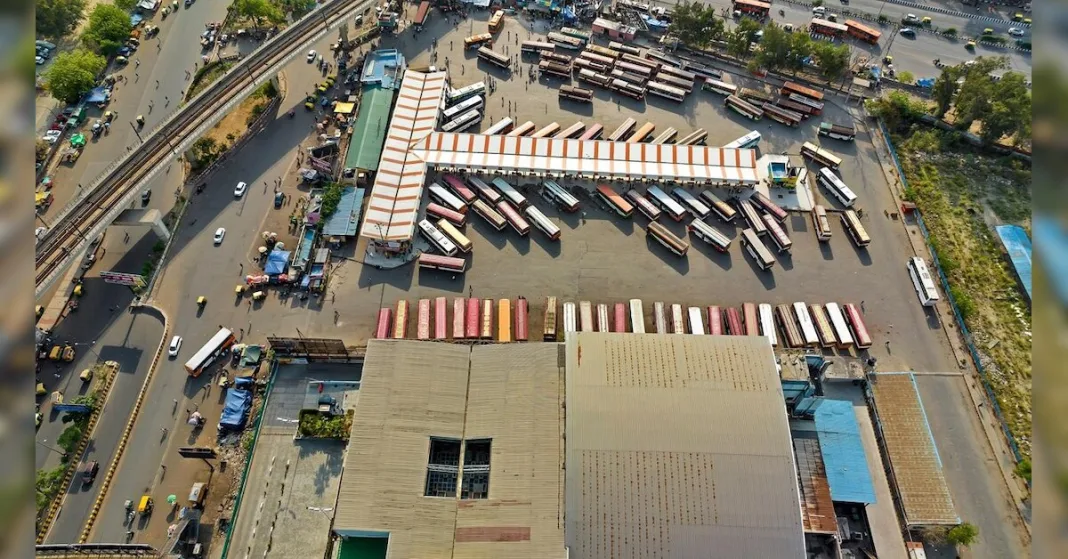
The Uttar Pradesh State Road Transport Corporation (UPSRTC) has floated fresh tenders for 18 modern bus terminals across Amethi, Pilibhit, Gonda, Balrampur, Unnao.
The proposed bus stations will be equipped with modern passenger amenities, while also accelerating economic and commercial activities in the respective cities and towns.
Earlier, state transport minister Daya Shankar Singh said the Yogi Adityanath-led state government is also aggressively promoting electric mobility to curb air pollution.
Electric buses are currently operating in 43 districts, and the services will be extended to all 75 districts in due course, Singh added.
Charging stations are also being set up in major cities while charging infrastructure is also being developed at bus depots, bus stations, and petrol pumps.
Operating an electric bus costs only a fraction of that of a diesel bus, making electric buses environmentally and economically sustainable despite higher upfront purchase cost.
UP also tops the national chart in terms of the highest number of electric vehicles across segments — two-wheelers, three-wheelers, buses.
Meanwhile, the state has expanded its fleet from 8,500 buses to over 14,500 across variants.
“We are taking a slew of measures to modernise the fleet. Every UPSRTC bus has been equipped with GPS tracking and panic buttons to enhance passenger safety, particularly for women,” Singh said.
Under the Mukhyamantri Gram Parivahan Yojana, the state aims to connect 12,200 villages with blocks, tehsils, and district headquarters through regular bus services. While around 1,100 buses are already operating, there are plans to add 10,000 more.
With a concession period of up to 90 years, the scheme entails private investments beyond the transport sector into retail, hotels, food courts, office spaces, multiplexes, and other commercial spaces, which augments the viability of the scheme.