
Published on August 4, 2026 |

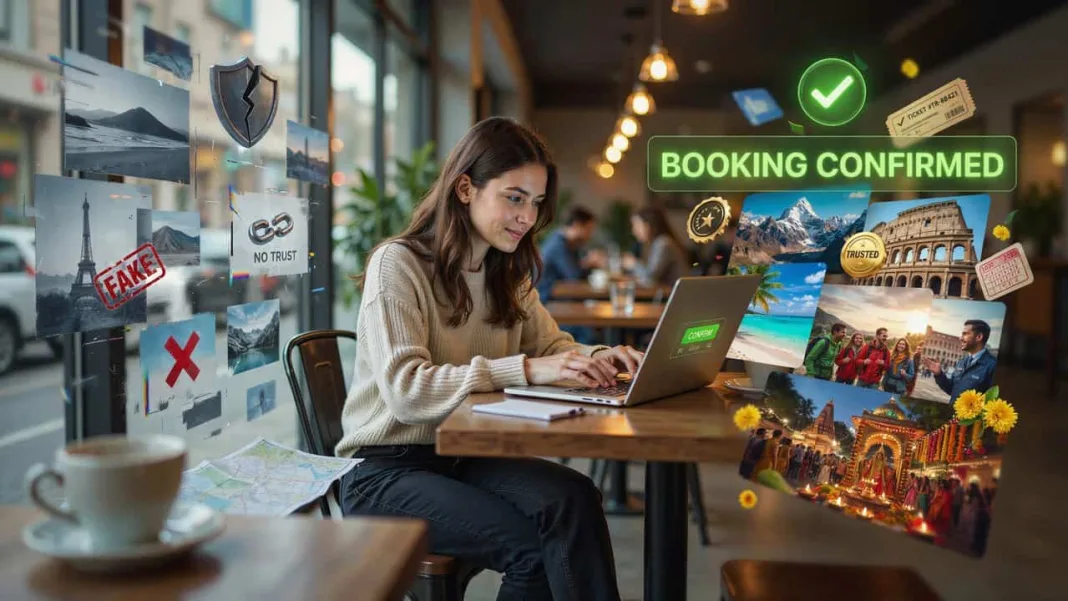
Image generated with Ai
Summary
- 72% value photos before booking travel experiences.
- 66% reject listings with poor-quality images.
- AI-generated images reduce traveller trust significantly.
- Authentic “wow” photos inspire more bookings.
- Trustworthy visuals increase booking confidence.
The latest research sheds light on the negative impact of poor photography on travel booking across the entire tourist sector. Most importantly, the researchers have found out that AI photography generates an enormous amount of distrust among tourists to the extent that they begin to doubt about the authenticity of the tour or experience. Given that competition becomes more intense day after day, the initial impression is getting more and more reliant on genuine photography instead of artificially processed photos. In this connection, travel providers who use blurred, outdated, and misleading pictures will lose their clients at the very first glance.
Advertisement
Advertisement
Travellers are making booking decisions faster than ever, and the quality of photographs has emerged as one of the strongest influences on whether a tour or travel experience secures a reservation. Fresh research from Bókun, a Tripadvisor company, reveals that authentic, high-quality images now play a bigger role in building traveller confidence than many operators may realise, while artificial intelligence-generated visuals risk undermining trust rather than strengthening it.
The findings, based on a survey of 2,000 adults across the UK and Italy, show that images have become a critical element of the online booking journey. In an increasingly visual digital environment where travellers scroll through countless experiences in seconds, compelling photography can encourage engagement, while poor imagery can quickly drive potential customers away.
The research also comes as generative AI becomes more common across travel marketing, highlighting that consumers continue to value authenticity over digitally created perfection.
Travellers Are Judging Experiences Before Reading the Details
The study demonstrates that photographs are no longer simply supporting content on booking platforms. Instead, they are often the first and most influential factor in determining whether travellers continue exploring a listing.
According to the findings, 72% of travellers consider photographs important when booking travel experiences online, while 37% say images are among the leading reasons they click through to learn more about a tour or activity.
Perhaps even more significantly, 57% admitted they would be tempted to book an experience primarily because the photographs looked appealing, even before fully considering the written description or other details.
This reflects the growing importance of visual storytelling across the travel sector. With travellers increasingly inspired by social media, digital content and visually driven platforms, strong imagery has become central to capturing attention in a highly competitive marketplace.
Rather than functioning purely as promotional material, photographs are increasingly acting as the first demonstration of quality, professionalism and authenticity.
Poor Photography Continues to Drive Travellers Away
While impressive imagery encourages bookings, the research also highlights how quickly poor-quality photographs can damage consumer confidence.
Among those surveyed, 66% said poor-quality images would discourage them from booking a tour or travel experience.
The same proportion, 66%, also said that having too few photographs reduced their willingness to make a reservation, suggesting that travellers expect comprehensive visual information before committing to an experience.
Other common concerns included:
- 37% said outdated photographs would discourage bookings.
- 34% said images that failed to accurately reflect the written description reduced confidence.
- 29% disliked seeing multiple photographs taken from the same viewpoint, preferring a broader visual representation of the experience.
These findings indicate that travellers are looking for realistic, varied and informative imagery that accurately portrays what they can expect.
For operators, this means that simply uploading a handful of attractive pictures is no longer enough. Travellers increasingly expect multiple perspectives, recent photographs and images that genuinely reflect the experience being offered.
Authenticity Remains Essential in the AI Era
The rapid growth of artificial intelligence has transformed content creation across numerous industries, but Bókun’s research suggests travellers remain cautious when AI-generated imagery is used to promote tourism experiences.
According to the survey, 72% of respondents said AI-generated images would make them less likely to book a travel tour or experience.
The findings suggest that consumers continue to associate authentic photography with transparency and credibility, particularly when making travel purchases that often involve significant financial commitments.
As AI tools become increasingly sophisticated, travellers appear to value genuine photographs that accurately capture destinations, activities and people over artificially enhanced visuals.
For travel operators, the message is clear: while technology can support marketing efforts, replacing authentic imagery with AI-generated alternatives may reduce rather than increase consumer confidence.
Photography Plays a Central Role in Building Trust
Trust remains one of the most valuable assets for tour operators, especially when selling experiences online where travellers cannot physically inspect the product before purchasing.
The research found that 73% of travellers consider listings featuring photographs to be more trustworthy than those without images.
Meanwhile, 67% said poor-quality photographs made them question whether a tour or experience was legitimate.
These results reinforce that photography functions as far more than decoration. Images help reassure prospective customers that experiences are genuine, professionally operated and accurately represented.
Clear, well-composed photographs showing real participants, destinations and activities allow travellers to visualise what they will receive, reducing uncertainty during the booking process.
In contrast, poor lighting, blurry images or outdated content may unintentionally signal poor service standards or inaccurate advertising.
The Images That Inspire Bookings Most Effectively
Bókun also examined which types of photographs are most likely to convert interest into confirmed bookings.
The survey identified several image styles that consistently perform best among travellers.
Leading the rankings were “wow” landscape photographs, with 50% of respondents saying spectacular scenery or destination images were most likely to encourage a booking.
Closely following were photographs showing the experience in action, selected by 49% of travellers. These images help customers understand exactly what they can expect during the activity.
Meanwhile, 45% preferred photographs showing people genuinely enjoying the experience, adding an emotional dimension that helps potential customers imagine themselves taking part.
Other influential visuals included:
- 40% valued photographs featuring well-known landmarks or attractions.
- 15% appreciated seeing guides or hosts, helping create a more personal connection before arrival.
Together, these findings illustrate that travellers respond most positively to authentic moments rather than staged promotional imagery.
Visual Storytelling Is Becoming a Competitive Advantage
Commenting on the research, Samuel Jefferies, Senior Growth Marketing Manager at Bókun, said the human brain processes images within milliseconds, making photography one of the fastest ways to capture attention in today’s digital environment.
He explained that as travellers increasingly seek memorable experiences and visually inspiring destinations, photographs have evolved beyond simple marketing assets into powerful storytelling tools.
According to Jefferies, compelling images not only attract attention but also establish credibility, inspire confidence and ultimately encourage bookings.
The research supports the growing industry recognition that visual content can significantly influence consumer behaviour long before travellers compare prices, read detailed itineraries or examine customer reviews.
Global Photo Competition Celebrates Authentic Travel Experiences
Building on the research findings, Bókun has launched the second edition of its global photography competition designed specifically for tour operators.
The initiative invites operators worldwide to submit their strongest photographs captured during real tours and experiences, celebrating authentic travel moments rather than artificially created imagery.
The competition seeks to identify some of the world’s most remarkable travel experiences through genuine photography, reinforcing the company’s message that authenticity remains one of the industry’s greatest marketing strengths.
An expert judging panel will select six winners across three competition categories, with successful entrants receiving prizes intended to help grow their businesses while showcasing their experiences to a global audience.
Rather than focusing on heavily edited or AI-generated visuals, the competition aims to highlight the power of genuine photography in communicating memorable travel experiences.
Authentic Photography Is Becoming an Essential Investment
The research sends a clear message to the global travel industry: high-quality photography is no longer an optional marketing enhancement but an essential commercial asset.
As travellers become increasingly selective and visually driven, authentic images are proving capable of shaping first impressions, building trust and influencing purchasing decisions within moments.
At the same time, the findings suggest that consumers remain sceptical of AI-generated imagery when evaluating real-world travel experiences, preferring photographs that accurately reflect destinations, activities and service quality.
For tour operators, investing in fresh, varied and authentic photography may therefore represent one of the most effective ways to strengthen online visibility, improve customer confidence and increase bookings in an increasingly competitive marketplace.
With travellers making decisions in just seconds, the difference between securing a booking and losing a customer may ultimately come down to a single photograph.
The primary cause of declining travel bookings is the growing use of poor-quality, outdated or misleading photographs that fail to reflect real experiences. Additionally, AI-generated images have heightened consumer scepticism because travellers increasingly value authenticity over digital perfection. The answer is straightforward: operators should invest in genuine, high-resolution photographs that accurately showcase destinations, activities and customer experiences from multiple perspectives. The reason is equally clear. Authentic visuals build trust, reduce uncertainty and help travellers understand exactly what they are booking. When confidence increases, engagement improves, conversion rates rise and businesses become more competitive in an increasingly visual travel marketplace.
Samuel Jefferies, Senior Growth Marketing Manager at Bókun, comments: “Studies show that the human brain processes images in a matter of milliseconds and in a world of endless scrolling, our research highlights that one unforgettable photo can be all it takes to convert travel dreams into booked experiences.
“With travel choices increasingly influenced by experiences that offer shareable moments and ‘travel envy’ aesthetics, photos are no longer just a marketing tool – they have become one of the most powerful forms of storytelling. Ultimately, images don’t just capture attention; they build trust and drive bookings.
“That’s why this summer, we’re on a mission to celebrate the power of real-life experiences captured through the lens of tour operators around the world.
“For the second year running, we have launched our global photo competition, inviting tour operators from all over the world to submit their most jaw-dropping photos, captured on their tours and experiences.
“For us, this is more than a competition; we’re offering tour operators the chance to invest in their future and drive their booking potential through the power of a single photo.”
The research confirms that photography has become one of the travel industry’s most influential marketing assets. While authentic images strengthen credibility and encourage bookings, poor visuals and AI-generated content can quickly undermine consumer trust. As travellers continue making rapid booking decisions online, operators that consistently present genuine, engaging and up-to-date photography are more likely to stand out in an increasingly crowded marketplace. Ultimately, successful travel marketing depends not only on offering memorable experiences but also on presenting them honestly. In today’s digital landscape, a single authentic photograph can inspire confidence, create emotional connections and convert curiosity into confirmed bookings.
Advertisement
Advertisement