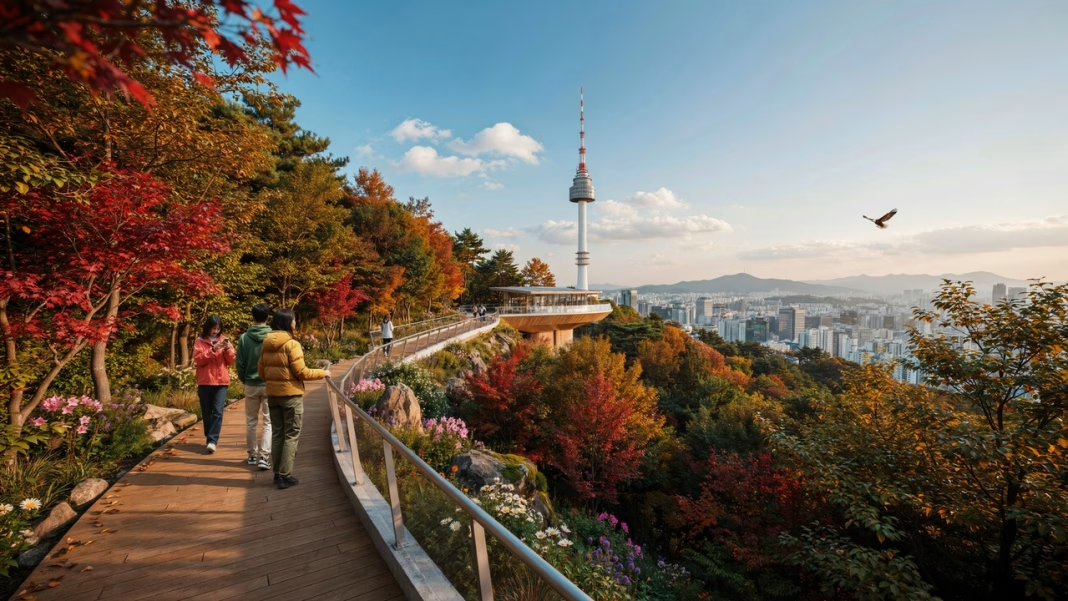


South Korea’s capital, Seoul, has announced a major transformation of Namsan Mountain, committing 19.2 billion won to ecological restoration, improved walking routes and new tourism facilities through 2031. According to Seoul Metropolitan Government’s announcement on 12 November 2026, the urban regeneration programme covers approximately 3.11 million square metres around Namsan, Myeong-dong and Yejang Park. The initiative includes 15 projects designed to protect forests, improve visitor access and create new recreational experiences. A panoramic observation deck, upgraded viewpoints and better pedestrian connections are among the main proposals, while a separate gondola project remains delayed by legal proceedings.
Seoul Unveils Major Namsan Tourism Plan to Transform Its Landmark Mountain
Seoul is preparing an extensive programme to improve one of South Korea’s best-known natural and cultural attractions. Namsan Mountain, located near the centre of the capital, attracts people interested in panoramic views, wooded walking trails, cultural landmarks and outdoor recreation.
Advertisement
Advertisement
The newly announced development programme aims to improve the visitor experience while protecting the mountain’s natural environment. Rather than concentrating exclusively on additional attractions, the city intends to restore damaged green spaces and provide better access to existing scenic locations.
The plan covers approximately 3.11 million square metres, extending beyond the mountain itself into surrounding urban districts. Myeong-dong and Yejang Park are important parts of the regeneration area because they provide connections between central Seoul and Namsan.
Seoul Metropolitan Government has organised the programme around four principal areas: urban vitality, connectivity, ecological recovery and visitor experiences.
Together, these areas contain 15 projects. Eight priority projects will receive a planned investment of 19.2 billion won through 2031.
Advertisement
Advertisement
The funding is intended to establish the main infrastructure needed for the wider transformation. It does not mean that every proposed facility will be completed immediately or that the funding applies equally to all 15 projects.
For international tourists, the main changes concern access to Namsan, opportunities to enjoy the mountain’s scenery and improvements to public areas connecting the destination with nearby neighbourhoods.
Advertisement
Advertisement
The programme also gives Seoul a way to strengthen nature-based tourism without treating the mountain solely as a commercial attraction.
What Does Seoul’s 19.2 Billion Won Namsan Investment Include?
The 19.2 billion won programme provides funding for eight priority urban regeneration projects, including forest restoration, viewpoints, pedestrian connections and recreational infrastructure.
These projects are intended to establish the foundations for the broader Namsan development strategy.
The investment also reflects a distinction between repairing existing environmental damage and adding facilities that could improve visitor enjoyment.
Advertisement
Advertisement
Eight Priority Projects in the Namsan Development Programme
| Priority project | Planned improvement |
|---|---|
| Ecological restoration | Repair damaged woodland and vegetation |
| Panoramic observation facilities | Develop Namsan Oreum 360 and improve viewpoints |
| Pedestrian accessibility | Improve connections between nearby districts and Namsan |
| Trail entrance improvements | Upgrade access points and surrounding public spaces |
| Gondola-area management | Prepare improvements around the proposed transport corridor |
| Forest loop trail | Develop a more connected woodland walking experience |
| Seasonal landscape improvements | Enhance northern and southern circulation routes |
| Sustainable Namsan planning | Support long-term ecological and recreational management |
The projects are connected, but each serves a different purpose.
Forest restoration addresses the health of the mountain’s natural environment. Improved viewpoints are intended to make sightseeing more enjoyable. Pedestrian improvements aim to make it easier to reach Namsan from nearby urban areas.
The forest loop trail and seasonal landscape work will provide additional opportunities for walking and recreation.
Management of the proposed gondola corridor also forms part of the regeneration framework, although construction of the transport system remains suspended.
Seoul’s approach is therefore broader than building a single attraction. The investment covers different parts of the visitor journey, from arriving in the neighbourhood to exploring the mountain and enjoying its views.
Forest Restoration Becomes a Central Priority for Namsan Mountain
Protecting Namsan’s natural landscape is one of the most important elements of the regeneration programme.
Advertisement
Advertisement
Seoul intends to restore damaged forests and vegetation, improve wildlife habitats and reduce the ecological pressure caused by informal walking routes.
The mountain serves as an important green space in an otherwise densely developed urban environment.
Its wooded slopes offer residents and international visitors a contrast to the commercial streets, office buildings and shopping districts nearby.
However, frequent recreational use can create difficulties for natural areas when visitors leave established pathways.
Repeated walking over vegetation can damage plants, disturb the soil and gradually create informal routes through woodland.
Seoul plans to address these problems by managing trails that have developed without official authorisation.
Advertisement
Advertisement
Some unnecessary paths will be closed or combined with existing routes, allowing affected areas to recover.
The city also plans to improve habitats used by wildlife.
This work is important because ecological restoration involves more than planting trees or adding decorative gardens.
Healthy woodland depends on vegetation, soil conditions, suitable habitats and the ability of different species to survive within the landscape.
For visitors, the restoration programme could eventually create a more attractive natural environment.
However, some woodland areas may need protection from public access while restoration work takes place.
Advertisement
Advertisement
The city has not announced a universal closure schedule for Namsan’s walking routes as part of the programme.
Travellers should therefore check local notices rather than assume that the entire mountain will be affected at once.
Why Closing Unauthorised Trails Could Improve Namsan’s Natural Environment
One proposed measure involves restricting informal trails that have developed across the mountain.
These routes can appear convenient to walkers because they provide shortcuts between existing paths.
However, frequent use can damage vegetation and create new areas of exposed soil.
Seoul’s restoration strategy aims to concentrate recreational activity on suitable walking routes while allowing disturbed woodland to recover.
Advertisement
Advertisement
This does not mean the city intends to remove the mountain’s established network of public paths.
The objective is to organise access in a way that protects sensitive areas without eliminating opportunities for recreation.
The changes may also help visitors navigate the mountain more easily.
Clearer routes and better-defined entrances can reduce confusion, particularly for tourists who are unfamiliar with Namsan’s geography.
The city plans to improve walking infrastructure gradually, rather than treating every trail as a separate construction project.
For nature-loving tourists, this creates an opportunity to experience woodland surroundings while respecting environmental boundaries.
Advertisement
Advertisement
Visitors should remain on officially designated routes and observe signs identifying areas undergoing restoration.
The long-term success of the programme will depend partly on how effectively the city balances public access with ecological protection.
Namsan Oreum 360 Observation Deck Promises New Panoramic Views of Seoul
A proposed observation deck, provisionally named Namsan Oreum 360, is among the programme’s most prominent tourism developments.
The facility is planned for the mountain’s summit area and is intended to provide panoramic views across the South Korean capital.
Namsan already occupies an important place in Seoul’s sightseeing landscape.
The summit area is associated with N Seoul Tower, which attracts visitors seeking views of the city during the day and after sunset.
Advertisement
Advertisement
The proposed new observation deck would add another dedicated viewing space to the mountain’s visitor facilities.
Seoul also intends to improve eight existing scenic viewpoints.
These upgrades are designed to make different parts of the mountain more attractive for sightseeing and recreation.
The project is particularly relevant to travellers interested in photography, urban landscapes and outdoor experiences.
Views from Namsan provide a way to appreciate the scale of Seoul, where high-rise buildings, residential districts and historic neighbourhoods extend across the surrounding landscape.
The new deck is planned as part of the regeneration programme rather than presented as an attraction already available to visitors.
Advertisement
Advertisement
Seoul has not confirmed a specific public opening date, admission price or reservation system for Namsan Oreum 360.
Travellers should therefore distinguish between the planned facility and the observation opportunities that already exist around the summit.
Eight Existing Viewpoints Will Receive Improvements for Sightseeing
Alongside the new observation deck, Seoul plans to upgrade eight existing viewing locations around Namsan.
This part of the programme aims to improve the quality of the sightseeing experience without requiring every visitor to concentrate on one location.
The mountain offers views from different directions, and each viewpoint can provide a different perspective of the surrounding city.
Some visitors may prefer wide views of central Seoul, while others may be interested in quieter locations along woodland walking routes.
Advertisement
Advertisement
Improving several viewpoints could help distribute recreational activity more evenly around the mountain.
This is relevant because popular observation areas can become crowded, especially when visitors gather for photographs.
The city has not published a confirmed completion date for each of the eight viewpoint upgrades.
It has also not confirmed that all eight sites will offer identical facilities.
Visitors should therefore avoid assuming that every viewpoint will receive a new platform, commercial attraction or additional service.
The confirmed intention is to improve existing scenic locations as part of the wider Namsan tourism development programme.
Advertisement
Advertisement
For travellers who enjoy walking, the upgrades could make exploration of the mountain more rewarding by connecting outdoor recreation with different sightseeing opportunities.
Northern and Southern Namsan Walking Routes Set for Major Improvements
Seoul intends to improve the northern and southern circulation routes around Namsan Mountain.
The proposals include seasonal landscaping, recreational facilities and more comfortable spaces for visitors to rest.
These routes are important because they provide opportunities to explore Namsan without concentrating every visit on the summit.
Walking around the mountain allows visitors to experience woodland scenery, changing vegetation and views of nearby neighbourhoods.
The seasonal landscape programme is intended to strengthen this experience throughout the year.
Advertisement
Advertisement
South Korea’s distinct seasons give Namsan a changing appearance.
Spring brings flowering trees and new vegetation. Summer introduces dense greenery, while autumn is associated with colourful foliage. Winter provides a different view of the wooded slopes and surrounding city.
Seoul’s proposals seek to make these seasonal changes a stronger part of the walking experience.
The programme also includes improvements to recreational and rest facilities.
These additions could be particularly useful for visitors who prefer relaxed walks rather than strenuous climbs.
However, the city has not announced that every section will become step-free or suitable for all mobility needs.
Advertisement
Advertisement
Travellers should continue checking the accessibility of individual routes before visiting.
The planned work reflects an effort to make Namsan a destination for spending time outdoors, not merely a location to visit briefly for photographs.
Forest Loop Trail Could Create a More Connected Nature Tourism Experience
A forest loop trail is another important element of Seoul’s regeneration plans.
The proposed trail is intended to strengthen recreational connections across Namsan’s wooded areas.
For visitors, a connected walking route can make it easier to plan an outing that begins and ends near established access points.
Circular walks also offer opportunities to experience changing scenery without repeatedly using the same section of pathway.
Advertisement
Advertisement
The programme’s environmental objectives remain important to this development.
New or reorganised walking routes will need to respect areas identified for vegetation restoration and habitat protection.
Seoul has not confirmed the full length, detailed alignment or opening schedule of the proposed loop trail in the official information reviewed.
It would therefore be premature to describe it as a completed route or promise a particular walking duration.
The practical benefit lies in the city’s intention to create a more connected recreational environment.
Visitors interested in nature tourism may eventually have additional opportunities to explore the mountain through managed pathways.
Advertisement
Advertisement
Until the new arrangements are confirmed, travellers should use existing authorised routes and check official park information before beginning longer walks.
Myeong-dong and Yejang Park Will Receive Better Pedestrian Connections
Improving access between Myeong-dong, Yejang Park and Namsan is a central objective of the regeneration programme.
These locations occupy an important position in central Seoul’s visitor landscape.
Myeong-dong is widely associated with shopping, restaurants, beauty products and busy commercial streets.
Yejang Park provides a connection between the urban environment and the mountain.
Namsan offers a different experience through wooded landscapes, walking routes and sightseeing opportunities.
Advertisement
Advertisement
Seoul intends to improve the pedestrian environment linking these areas.
The work includes changes to walking infrastructure, public spaces and entrances that lead towards the mountain.
This is significant because a destination’s accessibility depends not only on the attraction itself but also on the journey required to reach it.
Visitors unfamiliar with Seoul may find it easier to explore nearby attractions when routes are clearly organised.
Improved connections could also help tourists combine shopping and sightseeing within one neighbourhood visit.
The city has identified the surrounding urban areas as part of its regeneration strategy, rather than treating the mountain as an isolated attraction.
Advertisement
Advertisement
For local businesses, more convenient walking connections may create opportunities for visitors to explore additional streets and neighbourhoods.
However, no official projection establishes how much spending or visitor activity these improvements will generate.
How Will Namsan’s Proposed Gondola Improve Accessibility?
Seoul’s wider development strategy includes a proposed public gondola connecting Yejang Park, near Myeong-dong Station, with the summit area of Namsan Mountain.
The planned route is approximately 832 metres long.
The gondola is intended to offer an alternative way to reach the mountain, particularly for people who find steep walking routes difficult.
Potential users include wheelchair users, older visitors, families travelling with pushchairs and people with limited mobility.
Advertisement
Advertisement
The city has identified the mountain’s steep terrain and the inconvenience of existing transport connections as reasons for pursuing the project.
Official city communications have described a planned system capable of carrying up to approximately 2,000 passengers per hour.
This is a proposed transport capacity, not an actual operating figure.
The gondola would provide a connection between the lower urban area and the mountain’s summit if the project receives the approvals needed to proceed.
However, construction is currently suspended because of legal proceedings concerning changes to the city’s land-use and management arrangements.
As a result, travellers cannot treat the proposed gondola as an available transport option.
Advertisement
Advertisement
The regeneration programme includes work related to managing the surrounding gondola area, but this does not establish that construction has resumed.
No confirmed public opening date is available under the current project status.
Legal Dispute Leaves Namsan Gondola Construction Suspended
The proposed gondola is one of the most complicated elements of Seoul’s Namsan development strategy.
Construction has been suspended amid litigation concerning changes to the city management plan.
The dispute concerns the legal and planning arrangements required for the project.
Seoul Metropolitan Government has continued to support the gondola, arguing that an additional public transport option is necessary to improve access to the summit.
Advertisement
Advertisement
The city has also pursued changes to regulations governing transport infrastructure within urban natural park zones.
Such changes are relevant because the proposed system requires structures that must comply with the applicable planning rules.
The legal proceedings and regulatory process create uncertainty over the project’s eventual construction schedule.
Seoul has not announced a confirmed date for the resumption of work.
It has also not established a reliable opening timetable that travellers can use for future holiday planning.
The distinction matters for tourism reporting.
Advertisement
Advertisement
An approved regeneration strategy does not automatically resolve a separate dispute over transport infrastructure.
Other components of the Namsan programme can be planned around the mountain’s recreational and environmental needs, while the gondola remains subject to its own legal and administrative requirements.
Visitors should therefore consider the gondola a proposed future facility, not an attraction that is guaranteed to open within a particular travel season.
Seoul Wants Gondola Revenue to Support Long-Term Ecological Restoration
The proposed gondola has another role within Seoul’s wider environmental strategy.
If the system becomes operational, the city intends to direct its operating revenue into a dedicated fund supporting Namsan.
The money would be used for ecological restoration and improvements to recreational spaces.
Advertisement
Advertisement
This approach is designed to connect visitor transport with environmental management.
Rather than treating the gondola only as a means of carrying passengers, Seoul wants the facility to contribute financially to the mountain’s upkeep.
Potential uses include maintaining natural areas and supporting projects that improve public recreation.
However, the financial arrangement remains conditional on the gondola entering operation.
No revenue is currently being generated by the proposed system.
The city has not established a confirmed annual income figure for the future service in the official information considered for this report.
Advertisement
Advertisement
It would therefore be inaccurate to describe anticipated gondola earnings as money already available for restoration projects.
For travellers, the proposed reinvestment model is important because it indicates how Seoul wants tourism infrastructure to contribute to environmental protection.
The success of that approach will depend on the project’s legal outcome, actual operations and the management of any future revenue.
Namsan’s Urban Regeneration Could Benefit Nearby Seoul Neighbourhoods
The Namsan programme extends into neighbourhoods surrounding the mountain.
Seoul’s earlier planning approval identified Hoehyeon-dong, Pil-dong and Jangchung-dong among areas that could benefit from stronger connections with Namsan.
These neighbourhoods provide a mixture of residential streets, commercial activity and access to central Seoul.
Advertisement
Advertisement
The regeneration strategy aims to encourage visitors to experience more of the surrounding urban environment.
This is relevant because major tourism landmarks can attract large numbers of visitors without necessarily distributing their activity across nearby districts.
Better pedestrian connections and public spaces could make it easier for people to explore local streets before or after visiting the mountain.
Restaurants, cafés and shops may benefit if visitors choose to spend additional time nearby.
However, those potential economic effects should not be treated as guaranteed outcomes.
Seoul has not published a confirmed revenue forecast for individual businesses arising from the announced works.
Advertisement
Advertisement
The programme’s wider objective is to make Namsan an important recreational and tourism centre while strengthening the surrounding neighbourhoods.
Its eventual impact will depend on construction, visitor behaviour and the quality of connections created between the mountain and adjoining districts.
Why Namsan Is Important to South Korea’s International Tourism Appeal
Namsan is one of Seoul’s most recognisable destinations because it combines nature, urban scenery and cultural significance in one location.
N Seoul Tower stands on the mountain and provides an identifiable landmark in the capital’s skyline.
The tower has served as both a communications structure and a visitor attraction.
Today, it is particularly associated with panoramic views, evening sightseeing and photographs of Seoul.
Advertisement
Advertisement
The wider mountain offers experiences that differ from the city’s commercial districts.
Visitors can explore wooded paths, discover scenic locations and enjoy open-air recreation close to central Seoul.
This variety makes Namsan relevant to several types of traveller.
First-time visitors may be attracted by N Seoul Tower, while returning tourists may prefer quieter woodland routes or different viewpoints.
Families may be interested in outdoor recreation, and photographers can explore changing views of the city.
The regeneration programme recognises these different visitor interests.
Advertisement
Advertisement
Its combination of environmental protection, walking infrastructure and observation facilities aims to improve the destination without removing its natural character.
For international tourism, Namsan provides an example of how a major city can offer accessible outdoor experiences alongside cultural and commercial attractions.
Sustainable Tourism Becomes a Major Part of Seoul’s Destination Strategy
The Namsan plan places ecological restoration at the centre of a tourism development programme.
This approach is important because increasing visitor access and protecting natural environments can create competing demands.
More people visiting a green space may increase the need for clear pathways, rest areas and maintenance.
At the same time, natural areas require protection from damage caused by excessive or poorly managed use.
Advertisement
Advertisement
Seoul’s programme attempts to address both needs.
The city intends to restore forests, regulate informal pathways and improve existing visitor infrastructure.
It also proposes new scenic facilities that could make the mountain more attractive to tourists.
The challenge will be delivering these changes without creating unnecessary environmental pressure.
For example, observation areas and walking routes must be managed carefully to avoid damaging nearby habitats.
Similarly, proposed transport facilities require attention to planning rules and environmental conditions.
Advertisement
Advertisement
The gondola dispute demonstrates that infrastructure proposals can face legal and regulatory obstacles even when they are presented as ways to improve accessibility.
The broader strategy is therefore not simply about increasing tourism numbers.
It concerns the management of a valuable urban landscape that serves residents, wildlife and international visitors.
Why This Matters
Seoul’s Namsan regeneration programme matters because it combines destination development with efforts to protect an important natural environment.
For travellers, the proposed improvements could create more comfortable walking experiences, additional observation opportunities and clearer connections between Namsan and nearby neighbourhoods.
The restoration work is also relevant to visitors who value green spaces and outdoor recreation.
Advertisement
Advertisement
By repairing damaged woodland and managing informal trails, Seoul intends to preserve the landscape that makes the mountain attractive.
For people with limited mobility, the proposed gondola could eventually offer another way to reach the summit.
However, legal proceedings mean that this particular benefit is not yet available.
From a tourism industry perspective, the programme demonstrates how investment in public spaces can form part of a destination’s wider visitor strategy.
The improvements may encourage tourists to explore different parts of central Seoul rather than concentrating exclusively on a single landmark.
The wider economic effects remain uncertain.
Advertisement
Advertisement
No official evidence establishes that the programme will deliver a particular increase in arrivals, visitor spending or hotel bookings.
The confirmed development is the city’s planned investment in eight priority projects through 2031.
Its significance will ultimately depend on how effectively Seoul completes the work while protecting Namsan’s ecological character.
What Travellers Should Know Before Visiting Namsan Mountain
Travellers planning a visit to Namsan should understand that the announced changes form part of a multi-year regeneration programme. The new observation deck, improved viewpoints and upgraded pedestrian facilities are planned developments, not attractions that are already fully available.
Before Visiting Namsan
- Location: Namsan Mountain is in central Seoul, South Korea, near Myeong-dong and several other established visitor districts.
- Main attraction: N Seoul Tower remains an established landmark on the mountain.
- New observation deck: Namsan Oreum 360 is a proposed facility, with no confirmed public opening date in the current announcement.
- Walking routes: Visitors should use designated pathways and observe notices concerning restoration work.
- Gondola: The proposed public gondola is not operating, and its construction remains suspended.
- Accessibility: Travellers with mobility needs should check the suitability of individual routes and currently available transport arrangements.
- Admission and bookings: No confirmed price or reservation system has been announced for the proposed observation deck.
- Construction: Individual improvements may be introduced at different stages, so visitors should check local information before travelling.
Practical Travel Planning
Visitors can combine Namsan with other central Seoul attractions, including shopping and dining in Myeong-dong.
However, travelling on foot towards the mountain can involve inclines and steps, depending on the chosen route.
Advertisement
Advertisement
Comfortable footwear is advisable for those intending to explore woodland pathways.
Travellers should also consider seasonal weather, particularly when planning longer outdoor walks.
The announced programme does not establish that all routes will remain unchanged during future restoration or construction work.
Visitors should check Seoul Metropolitan Government’s park information and current public transport guidance before their trip.
For travellers who require step-free access, the distinction between existing accessible facilities and proposed improvements is especially important.
What Happens Next for Seoul’s Namsan Regeneration Programme?
Seoul intends to implement the eight priority projects progressively through 2031.
Advertisement
Advertisement
The programme builds on earlier planning decisions and establishes a broader framework for ecological protection and urban regeneration.
The city’s planning committee approved an earlier version of the Namsan regeneration proposal on 20 May 2026.
That earlier stage identified the same four broad development areas and 15 projects.
The November announcement provides an updated investment framework of 19.2 billion won across the priority projects.
The revised plan also places attention on the forest restoration programme, observation facilities and connections between Namsan and nearby districts.
Not every project has a confirmed individual construction or opening schedule.
Advertisement
Advertisement
Travellers should therefore expect a phased programme rather than a single date on which all the improvements become available.
The proposed gondola remains a separate area of uncertainty because its progress depends on legal and regulatory developments.
Seoul’s environmental and recreational improvements will be important indicators of how the overall regeneration strategy develops.
The city has set out its intentions, but the final visitor experience will depend on implementation.
Frequently Asked Questions About Namsan Tourism Development
How much is Seoul investing in Namsan Mountain?
Seoul Metropolitan Government plans to invest 19.2 billion South Korean won in eight priority regeneration projects through 2031. The wider programme includes 15 projects covering ecological restoration, accessibility, urban vitality and visitor experiences.
What new attractions are planned for Namsan?
The proposals include a panoramic observation deck called Namsan Oreum 360, improvements to eight existing viewpoints, upgraded walking routes and recreational facilities. These developments are planned rather than confirmed as completed.
Advertisement
Advertisement
When will the Namsan gondola open?
No confirmed public opening date is available. Construction remains suspended because of legal proceedings related to the city’s planning arrangements. Seoul is also pursuing regulatory changes connected to the project.
Will Namsan’s forests be restored?
Yes. Forest restoration is a major part of the regeneration strategy. The city plans to repair damaged vegetation, improve wildlife habitats and manage unauthorised pathways to reduce environmental damage.
Can tourists still visit N Seoul Tower?
N Seoul Tower is an established tourist attraction on Namsan Mountain. The regeneration announcement does not establish a general closure of the tower. Visitors should check current operating information and any local access notices before travelling.
Seoul’s Namsan Transformation Places Nature at the Heart of Future Tourism
Seoul’s latest regeneration programme introduces a long-term strategy for improving Namsan Mountain while protecting the natural qualities that make it an important destination.
The planned investment covers woodland restoration, observation facilities, walking routes and pedestrian connections linking the mountain with central Seoul.
The proposed Namsan Oreum 360 observation deck and upgrades to eight existing viewpoints could provide new ways to enjoy the city’s skyline.
Advertisement
Advertisement
Improved northern and southern walking routes may also make Namsan more comfortable for residents and international visitors seeking outdoor recreation.
At the same time, the city intends to repair damaged vegetation and protect wildlife habitats, recognising that the mountain’s environmental health is central to its tourism appeal.
The gondola remains an unresolved part of the wider strategy, with construction suspended and no confirmed opening date.
For South Korea’s tourism industry, the programme highlights Seoul’s ambition to strengthen nature-based experiences within its urban visitor economy.
The central objective is clear: by 2031, Seoul intends to establish stronger foundations for a Namsan destination where ecological protection, public recreation and international tourism can coexist.