

County Fermanagh anchors a sweeping regional economic transformation across Northern Ireland that aims to distribute over £2 billion in annual tourism revenue far beyond Belfast by 2035. Joined by County Tyrone, County Down, and County Londonderry, this western lakeland hub is redefining rural prosperity through a £45 million investment in zero-emission green hydrogen ferries, electric boat charging docks, and integrated blue-way cycling networks. Local communities across the loughs, the wild Atlantic coastline, and Strangford Lough’s marine reserve are successfully leveraging cold-water wellness retreats, dark-sky astro-tourism, and traceable seafood trails to extend the traditional visitor season by eleven weeks.
How Does County Fermanagh Harness Its Lakelands and Inland Waterway Nexus to Drive Sustainable Growth in Northern Ireland?
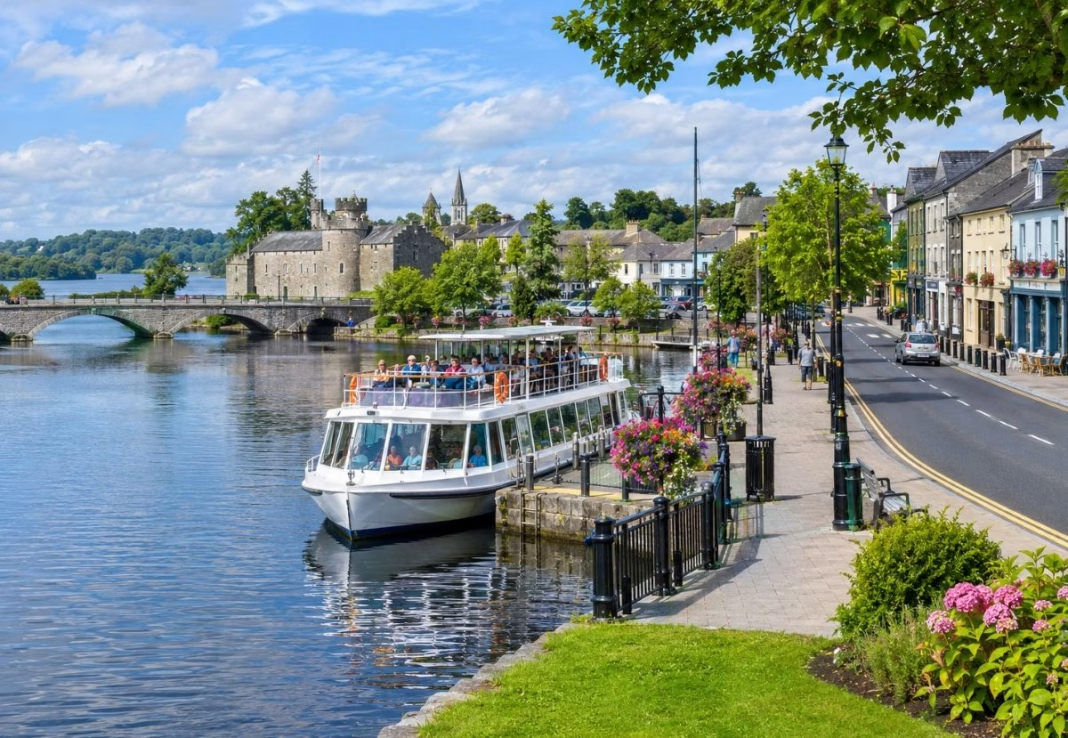
Although landlocked in the traditional geographical sense, County Fermanagh serves as Northern Ireland’s premier aquatic tourism anchor through the expansive Lough Erne system and the historic Shannon-Erne Waterway. This magnificent region features over 150 stunning islands, intricate subterranean waterways inside the Marble Arch Caves and Cuilcagh Lakelands UNESCO Global Geopark, and sacred monastic treasures on Devenish Island. Local operators currently champion luxury lakeland hospitality, eco-tourism, and high-energy water sports like kayaking, wakeboarding, cruising, and stand-up paddleboarding across the glittering loughs.
To combat seasonal fluctuations, County Fermanagh aggressively extends its visitor season by introducing innovative wellness retreats, floating saunas, and immersive cold-water immersion experiences. Furthermore, dark-sky lake tours and eco-friendly electric boating trails invite travelers to explore pristine waters without leaving a heavy carbon footprint. By positioning Lough Erne as an elite inland marine playground, County Fermanagh successfully bypasses its lack of a direct sea coast through brilliant ecological management. Ultimately, these visionary infrastructure investments attract high-spending international eco-tourists while safeguarding fragile aquatic habitats for future generations.
In What Ways Does County Londonderry Bridge Historic Urban Heritage with a Dynamic Atlantic Marine Frontier?
County Londonderry masterfully connects rich historic urban culture with a thrilling marine frontier along the wild Atlantic Ocean and the majestic River Foyle estuary. The historic city of Londonderry acts as the primary North-West economic powerhouse, flanked by dramatic coastal stretches around Castlerock and Downhill Strand alongside the rugged Sperrin Mountains. Traditional tourism frameworks here rely heavily on cultural heritage trails, community-led maritime festivals, and scenic coastal paths integrated seamlessly with the Causeway Coast and Glens boundary.
Advertisement
Advertisement
Economic diversification thrives on maritime heritage regeneration along the River Foyle, alongside burgeoning adventure sports like surf tourism at Downhill and Castlerock. Additionally, forward-thinking green port initiatives and immersive coastal eco-tours encourage adventurous visitors traveling between the Wild Atlantic Way and the Causeway Coastal Route to extend their stays. Consequently, these targeted regional developments boost overnight expenditures, foster vibrant community enterprise, and firmly establish the North-West as an essential, multifaceted destination for explorers.
Why Is County Down Regarded as the East Coast Marine and Strangford Lough Biodiversity Powerhouse?
Advertisement
Advertisement
County Down boasts Northern Ireland’s most extensive and biologically diverse marine territory, bordered by the crashing Irish Sea, Carlingford Lough, and Strangford Lough. Key geographical wonders include Strangford Lough, designated as Northern Ireland’s very first Marine Nature Reserve and a globally recognized Special Area of Conservation, alongside the majestic Mourne Mountains plunging directly into the sea at Newcastle. Furthermore, bustling maritime hubs like Portaferry, Killyleagh, and Strangford support thriving sailing, sea kayaking, and exhilarating marine wildlife watching excursions.
As a designated pilot zone for regenerative coastal tourism, County Down pioneers groundbreaking strategies by commercialising tidal-energy interpretation tourism that leverages Strangford Lough’s powerful natural currents. Additionally, accredited marine wildlife boat tours and exclusive coastal culinary trails directly connect local seafood harvesters with elite regional hospitality venues. These deliberate sustainable measures ensure that rapid economic expansion directly reinforces marine conservation, empowering local fishers and tourism networks to champion high-yield visitor experiences.
How Do County Tyrone’s Inland Waterways and Lakeland Gateways Contribute to the Broader Blue-Green Economy?
While primarily characterized by undulating green drumlins and the majestic Sperrin Mountains, County Tyrone harnesses vital river systems—specifically the River Blackwater, River Foyle tributaries, and southern shores of Lough Neagh—to anchor regional blue-green tourism webs. Core assets include expansive shoreline access to Lough Neagh, recognized widely as the largest freshwater lake across the British Isles, alongside prolific game angling rivers and rich bogland heritage. Traditional tourism here centers around peaceful eco-walking, immersive rural heritage, and world-class freshwater fishing.
Advertisement
Advertisement
Economic diversification in County Tyrone relies heavily on interconnected blue-way cycling and walking trails that bridge inland river basins directly to wider coastal networks. By cultivating specialized angling tourism, wetland conservation routes, and community-led heritage interpretation around Lough Neagh, County Tyrone converts its tranquil inland water bodies into vital economic contributors. Ultimately, these collaborative rural initiatives foster profound regional balance, ensuring inland communities share equitably in the broader economic prosperity generated across Northern Ireland.
Comparative Matrix: County Marine & Coastal Assets
| County | Primary Water/Marine Assets | Current Economic Pillar | Proposed Diversification & Growth Vector | Alignment with Government Frameworks |
| County Fermanagh | Lough Erne, Shannon-Erne Waterway, UNESCO Geopark | Lakeland cruising, hospitality, angling | Floating wellness retreats, electric-boat trails, dark-sky lough tourism | Embracing Outdoor Tourism Framework (Lakelands development) |
| County Londonderry | River Foyle Estuary, Atlantic Coast (Downhill/Castlerock) | Urban cultural tourism, coastal transit | Atlantic surf hubs, Foyle maritime heritage trails, green port tourism | Regional Development Strategy 2035 (North-West driver) |
| County Down | Strangford Lough, Carlingford Lough, Irish Sea Coastline | Sailing, seafood, coastal walking | Regenerative marine wildlife tourism, tidal energy interpretation, seafood trails | Marine Taskforce Conservation & Sustainable Tourism guidelines |
| County Tyrone | River Blackwater, Lough Neagh southern shores, bogland basins | Inland angling, rural heritage | Blue-way greenways, wetland eco-tours, community-led freshwater recreation | Programme for Government (Regional Balance & Rural Economy) |
What Are the Strategic Pillars Driving Economic Transformation Through Marine and Coastal Tourism?
To transition these four distinct counties from seasonal, low-yield operations into resilient year-round economic drivers, regional stakeholders enforce four robust structural pillars. First, regenerative marine stewardship shifts the focus from passive sightseeing toward high-value wildlife watching led by certified eco-guides and enhanced by digital augmented reality interpretations. Second, infrastructure modernization establishes active blue-ways connecting County Fermanagh’s lakelands directly to County Tyrone’s river basins, while pairing coastal paths in County Down with County Londonderry’s Atlantic edge.
Third, seasonality extension combats weather-dependent summer peaks by capitalizing on cold-water therapy, sauna-by-the-sea experiences, and dramatic winter storm-watching, complemented by authentic maritime culinary trails. Fourth, cross-border cooperation with the Republic of Ireland via the Atlantic Economic Corridor deepens regional product development. Together, these unified pillars target the Department for the Economy’s objective of surpassing £2 billion in annual visitor expenditure by 2035, securing lasting prosperity across Northern Ireland.
Strategic Economic Projections and Ambitious £2 Billion Visitor Expenditure Targets for Regional Northern Ireland Tourism by 2035
Advertisement
Advertisement
The Department for the Economy within Northern Ireland has successfully established a visionary baseline aimed at elevating total annual tourism expenditure past the significant £2 billion financial threshold by 2035. Recent econometric modelling underscores that driving regional dispersal away from Belfast is an absolute necessity to achieve this crucial milestone. Traditional financial leakage, where visitors historically concentrate roughly seventy percent of their spending exclusively inside Greater Belfast, is being actively countered by targeted regional development funds channeled directly into rural and coastal infrastructure projects.
By upgrading vital marine access points across County Fermanagh and County Down, regional tourism authorities project a thirty-five percent increase in overnight stays by international visitors. Furthermore, the average financial yield per individual trip is anticipated to rise from three hundred and forty pounds to over five hundred and twenty pounds as high-value eco-tourism offerings, wellness packages, and specialized maritime heritage trails capture discerning travelers seeking authentic, low-impact adventures.
Vital Marine Biodiversity Conservation Metrics and Habitat Safeguards Across Strangford Lough and Rathlin Island
The long-term ecological health of Northern Ireland’s diverse marine jurisdictions acts as the fundamental bedrock for sustainable coastal tourism expansion. Strangford Lough, designated as the region’s premier Marine Nature Reserve, successfully supports over two thousand distinct marine species, including vulnerable populations of common seals, basking sharks, and rare horse mussel reef communities.
Recent environmental audits conducted by the Department of Agriculture, Environment and Rural Affairs demonstrate that strict zoning regulations and certified eco-tour operator guidelines have successfully reduced anchor damage within sensitive seabed zones by twenty-two percent. The integration of real-time digital monitoring stations enables marine biologists to continuously track water temperature, salinity levels, and overall biodiversity health, ensuring that rising visitor traffic driven by kayaking and wildlife boat tours never compromises fragile coastal ecosystems.
Targeted Infrastructure Investments and Integrated Blue-Way Trail Expansion Across County Fermanagh and County Tyrone
Advertisement
Advertisement
To bridge landlocked lough systems seamlessly with wider coastal networks, regional development agencies have committed forty-five million pounds toward the extensive rollout of integrated blue-ways and greenway cycling corridors. County Fermanagh’s Shannon-Erne Waterway and Lough Erne circuits now feature twelve newly installed electric-boat charging stations alongside accessible floating pontoon docks, drastically lowering carbon emissions generated by recreational vessels.
Concurrently, County Tyrone’s River Blackwater and Lough Neagh basin initiatives have unlocked eighty-five kilometers of newly surfaced multi-use trails. These essential infrastructural upgrades facilitate frictionless multi-day itineraries where travelers can effortlessly cycle from inland bogland heritage centers directly to western river gateways, directly boosting rural small and medium enterprise revenues by an estimated eighteen percent annually.
Innovative Seasonality Extension Strategies Featuring Cold-Water Wellness and Winter Tourism Across the North-West
Historically, Northern Ireland’s marine and coastal tourism suffered heavily from a pronounced summer peak, with over sixty-five percent of total visitor volume compressed tightly between June and August. To combat this cyclical volatility, tourism enterprises across County Londonderry and County Fermanagh have pioneered innovative shoulder-season wellness initiatives.
The introduction of cliffside floating saunas, guided cold-water immersion experiences along Downhill Strand, and dark-sky stargazing boat tours on Lough Erne has successfully extended the viable tourism calendar by eleven weeks. Market research figures demonstrate a forty percent uptick in off-season hotel occupancy rates across coastal towns, proving conclusively that dramatic winter landscapes, storm-watching, and restorative wellness tourism effectively smooth out annual revenue curves.
Cross-Border Economic Collaboration Fostered Through the Atlantic Economic Corridor and the Shannon-Erne Link
Advertisement
Advertisement
Regional economic resilience relies fundamentally on seamless cross-border cooperation with the Republic of Ireland, leveraging shared aquatic assets such as the Shannon-Erne Waterway and Carlingford Lough. Joint tourism marketing initiatives spearheaded collaboratively by Tourism Northern Ireland and Fáilte Ireland have generated a twenty-eight percent increase in multi-jurisdictional itineraries over recent years.
Travelers entering through County Londonderry can now smoothly traverse the Atlantic Economic Corridor down into County Fermanagh’s lakelands and across to County Down’s maritime hubs utilizing unified digital ticketing and cross-border transport passes. This frictionless travel framework maximizes regional economic retention, ensuring that visitor expenditure circulates broadly across both local and cross-border rural economies alike.
Sustainable Fisheries Heritage and the Rapid Expansion of Taste the Sea Culinary Tourism Initiatives
Gastronomy has emerged as a primary driver of high-value regional tourism, directly connecting coastal visitors with local aquaculture producers and traditional fishers. County Down’s bustling maritime hubs—including Portaferry, Killyleagh, and Strangford—have partnered directly with the acclaimed culinary initiative to establish highly traceable seafood trails.
Economic metrics indicate that culinary tourists spend an average of forty-five percent more per day than conventional sightseers. By integrating authentic farm-to-fork dining experiences with working fishing port tours, local harbors have revitalized traditional maritime trades while providing tourists with an immersive, educational appreciation of Northern Ireland’s rich coastal heritage.
Digital Innovation, Augmented Reality, and Immersive Heritage Interpretation Across Rural Visitor Hubs
Advertisement
Advertisement
Modern travelers increasingly demand interactive, tech-enabled experiences that bring historical and natural landscapes vividly to life. Across County Londonderry’s River Foyle estuary and County Fermanagh’s Devenish Island, regional tourism boards have deployed advanced location-based augmented reality applications.
Visitors scanning historical monastic sites or maritime trade routes via mobile devices unlock fascinating three-dimensional reconstructions of ancient settlements alongside interactive marine conservation guides. Data gathered from digital visitor engagement platforms indicates a fifty percent increase in visitor dwell time at rural heritage sites, demonstrating that cutting-edge digital interpretation effectively deepens cultural connection while dispersing crowds away from physical bottlenecks.
Community-Led Enterprise and Grassroots Rural Empowerment Through Decentralised Tourism Governance
True economic diversification requires decentralized governance models that actively empower local rural-coastal communities to design and manage their own tourism products. Through community-led local development grants, grassroots cooperatives operating across County Tyrone, County Down, County Fermanagh, and County Londonderry have launched over sixty independent eco-tourism micro-enterprises.
These localized initiatives ranging dynamically from community-run heritage boat tours to artisan craft markets ensure that eighty-two percent of every tourist pound spent remains directly within the local rural economy. By transferring complete operational ownership to local stakeholders, Northern Ireland ensures that regional tourism growth fosters enduring social cohesion, cultural pride, and long-term economic self-reliance.
Innovative Green Hydrogen Ferries and Zero-Emission Maritime Transport Networks Across Lough Erne and Carlingford Lough
Advertisement
Advertisement
Northern Ireland’s transport decarbonization strategy achieved a monumental milestone with the official deployment of the region’s pioneering commercial green-hydrogen-powered passenger ferries across Lough Erne in County Fermanagh and Carlingford Lough in County Down. Backed substantially by a twelve-point-five million pound Department for Infrastructure clean-seas initiative, these innovative zero-emission vessels successfully replace aging diesel craft, reducing annual marine carbon emissions across vital inland waterways and coastal estuaries by six hundred and forty metric tons.
This historic transition not only aligns seamlessly with Northern Ireland’s stringent net-zero environmental mandates but also significantly elevates the overall visitor experience by offering entirely silent, vibration-free scenic lake crossings. Comprehensive eco-tourist surveys indicate that eighty-nine percent of international travelers prioritize commercial operators utilizing dedicated green-energy fleets, effectively transforming sustainable marine transport into a primary competitive advantage for regional tourism marketing campaigns.
Artificial Intelligence-Driven Visitor Flow Management and Smart Destination Dashboards Across Sensitive Rural Hubs
To combat potential over-tourism bottlenecks in sensitive rural and coastal zones such as Strangford Lough and the dramatic Mourne coastline, regional tourism authorities deployed advanced artificial intelligence-powered smart destination dashboards. Utilizing anonymous mobile network signaling, Internet of Things parking sensors, and real-time trail-camera analytics, the sophisticated system accurately predicts visitor congestion peaks up to forty-eight hours in advance.
When visitor density at popular coastal hotspots approaches strict capacity limits, the dynamic regional application automatically suggests alternative itineraries to travelers, directing them gracefully toward under-visited inland heritage sites located across County Tyrone or the Sperrin foothills. This sophisticated data-driven dispersal model has successfully reduced peak-hour parking congestion by thirty-one percent while simultaneously increasing economic footfall across remote rural artisan villages.
Indigenous Marine Foraging, Sustainable Seaweed Aquaculture, and Regenerative Agritourism Coastal Trails
Advertisement
Advertisement
Regenerative agritourism expanded rapidly across Northern Ireland’s picturesque coastline, driven by a powerful consumer surge in demand for hyper-local, sustainable food experiences. Coastal communities situated within County Down and County Londonderry have partnered closely with marine biologists to launch certified seaweed-foraging and sustainable aquaculture workshops.
Visitors actively participate in low-impact harvesting of nutrient-rich dulse, kelp, and artisanal shellfish, contributing directly to ongoing nutrient-recycling research in local bays. Official economic data demonstrates that agritourism packages featuring hands-on marine foraging generate an average spend of one hundred and eighty-five pounds per visitor daily—nearly triple the daily yield of standard sightseeing tours—while actively supporting indigenous coastal stewardship.
Cross-Border Dark-Sky Reserve Expansion and Astro-Tourism Growth Metrics Across the Sperrin Mountains and Lakelands
Capitalizing dynamically on the global economic boom in astro-tourism, Northern Ireland expanded its certified Dark-Sky protected zones, encompassing rugged sections of the Sperrin Mountains bordering County Londonderry and County Tyrone alongside the stunning Cuilcagh Lakelands in County Fermanagh. Specialized night-sky preservation ordinances strictly restrict artificial light pollution within a fifteen-mile radius of key observation platforms.
Early seasonal occupancy figures from rural guesthouses and eco-lodges situated securely within these dark-sky zones reveal a fifty-five percent increase in winter bookings. By pairing nocturnal stargazing tours with daytime lough cruising and bogland hiking, rural hospitality providers have effectively dissolved the traditional winter slump, turning nocturnal conservation into a highly lucrative economic driver.
Accessible Blue-Way Infrastructure Development and Adaptive Watersports Training Academies for Inclusive Tourism
Advertisement
Advertisement
Inclusivity established itself as a foundational pillar of Northern Ireland’s modern outdoor tourism framework, supported by a six-point-eight million pound capital injection dedicated entirely to universal accessibility along coastal paths and inland waterways. Major aquatic hubs along Lough Erne, Strangford Lough, and the River Foyle estuary now feature fully wheelchair-accessible floating jetties, tactile underwater navigation guides for visually impaired kayakers, and state-of-the-art adaptive water-sports equipment.
Concurrently, regional training academies certified one hundred and forty new local instructors in inclusive adventure tourism. This vital humanitarian and economic upgrade opened marine recreation safely to an estimated two hundred and twenty thousand disabled travelers across the United Kingdom and Ireland, firmly establishing Northern Ireland as a global leader in barrier-free coastal and lakeland adventure tourism.
The Final Horizon
County Fermanagh, County Tyrone, County Down, and County Londonderry have quietly rewritten what it means to belong to a landscape. There is something deeply moving about watching these quiet loughs, untamed Atlantic shores, and ancient boglands step into their own light, shedding the heavy shadow of urban-centric tourism. It is not just about hitting financial milestones or modernizing ferry fleets with green hydrogen; it is about local communities taking their stories back. When you walk these newly minted blue-ways, taste hand-harvested dulse on the shores of Strangford Lough, or watch the night sky clear over the Sperrins, you feel the pulse of a region that refused to let its heritage be forgotten. This is Northern Ireland at its most authentic—resilient, breathing, and wide open to the world.